
- Release Year: 2017
- Platforms: Linux, Macintosh, Windows
- Genre: Action, Puzzle
- Perspective: Side view
- Game Mode: Single-player
- Gameplay: Falling block puzzle
- Average Score: 100/100
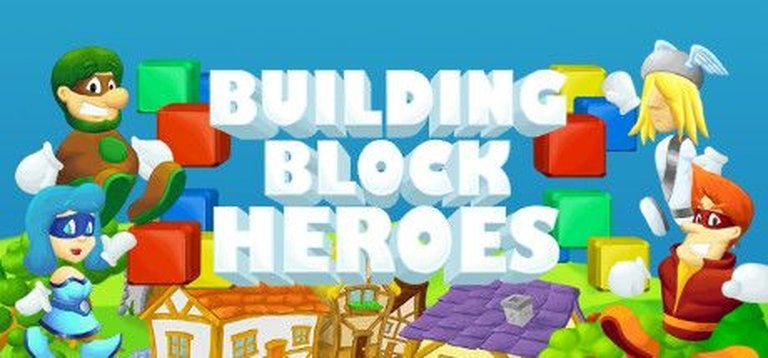
Description
Building Block Heroes is a puzzle platformer where players use falling colored blocks to construct pathways and platforms in a vibrant, hand-painted world, aiming to rescue the Jollyfolk from their cages. The game features simultaneous control over both heroes and building blocks (solo or co-op), unique characters with distinct abilities like dashing or conjuring ice, and dynamic boss fights requiring creative building under enemy attacks, all set in diverse environments with obstacles such as moving platforms and ocean currents.
Gameplay Videos
Where to Buy Building Block Heroes
PC
Building Block Heroes Cracks & Fixes
Building Block Heroes Guides & Walkthroughs
Building Block Heroes: Review
Introduction
In the bustling indie scene of 2017, where pixel art and nostalgia often reigned supreme, Building Block Heroes emerged as a vibrant anomaly. Devised by solo developer Aggroblakh, this puzzle-platformer dared to blend Tetris-like construction with physics-based heroics, all wrapped in a hand-painted, cartoony aesthetic. Though it arrived with the modest footprint of a passion project, its innovative core mechanics and earnest charm carved out a unique legacy. This review deconstructs Building Block Heroes not merely as a game, but as a testament to indie resilience—a product forged from hard-won lessons, technical experimentation, and a boundless creative spirit. Its thesis is clear: beneath its playful facade lies a surprisingly sophisticated design that recontextualizes puzzle-solving as collaborative creativity, leaving an indelible mark on the genre.
Development History & Context
The genesis of Building Block Heroes lies in the crucible of Aggroblakh’s previous title, World Boxing Manager (2016). That C++/Qt-based project, while niche, revealed painful truths about the indie landscape. Aggroblakh candidly admitted in a devlog that minimalistic graphics and a steep learning curve alienated players, despite the game’s niche appeal. A critical post-launch bug—slow simulations—further damaged its reputation, teaching that “graphics really do matter” and that community feedback must be solicited early. For his next project, Aggroblakh pivoted radically: he adopted the open-source Godot engine to reduce “wheel re-invention” and prioritized accessibility. Six months of full-time development yielded a game deliberately designed to be “incredibly simple to get into,” with integrated tutorials and vibrant visuals to counter past criticisms. Released on October 3, 2017, for Windows (with Linux/mac ports following), it launched at $9.99 with a 20% discount, reflecting its status as a labor of love rather than a blockbuster contender. The 2017 context was pivotal: the indie scene was saturated with “retro” titles, making Building Block Heroes‘s modern, polished aesthetic and innovative mechanics a quiet standout.
Narrative & Thematic Deep Dive
The narrative, while minimalist, serves as a thematic anchor. Players guide the eponymous heroes through five distinct areas—Jollyville, Freshleaf Forest, Mechafolk Factory, Icygale Glacier, and the Secret Rocket Base—to rescue the whimsical “Jollyfolk” from cages. Each zone introduces a new environment-based challenge, from neon-lit cityscapes to frozen tundras, subtly reinforcing the theme of adaptability. The four protagonists—Heatwave, Ice Queen, Airhead, and Dirtbag—are embodiments of elemental harmony (fire, water, air, earth), their designs mirroring the game’s four block colors. Heatwave’s fiery arrogance contrasts with Ice Queen’s delicate grace, Airhead’s carefree flight complements Dirtbag’s earthy pragmatism. Their abilities—dash, create ice, soar, and destroy blocks—symbolize complementary forces, explicitly designed to encourage teamwork. While dialogue is sparse, the narrative thrives through environmental storytelling: factories hint at mechanization, glaciers evoke isolation, and rocket bases imply grand ambition. The underlying theme is empowerment through creation; building isn’t just a mechanic, but a narrative act of liberation, framing the Jollyfolk as metaphors for untapped potential.
Gameplay Mechanics & Systems
Building Block Heroes’ genius lies in its dual-loop gameplay. Players simultaneously control a hero and manipulate falling blocks, using them to construct staircases, bridges, and barriers. This requires dexterity: blocks must be placed while evading enemies like the “annoying” Icygale Glacier pests or the “irresistible” ocean currents of the Oceantide Channel. Two modes deepen the experience: Breaker Mode emphasizes speed and destruction (clearing blocks with color-specific powers), while Connect Mode rewards strategic building (linking blocks for combos). The power meter, charged by destroying blocks, fuels special abilities: Heatwave dashes across gaps, Ice Queen conjures temporary ice platforms, Airhead glides over obstacles, and Dirtbag smashes barriers. These abilities are synergistic—Ice Queen’s “colorless” ice blocks can be destroyed by any breaker, enabling creative solutions. Boss fights are a highlight: dynamic, real-time encounters where players dodge attacks while constructing pathways to weak points. The UI is clean and intuitive, with a fixed/flip-screen perspective enhancing the puzzle clarity. Over 100 levels ensure sustained engagement, though the difficulty curve occasionally spikes due to precision demands. The true innovation lies in its “simultaneous control”—a mechanic that transforms passive puzzle-solving into a kinetic ballet of creation and evasion.
World-Building, Art & Sound
The game’s world is a masterclass in cohesive, expressive art direction. Aggroblakh’s hand-painted style is vibrant and textured, avoiding the flatness of many indie titles. Each area has a distinct personality: Jollyville’s warm, inviting hues give way to Freshleaf Forest’s lush greens, while Mechafolk Factory’s industrial grays clash with Icygale Glacier’s icy blues. Character designs are equally expressive—Heatwave’s spiky red hair and popped collar epitomize fire’s volatility, Dirtbag’s rotund frame and neckbeard evoke earthy humor. The “four-color motif” unifies the palette, with blocks and environments reflecting elemental themes. Sound design, though understated, complements the art. Aggroblakh composed music using MuseScore, creating jaunty, area-specific tracks that evoke whimsy and adventure. The absence of voice acting is deliberate, replaced by subtle audio cues—block placement, hero dashes, and enemy attacks—that enhance tactile feedback. This sensory synergy makes the world feel alive, transforming abstract puzzles into tangible journeys.
Reception & Legacy
At launch, Building Block Heroes flew under the critical radar; Metacritic lists no critic reviews, and Giant Bomb’s wiki entry remains skeletal. Yet, its reception among players and indie peers was quietly positive. Steambase reports a perfect 100/100 player score from a single review (likely early adopters), praising its creativity. Aggroblakh’s transparent devlogs fostered a loyal community, with ModDB forums buzzing about co-op exploits and boss strategies. Commercially, it found success as a budget title—priced at $4.99 post-launch, it became a “hidden gem” for puzzle-platformer fans. Its legacy, however, extends beyond sales. As an exemplar of Godot Engine’s capabilities, it demonstrated that open-source tools could rival commercial engines in crafting polished experiences. Thematically, its emphasis on cooperative creation prefigured trends in collaborative indie games, while its character-driven mechanics influenced puzzle designs that prioritize synergy over solo mastery. Though not a trendsetter, it remains a cherished artifact of 2017’s indie renaissance—a testament to how constraints foster ingenuity.
Conclusion
Building Block Heroes is more than a game; it’s a manifesto of indie perseverance. Aggroblakh’s evolution from World Boxing Manager’s missteps to this title’s polished brilliance showcases iterative design at its finest. Its gameplay, a fusion of Tetris and platforming, remains refreshingly inventive, while its art and sound craft a world brimming with personality. Though its narrative is light and its reception niche, its impact resonates in its mechanics—proving that puzzle-solving can be both cerebral and cathartic. In the annals of video game history, it stands as a humble yet vital entry: a reminder that the most enduring heroes often build their own paths, one block at a time. For players seeking a creative, co-op-infused romp, it’s not just a relic—it’s a timeless joy.