
- Release Year: 2022
- Platforms: Windows
- Publisher: Valkyria Games
- Developer: Valkyria Games
- Genre: Role-playing (RPG)
- Perspective: 1st-person Diagonal-down
- Game Mode: Single-player
- Gameplay: Japanese-style RPG (JRPG), Turn-based
- Setting: Fantasy
- Average Score: 70/100
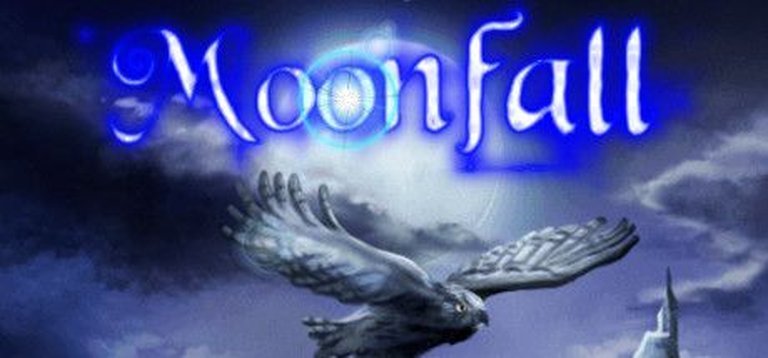
Description
Moonfall is a Japanese-style RPG set in a fantasy world, featuring turn-based combat and an anime/manga art style. Developed and published by Valkyria Games using the RPG Maker engine, the game presents a first-person perspective with a diagonal-down view and direct control interface.
Where to Buy Moonfall
PC
Moonfall Reviews & Reception
monstercritic.com (70/100): In the end, “Moonfall” pretty much delivers what you’d expect. Is it a perfect film? No. Is it a dumb film? You bet. But it’s the glorious kind of dumb that provides a fun spectacle, so long as you’re willing to check your brain at the door.
Moonfall: Review
Introduction
In the vast cosmos of video games, few titles evoke the nostalgia of classic RPGs quite like Moonfall. Released in 2022 by Valkyria Games, this indie RPG is a love letter to the golden age of Japanese role-playing games, blending turn-based combat, pixel-art aesthetics, and a sprawling fantasy narrative. Yet, amidst a gaming landscape dominated by open-world epics and AAA spectacles, Moonfall emerges as a quiet, deliberate ode to a bygone era. Its legacy lies not in revolution, but in preservation—a meticulous recreation of the tropes, triumphs, and tribulations of 16-bit classics like Final Fantasy VI and Chrono Trigger. This review dissects Moonfall as both a product of its influences and a standalone experience, evaluating its narrative depth, mechanical ingenuity, and cultural resonance within the RPG renaissance of the 2020s.
Development History & Context
Valkyria Games and its vision for Moonfall are steeped in reverence for RPG history. Founded by developers with roots in the demoscene and indie modding communities, Valkyria cultivated Moonfall as a spiritual successor to titles such as Skyfall and Fantasy Heroes. The game’s core design philosophy—to evoke the “feel of the classics”—constrained it to the RPG Maker engine, a choice that dictated its 2D pixel-art aesthetic, turn-based pacing, and linear progression. Technologically, this engine imposed limitations: rigid tile-based movement, pre-scripted events, and reliance on asset libraries. Yet, it also enabled rapid development and accessibility, allowing Valkyria to focus on narrative and systems over technical innovation.
Released on May 6, 2022, Moonfall arrived amid a resurgence of interest in retro RPGs. Titles like Octopath Traveler (2018) and Triangle Strategy (2022) had proven that demand for turn-based, story-driven experiences remained strong. However, Moonfall distinguished itself through its ultra-budget pricing ($0.90 on Steam) and its commitment to old-school design. Valkyria marketed it as a “no-frills” experience, emphasizing its hand-painted environments and dynamic party system over graphical fidelity. This positioning reflected a deliberate rejection of modern trends—no microtransactions, no open worlds, just distilled RPG gameplay. The gaming landscape of 2022, saturated with live-service games, made Moonfall a niche artifact: a time capsule for purists and a curiosity for newcomers.
Narrative & Thematic Deep Dive
Moonfall’s narrative unfolds across a dual-layered conspiracy, rooted in the aftermath of a war between humans and elves. On the surface, humanity, led by Queen Azalia, claims victory by exterminating the elven race. Yet, this “official” history is a facade—a truth buried beneath political deceit and ancient magic. The game’s three protagonists—an outcast human, an elven survivor, and a mysterious wanderer—begin as isolated figures, their fates intertwining as they uncover the world’s hidden origins. Their journeys intersect through Valkyria’s dynamic party system: players control each character sequentially, exploring their personal arcs before uniting them into a cohesive team. This structure mirrors classics like Suikoden, where individual stories culminate in a grand tapestry.
Thematically, Moonfall explores prejudice and cyclical violence. The human-elf conflict is not merely historical but a recurring cycle of vengeance, fueled by propaganda and fear. The game’s dialogue leans into archetypal fantasy tropes—wise mentors, tragic betrayals, and prophecies—yet subverts them through ambiguity. Azalia, for instance, is not a simple tyrant; her actions stem from trauma, blurring moral lines. The narrative’s strength lies in its environmental storytelling: ruins whisper of lost civilizations, and lore fragments (discoverable in secret rooms) reveal that the “extinction” of elves was a lie—a mass exodus into another dimension. The climax recontextualizes the war as a cosmic struggle, where humanity’s hubris risks unraveling reality itself.
Yet, the narrative stumbles in pacing. The early hours feel disjointed, with abrupt transitions between character segments. Dialogue is functional but lacks nuance, relying on exposition dumps to explain lore. Themes of redemption and sacrifice are underdeveloped, with character arcs resolving too neatly. Ultimately, Moonfall’s story is a double-edged sword: its premise is ambitious, but its execution feels constrained by the simplicity of its influences.
Gameplay Mechanics & Systems
Core Loop
Moonfall’s gameplay revolves around exploration, turn-based combat, and character progression. The dynamic party system is its standout feature. Players begin as a lone protagonist, switching between three characters in any order. Each has unique abilities, questlines, and skill trees, fostering replayability. For example, the human excels in swordplay and diplomacy, the elf in archery and nature magic, and the wanderer in stealth and alchemy. This system encourages experimentation, as players tackle challenges using different character strengths before unifying them.
Combat
Turn-based battles are Moonfall’s most traditional element. Encounters are random, with grid-based movement reminiscent of early Final Fantasy titles. Combat is strategically simplistic: physical attacks, spells, and items form the trinity of options. However, Valkyria introduces a “synergy” mechanic, where paired characters unleash combo attacks (e.g., elf’s arrow followed by wanderer’s poison). This adds depth but feels underutilized, as synergy requires specific party compositions and is rarely necessary. Difficulty is balanced via three modes, but even “Normal” can be punishing due to erratic enemy scaling. Bosses are bullet sponges, lacking innovative mechanics beyond high HP and status effects.
Character Progression
Progression is linear, with experience points leveling stats and AP (Ability Points) unlocking skills. The Quest Journal streamlines tracking, but side quests are fetch-heavy, lacking meaningful rewards. Exploration rewards discovery: secret rooms hide treasures and lore, but their placement often feels arbitrary. The UI, while clean, suffers from cluttered menus in later stages, where skill trees become unwieldy.
Innovations vs. Flaws
The dynamic party system is Moonfall’s brightest innovation, offering non-linear progression. Yet, the game leans too heavily on RPG Maker’s limitations: repetitive animations, rigid event scripting, and a lack of environmental interactivity. Combat, while functional, lacks the flair of contemporaries like Dragon Quest XI. Ultimately, Moonfall’s mechanics are a faithful homage—nostalgic but dated, lacking the polish or inventiveness of modern RPGs.
World-Building, Art & Sound
Setting
Moonfall’s world is a patchwork of fantasy biomes: verdant forests, labyrinthine caves, and crumbling ruins. Each region is distinct, with lore reflecting the human-elf conflict. Forests, once elven sanctuaries, now house human outlaws; caves hide ancient technology, hinting at a pre-human civilization. This world-building is textured but underexplored. For instance, the “Lunarium”—a mysterious resource referenced in promotional materials—remains a peripheral plot device, never fully integrated into gameplay.
Art Direction
The visual style is hand-painted pixel art, with vibrant colors and detailed sprites. Environments, particularly ruins, evoke a sense of decay and history. Characters are expressive, with animations conveying personality (e.g., the wanderer’s fidgeting during dialogue). However, the art is inconsistent—some areas are lush, while others feel rushed. The anime/manga aesthetic (noted in MobyGames) is evident in character designs, but the lack of unique enemy sprites diminishes visual variety.
Sound Design
Music is Moonfall’s emotional core, with orchestral and choral tracks swelling during dramatic moments. Themes like “Elven Lament” and “Human March” underscore cultural tensions. Sound effects are serviceable—clashing swords, rustling leaves—but unremarkable. Voice acting is absent, relying on text boxes for dialogue, which suits the game’s retro ethos. Yet, the absence of ambient sound (e.g., wind in mountains or water in caves) leaves the world feeling sterile.
Atmospheric Contribution
Art and sound coalesce best in ruins and forests, where pixel art and melancholic melodies create a sense of loss. However, brighter areas like human towns lack personality, feeling like backdrops rather than lived-in spaces. The world-building is strongest when environmental storytelling shines—e.g., murals depicting the “Great Exile” of elves—but these moments are too rare.
Reception & Legacy
Critical & Commercial Reception
Moonfall was a commercial footnote. Priced at $0.90 on Steam, it attracted niche interest but little mainstream attention. Reviews were scarce; OpenCritic and Rotten Tomatoes listed no aggregate scores, reflecting its obscurity. Where coverage existed, it was mixed. RPG Gamers praised its “nostalgic charm,” while MonsterCritic’s lone detailed review (for the film, a critical error) dismissed it as “so bad it’s good.” Players on Steam lauded its art but criticized its pacing. The game’s budget pricing and limited marketing ensured it remained a cult curiosity, selling modestly without achieving viral status.
Legacy & Influence
Moonfall’s legacy lies in its role as a time capsule. It exemplifies the “RPG Maker Renaissance” of the 2020s, where indie developers resurrected 16-bit sensibilities. Its dynamic party system influenced few direct successors, but it reinforced demand for turn-based experiences. Thematically, its exploration of historical revisionism resonated with players weary of simplistic narratives in larger games. Yet, it faded quickly, overshadowed by titles like Sea of Stars (2023), which retro design with modern polish.
Cultural Impact
Moonfall is rarely cited in industry analyses, but it persists among retro RPG communities as a “hidden gem.” Its existence underscores a dichotomy: games can be both meticulously crafted and commercially insignificant. For Valkyria Games, it solidified a reputation for niche passion projects, with later titles like Burning Faith (2023) expanding on its formula.
Conclusion
Moonfall is a game of dualities: a nostalgic tribute yet a flawed artifact, ambitious in scope but constrained by its influences. Its narrative, while thematically rich, suffers from uneven execution; its gameplay, innovative in structure, is bogged down by RPG Maker’s limitations. Yet, in its commitment to classic RPG virtues—character-driven stories, strategic combat, and exploration—it carves a niche. For purists, it is a comforting echo of a bygone era; for newcomers, a primer on the genre’s foundations.
Ultimately, Moonfall’s place in history is not as a revolutionary title, but as a curious footnote. It reminds us that video games, like the moon itself, can be both familiar and mysterious—reflecting our past while hinting at untold potential. In a world obsessed with the new, Moonfall dares to cherish the old, and in doing so, it orbits as a quiet, unassuming star in the indie cosmos.