
- Release Year: 2006
- Platforms: Windows
- Publisher: MumboJumbo, LLC
- Genre: Compilation
- Perspective: Top-down
- Game Mode: Single-player
- Gameplay: Deduction, Grid-based puzzle, Logic puzzle, Puzzle
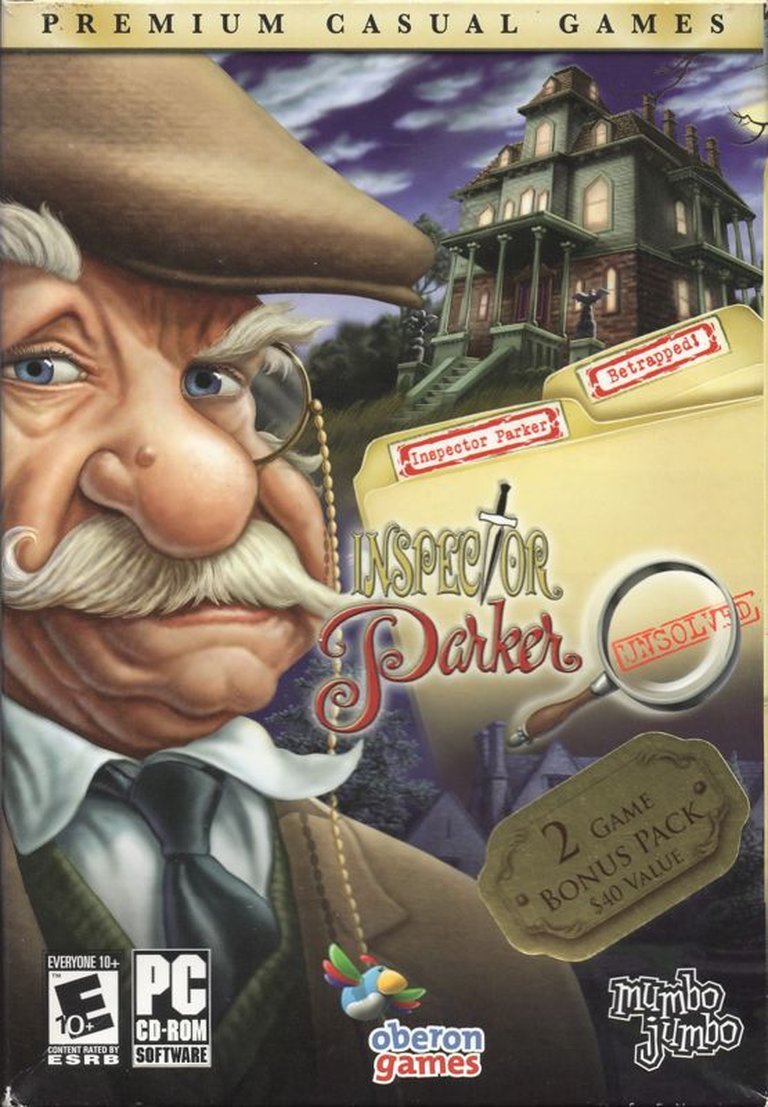
Description
Inspector Parker: Unsolved is a 2006 compilation for Windows bundling two mystery puzzle games: Inspector Parker (2003) and Inspector Parker in Betrapped! (2004). Players assume the role of an apprentice detective in a gothic, early 1900s mansion, tasked with solving the murder of the Lady of the house by deducing the suspect, weapon, location, and motive through intricate logic puzzles and clue-based investigations.
Gameplay Videos
Inspector Parker: Unsolved: Review
Introduction
In the shadowed corridors of digital gaming history, few compilations embody the eccentric charm of early 2000s casual gaming like Inspector Parker: Unsolved. Released in 2006 by MumboJumbo as a jewel-case bundle, this compilation bundles two cerebral detective games—Inspector Parker (2003) and its sequel Inspector Parker in Betrapped! (2004)—into a singular, gothic-tinged experience. Conceived by acclaimed adventure game designer Jane Jensen (Gabriel Knight series) and developed by her studio Oberon Games, these titles represent a fascinating intersection of logic puzzles and narrative deduction. Yet, despite their cult appeal, they remain footnotes in mainstream gaming discourse. This review argues that Inspector Parker: Unsolved is more than a curiosity; it is a masterclass in minimalist game design, where constraint breeds ingenuity, and where the marriage of Minesweeper logic with Agatha Christie-esque storytelling creates an enduring, if overlooked, artifact of puzzle-adventure innovation.
Development History & Context
Oberon Games, founded in 2002 by Jensen, Jessica Tams, and a small team of 18 developers, operated at the vanguard of the casual gaming revolution. Jensen’s vision was to distill the narrative depth of point-and-click adventures into accessible, bite-sized experiences. Technically, the games were marvels of efficiency. Built with Visual Basic and C++ on the DirectX 9 stack, Betrapped! was compressed into a mere 25 MB file—astonishing for a fully realized isometric world. This forced extreme austerity: static 2D sprites, low-poly environments, and a sparse soundscape. The 2004 gaming landscape was saturated with graphically intensive AAA titles, but Betrapped! targeted the burgeoning casual market via shareware platforms, priced at $19.99 for a two-hour playthrough. Its release as part of the 2006 Inspector Parker: Unsolved compilation (packaged by MumboJumbo) aimed to bundle Jensen’s detective duo for retail, capitalizing on the niche’s growing appetite for polished, low-cost puzzles.
Narrative & Thematic Deep Dive
The compilation’s dual narratives explore the tension between logic and human fallibility.
– Inspector Parker: A traditional mansion murder mystery. Players act as Parker’s apprentice, deducing suspect, weapon, motive, and location from scattered clues. The plot—a classic “locked-room” scenario—serves as a vehicle for deductive reasoning, with dialogue snippets hinting at character secrets like the “sexy French maid” or the victim’s bitter relatives.
– Betrapped!: A more ambitious gothic epic. Set in Ravencourt Castle during a raging storm, it follows Inspector Parker investigating Lord North Vandernot’s death. The castle’s 12 suspects—each with hidden motives—create a web of greed, jealousy, and impending doom. Thematic motifs abound: isolation (the storm traps Parker within the castle), heritage (clashes between aristocratic tradition and modernity), and the symbolism of disarming traps as a metaphor for dismantling suspicion. Jensen’s “relaxential” narrative style—minimal dialogue, implied subtext—relies on environmental storytelling, with Parker’s silence emphasizing the player’s role as the sole arbiter of truth.
Gameplay Mechanics & Systems
The compilation’s brilliance lies in its deconstruction of adventure-game tropes into systemic purity.
Inspector Parker
- Core Loop: A streamlined Clue-like deduction. Players gather physical evidence (e.g., a broken monocle) and testimonial alibis, then input solutions via a grid. Lives are lost for incorrect deductions, with thunderclap audio cues marking mistakes.
- Progression: Rooms unlock as evidence is pieced together, creating a satisfying illusion of agency.
Inspector Parker in Betrapped!
- Two-Phase Design:
- Disarm Phase: A Minesweeper-inspired puzzle. Rooms are tiled grids where colors indicate trap proximity (blue = 0 traps, green = 1, yellow = 2). Right-clicking to defuse traps risks losing a life (typically 5 per room). Flashing-skull and timed traps add complexity.
- Explore Phase: Once cleared, players freely roam, scanning for interactables (spacebar) and interrogating NPCs. Clues—some requiring “exterior knowledge”—build the case.
- Puzzle Mode: A pure trap-disarming challenge at three difficulty levels,剥离 narrative for raw logic.
- Strengths: Intuitive mechanics; progressive difficulty escalates from simple linear layouts to multi-room labyrinths. The hybrid pacing balances tension (disarming) with revelation (exploration).
- Weaknesses: The life system feels punitive, with a single misstep costing progress. Limited replayability exists beyond puzzle mode or replaying single rooms. The UI’s minimalism lacks explicit cues, frustrating new players.
World-Building, Art & Sound
Betrapped!’s gothic aesthetic is a triumph of stylistic constraint. Jeffrey K. Bedrick’s isometric sprites evoke vintage Edwardian illustrations—caricatured characters (e.g., a monocled Parker) rendered in terracotta and ironwork textures against a palette of stormy grays and deep blues. The low-resolution visuals create a charming “retro-pixel” charm, focusing the player on logic over spectacle. Sound design amplifies atmosphere: Ashif Hakik and Robert Holmes’ score—an 8-bar looping motif of suspenseful strings and thunder—mirrors the castle’s oppressive gloom. Trap triggers emit sharp “pops” and distant thunder, while silence during exploration heightens tension. The absence of voice acting, while criticized by some, reinforces the game’s text-based, cerebral tone, allowing players to imagine Parker’s weary sighs.
Reception & Legacy
Upon release, Inspector Parker: Unsolved garnered mixed yet telling praise:
– Critical: GameSpot (7.3/10) lauded its “solid Minesweeper roots” but noted its brevity. Just Adventure (75/100) called it “stylish and amusing,” while Adventure Gamers (3/5) dismissed it as a “casual game.”
– Commercial: Modest sales as shareware; the 2006 compilation provided a minor resurgence.
– Legacy: Its influence is quietly profound. Betrapped! pioneered the isometric Minesweeper formula, later echoed in indie titles like The Witness (2016). Its “room-by-room evidence gathering” foreshadowed narrative-driven games like Her Story (2015). GOG and LaunchBox preservation efforts underscore its cult status, with Reddit users recalling its “thunder rumble” and pipe-organ “undertaker song” as nostalgic touchstones. Jensen’s fusion of puzzle and adventure remains a blueprint for minimalist design.
Conclusion
Inspector Parker: Unsolved is a testament to the power of constraint in game design. Within its 25 MB shell, Jane Jensen and Oberon Games compressed the essence of detective work—logic, observation, and deduction—into two perfectly crafted experiences. Inspector Parker offers a pure deduction puzzle, while Betrapped! ingeniously marries Minesweeper tension with gothic atmosphere. Though its punitive life system and limited replayability are flaws, they are eclipsed by its ingenuity: the thunderclap misstep, the satisfaction of clearing a trap-filled room, the silent revelations in dusty castle halls. As a niche artifact of the casual gaming boom, it occupies a hallowed space in puzzle-adventure history—a warm, humorous “protective badge,” as one GOG user recalled, that burned a distinct signature at the genre’s crossroads. For anyone seeking a masterclass in minimalist narrative and systemic elegance, *Inspector Parker: Unsolved remains not just unsolved, but unforgettably resolved.