
- Release Year: 2010
- Platforms: Windows, Xbox 360
- Publisher: ak tronic Software & Services GmbH, Akella, DreamCatcher Interactive Inc., JoWooD Productions Software AG, Nordic Games GmbH
- Developer: Spellbound Entertainment AG
- Genre: Role-playing (RPG)
- Perspective: Behind view
- Game Mode: Single-player
- Gameplay: Action RPG, Crafting, Skill trees
- Setting: Fantasy
- Average Score: 62/100
Description
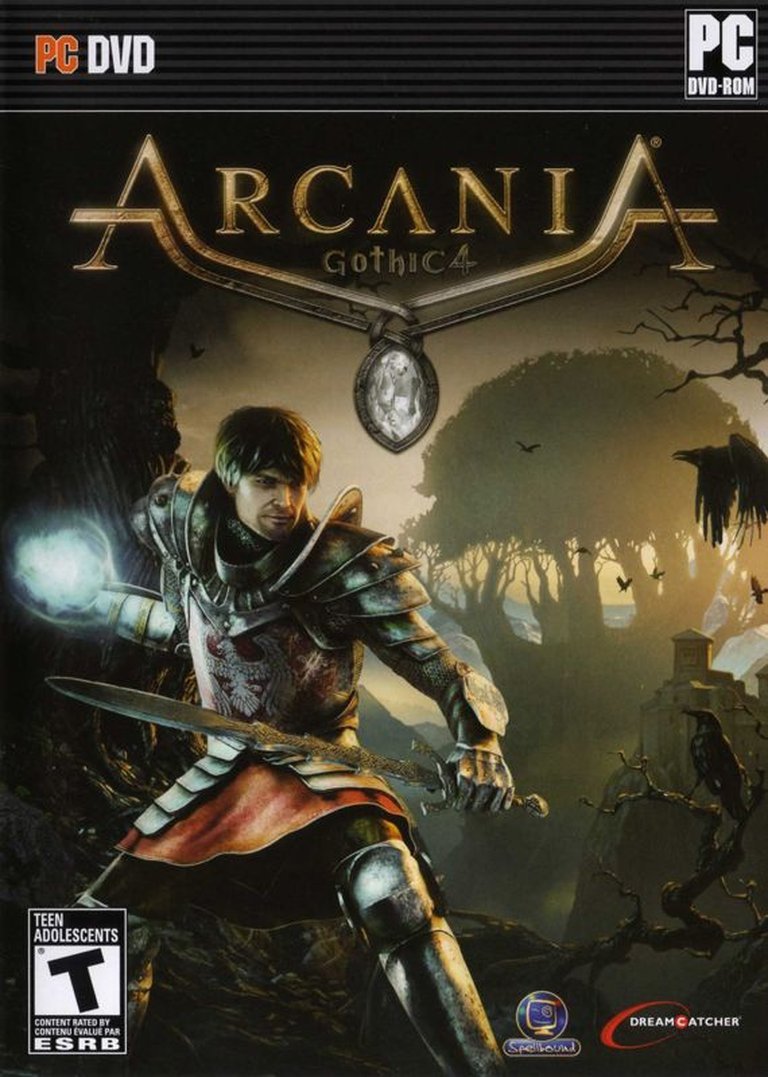
ArcaniA: Gothic 4 is a single-player fantasy RPG set a decade after the events of Gothic 3, where the former hero Robar III has become a corrupted king due to a mysterious amulet. Players take on the role of a new hero driven by vengeance against the forces that massacred their loved ones. The game features a ‘back-to-basics’ approach with a smaller, linear world map, action-based combat across three classes (mage, ranger, warrior), and simplified mechanics including no guilds, morality constraints, or inventory limits, alongside elemental spellcasting and a crafting system.
Gameplay Videos
Where to Buy ArcaniA: Gothic 4
PC
ArcaniA: Gothic 4 Free Download
ArcaniA: Gothic 4 Cracks & Fixes
ArcaniA: Gothic 4 Patches & Updates
ArcaniA: Gothic 4 Mods
ArcaniA: Gothic 4 Guides & Walkthroughs
ArcaniA: Gothic 4 Reviews & Reception
metacritic.com (63/100): A classic and complex roleplaying game has become an entertaining and enjoyable adventure in a fantasy world. Despite some flaws, Arcania: Gothic 4 is a highly recommended game.
ign.com : Arcania: Gothic IV tries so hard to tick all the right boxes, in fact, that it doesn’t actually have a lot of unique personality – and the lack of polish ultimately holds Arcania: Gothic IV, like its predecessors, back.
gamerant.com : The voice acting, however, is beyond terrible. The sensation of people in recording booths, reading lines they don’t understand and have no motivation for is palpable whenever a dialog sequence is triggered.
ArcaniA: Gothic 4: Review
Introduction
ArcaniA: Gothic 4 stands as one of the most contentious entries in the Gothic saga—a franchise revered for its challenging, immersive role-playing experiences. Released in 2010 after years of development turmoil, this spin-off marked a seismic shift in direction. Developer Spellbound Entertainment, tasked with reviving the series after Piranha Bytes’ departure, delivered a product that traded Gothic’s signature complexity for streamlined accessibility. The result is a paradox: a visually stunning yet mechanically shallow RPG that alienated die-hard fans while failing to captivate new audiences. This review dissects ArcaniA’s legacy as both a commercial experiment and a creative misstep, arguing it represents a cautionary tale about franchise reinvention in an era of AAA homogenization.
Development History & Context
ArcaniA’s genesis was fraught with instability. Following the disastrous launch of Gothic 3 (2006), publisher JoWooD initiated a “developer casting” process, demanding candidates produce unpaid demos before securing the contract. Spellbound Entertainment won, but the project’s vision was soon compromised by external investors. Johann Ertl, JoWooD’s community manager, infamously stated: “There were too many people (at JoWooD) who would have rather cut their own wrist than calling the game Gothic 4.” This sentiment underscored the studio’s reluctance to embrace the franchise’s identity.
The game’s title changed four times—from Gothic 4: Genesis (2007) to ArcaniA: A Gothic Tale (2008)—reflecting a deliberate effort to distance it from the Gothic legacy. The shift to a linear experience, smaller world, and simplified mechanics was a direct response to Gothic 3’s technical failures and JoWooD’s desire to court casual players. Built on Trinigy’s Vision Engine 7 with PhysX physics, the game showcased graphical ambition but suffered from inconsistent optimization. Release delays plagued production, and the final product, launched on October 12, 2010, felt like a compromised vision—neither the Gothic fans craved nor the accessible RPG JoWooD had promised.
Narrative & Thematic Deep Dive
Set a decade after Gothic 3, ArcaniA introduces a nameless shepherd hero whose life upends when his village of Feshyr is razed by King Rhobar III’s forces. The king, once the franchise’s hero, is now corrupted by the demon Krushak (the final boss of Gothic 1), his soul twisted by a cursed amulet. The protagonist’s quest for vengeance evolves into a mission to exorcise Rhobar and thwart a global demonic threat—a narrative thread familiar to RPGs but executed with startling simplicity.
The plot’s primary flaw lies in its lack of depth. Characters like Diego, a beloved figure from prior games, appear but lack meaningful development. Key moments—such as the hero’s fiancée Ivy being killed—are rushed, reducing emotional stakes to a series of functional cutscenes. Thematic elements of corruption and redemption are present but never interrogated, replaced by a “fetch quest” structure that prioritizes progress over storytelling. The linear narrative eliminates meaningful choices, reducing the player to a passive observer. As IGN noted, the story is “distracting and disposable—kind of enjoyable but never subtle,” a damning critique for a genre built on player investment.
Gameplay Mechanics & Systems
ArcaniA’s gameplay represents a radical departure from Gothic’s roots. The open-world exploration of Gothic 3 is replaced by a segmented, linear map where advancing locks players out of previous zones. This design choice, framed as a “back-to-basics” approach, sacrifices player agency for streamlined progression.
- Combat: A simplified action-based system uses mouse controls (left-click to attack, right-click to block/roll). While fluid, it lacks tactical depth. Enemy telegraphing (via purple auras) makes encounters predictable, and the absence of weapon-stat requirements allows players to wield any gear immediately. Spells are limited to fire, lightning, and ice—upgradeable but uninspired.
- Progression: Three classes (mage, ranger, warrior) unlock skills via a generic skill tree. No teachers exist to guide specialization, and leveling feels unrewarding. Inventory management is trivialized by unlimited weight capacity, while alchemy/crafting systems are so abundant they devalue effort.
- Role-Playing Void: The removal of guilds, factions, and moral choices reduces RPG elements to a bare minimum. Stealing carries no consequences, and quests are overwhelmingly linear fetch tasks. As GameSpot lamented, “Arcania has been dumbed down into a generic action RPG, so it isn’t a Gothic game in anything but its subtitle.”
World-Building, Art & Sound
ArcaniA’s world—spanning islands like Feshyr and Argaan—is visually impressive but narratively inert. Environments like Thorniara, the capital city, boast detailed architecture and dynamic day/night cycles. Waterfalls, forests, and dungeons are rendered with lush textures, courtesy of SpeedTree middleware and advanced lighting. The Vision Engine 7 delivers stunning vistas, albeit marred by texture pop-in and occasional frame rate drops on consoles.
Sound design, however, is inconsistent. The orchestral score by Dynamedion evokes epic fantasy, but voice acting is universally panned. Accents are unconvincing, lines are delivered with baffling inflection (e.g., shouts intoned as questions), and translations are stilted. A notorious example is the witch Lyrca, whose “forced falsetto pitch and pantomime cackles” (per Game Rant) make conversations unintentionally hilarious. Environmental audio—thunderous waterfalls, rustling leaves—adds immersion, but the overall soundscape fails to compensate for the game’s narrative shortcomings.
Reception & Legacy
ArcaniA’s reception was polarized. Critics praised its graphics and combat but lamented its simplification. The PC and Xbox 360 versions scored 63% and 64% on Metacritic, respectively, while the PlayStation 3/PS4 ports plummeted to 42%. PC Gamer UK awarded 76%, calling it “shallow but entertaining,” whereas Eurogamer’s 4/10 decried it as “dry spreadsheet of RPG elements.”
Commercially, it sold 200,000 units in Europe by October 2010, a modest success for a niche RPG. The expansion Fall of Setarrif (2011) added new quests and allowed players to revisit prior characters but did little to salvage the core game’s reputation. Over time, ArcaniA became synonymous with franchise betrayal. Piranha Bytes explicitly disavowed its canonicity, and later Gothic titles (ELEX, Gothic Remake) ignored it entirely.
Legacy-wise, ArcaniA exemplifies the pitfalls of developer-driven franchise pivots. Its failure to balance accessibility with depth influenced how publishers approached legacy IPs, often favoring broad appeal over niche innovation. As a historical artifact, it remains a case study in mismanaged expectations—a game whose potential was overshadowed by its compromises.
Conclusion
ArcaniA: Gothic 4 is a beautiful but hollow shell—a game that looks the part of an epic RPG but lacks its soul. Its streamlined mechanics and linear design betray the Gothic series’ identity, reducing a rich world to a backdrop for repetitive combat and shallow quests. While its art direction and combat offer fleeting pleasures, the absence of meaningful choices, depth, and narrative cohesion relegates it to a footnote in gaming history.
For veterans, it’s a betrayal; for newcomers, a missed opportunity. ArcaniA’s true legacy is cautionary: a reminder that franchises built on complexity should not be simplified into oblivion. In the end, it’s not a bad game—but as a Gothic title, it’s a profound disappointment. Its place in history is secured not as a landmark RPG, but as a pivotal lesson in the costs of artistic compromise.