
- Release Year: 2021
- Platforms: Quest, Windows
- Publisher: CyberSpline Games
- Developer: Alterside
- Genre: Action
- Perspective: 1st-person
- Game Mode: Single-player
- Gameplay: Music, rhythm
- VR Support: Yes
Description
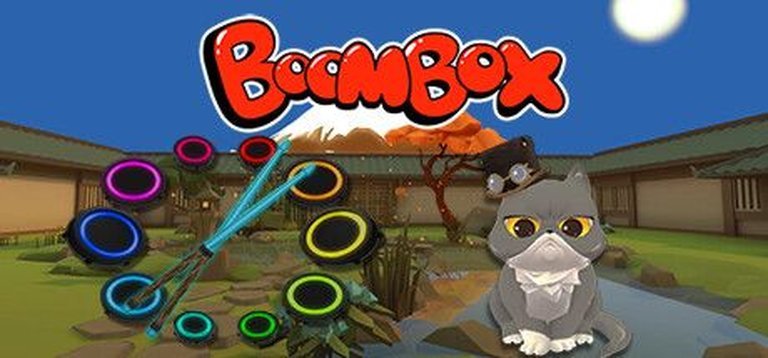
BoomBox VR is a rhythm-based VR game where players use virtual drumsticks to beat along to community-created songs across breathtaking, immersive environments like Japanese gardens and ancient ruins. Combining fitness, rhythm gameplay, and creative expression, the game features an in-built library of user-generated maps, intuitive motion controls, and a map editor for sharing custom content, all driven by a passionate community that shapes its ongoing development.
Gameplay Videos
BoomBox VR Guides & Walkthroughs
BoomBox VR: A Rhythmic Requiem and Community Resurrection
Introduction
In the ever-expanding virtual reality landscape, few titles have embodied the chaotic, collaborative spirit of the indie development scene quite like BoomBox VR. Arriving in 2021 as a passion project from Vancouver Film School alumni, this VR rhythm game promised a potent fusion of kinetic drumming, full-body fitness, and community-driven creativity. Yet, its journey—from scrappy underdog to corporate mismanagement and ultimately, a player-led resurrection—mirrors the struggles and triumphs of modern independent game development. This review delves deep into BoomBox VR, examining its ambitious mechanics, its tumultuous history, and its enduring legacy as a testament to the power of player communities in shaping digital experiences. While its technical execution wavers, its core philosophy of placing music, movement, and creator collaboration at the forefront makes it a fascinating, if flawed, artifact in the VR canon.
Development History & Context
BoomBox VR’s genesis is a story of idealism meeting harsh reality. Founded in 2019 by Cyberspline Games (originally credited as Alterside on MobyGames), the core team met at Vancouver Film School, united by a shared belief in VR’s potential and a desire to create the game they wanted to play. Operating for a full year without pay, they relied on a patchwork of support: funding from the Canada Media Fund, IRAP, the IBM Startup Program, and partnerships with the University of British Columbia and Vancouver Film School itself. This bootstrap approach reflects the constraints of a small studio in an era dominated by VR giants. Technologically, they optimized for accessibility—the Steam minimum specs (GTX 1060, 4GB RAM, Windows 7 SP1) and “standing only” VR support underscored a commitment to reaching as broad an audience as possible, even with the limitations of 2021 hardware.
The gaming landscape in mid-2021 was both ripe and challenging. The Oculus Quest 2 had massively expanded VR’s user base, making rhythm games a genre with proven appeal. However, the field was dominated by Beat Saber, whose established modding community set a high bar for user-generated content. BoomBox VR positioned itself as a distinct alternative, not by aping lightsaber combat, but by centering the experience on physical drumming—a more intuitive and physically demanding action. This choice was both a strength and a constraint. It offered full-body engagement but required a different kind of hardware setup (tracked controllers) and appealed to a niche subset of VR users seeking a fitness-focused rhythm experience. The developers’ vision, articulated in their press kit as “fitness, community, and music,” was ambitious but untested, setting the stage for the game’s dramatic evolution.
Narrative & Thematic Deep Dive
BoomBox VR deliberately eschews traditional narrative in favor of an emergent, player-driven story. There are no characters, no dialogue, and no overarching plot. Instead, the narrative unfolds through gameplay mechanics and the very act of participation. The player becomes the drummer, the protagonist of their own rhythmic journey. This minimalist approach serves the game’s core themes: individual expression and collective creation. Each drumming session is a personal performance, a physical expression of musical interpretation. Yet, this individual experience is deeply intertwined with the community, as players download and conquer maps created by others, transforming the game into a vast, shared canvas.
The game’s most potent, albeit non-traditional, narrative element is the virtual cat, Pupa. Functioning as a companion and a source of tactile comfort, Pupa embodies themes of respite and connection. Petting her provides a momentary break from the intensity of the rhythm gameplay, a meta-commentary on the need for balance in both gaming and life. However, the game’s most profound narrative arc lies outside its code, in its real-world history. The story of BoomBox’s acquisition by a corporate entity that “didn’t share its values,” leading to creative stagnation and community alienation, is a powerful allegory for the tension between artistic vision and commercial pressure. The subsequent community outcry and the developers’ decision to rebuild as BoomBox Remastered under a woman-led, community-focused studio transforms the game’s history into a narrative of resilience and reclamation. It’s a story about players refusing to let a beloved creation die, forcing the creators to return to their roots and rebuild with intention—a rare and compelling narrative in mainstream gaming.
Gameplay Mechanics & Systems
At its core, BoomBox VR revolves around deceptively simple mechanics executed with surprising physicality. Players wield two virtual drumsticks, striking notes that approach them in a three-dimensional space. Unlike the linear slicing of Beat Saber, notes appear in circular patterns inspired by arcade rhythm games like Wacca. This design choice is fundamental, encouraging full-arm movements, twists, and lunges rather than localized wrist actions. Notes also appear on “walls” positioned at various heights and distances, demanding squats, reaches, and core engagement—transforming the game into a genuine fitness experience. The UI is clean and functional, prioritizing visibility of the incoming note stream over aesthetic flourish.
Key systems include:
* Music & Mapping: The game shipped with 33 “core” songs from its original soundtrack, boasting a library of 600+ DMCA-free tracks licensed for community mapping. Its groundbreaking feature was the in-game community map browser, allowing players to download and play user-created songs directly without external modding tools—a significant innovation for VR rhythm games in 2021. Steam Workshop integration was planned but not fully realized at launch.
* Character Progression & Customization: Progression is tied to score, accuracy, and song completion, unlocking achievements and cosmetic skins for drums and environments. While lacking deep RPG elements, this system provides tangible goals for mastery.
* The Editor: A downloadable map editor (from the official site) empowered the community to create and share content, fueling the game’s longevity. Tools were accessible enough for beginners but deep enough for complex creations, fostering a vibrant mapping scene.
* Fitness Mode: Explicitly designed for a workout, this mode likely tracked metrics like calories burned, though detailed implementation varied. Its emphasis on full-body movement rather than stationary arm work was a key differentiator.
* Pupa & The Hub: The original game featured a central “hub” room where Pupa roamed, offering petting and a sense of place. This was infamously removed in a later update, sparking significant backlash from players who saw it as a core part of the game’s charm and identity, highlighting the disconnect between corporate decisions and player desires.
The core loop is satisfyingly visceral: the tactile thwack of virtual sticks, the satisfying pop of hitting a note, the burn in your muscles as you contort to reach a low wall note. However, the system wasn’t flawless. Some community maps suffered from inconsistent difficulty spikes, and the note placement, while innovative, occasionally led to awkward or physically unnatural movements. The removal of the hub and later controversies over AI-generated cover art further marred the user experience for some.
World-Building, Art & Sound
BoomBox VR’s world-building is impressionistic and environmental rather than narrative-driven. It offers 20 uniquely designed environments, each a self-contained stage for rhythmic performance. These settings are vibrant, colorful, and often fantastical: serene Japanese gardens, crumbling ancient ruins, ethereal magical skies, neon-lit cyberpunk cityscapes. The art direction prioritizes atmospheric immersion and visual clarity. Environments are rendered in a bright, almost cartoonish style, ensuring notes remain distinct against the background. This aesthetic, while not photorealistic, complements the high-energy electronic and dance music that forms the soundtrack. The use of dynamic lighting, particle effects (like sparks or confetti triggered by notes), and environmental details (swaying trees, floating platforms) enhances the sense of being within a living, breathing concert space.
Sound design is absolutely paramount and arguably the game’s strongest element. The drum hits are crisp, percussive, and provide immediate auditory feedback, perfectly synchronized with the visual impact. The music itself is the star, curated from a diverse pool of independent artists like FiXT and Camellia alongside community favorites. The game actively promotes indie music, providing a platform for creators whose work might otherwise be overlooked. The soundtrack is high-octane electronic, dance, and remixes, perfectly suited to the frenetic gameplay. The ambient sounds within environments – birds chirping in a garden, distant city hums – add subtle layers of immersion. Even Pupa contributes, with soft meows and purrs providing a counterpoint to the rhythmic intensity. This auditory richness transforms each song into a multisensory event, where the rhythm is felt as much as heard and seen.
Reception & Legacy
BoomBox VR launched on June 11, 2021, to a “Very Positive” reception on Steam, maintaining an 84% positive rating from 127 reviews (as of available data). Players lauded its unique drumming mechanics, the effectiveness of its fitness integration, the seamless in-game map browsing, and the sheer joy of Pupa. It found a dedicated niche among VR enthusiasts seeking a physically active rhythm alternative to Beat Saber and those passionate about supporting indie music. However, the reception wasn’t without criticism. Negative reviews cited technical issues like community download failures, the controversial removal of the hub/Pupa interaction, and later, the unpopular AI-generated cover art. These points highlighted the disconnect between player expectations and developer/publisher decisions during the corporate phase.
Commercially, the game achieved modest success, priced accessibly at $9.99 on Steam and available on Quest. Its true legacy, however, lies beyond sales figures. BoomBox VR became a case study in community resilience. Its story – from passionate origin to corporate stagnation and then the community-driven push for and creation of BoomBox Remastered (announced for late 2025) – resonated deeply within the indie gaming sphere. It demonstrated the immense power of a player base in preserving and revitalizing a beloved IP.
Influence on the industry is subtle but significant. Its pioneering of in-game community map downloads for a VR rhythm game set a precedent for user accessibility, even if it wasn’t universally adopted. Its emphasis on full-body fitness as a core rhythm mechanic expanded the genre’s physical possibilities. More broadly, its journey served as a cautionary tale about corporate interference in creative projects and an inspiring blueprint for community-led development, influencing conversations around player rights and creator autonomy. The upcoming Remastered edition, built directly from player feedback and featuring experienced modders on the dev team, is the ultimate testament to this legacy, ensuring BoomBox’s rhythmic heart continues to beat.
Conclusion
BoomBox VR is a product of its time, its community, and its tumultuous history. It is not a perfect game; its mechanical design can feel awkward at times, its post-launch corporate decisions alienated players, and its technical execution had flaws. Yet, it is an essential and compelling piece of VR history. It stands as a vibrant testament to the power of indie passion, the transformative potential of community collaboration, and the enduring appeal of rhythm as a full-body, expressive art form. The game’s core strength lies in its unique synthesis of drumming, fitness, and music discovery, all facilitated by groundbreaking community tools. Its narrative – from idealistic birth through corporate struggle to community resurrection – is more compelling than any scripted plot found in many AAA titles.
Ultimately, BoomBox VR’s place in video game history is secured by its authenticity and its unyielding connection to its players. It is a game that was built with the community, nearly destroyed without them, and is now being rebuilt by them. While the original version may serve as a flawed but fascinating artifact, its true spirit lives on in BoomBox Remastered. For VR enthusiasts, rhythm fans, and anyone interested in the complex interplay between creators, players, and commerce, BoomBox VR is more than just a game; it’s a rhythmic requiem and a resurrection song, a potent reminder that in the digital age, community can be the ultimate lifeblood of creation.