
- Release Year: 2011
- Platforms: iPad, iPhone, Windows, Xbox 360
- Publisher: Quikding LLC, Wainstop James
- Developer: Quikding LLC
- Genre: Role-playing (RPG)
- Perspective: Top-down
- Game Mode: Single-player
- Gameplay: Action RPG, Multiple endings
- Setting: Fantasy
- Average Score: 100/100
Description
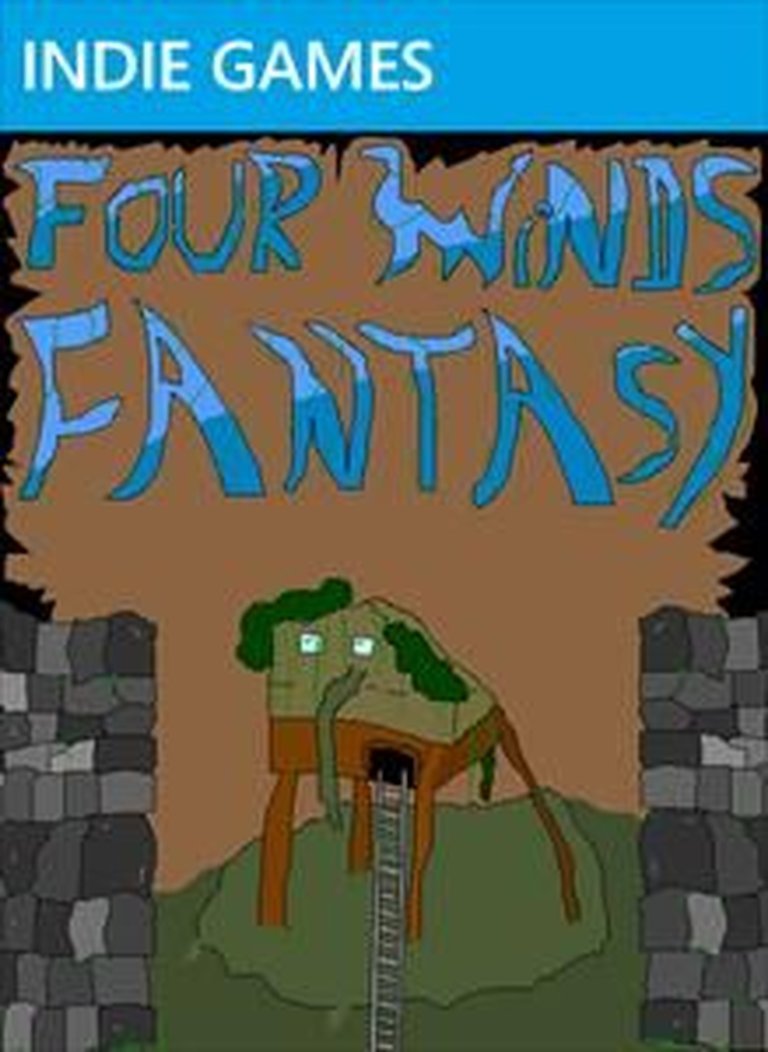
Four Winds Fantasy is a surreal action-RPG where an old man, shunned by his village, ventures into the town and a nearby cave to find his missing son. Set in a nightmarish world with crude graphics, abstract dialogue, and deranged environments, the game blends experimental storytelling reminiscent of Yume Nikki and the Mother series. Despite its challenging collision detection and minimal health system, the short experience offers multiple endings and replayability through its warped, contemplative design.
Gameplay Videos
Where to Buy Four Winds Fantasy
Four Winds Fantasy Free Download
Four Winds Fantasy Guides & Walkthroughs
Four Winds Fantasy Reviews & Reception
hardcoregaming101.net : It’s hard to tell if it’s a genuine masterpiece or a mediocre failure, but it’s worth giving a shot.
Four Winds Fantasy: Review
Introduction
In the sprawling, often sanitized landscape of modern AAA gaming, few titles dare to be as unapologetically strange and artistically confrontational as Four Winds Fantasy. This 2011 action-RPG, initially a humble Xbox Live Indie Games release, has transcended its origins to become a cult phenomenon—a digital enigma that balances jarring roughness with profound thematic depth. Developed by the enigmatic duo of BankBank and GHXYK2 under the banner of QUIMDUNG (later renamed QUiKDiNG), the game thrusts players into the shoes of an ostracized old man searching for his vanished son in a nightmarish village and cave. Its legacy is not one of polished perfection but of deliberate, unsettling artistry. This review argues that Four Winds Fantasy is less a traditional game and more a surrealist manifesto—a deliberately flawed, viscerally abrasive experience that challenges players to confront existential dread through its abstract narrative, broken mechanics, and unapologetic anti-aesthetic.
Development History & Context
Four Winds Fantasy emerged from the fertile, if overlooked, ground of Xbox Live Indie Games (XBLIG) in October 2011. At a time when indie games were gaining traction but often adhered to minimalist or charming aesthetics (think Minecraft or Braid), QUIMDUNG’s vision was radically different. The studio—founded by BankBank and GHXYK2—operated with a microscopic budget and a defiant anti-corporate ethos. Their work, later rebranded QUiKDiNG (a cheeky nod to British slang), rejected industry norms, prioritizing raw expression over technical polish. The game’s 80 Microsoft Points price point underscored its disposable-yet-intentional design, mirrored in its later iOS and PC expansions (DX versions added character art and achievements).
Technologically, the game ran on the Xbox 360 alongside AAA titles like Vanquish and Gears of War, yet its visuals and soundscapes seemed engineered to clash with this context. The developers embraced the XBLIG platform’s lax constraints to craft something deliberately “garbage,” as Hardcore Gaming 101 put it. This was a response to an industry obsessed with photorealism and streamlined gameplay; Four Winds Fantasy felt like a middle finger to both. Its collision-detection glitches and monochrome, abstract visuals weren’t bugs but features—a rejection of the “playable movie” model dominating RPGs. In 2011, when the Mother series’ surrealism influenced Japanese RPGs, QUIMDUNG twisted that inspiration into a grotesque, noise-laden critique of genre conventions.
Narrative & Thematic Deep Dive
The plot is deceptively simple: an old man, shunned by his town, ventures into its depths when his son vanishes. Yet beneath this premise lies a labyrinth of symbolism and ambiguity. The village is a character unto itself, with “fucked-up architecture” (HG101) and inhabitants delivering dialogue that is simultaneously profound and nonsensical. Lines like “The winds whisper to those who listen, but scream at those who don’t” (Steam) echo the Mother series’ quirky wisdom but descend into paranoia, reflecting the protagonist’s fractured psyche. Characters are grotesque caricatures—their pixelated faceset animations shifting between pity and malice—mirroring the game’s tonal whiplash.
Thematic richness lies in its exploration of isolation and existential dread. The old man’s quest is a metaphor for confronting societal rejection: the cave represents the unconscious, while the town embodies repressed collective guilt. Multiple endings (three in total) force players to interpret outcomes from tragic to absurdist, with one ending suggesting the son’s disappearance was a self-imposed escape from paternal oppression. Abstract dialogue (“The only truth is that there is no truth“) and the game’s deliberately obtuse lore (e.g., enigmatic “Winds” that guide the protagonist) invite parallels to Yume Nikki’s dream logic. It’s a game that weaponizes incomprehension, demanding players find meaning in chaos—a direct rebuke to RPGs’ hand-holding narratives.
Gameplay Mechanics & Systems
As an action-RPG, Four Winds Fantasy’s mechanics are deceptively simple yet maddeningly complex. Combat is a frantic, glitchy affair: the protagonist wields a basic sword against cave-dwelling “deranged” foes (HG101), with health limited to three hearts and scarce healing items. The real challenge stems from its notoriously poor collision detection, where grazing walls or enemies triggers unintended damage—a flaw thatHG101 calls “terrible” but acknowledges as an exploitable feature. Speedrunners discovered that hugging walls grants a movement boost, turning the game into a masochistic race against time. This transforms gameplay from a traditional dungeon crawl into a test of patience and glitch mastery.
Character progression is minimal, with no traditional leveling; skill comes from mastering the game’s quirks. The UI, a jumble of jagged fonts and clunky menus, amplifies the oppressive atmosphere. Replays are incentivized by three endings, each requiring nuanced exploration (e.g., ignoring certain NPCs or bypassing bosses). The 2022 Steam edition added leaderboards and achievements, reframing the experience as an “esports speedrunning Action RPG” (Steam)—a tongue-in-cheek nod to how its flaws birthed a competitive subculture. Ultimately, the gameplay embodies the developers’ ethos: it’s “simple but deep” (Steam), rewarding those who embrace its imperfections.
World-Building, Art & Sound
The game’s world is a diorama of surreal dread. The village, a claustrophobic maze of impossible angles and shifting perspectives, feels like a fever dream. HG101 describes it as “hideous, simplistic, colorful, deformed, strange, disturbing”—a palette of vomit greens, sickly pinks, and bruised purples that clashes violently with the cave’s muted browns. Enemies are abstract horrors: floating, faceless entities and glitching, pixelated aberrations that defy biological logic. This isn’t a world to explore but to endure, with no NPCs offering exposition beyond cryptic monologues.
Sound design is the game’s most potent weapon. The title theme is “soothing,” HG101 notes, but dungeon tracks blend “cheesy keyboard tunes” with “unsettling noise,” creating a “blend that borders on the inaudible.” Sound effects—grating sword clashes and distorted footsteps—erode sanity, while silence punctuates moments of unease. This auditory assault is intentional, forcing players to feel the protagonist’s isolation. The art’s primitivism isn’t accidental; it’s a rejection of conventional beauty, using crude visuals to amplify the narrative’s themes of alienation. Together, art and sound forge a “nightmarish feel” (MobyGames) that lingers long after the credits roll.
Reception & Legacy
Upon its 2011 debut, Four Winds Fantasy polarized audiences. Critics like Brandon Sheffield (Insert Credit) called it “fantastically bizarre and quite difficult,” while Danny Cowan (GameSetWatch) admitted, “I don’t quite understand what’s going on, but I like what I’ve played.” Commercial success was modest, buoyed by its low price point and cult curiosity. The game’s true legacy, however, emerged retrospectively. It became a touchstone for “kusoge” (so-bad-it’s-good) communities, celebrated for its unpolished audacity. HG101 framed it as an existential enigma: “Is this a parody of RPGs? An expression of hatred toward modern games? We’ll never know, and that’s what makes it worth playing.”
The 2022 Steam reinvigorated its reputation, earning a 100% positive rating from 8 reviews (Niklas Notes). Players praised its replayability and “psychedelic” (Steam) atmosphere. Influentially, it paved the way for indie RPGs that embrace roughness, like Caves of Qud and LISA, which similarly blend surrealism with mechanical flaws. Its greatest legacy is its fearless authenticity: in an era of algorithmically designed experiences, Four Winds Fantasy remains a testament to the power of unfiltered, uncompromising art.
Conclusion
Four Winds Fantasy is not a game one “beats” but endures. It stands as a defiant outlier in gaming history—a glitchy, abrasive masterpiece that prioritizes vision over polish. Its narrative, born of abstract horror and paternal grief, challenges players to find meaning in chaos. Its gameplay, marred by collision detection, becomes a feature, rewarding masochistic dedication. Its art and sound design weaponize ugliness to evoke profound unease. While critics and historians may debate its merits—Is it genius or folly?—its impact is undeniable. In a landscape of homogenized AAA titles, Four Winds Fantasy remains a vital, visceral reminder that sometimes the most resonant experiences aren’t polished diamonds, but raw, uncut gems. Its place in history is secure: not as a classic, but as a necessary, beautiful failure.