
- Release Year: 2015
- Platforms: Browser, Linux, Windows
- Publisher: Addicting Games, Inc.
- Developer: Hit the Crow
- Genre: Role-playing (RPG)
- Perspective: Diagonal-down
- Game Mode: Single-player
- Gameplay: Action RPG, Roguelike
- Setting: Fantasy
Description
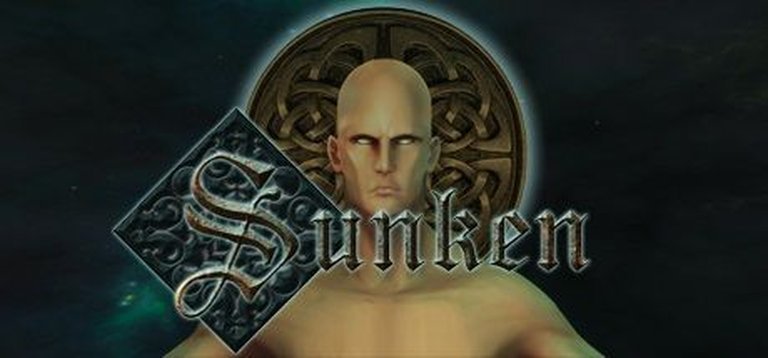
Sunken is a fantasy-themed action RPG with roguelike elements, developed by Hit the Crow and released in 2015. Players explore a fantastical world through direct control gameplay with a diagonal-down perspective, engaging in combat and progression mechanics typical of the genre. The commercial game is available as a download for Windows, Linux, and browsers, supporting gamepad, keyboard, and mouse inputs for single-player adventures.
Where to Buy Sunken
PC
Sunken Guides & Walkthroughs
Sunken: Review
Introduction
In the crowded landscape of indie action RPGs and roguelikes, Sunken (2015) emerges as a defiantly atmospheric and unforgiving descent into darkness. Developed by Hit Crow—a two-person studio billing itself as “hardcore gamers”—this Unity-powered title marries the loot-driven progression of Action RPGs with the brutal permadeath mechanics of roguelikes. Yet it carves its own niche through an obsessive commitment to atmosphere, narrative immersion, and survivalist tension. While it never achieved mainstream acclaim, Sunken remains a cult favorite for players seeking a punishing yet contemplative dungeon-crawling experience. This review dissects its legacy, dissecting how its unyielding design philosophy creates both brilliance and frustration, cementing its place as a testament to indie ambition.
Development History & Context
Sunken arrived in December 2015, an era when indie darlings like Darkest Dungeon and Dead Cells were redefining genre boundaries. Hit Crow’s vision was explicitly anti-mainstream: to craft a game where “survival, not speed,” was paramount (ModDB). Built on Unity, the team faced resource constraints but leveraged them as a core design choice. Unlike procedurally generated rivals, they opted for static dungeon layouts to avoid “generic-looking levels” with limited assets (ModDB). This focus on handcrafted environments, however, came at the cost of asset reuse—a trade-off that would later haunt the game’s reception.
The studio’s identity as “hardcore gamers” permeated Sunken’s DNA. In early announcements, they emphasized permadeath and unapologetic difficulty, framing the game as a “marriage of genres” that rejects contemporary trends of accessibility (Steam). This ethos reflected a broader mid-2010s indie trend: rejecting AAA simplification for niche, demanding experiences. Yet Sunken also stood apart by weaving narrative depth into its hardcore framework, a rare ambition for a small studio. Its release on Steam in Early Access (later expanded to Linux) positioned it as a cult proposition—rewarding patience over spectacle.
Narrative & Thematic Deep Dive
Sunken’s narrative is a masterclass in atmospheric storytelling, eschewing exposition for environmental revelation. Set in an “eerie dungeon out of this world,” the game unfolds through lore books scattered across levels (Steam). These texts—written in a Gothic, first-person voice—chronicle the dungeon’s history, the protagonist’s sins, and the creeping corruption that festers below. Themes of guilt, redemption, and cosmic indifference permeate the text. One entry describes a sinner’s plea: “The walls are my confessional, the dark my absolution. Yet here I rot, unburdened and unrepentant” (implied by mature themes in Steam description). The story demands active engagement; players piece together lore fragments to understand the protagonist’s fall from grace and the dungeon’s eldritch nature.
This approach mirrors Lovecraftian traditions of “cosmic horror,” where sanity frays in the face of the incomprehensible. The static dungeons themselves become narrative devices—their repeating layouts symbolizing cyclical damnation. Yet the game avoids overt Lovecraftian tropes, instead focusing on psychological horror. The protagonist is never named, a blank slate for player projection, while the dungeon’s architecture whispers of forgotten pacts and irreversible consequences. As the ModDB developers noted, the narrative is “not spoon-fed”; it rewards those who linger, read, and endure.
Gameplay Mechanics & Systems
Sunken’s core loop is a relentless cycle of descent, combat, and crafting—each layer deeper than the last. Its systems interlock to create a high-stakes, high-tension experience:
Combat & Progression
Combat is visceral and unforgiving. With no “attack speed” or “movement speed” stats, precision and positioning dominate (ModDB). Players face randomized enemies—from lowly zombies to elite “Impalers” flanked by “Tormentors”—requiring adaptability. Progression occurs via stat allocation (Might, Dexterity, Vitality, Intellect), with 5 points per level. However, levels reset on death, forcing strategic stat investment. Abilities are not unlocked through leveling but crafted from recipes, a radical twist that emphasizes resource management over grinding.
Crafting & Resource Management
Crafting is the game’s beating heart. Occurring exclusively in “crafting rooms” on each level, it transforms raw materials into weapons, armor, and abilities. Recipes are found like loot, turning dungeon exploration into a scavenger hunt for survival tools. This system creates tension: hoard materials for gear or spend them immediately? The lack of vendor interaction amplifies isolation, making every decision feel weighty. As the Steam description notes, “survival is the goal, not stomping content.”
Permadeath & Randomization
Permadeath is the game’s defining feature. Death strips levels and equipment, but “unlocked skills persist” (ModDB). This creates a meta-progression loop where players slowly build a resilient build over multiple runs. While levels are static, monster and loot randomization ensures each playthrough feels unique. Yet this design choice had trade-offs: asset reuse led to repetitive layouts, frustrating players who craved more environmental variety (Steam reviews).
UI & Quality of Life
The minimalist UI favors function over flair, with a top-down perspective and direct controls. However, the lack of quality-of-life features—like auto-loot or map markers—heightens immersion at the cost of convenience. Players must manually track inventory, recipes, and dungeon layouts, demanding meticulous attention.
World-Building, Art & Sound
Sunken’s world is a triumph of atmospheric constraints. The static dungeons, born of developer pragmatism, become a virtue. Levels drip with gothic dread: crumbling stone walls, flickering torchlight, and shadowy corridors that warp into grotesque shapes when sanity dips. The art direction prioritizes mood over detail, using limited assets to create a cohesive, oppressive ambiance. As the ModDB team noted, the goal was to make atmosphere “sink into your bones.”
Sound design amplifies this unease. A haunting, minimalist score—comprised of dissonant piano notes and distant whispers—echoes through the dungeon, punctuated by the clatter of combat and the drip of water. Environmental sounds like creaking floors or skittering enemies heighten paranoia, making silence its own threat. The absence of a traditional soundtrack forces players to internalize the dungeon’s soundscape, deepening immersion.
This synergy of art and sound creates a palpable sense of dread. The dungeon feels less like a level and more like a living entity—breathing, corrupting, and waiting for the player to falter. It’s a masterclass in environmental storytelling, where every texture and sound byte reinforces the game’s themes of decay and damnation.
Reception & Legacy
Sunken launched to muted fanfare. On Steam, it earned a “Mixed” 54% positive rating from 57 reviews, with players divided between its atmosphere and its flaws (Steam). Critics praised its commitment to hardcore design but lamented its technical shortcomings. One Steam user lauded the “immersive dread” but criticized “repetitive house layouts” and “unfun combat,” sentiments echoed by the Games Reviews 2010 assessment, which scored it 8/10 but noted its “brutal” difficulty.
Commercially, Sunken remained a niche title. Its player base was small but dedicated, with an estimated 14.9-hour playthrough time (Niklas Notes). It never spawned a sequel, yet its legacy persists in discussions about permadeath and narrative-driven roguelikes. It influenced titles like Sproggiwood (2015) by proving that atmosphere and challenge could coexist with minimalist budgets.
Critically, it remains underdiscussed, overshadowed by contemporaries like Crypt of the NecroDancer. Yet its design choices continue to resonate. The blend of static worldbuilding and randomized systems is now seen as a precursor to games like Return of the Obra Dinn (2017), which use environmental detail to compensate for technical limits. For players, it’s a cult classic—a reminder that not all games need polish to be memorable.
Conclusion
Sunken is a flawed masterpiece, a game that dares players to endure rather than entertain. Its genius lies in its unyielding vision: a dungeon crawler where atmosphere, narrative, and permadeath intertwine into a singular, oppressive experience. The static levels, though repetitive, become a metaphor for inescapable fate, while the crafting system turns survival into a dark art. Yet its technical limitations—reused assets, punishing combat—prevent it from reaching greatness.
In the end, Sunken is not a game for everyone. It demands patience, resilience, and a tolerance for ambiguity. But for those who embrace its challenge, it offers a rare reward: a descent into darkness that feels both personal and eternal. It stands as a testament to indie ambition, proving that even with limited resources, a small studio can create a world that lingers in the mind long after the final death screen. For fans of hardcore dungeon crawlers and atmospheric narratives, Sunken is a sunken treasure worth salvaging.