
- Release Year: 2018
- Platforms: Android, iPad, iPhone, Macintosh, Nintendo Switch, PlayStation 4, Windows, Xbox One, Xbox Series
- Publisher: Klassefilm, Nakana sp. z o.o.
- Developer: Klassefilm, Those Eyes ApS
- Genre: Adventure
- Perspective: 3rd-person (Other)
- Game Mode: Single-player
- Gameplay: Graphic adventure, Puzzle elements
- Setting: Autobiographical, Cold War
- Average Score: 71/100
Description
Cosmic Top Secret is an innovative adventure game with puzzle elements, developed by Those Eyes ApS and Klassefilm, and published by Klassefilm and Nakana sp. z o.o. Released in 2018 across multiple platforms including Windows, macOS, iOS, Android, and later expanded to PlayStation, Xbox, and Nintendo Switch in 2021, the game stands out for its unique approach to storytelling. It seamlessly blends autobiographical and historical narrative into an interactive experience that goes beyond typical documentaries, presenting a personal story through gameplay mechanics. The game won the prestigious Culture Award at IndieCade in 2017 for its distinctive method of weaving documentary elements into an engaging adventure.
Gameplay Videos
Where to Buy Cosmic Top Secret
PC
Cosmic Top Secret Patches & Updates
Cosmic Top Secret Guides & Walkthroughs
Cosmic Top Secret Reviews & Reception
metacritic.com (72/100): Cosmic Top Secret is a unique and novel way to use video games to create an experience that no book or documentary format could even come close to achieve.
keengamer.com : The story worked well with the surreal art style, allowing you to experience run-of-the-mill conversations with your parents and their old colleagues, and then diving into surreal video game tropes.
monstercritic.com (71/100): If you want to play something out of the ordinary, you certainly can’t go wrong with the very intriguing Cosmic Top Secret.
Cosmic Top Secret: Review
Introduction
In the vast landscape of interactive entertainment, few games dare to tread the delicate ground between personal memoir and historical documentation. Cosmic Top Secret, a 2018 autobiographical adventure from Danish studio Klassefilm, stands as a singular achievement in this regard. Based on the real-life investigation of director Trine Laier into her parents’ secret work for Danish Intelligence during the Cold War, it masterfully weaves archival footage, candid audio recordings, and surreal papercraft gameplay into a narrative tapestry that is both intimate and epic. Its legacy, cemented by wins at IndieCade (Culture Award) and IDFA DocLab (Digital Storytelling Award), positions it not merely as a game, but as a groundbreaking experiment in how interactive media can illuminate the hidden corners of history and the human heart. This review argues that Cosmic Top Secret transcends traditional documentary formats by immersing players directly in the emotional and investigative journey of its creator, creating an unparalleled experience of empathy and historical revelation.
Development History & Context
Born from a serendipitous meeting at the Nordic Game conference seven years prior to release, Cosmic Top Secret emerged as a collaboration between Copenhagen-based film studio Klassefilm and Those Eyes, the animation company co-founded by director Trine Laier. Laier, with roots in animation since the 1990s, sought to adapt her personal investigation into her parents’ secretive careers—work that involved NATO’s highest security classification (“Cosmic Top Secret”)—into an interactive medium. The project’s genesis was unusual: it began as a thesis film at the National Film School of Denmark in 2012, later evolving into a full-fledged game with funding from the Danish Film Institute and Creative Europe.
Technologically, the game leveraged the Unity engine to achieve cross-platform viability (Windows, macOS, Android, iOS, with subsequent console releases in 2021). This choice allowed the team to focus on their ambitious vision rather than wrestling with proprietary engine constraints. Crucially, Laier and producer Lise Saxtrup rejected the conventional “first write the story, then build the game” development model. Instead, they adopted a radical iterative approach, prototyping mechanics and narrative elements simultaneously through game jams. This fluid process allowed ideas—like the game’s signature papercraft aesthetic and flick-rolling movement—to organically emerge from the core themes of fragility, secrecy, and discovery.
The gaming landscape in 2018 was ripe for such an experiment. The indie scene was flourishing, with titles like What Remains of Edith Finch and Night in the Woods demonstrating the medium’s capacity for nuanced, personal storytelling. Cosmic Top Secret arrived at a cultural moment where games were increasingly being recognized not just as entertainment, but as valid vehicles for serious, real-world narratives. Its unconventional blend of documentary and gameplay was both a product of this environment and a catalyst for pushing its boundaries.
Narrative & Thematic Deep Dive
The narrative of Cosmic Top Secret is a labyrinth of personal and historical revelation. Players guide “T,” a fictionalized avatar of Trine Laier, as she navigates six distinct levels representing her quest to uncover the truth about her parents’ Cold War-era espionage. The plot unfolds through a mosaic of real sources: over 100 hours of Laier’s own audio recordings of interviews with her parents, colleagues, and intelligence officials; declassified documents; and archival footage. This raw material is interwoven with fictionalized interactions, creating a narrative that is both meticulously researched and emotionally resonant.
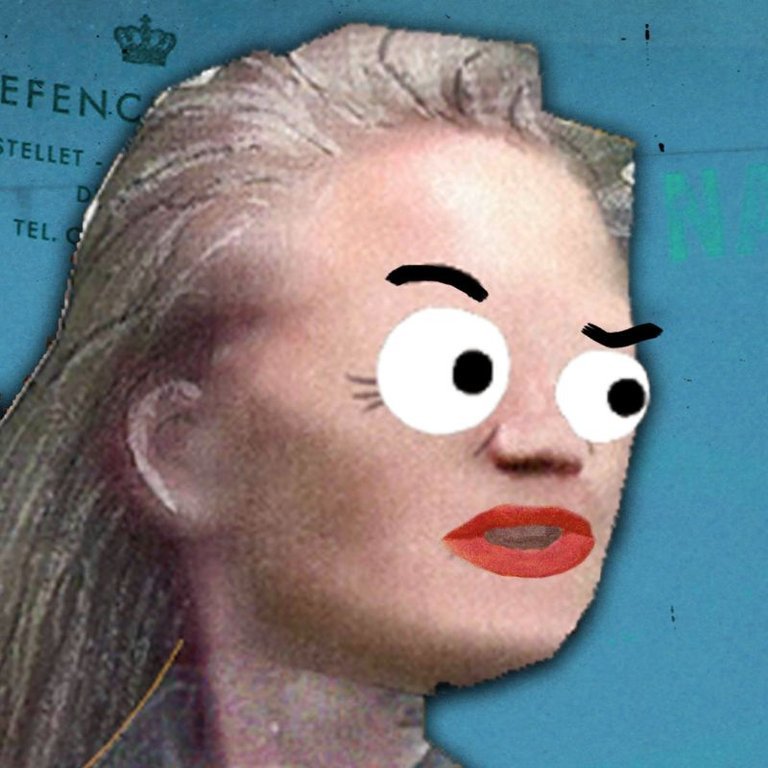
The characters are drawn from a real cast of over 30 individuals, including Queen Margrethe II of Denmark, former agents, and Laier’s own family. Their dialogue ranges from the mundane—discussions about road trips and aging—to the extraordinary, like recounting the absurd anecdote of Danish Intelligence installing extra pipes in Nikita Khrushchev’s hotel during his 1964 Copenhagen visit to collect stool samples. These characters are brought to life as 2D paper puppets with signature googly eyes—a solution Laier stumbled upon during a conference talk, finding that the large, expressive eyes conveyed emotions far more effectively than traditional mouth animations and allowed for cost-effective reuse across the diverse cast.
Thematic depth permeates every level. At its core is the exploration of “The Big Circle” (the geopolitical machinations of the Cold War) and “The Little Circle” (Laier’s personal relationship with her estranged parents). The game masterfully interrogates the tension between national secrecy and familial intimacy, using the intelligence concept of “need to know” as a metaphor. T’s journey mirrors the trauma of confronting fragmented memories; for instance, a level based on an orienteering exercise where her father loses his leg becomes a poignant metaphor for the fragility of both parental authority and historical memory. The narrative also grapples with the psychological weight of the Cold War—not just through espionage tales, but through the subtle, pervasive paranoia that seeped into everyday life, a feeling recreated through the game’s unsettling soundscapes and disorienting level design.
Gameplay Mechanics & Systems
Cosmic Top Secret defies conventional genre classification, blending exploration, light puzzle-solving, and collection into a cohesive, if idiosyncratic, whole. The core gameplay loop revolves around guiding T through surreal papercraft environments to collect clues, complete dossiers, and unlock narrative segments. Movement is central to the experience: T morphs into a crumpled paper ball that players flick, roll, or glide across the landscape, a mechanic that evokes both childhood playfulness and the fragility of the secrets she seeks.
Innovative systems underpin this exploration. Throwing paper grenades can reveal hidden passages, while “nightfall” mechanics introduce a risk-reward dynamic: objects become easier to spot in the dark, but the disorienting environment heightens the feeling of vulnerability and uncertainty—a direct reflection of the Cold War climate. The game’s structure is modular, with each level representing a side of a cube, divided into nine fields requiring nine objects to complete. This rigid framework, established early in development, paradoxically allows for surprising creativity. Approximately 50% of the content is optional, such as collecting ferrite cores for the “Bits” dossier to unlock video segments on cryptography, or pursuing anecdotes like “Khrushchev’s Poop.” This design empowers players to tailor their depth of engagement with the historical material.
However, the gameplay is not without flaws. Critics noted finicky controls during platforming segments, where precision is often required but difficult to achieve. The rolling mechanic, while thematically resonant, can feel imprecise, leading to frustrating falls. Pacing is another contentious element; the game prioritizes narrative and atmosphere over action, resulting in a deliberate, sometimes slow, pace that may challenge players accustomed to more dynamic experiences. The UI, mimicking a dossier or scrapbook, is thematically appropriate but can feel cluttered, overwhelming players with documents and collectibles.
World-Building, Art & Sound
The world of Cosmic Top Secret is a triumph of imaginative design, transforming the Cold War’s grim reality into a tactile, dreamlike papercraft diorama. Environments evoke a child’s storybook—torn cardboard, scribbled annotations, and collage-like textures—yet are infused with an undercurrent of unease. This aesthetic choice is deliberate, blending nostalgia with the uncanny to mirror the game’s themes of memory and hidden truths. Levels shift from mundane settings like family homes to abstract representations of intelligence operations, such as a world constructed from punched paper tapes where players navigate “bug-filled” underworlds. The art direction, a hybrid of 2D cutouts and 3D spaces, creates a sense of depth and immersion that feels both handmade and otherworldly.
Sound design and music are equally integral to the atmosphere. Composer Bjørn Svin’s electronic score is both ethereal and unsettling, with live sessions conducted as the team played early builds—tracks like “Underverdenen” (Underworld) were composed in real-time during gameplay. Sound designer Anne Gry Friis Kristensen layered authentic archival audio—whispers, footsteps, distant machinery—over Svin’s compositions, immersing players in the aural textures of espionage. The juxtaposition of the whimsical art style with these serious, often dissonant, soundscapes creates a powerful cognitive dissonance. Players are simultaneously charmed by the googly-eyed puppets and unsettled by the weight of the history they uncover, ensuring that the emotional impact lingers long after the credits roll.
Reception & Legacy
Upon its 2018 release, Cosmic Top Secret received a mixed-to-positive critical reception. It holds a Metascore of 72, with praise for its innovative storytelling (“a fascinating means of storytelling,” Indie Game Reviewer) and emotional depth, balanced by criticism of its controls (“the moments between the engrossing revelations often feel clunky,” Finger Guns). On Steam, it boasts a 94% positive user rating, reflecting a dedicated audience drawn to its unique premise. Commercially, it performed modestly but gained significant traction after its 2021 console ports, expanding its reach beyond PC and mobile gamers.
Its legacy, however, extends far beyond sales figures. The game has become a case study in autobiographical game design, frequently cited for demonstrating how personal narratives can achieve unparalleled intimacy through interactivity. It inspired a life-size event at the Cold War Museum of Denmark, translating its interactive documentary ethos into physical space. Academically, it is analyzed for its pioneering use of “procedural rhetoric”—how gameplay mechanics (like the “need to know” exploration) reinforce thematic content. It has influenced a new wave of developers to explore non-traditional sources, including family archives and oral histories, for game narratives. As historian Adam Chapman notes, Cosmic Top Secret stands as a testament to games’ potential as “powerful tools for historical education and empathy,” setting a benchmark for future work in the interactive documentary space.
Conclusion
Cosmic Top Secret is a flawed yet profound masterpiece that redefines what video games can be. Its fusion of real-life investigation, surreal artistry, and innovative gameplay creates an experience that is both intellectually stimulating and emotionally devastating. While its controls and pacing may deter some, the game’s core achievement lies in its ability to make players feel the weight of history—not as abstract facts, but as lived, remembered, and suppressed truths. It stands as a landmark in interactive storytelling, proving that the medium can be a vessel for the most personal and historically resonant narratives. In a world saturated with fictional epics, Cosmic Top Secret dares us to ask: do we really know those closest to us? And in answering that question, it carves an indelible place for itself in the annals of video game history as a work of art, a document, and a deeply human journey.