
- Release Year: 2001
- Platforms: Windows
- Publisher: Real Networks, Inc.
- Developer: LithTech, Inc.
- Genre: Action, Driving, Racing
- Perspective: 1st-person
- Game Mode: Online PVP, Single-player
- Gameplay: Arcade, giant robot, Mecha, Shooter
Description
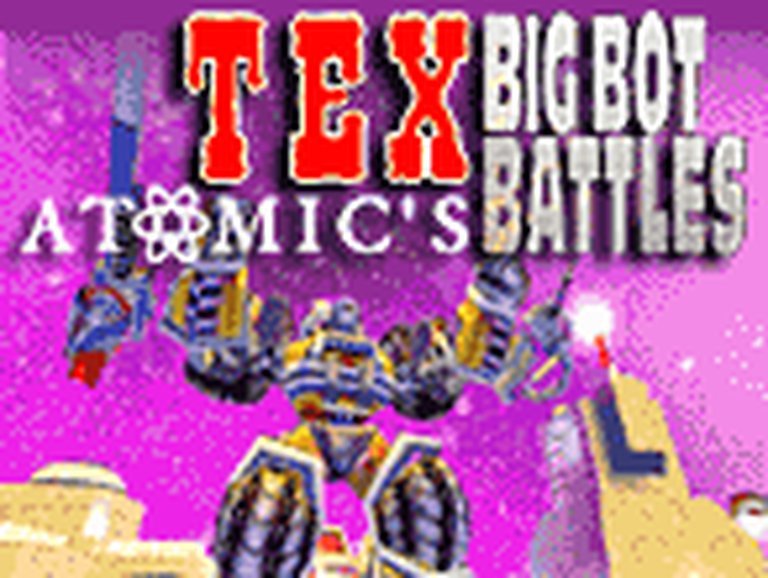
Tex Atomic’s Big Bot Battles is an action-packed arcade shooter set in a world of giant robot combat, blending professional wrestling and monster truck events with American Gladiator-style challenges. Players pilot customizable mecha bots, wielding ten unique weapons across four distinct BattleGame events in single-player or head-to-head multiplayer modes. The game features vibrant anime-inspired visuals and utilizes the LithTech Talon engine for its fast-paced vehicular combat experience.
Gameplay Videos
Tex Atomic’s Big Bot Battles Free Download
Tex Atomic’s Big Bot Battles Reviews & Reception
retro-replay.com : Tex Atomic’s Big Bot Battles delivers a frantic and satisfying blend of sports entertainment and mech combat.
Tex Atomic’s Big Bot Battles: Review
Introduction
In the pantheon of niche gaming curiosities, few titles capture the unbridled absurdity of early-aughts experimental design quite like Tex Atomic’s Big Bot Battles. Envisioned as a collision of championship wrestling, monster truck rallies, and American Gladiator-style obstacle courses, this 2001 arena brawler promised over-the-top mech combat with a side of digital distribution novelty. Developed by the LithTech division of Monolith Productions (fresh off Aliens Versus Predator 2) and published as a flagship title for RealArcade’s fledgling digital service, TABBB arrived with a bold premise: customizable robot duels in arenas littered with electrified posts and spinning hammers. Yet beneath its explosive veneer lies a fascinating artifact—a snapshot of an era when digital storefronts were just taking root and mech combat games were still finding their footing. While critical reception was lukewarm and its legacy remains overshadowed by its creators’ more celebrated works, TABBB endures as a cult classic that perfectly encapsulates the chaotic, experimental spirit of early 2000s PC gaming.
Development History & Context
Studio and Vision
Born from the LithTech engine powerhouse at Monolith Productions (responsible for Blood, No One Lives Forever, and eventually Middle-earth: Shadow of Mordor), TABBB was a deliberate departure from the studio’s narrative-driven shooters. Lead Designer Matthew J. Norton and Technical Producer Brian Goble spearheaded a vision to merge vehicular combat with arcade-sports spectacle. The result was a “giant robot sport-fighting game” where players piloted customizable mechs through four distinct BattleGame events, blending real-time strategy with brawler chaos.
Technological Constraints and Gaming Landscape
Released on April 15, 2001, TABBB was a product of its time’s technological limitations and burgeoning digital trends. Built on the LithTech Talon engine, it required modest hardware: a Pentium II 333MHz CPU, 64MB RAM, and a basic graphics card—reflecting the era’s pre-DX9 standard. Its real significance, however, lay in its distribution model. As a launch title for RealArcade, TABBB was one of the first major PC games sold exclusively via digital download, a stark contrast to the physical media dominance of the late ’90s. This move positioned it alongside early experiments in digital storefronts, foreshadowing platforms like Steam. The gaming landscape of 2001 was also saturated with arena shooters (Quake III, Unreal Tournament) and burgeoning mech titles (e.g., MechWarrior 4), but TABBB’s hybrid approach—melding customization with arcade-style hazards—felt refreshingly unique, even if imperfectly executed.
Narrative & Thematic Deep Dive
Plot and Characters
TABBB’s narrative is intentionally threadbare, serving as a framework for its combat spectacle. Players assume the role of an unnamed pilot ascending the “Big Bot BattleGames” tournament circuit—a cross between pro wrestling and demolition derbies. The campaign spans nine circuits, including the “North American Circuit” and “SlovBloc Circuit,” where players face progressively tougher AI opponents. Boss battles pit pilots against champions like “The Comet,” each with signature weapons and entrance animations. While devoid of complex lore, the game leans into its sports-entertainment roots, with rival factions taunting players via arena intercoms and animated cutscenes depicting garage-to-stardom ascents.
Dialogue and Themes
Dialogue is sparse, functional, and steeped in campy bravado. Rival bots exchange taunts like “Prepare for a world of hurt!” before matches, reinforcing the game’s pro-wrestling ethos. Thematically, TABBB explores the blurring lines between sport and violence, framing mech combat as a sanitized, commercialized spectacle. Customization—swapping plasma blades for missile pods or reallocating power from shields to thrusters—mirrors real-world sports strategy, where load-outs and tactics define success. The underlying theme is one of controlled chaos: arenas are deathtraps, yet victories are celebrated as athletic triumphs, not acts of destruction.
Gameplay Mechanics & Systems
Core Loops and Combat
TABBB’s gameplay is a frantic, physics-driven mashup of third-person brawling and vehicular combat. Matches unfold in dynamic arenas where environmental hazards—spinning sawblades, shock grids, and spring-loaded bumpers—force constant adaptation. Combat revolves around ten customizable weapons, from rapid-fire plasma cutters to area-of-effect rocket launchers, each with distinct cooldowns and ammo limits. Movement is weighty and deliberate, with bots feeling like hulking machines rather than agile fighters, emphasizing tactical positioning over twitch reflexes.
Customization and Progression
Depth lies in its robust customization system. Players select from nine base chassis, each with unique speed, armor, and agility ratings. Between bouts, parts can be swapped: heads targeting weak points, bodies affecting durability, and legs altering mobility. Power allocation adds a strategic layer—shields, thrusters, and weapon systems can be balanced mid-campaign. The single-player progression through nine campaigns (e.g., “Comet Cup”) unlocks new parts, while multiplayer modes like “Domination” and “Atomic BattleBall” offer objective-based variety.
UI and Multiplayer
The interface, utilitarian but effective, streamlines bot configuration and match selection. Multiplayer supports two-player head-to-head via internet or LAN, with matches devolving into tense cat-and-mouse games where wall-bounces and weapon timing decide victors. However, the reliance on RealArcade for online play limited accessibility, and the absence of bots for offline skirmish felt like a missed opportunity.
World-Building, Art & Sound
Visuals and Atmosphere
TABBB’s art direction leans into its anime/manga influences, with bold, cel-shaded mechs sporting exaggerated proportions and glowing energy cores. Arenas are vibrant but generic—industrial warehouses, desert canyons—supplemented by interactive hazards that pop visually: spinning maces shower sparks, and shock grids flash with electricity. Particle effects are serviceable, with smoke trails and muzzle flashes enhancing combat feedback, though textures and lighting are rudimentary by 2001 standards. The LithTech engine handles chaotic brawls admirably, maintaining a steady frame rate even amid explosions.
Sound Design
Sound, led by James Ackley and Brian Pamintuan, is TABBB’s unsung strength. Weapon impacts resonate with satisfying clangs and booms, while arena ambience—crowd roars, grinding machinery—immortalizes its sports-entertainment vibe. The synth-heavy soundtrack pulses with adrenaline, and taunts delivered by rival pilots inject personality into otherwise mechanical combat.
Reception & Legacy
Critical and Commercial Response
Upon release, TABBB received mixed-to-mild reviews. The sole critical metric available—a 65% score from Absolute Games (AG.ru)—praised its concept but criticized its execution, noting: “Projects like TABBB fall like a filled water balloon from the twelfth floor—common but uninspired.” Player ratings averaged a tepid 3.4/5, with complaints about repetitive gameplay and shallow AI. Commercially, its digital-only model hindered visibility, though RealArcade’s platform ensured niche penetration.
Evolution of Reputation and Influence
Over time, TABBB’s reputation has shifted from dismissed curiosity to cult favorite. Its legacy is twofold: as a technical showcase for the LithTech engine (later used in Tron 2.0 and F.E.A.R.) and as a pioneer in digital distribution. While it never spawned sequels or imitators, its DNA can be seen in later mech hybrids like Roboforge (2002), which expanded on its customization ethos. Monolith Productions’ subsequent focus on narrative-driven action (Middle-earth: Shadow of War) left TABBB as a footnote, but its unapologetic embrace of arcade chaos resonates with modern fans of titles like Fall Guys or Rocket League, proving that its core concept—customizable, physics-based arena combat—was ahead of its time.
Conclusion
Tex Atomic’s Big Bot Battles is a game of glorious contradictions: a deep, customizable mech brawler wrapped in a thin arcade shell; a digital distribution pioneer saddled with clunky netcode; a campy spectacle with surprisingly nuanced combat. Its flaws—repetitive arenas, dated visuals, and a reliance on defunct multiplayer infrastructure—are undeniable, yet its ambition and unbridled energy transcend its technical limitations. For historians, TABBB is a vital artifact documenting the experimental phase of digital gaming and Monolith Productions’ versatility beyond narrative epics. For players, it remains a hidden gem of chaotic, customizable mayhem. While it may never achieve the acclaim of its creators’ masterworks, TABBB stands as a testament to the era’s boundless creativity—a flawed, unforgettable battle royale that, for its brief moment, proved even a water balloon could soar.
Verdict: A flawed but fascinating relic of early digital gaming, Tex Atomic’s Big Bot Battles deserves recognition for its bold concept and its place in the evolution of mech combat and digital distribution. For fans of niche arena brawlers, it’s a chaotic, customizable blast from the past. For historians, it’s a vital footnote in the story of PC gaming’s digital frontier.