
- Release Year: 2016
- Platforms: PlayStation 4, Windows
- Publisher: Rising Star Games Inc., Rising Star Games Ltd.
- Developer: DRACUE Co., Ltd.
- Genre: Action
- Perspective: Side view
- Game Mode: Single-player
- Gameplay: Shooter
- Setting: Futuristic, Sci-fi
- Average Score: 68/100
Description
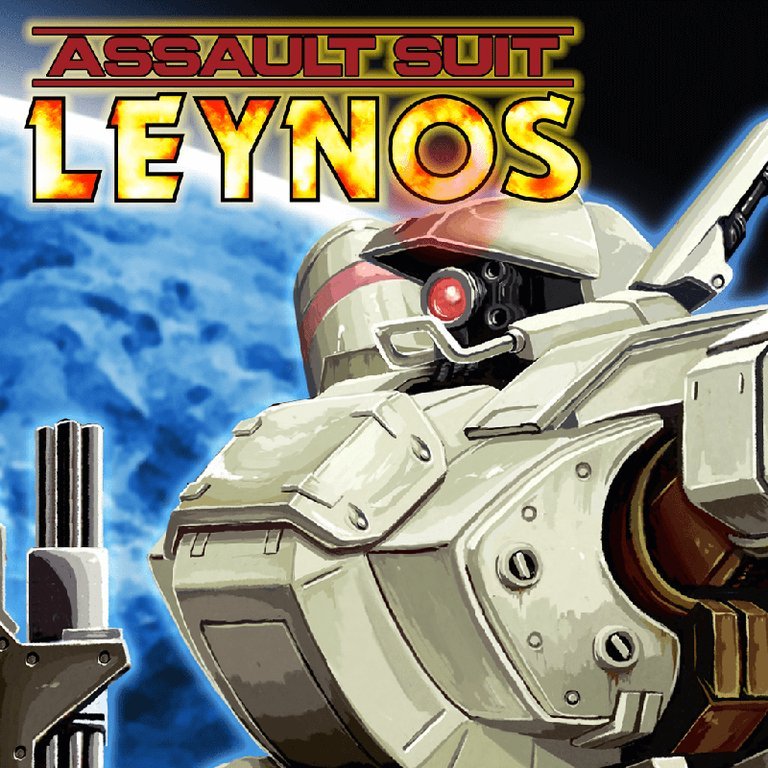
Assault Suit Leynos is a side-scrolling 2D action shooter set in a futuristic sci-fi world, featuring anime-style visuals and intense mech combat gameplay. Players pilot powerful assault suits through challenging levels filled with mechanized enemies, engaging in explosive battles that emphasize precision and strategy. Part of the classic Assault Suits series, the game was developed by DRACUE Co., Ltd. and published by Rising Star Games, originally released in 2016 for PlayStation 4 and Windows platforms.
Gameplay Videos
Where to Buy Assault Suit Leynos
PC
Assault Suit Leynos Free Download
Assault Suit Leynos Cracks & Fixes
Assault Suit Leynos Guides & Walkthroughs
Assault Suit Leynos Reviews & Reception
metacritic.com (67/100): Assault Suit Leynos is exactly what a remake should be. It takes everything that worked about the original and improves upon it with modern flourishes.
opencritic.com (69/100): Assault Suit Leynos is exactly what a remake should be.
fanboydestroy.com : For fans of the classic or those gamers who want a taste of old-school gaming as an education in patience and learning how to play over more guided game experiences, this storied shooter will keep you busy from the beginning and coming back for more.
Assault Suit Leynos Cheats & Codes
PC (Trainer v1.0)
Run the trainer and press the following keys during gameplay.
| Code | Effect |
|---|---|
| Numpad 0 | Unlimited Health |
| Numpad 1 | Unlimited Lives Allies |
| Numpad 2 | Unlimited Ammo |
| Numpad 3 | Unlimited Jetpack |
| Numpad 4 | Unlimited Score |
| Numpad 5 | Rapid Fire |
| Numpad 6 | Stop Time |
Assault Suit Leynos: A Retrospective on the 2015 Mech Shooter Remake
Introduction: A Classic Reawakened
In the annals of video game history, few franchises embody the unrelenting challenge and mechanical depth of the 16-bit era like the Assault Suit series. The 2015/2016 remake of Assault Suit Leynos—a reimagining of Masaya Games’ 1990 Sega Genesis classic (released as Target Earth in North America)—stands as a testament to the enduring appeal of hardcore run-and-gun shooters. Developed by Dracue Co., Ltd. and published by Rising Star Games, this HD overhaul bridges the gap between retro grit and modern polish, offering both veterans and newcomers a brutal yet rewarding experience. At its core, Assault Suit Leynos is not merely a nostalgic revival but a meticulously crafted homage that retains the soul of its predecessor while refining its execution. This review dissects the remake’s legacy, dissecting its narrative depth, punishing gameplay, artistic merits, and cultural impact to argue that it succeeds as both a time capsule and a contemporary masterpiece of mech warfare.
Development History & Context: From Genesis to PS4
The genesis of Assault Suit Leynos lies in the fertile creative landscape of 1990s Japan, where developer Masaya Games (NCS) pioneered a subgenre of mecha shooters distinguished by their cerebral complexity and unforgiving difficulty. The original 1990 title, known as Target Earth in the West, was a cult hit on the Sega Genesis, blending side-scrolling action with strategic loadout customization—a radical departure from the mindless carnage of contemporaries like Contra. However, its Western release was marred by censorship; a scene depicting a comrade burning in a planet’s atmosphere and romantic subplots were excised, diluting its dramatic impact. Fast-forward to 2015, when Dracue Software (the minds behind the cult favorite Gunhound EX) undertook the ambitious task of remastering the game for the PlayStation 4 and PC. Driven by a vision to “restore the soul” of the original, the team aimed to preserve its punishing mechanics while modernizing its presentation. Technical constraints were minimal compared to the 1990 hardware, yet the developers faced the challenge of balancing accessibility for modern audiences with the series’ signature difficulty. The result was a dual-mode structure: “Arcade Mode” offered a streamlined experience with new bosses, stages, and HD visuals, while “Classic Mode” replicated the original’s brutal challenge and retro soundtrack. Delays from a planned 2014/2015 release allowed the addition of Japanese voice-over and dynamic camera cuts, further elevating the remake’s cinematic ambitions. Against the backdrop of 2016’s indie renaissance—where titles like Shovel Knight and Hyper Light Drifter championed retro aesthetics—Assault Suit Leynos emerged as a niche but passionate tribute to an era where skill, not spectacle, defined greatness.
Narrative & Thematic Deep Dive: War, Legacy, and the Weight of Command
At its heart, Assault Suit Leynos weaves a sprawling space opera that transcends its run-and-gun trappings, exploring themes of retribution, existential dread, and the cyclical nature of violence. Set in 2201, humanity has colonized the solar system following the devastation of the Fourth World War, only to face annihilation from the enigmatic “Chron”—cyborg warriors emerging from deep space. The narrative masterfully subverts expectations, revealing the Chron as survivors of Earth’s failed Outer Space Expeditionary Party, a century-old mission abandoned by the very civilization they now seek to destroy. This twist reframes the conflict not as a simple alien invasion but as a tragic homecoming, exposing humanity’s capacity for cruelty and its cost. Player Rex, a stoic Assault Suit Wing commander, embodies the burden of leadership; his journey from Ganymede’s frozen wastelands to Earth’s ravaged cities and enemy outposts is a testament to war’s futility. Supporting characters like Leana, Rex’s love interest, add emotional weight, with their relationship restored in the remake after being downplayed in the censored Western original. Dialogue, delivered in Japanese with English subtitles, balances military jargon with poignant introspection, though critical text overlays during intense combat occasionally obscure objectives—a flaw noted in reviews. Thematically, the game interrogates the ethics of warfare: the Assault Suits themselves, twelve-foot-tall war machines, symbolize humanity’s violent evolution, while the Chron’s quest for vengeance mirrors humanity’s own destructive impulses. The narrative’s strength lies in its restraint; it avoids melodrama, letting the mech combat and environmental storytelling—like burning colonies and derelict space stations—convey the scale of the conflict. In doing so, Assault Suit Leynos elevates itself beyond a mere shooter, offering a haunting meditation on legacy and consequence.
Gameplay Mechanics & Systems: The Dance of Steel and Fire
Assault Suit Leynos’ gameplay is a masterclass in structured chaos, demanding mastery over its intricate mech systems while delivering visceral satisfaction. Core mechanics revolve around side-scrolling combat with subtle platforming elements, executed across eight meticulously designed stages. The player’s Assault Suit is a towering behemoth—slow yet powerful—requiring deliberate, tactical movement rather than nimble acrobatics. Six equipment slots dictate combat strategy, with 14 weapon types unlocked based on stage performance: machine guns for crowd control, shotguns for close-range devastation, rockets and bazookas for armored threats, and defensive tools like shields and jetpacks. This loadout customizability encourages experimentation, rewarding players who adapt to objectives—whether protecting convoys, destroying enemy cruisers, or annihilating specific unit counts. The 360-degree aiming system, lockable via L1, is pivotal for precision against towering bosses, though the absence of right-stick aiming (as noted by critics) creates a slight disconnect. Melee combat—a punch mechanic—is unexpectedly effective against swarming smaller units, adding a gritty, tactile layer to encounters. Difficulty is a defining feature: “Arcade Mode” softens the original’s brutality with regenerating health and streamlined checkpoints, while “Classic Mode” resurrects the Genesis era’s unforgiving design, including randomized enemy placements. Stages escalate in complexity, with later levels like Earth’s urban ruins becoming gauntlets of overwhelming firepower. Boss battles, though occasionally exploitable, demand pattern recognition and strategic weapon cycling via L2/R2. The progression system—tied to mission rankings—ensures replayability, as higher scores yield better gear for subsequent stages. Controls require adjustment; the jetpack, essential for dodging damage and navigating cliffs, feels weighty yet responsive. Ultimately, the gameplay loop excels by balancing accessibility in “Arcade Mode” with the purist satisfaction of “Classic Mode,” creating an experience that respects both new players and series veterans.
World-Building, Art & Sound: A Gritty Sci-Fi Canvas
The remake’s visual direction transforms the original’s pixelated sprites into a vibrant, anime-infused tapestry, while sound design amplifies the atmosphere of interstellar war. Art direction, helmed by Chihoko Minami and Noi Momoyama, infuses environments with a lived-in dystopian realism. Ganymede’s icy landscapes, juxtaposed with sleek enemy fortresses and Earth’s war-torn cities, showcase parallax scrolling and dynamic lighting that create depth without sacrificing clarity. The Assault Suits themselves are mechanical marvels, intricate details like hydraulic joints and plasma exhaustors lending authenticity, while enemy mechs—from agile scout units to colossal capital ships—exhibit distinct, threatening designs. Explosions, though criticized by some (e.g., Hardcore Gamer’s Jeremy Peeples) for being “too large,” are spectacular, with particle effects and screen-shaking impacts that emphasize the scale of combat. Character designs, rooted in 1980s mecha anime, feature sharp lines and expressive faces, particularly in cutscenes where Japanese voice acting brings gravitas to Rex and Leana. Sound design, managed by Hyakutaro Tsukumo, is a double-edged sword: the soundtrack, while functional, lacks the memorable melodies of contemporaries like Cybernator, though it effectively underscores tension with synth-driven strings and percussive beats. Sound effects, however, are stellar—the crunch of a mech fist impacting armor, the whir of a jetpack, and the roar of rocket launches create a tactile symphony of destruction. The world-building extends beyond visuals; lore fragments, scattered through mission briefings, hint at the Chron’s tragic history and Earth’s colonial hubris. Together, art and sound forge an immersive atmosphere where the cold vacuum of space and the chaos of battle feel palpable, elevating the gameplay from mere shooting to a narrative experience.
Reception & Legacy: A Cult Classic Reborn
Upon its 2015–2016 release, Assault Suit Leynos received a mixed-to-positive critical reception, with a Metacritic score of 67/100 for the PS4 version, indicating “mixed or average reviews.” Critics universally praised its faithfulness to the original’s challenging spirit and modernized visuals. Jeremy Peeples of Hardcore Gamer (80/100) lauded it as “exactly what a remake should be,” commending its modern flourishes while retaining core difficulty. Robert Ramsey of Push Square (7/10) called it a “solid mech shooter,” highlighting satisfying weightiness and uncompromising gameplay. Conversely, some reviewers noted flaws: Robert Ramsey criticized text overlays during intense combat obscuring objectives, while Use a Potion! (67/100) argued it was overshadowed by superior retro-styled shooters. Commercially, it remained a niche title—praised by fans as a “must-buy” for series devotees but overlooked by mainstream audiences due to its steep learning curve. Player reviews on platforms like Metacritic (6.9/10) echoed this dichotomy, with veterans celebrating its authenticity and newcomers finding it punishing. Yet its legacy has solidified over time. The remake introduced the Assault Suit series to a new generation, paving the way for Assault Suits Valken: Declassified (2023). It influenced contemporary mecha shooters, particularly in its emphasis on loadout strategy and environmental storytelling. Culturally, it stands as a benchmark for faithful remakes, proving that updating a classic requires respecting its roots—not diluting them. As Kevin Mitchell of SelectButton (8/10) noted, it’s a “solid return” for a series dormant in the West since 1993’s Cybernator, ensuring that the ley torch of mech warfare continues to burn brightly.
Conclusion: The Enduring Armor of Leynos
Assault Suit Leynos (2015) is more than a remaster; it is a preservation of gaming history, a testament to the artistry of 16-bit design, and a thrilling experience in its own right. Dracue Software and Rising Star Games succeeded in capturing the essence of Masaya Games’ original—a game defined by its mechanical depth, narrative gravitas, and unrelenting challenge—while breathing new life into its aging frame. The dual-mode structure, from the accessible “Arcade Mode” to the purist “Classic Mode,” ensures that both newcomers and veterans find value, while the anime-inspired art direction and tactile sound design elevate the sci-fi atmosphere. Flaws like occasional UI clutter and a derivative soundtrack are minor blemishes on an otherwise polished gem. Its legacy is assured: it rekindled interest in the Assault Suit series, influenced modern mech shooters, and offered a rare glimpse into an era where difficulty was a feature, not a flaw. For players seeking a game that demands skill, rewards patience, and honors its inspirations, Assault Suit Leynos stands as an armored colossus—an enduring icon of run-and-gun excellence. In the pantheon of video game remakes, it wears its legacy with pride, proving that some classics, like the mechs they depict, are built to last.