
- Release Year: 2005
- Platforms: Linux, Macintosh, Windows Apps, Windows, Xbox 360
- Publisher: 1C Company, Activision Publishing, Inc., ak tronic Software & Services GmbH, Aspyr Media, Inc., Bethesda Softworks LLC
- Developer: Raven Software Corporation
- Genre: Action
- Perspective: 1st-person
- Game Mode: LAN, Online PVP, Single-player
- Gameplay: Shooter
- Setting: Futuristic, Sci-fi
- Average Score: 81/100
Description
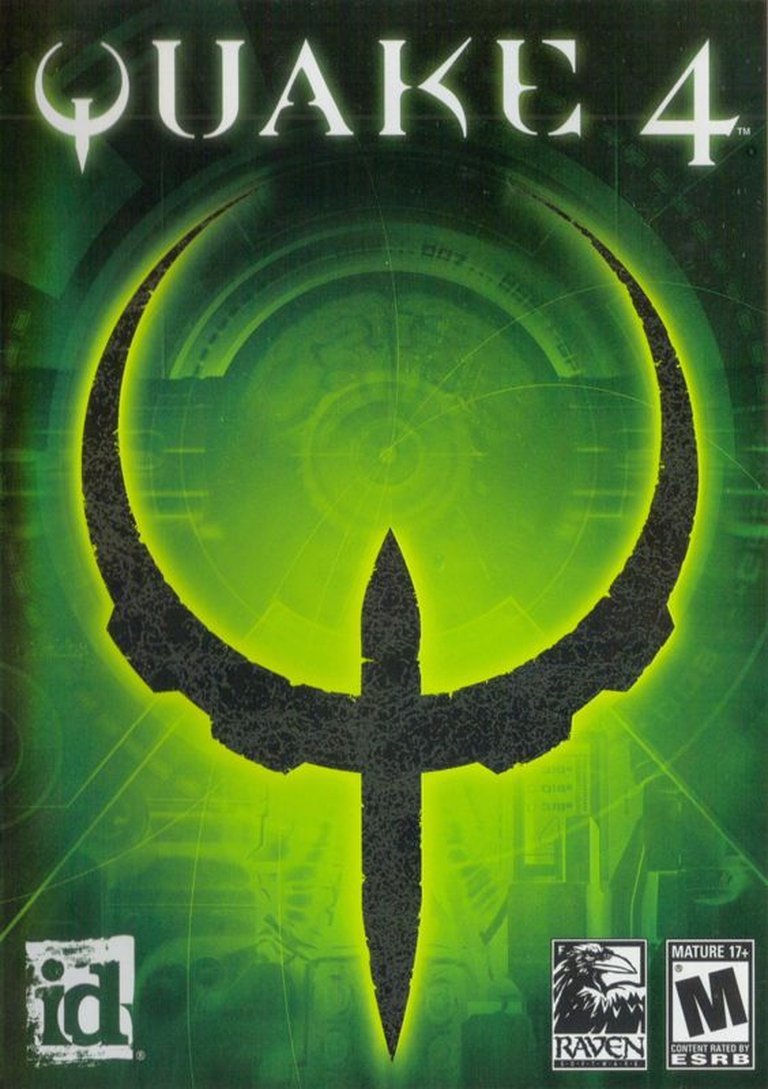
Quake 4 continues the war against the alien cyborg Strogg on their home planet, Stroggos, following the events of Quake II. Players join a squad of marines in a campaign featuring vehicles, changing objectives, and an arsenal of classic weapons like the nailgun and rail gun alongside the new Dark Matter Gun, all powered by an enhanced Doom 3 engine.
Gameplay Videos
Where to Buy Quake 4
Quake 4 Free Download
PC
Quake 4 Cracks & Fixes
Quake 4 Patches & Updates
Quake 4 Mods
Quake 4 Guides & Walkthroughs
Quake 4 Reviews & Reception
metacritic.com (81/100): Although there may be times throughout the game where you will feel as though things are getting repetitive and drawn out, the play gets changed up at the right times and gives you a refreshing perspective to keep you going.
imdb.com (90/100): What a game, the emphasis on this game obviously was the single player, which indeed is awesome.
ign.com (82/100): Return to the battle against the Stroggos as marine Matthew Kane. As part of Rhino Squad, Kane must infiltrate the Stroggos headquarters and take down their leader in QUAKE 4.
Quake 4 Cheats & Codes
PC
Press Ctrl+Alt+~ to open the console, then enter the codes.
| Code | Effect |
|---|---|
| god | God mode |
| noclip | No clipping mode |
| give all | Gives all weapons, full ammo, health, and armor |
| give ammo | Max ammunition |
| give armor | Max armor |
| give health | Max health |
| kill | Suicide |
| undying | Player stops taking wounds at 1 health |
| notarget | Invisibility to most enemies |
| killmonsters | Kill all monsters |
| com_allowconsole 1 | Enable console toggling with ~ |
| editor | Close game and open map editor |
| benchmark | Run game benchmark |
| clear | Clear the console |
| gfxinfo | Display graphics card information |
| listcmd | List all documented commands |
| listcvar | Display all cvars |
| listentities | Display all entities |
| listmonsters | Display all monsters/enemies |
| quit | Quit game |
| avidemo | Save a demo of your playing to AVI |
| screenshotJpeg | Take a JPEG screenshot |
| saveGame | Save the game |
| timescale 1 | Return game speed to normal |
| timescale 15 | Speed up the game |
| testlight | Create a new light source |
| poplight | Remove a testlight-created light source |
| g_fov # | Change field of view |
| g_showplayershadow # | Toggle player shadow (1=on, 0=off) |
| com_showfps # | Toggle FPS display (1=on, 0=off) |
| pm_thirdperson # | Toggle third-person mode (1=on, 0=off) |
| pm_speed # | Change movement speed |
| pm_jumpheight # | Change jump height |
| pm_noclipspeed # | Change noclip speed |
| pm_crouchspeed # | Change crouch speed |
| g_knockback # | Set knockback (0 for no knockback) |
| g_stoptime # | Stop time (1=on, 0=off) |
| give quad | Get quad damage |
| give item_health_mega | Get +100 health (max 200) |
| give keys | Get all keys |
| give all weapons | Get all weapons without any ammo |
| give weapon_dmg | Get a dark matter gun and ammo |
| give weapon_grenadelauncher | Get a grenade launcher and ammo |
| give weapon_hyperblaster | Get a hyperblaster and ammo |
| give weapon_lightninggun | Get a lightning gun and ammo |
| give weapon_machinegun | Get a machinegun and ammo |
| give weapon_nailgun | Get a nailgun and ammo |
| give weapon_railgun | Get a railgun and ammo |
| give weapon_rocketlauncher | Get a rocket launcher and ammo |
| give weapon_shotgun | Get a shotgun and ammo |
| spawn char_doctor | Spawn a doctor |
| spawn char_kane_strogg | Spawn Kane in Strogg form |
| spawn char_marine | Spawn a marine (has a gun) |
| spawn char_marine_fatigues | Spawn a marine in shirt and shorts |
| spawn char_marine_medic | Spawn a medic marine that heals you |
| spawn char_marine_tech_armed | Spawn a marine that fixes armor |
| spawn monster_berserker | Spawn a berserker enemy |
| spawn monster_bossbuddy | Spawn a mech boss |
| spawn monster_failed_transfer | Spawn a failed transfer enemy |
| spawn monster_fatty | Spawn a fatty boss |
| spawn monster_gladiator | Spawn an enemy with a shield |
| spawn monster_grunt | Spawn a grunt enemy |
| spawn monster_gunner | Spawn a gunner enemy |
| spawn monster_harvester_combat | Spawn a spider mech |
| spawn monster_iron_maiden | Spawn an iron maiden enemy |
| spawn monster_makron | Spawn the Makron boss |
| spawn monster_network_guardian | Spawn the network boss |
| spawn monster_repair_bot | Spawn a repair bot |
| spawn monster_scientist | Spawn a Strogg doctor |
| spawn monster_sentry | Spawn a sentry enemy |
| spawn monster_slimy_transfer | Spawn a slimy transfer enemy |
| spawn weaponmod_hyperblaster_bounce1 | Add bouncing shots to hyperblaster |
| spawn weaponmod_lightninggun_chain | Allow lightning to jump between enemies |
| spawn weaponmod_machinegun_ammo | Expand machinegun clip |
| spawn weaponmod_nailgun_ammo | Increase nailgun max ammo |
| spawn weaponmod_nailgun_power | Increase nailgun damage |
| spawn weaponmod_nailgun_rof | Increase nailgun rate of fire |
| spawn weaponmod_nailgun_seek | Add homing nails |
| spawn weaponmod_railgun_penetrate | Add penetration to railgun |
| spawn weaponmod_rocketlauncher_burst | Add burst fire to rocket launcher |
| spawn weaponmod_rocketlauncher_homing | Add homing rockets |
| spawn weaponmod_shotgun_ammo | Increase shotgun ammo capacity |
| map game/airdefense1 | Load Air Defense Base |
| map game/airdefense2 | Load Air Defense Trenches |
| map game/convoy1 | Load Canyon |
| map game/convoy2 | Load Aqueducts |
| map game/convoy2b | Load Aqueducts Annex |
| map game/walker | Load Construction Zone |
| map game/network1 | Load Data Networking Terminal |
| map game/network2 | Load Data Networking Security |
| map game/process1 | Load game/process1 |
| map game/process2 | Load Data Processing Security |
| map game/storage1 | Load game/storage1 |
| map game/storage2 | Load Data Storage Security |
| map game/dispersal | Load Dispersal Facility |
| map game/hangar1 | Load Hangar Perimeter |
| map game/hangar2 | Load Interior Hangar |
| map game/mcc_landing | Load MCC Landing Site |
| map game/mcc_1 | Load Operation: Advantage |
| map game/mcc_2 | Load Operation: Last Hope |
| map game/building_b | Load Perimeter Defense Station |
| map game/putra | Load Putrification Center |
| map game/recomp | Load Recomposition Center |
| map game/medlabs | Load Strogg Medical Facilities |
| map game/core1 | Load Nexus Core |
| map game/core2 | Load The Nexus |
| map game/hub1 | Load Nexus Hub Tunnels |
| map game/hub2 | Load Nexus Hub |
| map game/tram1 | Load Tram Hub Station |
| map game/tram1b | Load Tram Rail |
| map game/waste | Load Waste Processing Facility |
Quake 4: Review
Introduction
The Quake series has always been a benchmark for first-person shooters, defining genres and pushing technological boundaries since its inception. Yet, with Quake 4, released in 2005, the franchise embarked on a daring pivot—one that traded the abstract, multiplayer-centric arenas of Quake III Arena for a gritty, narrative-driven sequel to Quake II. Developed by Raven Software under the watchful eye of id Software, Quake 4 aimed to merge the visceral intensity of its predecessors with a more immersive, story-driven experience. While it succeeded in delivering a hauntingly atmospheric single-player campaign, its multiplayer ambitions and technological constraints left it a transitional, rather than revolutionary, entry. This review dissects Quake 4’s legacy, exploring its triumphs as a horror-infused war epic and its shortcomings as a genre innovator.
Development History & Context
The genesis of Quake 4 lies in a pivotal moment for id Software. After pioneering online multiplayer with Quake III Arena and revolutionizing graphics with Doom 3’s id Tech 4 engine, the company sought a trusted partner to continue the Quake saga. Raven Software, veterans of id-powered titles like Soldier of Fortune and Heretic, were tasked with the challenge. This wasn’t a mere license adaptation; id provided rigorous oversight, ensuring the game aligned with the Quake ethos while leveraging cutting-edge technology.
The id Tech 4 engine was a double-edged sword. Its unified lighting and shadow system created unprecedented depth, making corridors feel claustrophobic and battles a chaotic dance of muzzle flashes and stark silhouettes. Yet, this came at a cost: the engine’s “plastic-wrapped” surfaces and focus on enclosed spaces clashed with Quake’s traditionally open arenas. Hardware demands were prohibitive, and the Xbox 360 launch port suffered from notorious frame rate drops and long load times, earning it GameSpot’s “Most Aggravating Frame Rate” award.
Raven’s vision was equally ambitious: a direct narrative sequel to Quake II. This meant jettisoning the franchise’s multiplayer-only tradition for a focused single-player experience. Set on the Strogg homeworld, Stroggos, the game emphasized squad-based tactics and vehicle combat—a departure from the lone-wolf heroism of prior entries. Budgeted at $15 million, the development aimed to deliver a “definitive action experience,” blending old-school speed with modern storytelling. Yet, as the competitive scene (where the Cyberathlete Professional League adopted it for 2006) would reveal, the multiplayer—an evolution of Quake III’s formula—felt like an afterthought, lacking the innovation of its campaign.
Narrative & Thematic Deep Dive
At its core, Quake 4 is a war story of transformation and identity. Players step into the boots of Corporal Matthew Kane, a member of humanity’s elite Rhino Squad, tasked with invading Stroggos to finish the war initiated in Quake II. The narrative unfolds in five acts, blending traditional military tropes with body-horror. Early missions involve securing footholds and destroying Strogg infrastructure, but the story’s turning point arrives in the infamous “Stroggification” sequence.
In a masterstroke of interactive storytelling, Kane is captured and subjected to a brutal cybernetic assimilation. Strapped to a conveyor belt, players witness his limbs amputated and replaced with machinery while conscious—a sequence unflinching in its first-person perspective. The sound design—buzzing saws, hydraulic clamps, and Kane’s muffled screams—transforms the act into a visceral nightmare. This moment transcends mere shock value; it redefines Kane’s role. He emerges “enhanced,” able to understand Strogg communications and infiltrate previously impenetrable zones, blurring the line between hunter and prey.
Thematic depth emerges from this duality. The Strogg represent war’s dehumanizing force—cyborgs harvesting human bodies to swell their ranks, mirroring the Borg’s assimilation trope. Yet, the game avoids simplistic moralizing. Kane’s transformation forces empathy, making the Strogg less “evil aliens” and more a reflection of war’s atrocities. Squaddies like Private Johann Strauss (voiced by Peter Stormare) add nuance, their camaraderie humanizing the conflict. Tragically, the narrative stumbles with Lieutenant Voss’s full Stroggification—a powerful boss fight that feels rushed. Ultimately, Quake 4’s narrative succeeds through its raw, personal horror, even if the broader war plot remains a straightforward “humanity vs. aliens” trope.
Gameplay Mechanics & Systems
Quake 4’s gameplay is a study in contrasts—polished yet familiar, innovative yet constrained. The core combat retains the series’ speed and precision, with weapons like the Nailgun, Railgun, and Lightning Gun offering satisfying feedback. The new Dark Matter Gun, firing black holes, replaces the BFG10K as a game-changer, though its ammunition scarcity limits its impact. Weapon upgrades—unlocked through progression—add depth, turning standard firearms into devastating tools.
The squad system is the campaign’s standout feature. Unlike the “bullet sponges” of earlier FPS squadmates, Rhino Squad members (medics, engineers) actively support Kane. Medics heal on the fly, while engineers repair armor, creating a dynamic interdependence that makes losing teammates feel consequential. Vehicle sections—hovertanks and mechs—break up the on-foot combat but are undercooked. Handling is sluggish, and levels feel like obligatory set pieces rather than organic extensions of the war.
Multiplayer, however, is Quake 4’s Achilles’ heel. Raven transplanted Quake III’s arena formula into id Tech 4, offering Deathmatch, CTF, and Arena CTF. Movement mechanics like ramp jumping and crouch slides add nuance, but the experience feels derivative. Maps recycled from Quake III and Quake II, combined with underwhelming new modes (e.g., DeadZone), failed to innovate. The lack of bots at launch (later rectified via mods like SABot) further alienated casual players. Ultimately, Quake 4’s gameplay excels in single-player intensity but falters in multiplayer evolution, trapped between past glories and future trends.
World-Building, Art & Sound
Stroggos is a character in itself—a industrial hellscape of rust, biomechanics, and oppressive darkness. Raven’s art direction, powered by id Tech 4, renders this world with grim detail. Strogg architecture is a nightmare of exposed wiring, hydraulic pistons, and organic flesh fused with steel. Environments like the Medical Facilities (a conveyor belt of horrors) and Waste Processing Plants (filled with half-transformed “zombies”) ooze dread. The lighting engine is the star here: muzzle flashes illuminate dust motes, while strobe lights in barracks create disorienting patterns, turning corridors into claustrophobic mazes.
Enemy design elevates the horror. Strogg are not mere cannon fodder but biomechanical abominations—gunners with rotating torsos, tank-like “Hulks” with explosive weak points, and the imposing Makron. Their animations are unnerving, with jerky movements and unsettling vocalizations that build tension. Sound design reinforces this atmosphere. The absence of a traditional score replaced with ambient industrial noises—distant alarms, whirring machinery—immerses players in the war’s chaos. Strogg bark guttural commands in their own language, while weapons crack with visceral punch. The Stroggification sequence’s audio—saws, drills, and Kane’s pained gasps—is a masterclass in horror. Yet, the game’s reliance on the Doom 3 engine’s “plastic” textures makes some environments feel repetitive, and the Xbox 360’s frame rate issues undermine the artistry during intense firefights.
Reception & Legacy
Upon release, Quake 4 received a mixed but generally positive reception. The PC version garnered an 81/100 on Metacritic, praised for its intense single-player campaign, graphics, and voice acting. IGN lauded it as “a polished, atmospheric shooter,” while GameSpot noted its “solid campaign” but criticized the multiplayer’s stagnation. The Xbox 360 version fared worse (75/100), with reviewers citing performance issues and a “disappointing” port. Commercially, it was a modest success—earning a Silver sales award in the UK—but failed to match the cultural impact of its predecessors.
Long-term, Quake 4’s reputation has evolved. Initially seen as a “transitional” game—bridging old-school arena shooters and narrative-driven FPS—it’s now recognized for its bold narrative choices. The Stroggification sequence, in particular, is cited as an early example of immersive storytelling, influencing titles like BioShock. Its multiplayer, though derivative, fostered a competitive scene with mods like Q4Max refining the experience for esports. Yet, the game’s legacy is bittersweet. The cancelled “Awakening” expansion and its overshadowing by contemporaries like F.E.A.R. and Call of Duty 2 cement its status as a cult classic. Today, it’s remembered for its atmosphere and Kane’s journey, a testament to a Quake game that dared to be different even when it fell short.
Conclusion
Quake 4 stands as a fascinating anomaly in the Quake series—a game that prioritized narrative immersion over multiplayer innovation, and atmosphere over spectacle. Its single-player campaign is a visceral, haunting war story elevated by the Stroggification sequence and squad mechanics, even if its broader plot remains conventional. Technologically, the id Tech 4 engine delivers stunning visuals and sound, but its constraints—corridor design, hardware demands—prevent it from reaching the genre-defining heights of Quake or Doom. Multiplayer, a pale echo of Quake III, feels like a missed opportunity.
Yet, Quake 4’s legacy endures. It represents a pivotal moment when FPS games began embracing cinematic storytelling without sacrificing action. Its influence on later titles—from squad integration to interactive horror—proves its significance. In the end, Quake 4 is not the revolution fans expected, but it’s a compelling, flawed masterpiece that captures the chaos and horror of war with unforgettable intensity. For those seeking a Quake experience that prioritizes atmosphere over speed, it remains an essential, if overlooked, chapter in FPS history.