
- Release Year: 2014
- Platforms: Windows
- Publisher: Smudged Cat Games Ltd
- Developer: Smudged Cat Games Ltd
- Genre: Action
- Perspective: Side view
- Game Mode: Single-player
- Gameplay: Platform, Puzzle elements
- Average Score: 90/100
Description
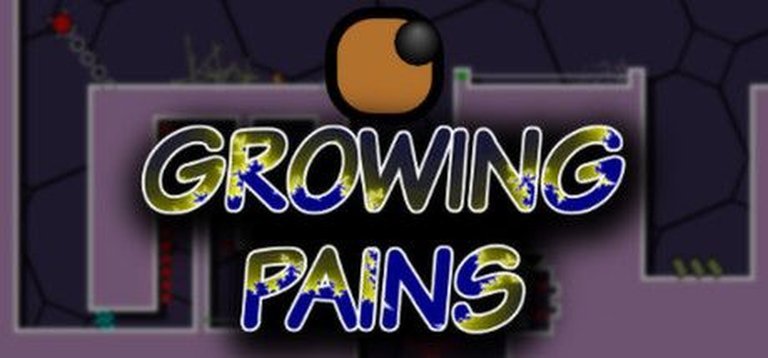
Growing Pains is an action platformer game released in 2014 for Windows by Smudged Cat Games Ltd, featuring side-view 2D scrolling gameplay that combines platforming challenges with puzzle elements. Players navigate through dynamic environments, utilizing precise mechanics to overcome obstacles and progress through the game.
Gameplay Videos
Where to Buy Growing Pains
PC
Growing Pains Mods
Growing Pains Reviews & Reception
gamesreviews2010.com (90/100): A genre-defining masterpiece that pushes the boundaries of what’s possible.
Growing Pains: Review
Introduction
In the crowded pantheon of indie platformers, some titles rise to prominence through innovation, while others are remembered for their peculiar quirks. Growing Pains (2014), developed by Smudged Cat Games Ltd., falls into the latter category. Released on Steam for a modest $4.99, this game promised a unique twist on the genre: a perpetually growing protagonist racing against time and space. Yet, its legacy is a study in contradictions. Praised by some as a “genre-defining masterpiece” and dismissed by others as “bland and uninspired,” Growing Pains occupies a fascinating niche in gaming history—a flawed experiment whose concept overshadowed its execution. This review deconstructs the game’s design, context, reception, and enduring legacy, arguing that its central mechanic, while innovative, was ultimately undermined by poor design choices and a failure to capitalize on its own potential.
Development History & Context
Studio and Vision: Smudged Cat Games Ltd., a British studio known for titles like The Adventures of Shuggy (2011), developed Growing Pains. The studio had established a reputation for quirky, physics-based puzzle-platformers with tight controls and inventive level design. Growing Pains represented a departure: a faster, more action-oriented title centered around a single, high-stakes mechanic. The vision, as articulated in the Steam store description, was to create a “heart-pounding race” where players navigate collapsing spaces while their character, the “Vessel,” grows uncontrollably. This concept aimed to inject urgency and spatial puzzle-solving into the traditional platformer formula, blending speed with strategy.
Technological Constraints and Era: Released on May 28, 2014, Growing Pains emerged during a period of rapid indie game proliferation on platforms like Steam, following the success of titles such as Super Meat Boy (2010) and Spelunky (2008). The game was built on minimalist technology—a 2D side-scrolling engine optimized for Windows, macOS, and Linux. Its visual style, described as “sleek” and “psychedelic,” relied on neon color palettes and simple geometric shapes to convey a retro-futuristic aesthetic. The soundtrack, a “thumping electronic” score, was designed to complement the fast-paced gameplay. However, these technological choices also constrained the game’s scope: limited animation and art resources resulted in a visually sterile environment, with backgrounds consisting of “scrolling patterns” and assets resembling “MS Paint” creations, as noted by critics.
Gaming Landscape: The 2014 indie scene was dominated by high-precision platformers and narrative-driven experiments. Growing Pains entered this arena with a bold but risky premise. While its growing-mechanic was unique, the market was saturated with titles offering similar adrenaline-fueled challenges. The studio’s prior work (Shuggy) suggested an aptitude for clever design, but Growing Pains would need to prove it could translate that ingenuity into a more action-oriented format. The absence of a narrative or character depth further distanced it from story-focused indie darlings of the era, positioning it as a pure, high-score-driven experience.
Narrative & Thematic Deep Dive
Growing Pains is a narrative void. The game offers no plot, characters, dialogue, or overarching themes. The protagonist, the “Vessel,” is a nondescript brown squircle—a “square with rounded edges”—lacking any personality or backstory. Levels are abstract arenas filled with traps (spikes, lasers, crumbling platforms) and collectibles, devoid of contextual storytelling. Even its title, Growing Pains, is ironic: the game explores no metaphorical or emotional dimensions of growth, focusing solely on the physical, mechanical act of expansion. This absence is not an artistic statement but a design omission. Without narrative or thematic anchors, the game reduces itself to a series of spatial puzzles, stripping away the human element that could have elevated its core mechanic. The result is a sterile experience where the “pain” of growth is purely logistical, not existential.
Gameplay Mechanics & Systems
Core Loop: The gameplay revolves around a single, relentless mechanic: the Vessel grows larger continuously from the moment a level begins. Players must race through stages, collecting colored rectangles (the primary objective) and reaching exit portals before the Vessel becomes too large to fit through narrow passages or around obstacles. This creates a perpetual tension between speed and caution—rushing to clear objectives versus managing size to navigate tight spaces. Levels are segmented into “massive” interconnected areas, each with its own set of traps and hazards.
Innovation and Flaws: The growing mechanic is undeniably inventive. It transforms traditional platforming into a race against physics, demanding spatial awareness and split-second decisions. However, the implementation is deeply flawed. As the IndieGameBundles review highlights, the mechanic often feels underwhelming. On standard difficulty, growth is slow enough that players can routinely navigate obstacles without significant size-related challenges. Difficulty tiers (Easy, Normal, Hard) merely accelerate growth rate without altering level design, making Hard a frustrating exercise in trial-and-error rather than strategic depth. The game’s encouragement of speed—via a timer and leaderboards—conflicts with the need for precision. The lives system exacerbates this: dying sends players back to the start of the entire level, not the last checkpoint, punishing experimentation and rewarding memorization over skill.
Controls and Progression: Controls are “tight and responsive,” enabling pixel-perfect jumps and wall-slides. Yet, the Vessel’s growth makes movement cumbersome at larger sizes, amplifying minor missteps into catastrophic failures. There is no character progression; abilities are static, and upgrades are nonexistent. The sole metric of success is the leaderboard, which tracks replays for competitive play. While this fosters replayability, it relies on players’ tolerance for repetitive, punishing runs.
UI and Polish: The UI is minimalist, displaying a timer, lives counter, and objective tracker. Its simplicity is functional but uninspired. A “sleek” aesthetic is undermined by repetitive visuals, and the game’s lack of polish—such as inconsistent hitboxes—further mars the experience. Ultimately, Growing Pains’ systems feel like a rough sketch: a promising concept shackled by underdeveloped execution.
World-Building, Art & Sound
Setting and Atmosphere: The game’s world is non-existent. Levels are abstract voids—laboratories, factory floors, and alien landscapes—devoid of lore or environmental storytelling. Traps like “sweeping lasers” and “spike balls” appear as generic obstacles, divorced from context. This abstraction strips the game of atmosphere, reducing it to a sterile test chamber for mechanics.
Visual Direction: The art style, described as “psychedelic” and “neon,” relies on high-contrast colors and geometric simplicity. While visually striking in screenshots, the in-game experience is monotonous. Levels reuse asset palettes (e.g., a single color scheme per stage), and the Vessel lacks detail. Critics like IndieGameBundles dismissed it as “flash game-like,” with backgrounds as “scrolling patterns.” The art fails to evoke emotion or immersion, serving only as a functional backdrop for the growing mechanic.
Sound Design: The soundtrack is the game’s strongest element. A “thumping electronic” score, reminiscent of trance music, provides a consistent pulse that aligns with the frantic gameplay. Sound effects are crisp and impactful, enhancing the satisfaction of landing a jump or collecting an item. However, the audio cannot compensate for the visual and mechanical shortcomings; it merely underscores the game’s repetitive nature.
Reception & Legacy
Launch Reception: Upon release, Growing Pains received mixed-to-negative reviews. Critics praised its concept and soundtrack but lamented its execution. IndieGameBundles awarded it a 5/10, calling it “adequate” but “bland,” citing uninspired level design and the punitive lives system. GamesReviews2010 was an outlier, lauding it as a “masterpiece” with a 9/10 score, highlighting the “innovative mechanic” and “tight controls,” but this view was not representative of the broader consensus. Steam reviews at launch were sparse, with players echoing criticism of difficulty pacing and visual monotony.
Commercial Performance: Priced at $4.99, the game failed to make a significant commercial impact. It was bundled occasionally but never achieved viral success, overshadowed by more polished titles like Super Meat Boy or Celeste. Steambase’s player score of 76/100 (based on 29 reviews) reflects a “Mostly Positive” reception, but this is likely inflated by a small, dedicated fanbase rather than widespread acclaim.
Legacy and Influence: Growing Pains’ legacy is one of cautionary experimentation. Its core mechanic—perpetual growth as a gameplay constraint—remains underexplored. No major titles have directly adopted this concept, though indie darlings like Getting Over It with Bennett Foddy (2017) similarly use physics-based frustration as a hook. The game’s flaws, particularly the lives system and repetitive design, have become a case study in how not to balance high-stakes mechanics. It endures as a niche curiosity, referenced in discussions of “innovative but flawed” indies, but its influence is negligible. The game’s title, ironically, now symbolizes the “growing pains” of indie development itself: ambitious ideas undermined by technical and design limitations.
Conclusion
Growing Pains is a fascinating failure. Its central mechanic—perpetual growth as a spatial and temporal threat—is a stroke of genius, redefining platforming as a race against physics. Yet, the game squanders this potential through repetitive level design, a punishing lives system, and a sterile artistic vision. While its controls and soundtrack demonstrate Smudged Cat’s technical prowess, the absence of narrative, thematic depth, and meaningful progression reduces it to a mechanical exercise. Its legacy is not one of innovation but of caution: a reminder that a compelling concept alone cannot sustain a game. For platformer enthusiasts seeking a challenge, Growing Pains offers fleeting satisfaction. For historians, it stands as an artifact of an era where indie games often prioritized novelty over polish. Ultimately, Growing Pains is a game you can’t quite grow out of—flawed yet unforgettable, a testament to the risks and rewards of creative experimentation.