
- Release Year: 2015
- Platforms: Linux, Macintosh, PlayStation 4, Windows
- Publisher: Kalypso Media Digital Ltd.
- Developer: Realmforge Studios GmbH
- Genre: Strategy, Tactics
- Perspective: Diagonal-down
- Game Mode: LAN, Online Co-op, Single-player
- Gameplay: City building, construction simulation, RPG elements
- Setting: Fantasy
Description
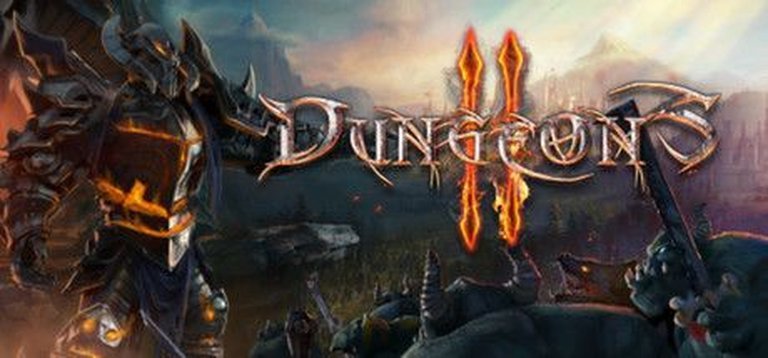
Dungeons II is a darkly humorous real-time strategy game that combines dungeon-building and minion management with tactical overworld combat. Players construct an underground lair, train fantasy creatures like goblins and trolls, and deploy them to the surface world to battle heroic forces. Set in a vibrant fantasy realm, the game blends city-building simulation with RPG elements, offering a unique twist on the strategy genre where evil minions conquer the overworld instead of the other way around.
Gameplay Videos
Where to Buy Dungeons II
Dungeons II Free Download
Dungeons II Mods
Dungeons II Guides & Walkthroughs
Dungeons II Reviews & Reception
geekoutsw.wordpress.com : Dungeons II began to feel very familiar. Here you begin to learn the basics, things like mining gold, expanding your dungeon, creating rooms and so on.
Dungeons II Cheats & Codes
PC
Edit the config file at C:\Users\YOUR USER NAME\AppData\Roaming\Kalypso Media\Dungeons 2 and add ‘Debug.EnableCheats = True’ to enable cheats. Then use the following console commands in-game.
| Code | Effect |
|---|---|
| F2 | Pause ingame speed |
| F3 | Slows down ingame speed |
| F4 | Speeds up ingame speed |
| F12 | Show ingame cheat menu |
Dungeons II: Review
Introduction
In the shadowed annals of gaming history, few loom as large as Dungeon Keeper. Bullfrog’s 1997 masterpiece defined the dungeon management genre, but its legacy endured in fits and starts, leaving a void that eager successors struggled to fill. Enter Dungeons II, a 2015 hybrid strategy-simulation from Realmforge Studios and Kalypso Media. Positioned as both a sequel to 2011’s Dungeons and a spiritual successor to Keeper, it promised a twisted blend of subterranean tyranny and overworld conquest. Yet, while it captures the irreverent spirit of its forebear, Dungeons II emerges as a flawed, ambitious beast—a game that tantalizes with its dark humor and intricate mechanics yet stumbles under the weight of its own ambition. This review delves into how Dungeons II walks the tightrope between homage and innovation, dissecting its narrative, gameplay, art, and enduring legacy in the pantheon of villainous simulations.
Development History & Context
The Studio & Vision
Realmforge Studios, founded in 2008 as a joint venture between publisher Kalypso Media and developer Boxed Dreams, carved a niche for dark fantasy strategy titles. With Dungeons (2011) criticized for straying too far from Dungeon Keeper’s core loop, Dungeons II was conceived as a corrective. Creative Director Christian Wolfertstetter explicitly framed it as a “more direct homage,” emphasizing dungeon management over the first game’s tower-defense leanings. Art Director Viktor Linke noted a deliberate shift toward “chunkier, bigger, and more cartoonish” aesthetics to evoke Keeper’s charm. The studio’s goal was clear: recapture the essence of evil overlordship while modernizing the formula.
Technological Constraints & Landscape
Developed on the Unity 5 engine, Dungeons II prioritized cross-platform compatibility (Windows, macOS, Linux), a rarity in 2015 for strategy games. Unity’s flexibility allowed for scalable 3D graphics, though it also introduced technical hurdles. Minimum specs—dual-core 3 GHz CPUs and Intel HD 4400 GPUs—reflected mid-tier ambitions, while Direct3D 9.0c/11 support ensured broad accessibility.
The 2015 gaming landscape was dominated by RTS hybrids and genre revivals. Dungeons II arrived alongside War for the Overworld (2015), another Keeper spiritual successor, and rode the wave of nostalgia for Bullfrog classics. Yet, it faced skepticism: could a German studio, known for the Tropico series’ satire, authentically channel Keeper’s malevolent genius? Realmforge’s answer was a dual-focused design: underground dungeon-building and overworld RTS battles—a technical and narrative tightrope few had attempted.
Narrative & Thematic Deep Dive
Plot: Fragmented Evil
- Dungeons II*’s narrative centers on the Absolute Evil, a primordial force shattered by heroic forces into three entities: the Ultimate Evil (the player’s spectral avatar), the Chaotic Evil, and the Corrupting Evil. Decades later, the Ultimate Evil awakens as an incorporeal spirit, rebuilding his empire through loyal minions. The campaign weaves a darkly comedic revenge saga, pitting the player against sanctimonious heroes while navigating rival evils. Key missions include the sacking of elven forests (“The Battle for the Elven Forest”) and the assassination of human kings (“King Robert has to Die!”), all narrated with a fourth-wall-breaking wit.
Characters & Dialogue
- Ultimate Evil: A ghostly, sarcastic commander, voiced with dry British aplomb. His interactions with minions—ordering them to “fetch the pretty skulls”—blend menace and buffoonery.
- Minions: Named creatures like goblins orcs, and succubi exhibit personalities. Idle quips (“I’m bored! Let’s go raid!”) and disobedience if neglected add depth.
- Narrator: An omnipresent, sardonic commentator, akin to The Stanley Parable’s Kevan Brighting, peppers gameplay with barbs like “Your strategic genius is rivaled only by a garden slug.”
Themes & References
The story satirizes fantasy tropes: heroes are hypocritical interlopers, evil is a bureaucratic enterprise, and conquest is a darkly absurd ritual. References to Warcraft (“Orcs? More like orks!”), Lord of the Rings, and Game of Thrones (DLC titles like A Song of Sand and Fire) ground the humor in pop culture. Ultimately, Dungeons II asks: What if evil wasn’t just monstrous, but tedious? The answer is both hilarious and poignant.
Gameplay Mechanics & Systems
Core Loops: Dungeon & Overworld
The game’s genius lies in its duality:
– Dungeon Management: Players excavate blocks, build rooms (treasuries, barracks, lairs), and automate minion labor. Gold and mana are mined from stone, while traps (exploding chests, fire grates) defend against hero raids.
– Overworld RTS: Through cave exits, players deploy minion armies (orcs, trolls, naga) in tactical skirmishes. Objectives include sacking castles, capturing villages, and corrupting landscapes.
Combat & Progression
- Minion Mechanics: The Hand of Terror acts as a cursor, allowing direct control. Minions are hired in the Throne Room, leveled up, and trained. Neglect their needs (food, gold), and they rebel.
- Factions:
- Horde: Strength-focused (orcs, goblins).
- Demons: Magic-oriented (succubi, pit fiends), controlled by the Hand of Chaos in multiplayer.
- RPG Elements: Named minions gain stats and abilities, encouraging attachment but sometimes leading to frustrating micromanagement.
UI & Innovation
- Hand of Terror: Intuitive but finicky; targeting precise units requires patience.
- Hybrid Ambition: The switch to RTS is ambitious but undercooked. Units lack grouping, pathfinding is clunky, and battles feel sluggish compared to pure RTS titles.
- Flaws: Mission repetition, save scumming (e.g., locked unit spawns), and unbalanced late-game scaling mar the experience.
World-Building, Art & Sound
Setting & Atmosphere
The Underworld is a labyrinth of stone and shadow, its mood claustrophobic yet whimsical. The Overworld transitions to vibrant, pastoral landscapes—forests, deserts, snowfields—rapidly corrupted by evil. This duality creates a palpable sense of scale: from intimate dungeon halls to grand RTS battlefields.
Art Direction
- Visuals: Isometric 3D with cartoonish exaggeration. Chunky minions, exaggerated animations, and destructible terrain (Keeper’s influence) evoke a playful menace.
- Themes: The art amplifies satire—hero castles are pastel-colored follies, while dungeons ooze gothic grandeur.
Sound Design
- Narration: The British narrator’s dry delivery is the game’s star, turning mundane tasks into comedic set pieces.
- Audio: Minion gibberish, clanging swords, and crumbling stone layers soundscapes. The absence of a dynamic soundtrack, however, leaves battles feeling flat.
Reception & Legacy
Critical & Commercial Response
- Metacritic Scores: PC (70/100), PS4 (61/100). Critics praised humor and dungeon management but panned RTS execution and bugs. Hooked Gamers lauded it as “a riot,” while GameStar noted “good ideas” marred by “inconsistent design.”
- Sales: Steam peaks at 11,705 concurrent players (2017). Budget pricing ($4.99 on GOG) sustained modest sales, though it never reached Keeper’s cult status.
- Player Feedback: Steam users (82% positive) celebrated replayability via DLC but lamented balance issues and multiplayer instability.
Legacy & Influence
- Sequels: Dungeons III (2017) refined the formula, expanding overworld strategy and co-op. Dungeons IV (2023) further polished core mechanics.
- Genre Impact: Dungeons II kept the dungeon-sim genre alive, inspiring titles like Vambrace: Dungeon Monarch. Its hybrid model—management + RTS—remains influential, though rarely replicated.
- Cultural Footprint: The Game of Thrones DLCs (A Chance of Dragons, A Game of Winter) became cult favorites, adding campaigns and units (undead, yetis) that enhanced replayability.
Conclusion
Dungeons II is a game of two faces: a loving homage to Dungeon Keeper and a flawed experiment in hybrid design. Its dungeon management loop—minion wrangling, trap-laden lairs, and sarcastic narration—captures the joy of villainy with aplomb. Yet, the overworld RTS elements feel tacked on, bogged down by clumsy controls and shallow tactics.
Verdict: A flawed but fascinating footnote in strategy gaming. For fans of dark humor and base-building, Dungeons II offers hours of mischievous fun, especially with its DLC expansions. It may not dethrone Dungeon Keeper, but it stands as a testament to the genre’s enduring appeal—a chaotic, charming, and occasionally frustrating ode to evil. In the pantheon of villainous simulations, it’s less a masterpiece and more a delightful, if imperfect, demon.