
- Release Year: 2015
- Platforms: Macintosh, Windows
- Publisher: S.F. Bay Studios, Inc.
- Developer: S.F. Bay Studios, Inc.
- Genre: Action
- Perspective: 1st-person
- Game Mode: Single-player
- Gameplay: Aviation, Dragon flying, Flight, riding, Shooter
- Setting: Fantasy
Description
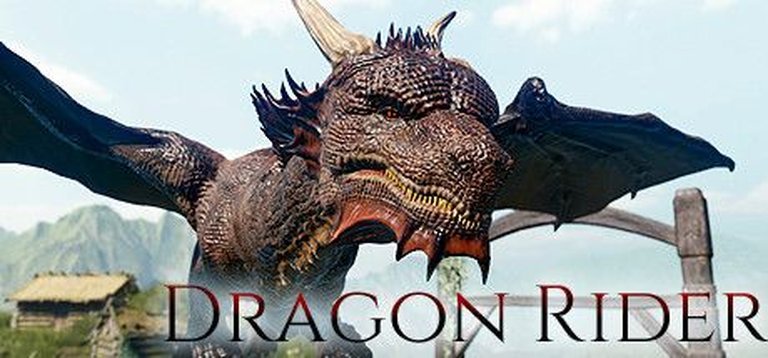
Dragon Rider is a first-person action shooter set in a fantasy world where players take control of a dragon for aerial combat and exploration. Developed by S.F. Bay Studios, Inc. and released in 2015, the game features vehicular flight mechanics that allow players to soar through skies, engage in battles, and experience the unique thrill of riding and controlling mythical creatures in a dynamic fantasy setting.
Dragon Rider: Review
Introduction
In the pantheon of fantasy archetypes, the image of a human astride a dragon soars with unparalleled majesty—a symbol of untamed power forged into partnership. Yet, translating this mythos into interactive entertainment is a delicate dance, demanding a balance between spectacle and substance. Dragon Rider (2015), developed by S.F. Bay Studios, enters this arena not as a sprawling epic, but as a focused, VR-compatible multiplayer combat experience. It seeks to distill the core thrill of dragon-riding into fast-paced aerial skirmishes. This review deconstructs Dragon Rider as a product of its time and a unique, if flawed, experiment in virtual reality fantasy combat. While it may lack the narrative depth of How to Train Your Dragon or the tactical complexity of Temeraire, it carves out a niche as an early, visceral attempt to let players feel the wind beneath digital wings. Its legacy lies not in revolutionizing the genre, but in its raw, unapologetic commitment to the fantasy of the dragon rider as pure, adrenaline-fueled spectacle.
Development History & Context
Dragon Rider emerged in 2015, a pivotal yet turbulent year for virtual reality. The Oculus Rift DK2 had ignited developer interest, but consumer VR was still nascent, dominated by clunky headsets and limited libraries. S.F. Bay Studios, an independent entity with no prior major titles, identified a gap: a dedicated, accessible multiplayer VR experience built around the potent fantasy of dragon combat. Their vision, as articulated on Steam, was clear: “an intense multiplayer arena game set in the skies on the back of a Dragon!”
The technological constraints of the era were significant. Achieving smooth, convincing flight and fluid first-person shooter mechanics within the limits of early VR hardware (Oculus Rift support was a launch feature, targeting the DK2 and later the CV1) was a monumental challenge. The game leveraged the burgeoning interest in VR to gain traction, successfully navigating Steam Greenlight. Its development was iterative, entering Early Access in November 2015 with a core multiplayer loop and the promise of single-player content. The gaming landscape at the time saw a surge of arena shooters (like Paladins and Battleborn) and the rise of “hero shooters,” but Dragon Rider differentiated itself by tethering combat directly to the fantasy of riding a mythical beast. It arrived amidst a broader cultural fascination with dragons, fueled by Game of Thrones and the enduring popularity of the dragon rider trope in literature and games, yet it chose to strip away the world-building and narrative complexity, focusing intensely on the core combat fantasy.
Narrative & Thematic Deep Dive
As a multiplayer arena game, Dragon Rider consciously eschews traditional narrative exposition. There is no overarching plot, no protagonist’s journey, and no named characters beyond the players themselves. The “story” is one of emergent conflict: players enter fantastical sky arenas as dragon riders to engage in free-for-all combat. The narrative thrust is purely situational and competitive.
The underlying themes, however, are subtly embedded in the core fantasy. The primary theme is the Power Fantasy of Bonded Mastery. While lacking explicit telepathic bonds (a staple of the trope), the game allows players to “customiz[e] your dragon’s abilities,” implying a partnership built on tactical synergy and rider dominance. The dragon becomes an extension of the player’s will, a weaponized mount chosen and enhanced to overcome rivals. This leans into the more utilitarian aspect of the rider-dragon dynamic, where the dragon is a tool for achieving aerial supremacy. A secondary, less explored theme is Aerial Dominance as Ultimate Prowess. The confined, high-altitude arenas transform the sky into a gladiatorial colosseum. Success hinges not on traditional RPG skills, but on mastering the physics of dragon flight and the precision of aerial dogfighting, positioning the rider as the apex predator within this specific, artificial environment. The lack of deeper lore or dragon-centric agency means the narrative remains firmly focused on the human rider’s perspective and competitive drive, a choice that prioritizes gameplay over world-building.
Gameplay Mechanics & Systems
Dragon Rider centers on its core flight combat loop, leveraging the strengths of its VR foundation:
- Flight & Control: Players experience flight from a first-person perspective perched atop their dragon. Movement is pitch, roll, and yaw-based, controlled intuitively via VR motion controllers (for supported setups) or traditional mouse and keyboard/gamepad. The core challenge lies in mastering the dragon’s momentum, handling, and turning radius, which feel weighty and deliberate, demanding skill to maintain stable aim and positioning. Early VR constraints likely made achieving perfectly fluid motion a significant technical hurdle.
- Combat: The gameplay is fundamentally an aerial arena shooter. Players engage in 4-player free-for-alls, armed with projectile weapons (likely energy bolts or arrows, though specifics are limited in the source material). The unique mechanic is firing from a moving platform. Accuracy requires compensating for the dragon’s movement, making each shot a dynamic calculation. VR enhances this immersion, as players physically lean and gesture to aim and fire, heightening the sense of being actively piloting and fighting.
- Customization: A key feature is the ability to customize dragon abilities. While the exact nature of these upgrades isn’t detailed beyond “abilities,” it suggests variations in speed, maneuverability, armor, or potentially special attacks (like short-range bursts of fire or targeted energy blasts). This adds a layer of strategic depth, allowing players to tailor their mount to their preferred playstyle (e.g., a fast, agile “dancer” dragon vs. a slow, heavily armored “tank” dragon).
- Multiplayer & Single Player: The core experience is multiplayer, fostering competitive matches with friends or strangers. The Early Access launch explicitly promised online multiplayer. A significant development update in November 2015 revealed an expansion of the single-player mode. This likely involved AI opponents (“Dragon Riders”) in more structured or challenge-based scenarios, catering to players unable to find matches or preferring solo practice. The single-player mode acts as a proving ground for mastering flight and combat mechanics against predictable foes.
- UI & Presentation: The UI is minimalistic, focusing on displaying essential information like health, score, and ability cooldowns directly within the player’s VR view or a simple HUD. The lack of complex menus keeps players immersed in the aerial combat. The core loop is repetition-based – enter arena, fight, respawn/repeat – typical of the arena shooter genre but grounded in the unique dragon-riding context.
Flaws: The primary flaw stems from its genre focus and era. As an Early Access title launched into a nascent VR market, depth was sacrificed for core concept. The single-player mode, while expanded, likely offered limited longevity compared to the dynamic unpredictability of human opponents. Customization, while present, might lack the breadth to create truly distinct play styles long-term. The reliance on fast-paced free-for-alls may lead to repetitive gameplay for some, and the weighty flight controls could feel sluggish or imprecise on certain hardware setups.
World-Building, Art & Sound
Dragon Rider presents a stylized, high-fantasy world, but its world-building is intentionally minimalistic and arena-focused.
- Setting & Atmosphere: The game is set in fantastical sky arenas – floating islands, crumbling ruins suspended in clouds, perhaps even abstract celestial battlegrounds. The atmosphere is one of grand, isolated conflict. There’s no sprawling kingdom, no ancient dragon culture, just the immediate thrill of the duel. The sky is rendered as an expansive, often dramatic canvas, emphasizing freedom and height. The arenas themselves provide context for the conflict, suggesting battles for skyborne dominance or proving grounds for riders, but offer no deeper lore.
- Visuals & Art Direction: The art direction leans towards vibrant, slightly stylized fantasy. Dragons are likely designed to be visually distinct and imposing within the constraints of real-time VR rendering – recognizable as powerful beasts with scales, wings, and potentially unique features based on customization. Players see their dragon’s neck and perhaps shoulders in the periphery, enhancing the sense of scale and connection. Environmental details are functional rather than intricate, designed for clear visibility during intense combat. The visual focus is on the dragon, the rider’s weapons, and the immediate competitors. While technically limited by 2015 VR capabilities, the effort was likely concentrated on making the dragons feel substantial and the flight believable within the VR headset.
- Sound Design: Sound is crucial for immersion and combat feedback. Expect the powerful roar of the dragon beneath the player, the rush of wind during dives and climbs, and the satisfying impact of weapons hitting dragon or rider. Audio cues likely play a key role in spatial awareness – identifying the direction of incoming fire or the approach of an enemy. The musical score, if present, would be dynamic, intensifying during combat and providing a sense of epic scale. The overall soundscape aims to be immersive and visceral, reinforcing the physicality of the VR experience and the power of the dragon mount.
The art and sound work collaboratively to create the core fantasy: the feeling of being a powerful dragon rider locked in a high-stakes aerial battle. The lack of deep world-building is a conscious design choice, directing all resources towards the core gameplay and VR spectacle.
Reception & Legacy
Dragon Rider launched into Early Access in November 2015 to a niche but receptive audience within the burgeoning VR community. Reception was likely mixed, typical for an Early Access title:
- Initial Reception: Positive feedback likely focused on the unique VR experience – the novelty of genuinely feeling like you were flying and fighting on a dragon’s back. The intuitive controls (especially in VR) and the potential for fun, chaotic multiplayer matches were praised. Customization added a layer of appeal. However, criticism would have centered on the limited content, the repetitive nature of the free-for-all mode, the shallow single-player offering initially, and the technical limitations of early VR hardware (resolution, motion blur, potential motion sickness).
- Launch & Evolution: The November 2015 update promising expanded single-player content showed developer commitment. However, as an Early Access title from a small studio, sustained development and significant post-launch support were likely challenging. The game never graduated out of Early Access on Steam, remaining in that state until at least 2019 (per MobyGames). The Steam Community page reveals limited ongoing activity and discussion, suggesting player interest waned as newer VR titles with more polished experiences or richer content emerged.
- Legacy: Dragon Rider‘s legacy is primarily as a historical footnote in VR gaming. It represents an early, ambitious attempt to leverage the unique affordances of VR (immersive first-person perspective, intuitive motion controls) to realize a specific, beloved fantasy – dragon-riding combat. Its significance lies in this proof-of-concept. It demonstrated the potential for visceral, mounted combat in VR, even if the execution was limited by the technology of the time and the scope of its design. It stands alongside other early VR experiments like Euro Truck Simulator VR or Raw Data – games that were less about narrative depth and more about showcasing the raw, sensory power of the new medium. Within the broader “dragon rider” trope, it occupies a distinct niche: the pure, multiplayer arena combat simulator. While it didn’t influence the narrative-heavy dragon-riding games that dominate the genre, it contributed to the diversification of how the concept could be represented in interactive media, specifically within the VR space. Its legacy is one of a passionate, if ultimately limited, attempt to make players truly feel the dragon.
Conclusion
Dragon Rider (2015) is a product defined by its concept and its era. It is not a grand fantasy adventure or a deep character study; it is a focused, VR-centric multiplayer arena shooter built entirely around the fantasy of dragon-riding combat. Its strengths lie in its core premise: the visceral, immersive experience of piloting a dragon and engaging in aerial dogfights, amplified by the unique immersion virtual reality offers at its most basic level. The customization of dragon abilities and the expansion of the single-player mode showed developer intent to flesh out the experience.
However, these strengths are tempered by significant limitations. The lack of narrative depth, minimal world-building, and repetitive free-for-all gameplay structure, while typical of the genre, prevent it from transcending its niche. Its Early Access status and the technological constraints of 2015 VR hardware meant it never reached the level of polish or content richness players might expect today.
Ultimately, Dragon Rider earns its place in video game history as an ambitious, early VR experiment. It successfully translated the core thrill of the dragon rider fantasy into a playable, if shallow, multiplayer experience. Its legacy isn’t in revolutionizing the fantasy genre or VR technology, but in serving as a tangible example of how a powerful mythological concept could be directly channeled into the unique capabilities of a new medium. It stands as a reminder of the bold, sometimes rough, experiments that characterized the early days of modern virtual reality, offering a taste of the sky that, for its time, felt genuinely unprecedented. For the player seeking pure, adrenaline-fueled dragon combat in VR, it offered a unique, if fleeting, ride. For the historian, it’s a snapshot of VR’s formative years and the enduring power of the dragon rider archetype.