
- Release Year: 2015
- Platforms: Macintosh, Nintendo Switch, PlayStation 3, PlayStation 4, Wii U, Windows, Xbox 360
- Publisher: Nordic Games GmbH
- Developer: NEON Software GmbH
- Genre: Action
- Perspective: Behind view
- Game Mode: Single-player
- Gameplay: Puzzle elements
- Setting: Fantasy
- Average Score: 60/100
Description
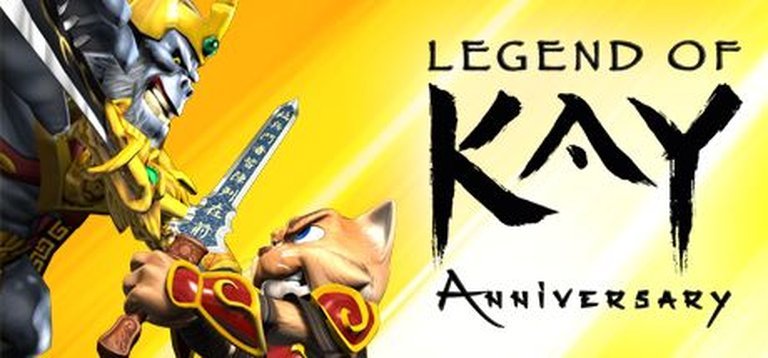
Legend of Kay: Anniversary is a remaster of the 2005 action-adventure game, featuring the anthropomorphic cat protagonist Kay in a vibrant fantasy world filled with martial arts combat, platforming challenges, and puzzle elements. Set in a realm where animals wield weapons and engage in epic battles, the adventure remains faithful to the original while boasting enhanced graphics, high-resolution textures, refined character models, and polished surround sound to deliver a modernized experience for players on multiple platforms including Windows, PlayStation, Xbox, Wii U, and Nintendo Switch.
Gameplay Videos
Where to Buy Legend of Kay: Anniversary
Legend of Kay: Anniversary Free Download
Legend of Kay: Anniversary Cracks & Fixes
Legend of Kay: Anniversary Mods
Legend of Kay: Anniversary Guides & Walkthroughs
Legend of Kay: Anniversary Reviews & Reception
gamerevolution.com : Who asked for this?
steamcommunity.com : The controls leave much to be desired. Camera intelligence is problematic.
Legend of Kay: Anniversary: Review
Introduction
In the crowded landscape of remastered titles, Legend of Kay: Anniversary stands as a curious relic of the mid-2000s 3D platforming boom. Born from the ambitions of German developer Neon Studios and later revived by Kaiko for its tenth-anniversary re-release, this anthropomorphic feline adventure offers a stark window into an era when cel-shaded charm and martial arts combat could elevate otherwise conventional design. Yet as this remaster demonstrates, time can be unkind to even the most earnest of titles. While Legend of Kay Anniversary polishes the original’s rough edges with HD textures, updated models, and surround sound, it simultaneously lays bare the limitations of its 2005 foundation. This review examines the game’s legacy not merely as a technical upgrade, but as a cultural artifact—simultaneously a testament to niche creativity and a cautionary tale about the risks of preserving the past without adapting it for the present. The central thesis emerges: Legend of Kay Anniversary is a faithful, visually enhanced tribute to a bygone era, but its unchanged gameplay reveals a game whose charm was always tempered by design compromises that modern audiences may struggle to overlook.
Development History & Context
Legend of Kay emerged from the creative crucible of Neon Studios, a small German developer whose final project before closure in 2005 was this ambitious PlayStation 2 title. Conceived by lead designer Antony Christoulakis, the game was pitched as a 3D platformer blending anthropomorphic animal characters—cats, rabbits, frogs, and pandas—with martial arts-inspired combat, all set in a mythical Chinese-inspired world. Leveraging RenderWare, Neon Studios crafted a visually distinct world with cel-shaded characters and comic-book-style cutscenes, aiming to differentiate itself from the human-centric platformers dominating the market. The original 2005 PS2 release, published by JoWooD in Europe and Capcom in North America, arrived amid a transitional period for the genre, as the PS2’s golden age of platformers (epitomized by Ratchet & Clank and Jak & Daxter) was waning. Despite solid reviews (72/100 Metacritic), the game’s modest marketing and stiff competition led to commercial obscurity.
A significant departure came in 2010 with a Nintendo DS port by Firehazard Studio, which transformed the action-adventure into a stealth-platformer—a shift driven by hardware constraints and aimed at a handheld audience. This version, however, received harsh criticism (41% on GameRankings) for imprecise controls and stripped-down mechanics.
The 2015 remaster, developed by Kaiko and published by Nordic Games (later THQ Nordic), marked a deliberate preservationist effort. Rather than reimagining the game, Kaiko focused on technical enhancements: high-resolution textures, retooled character models (led by artists like Benjamin Sauer), improved lighting, and polished surround sound. No gameplay systems were altered, and the original’s linear structure, camera design, and even dialogue remained intact. This approach reflected a trend in anniversary editions—prioritizing visual fidelity over modernization—and extended the game’s reach to PC, PS3/4, Wii U, and Xbox 360, with a Switch port following in 2018. The remaster’s existence underscores a niche strategy: resurrecting cult classics for dedicated audiences, even when their core design feels increasingly archaic.
Narrative & Thematic Deep Dive
The narrative of Legend of Kay unfolds in the land of Yenching, a world where anthropomorphic animal races once thrived under “The Way,” a philosophical code emphasizing harmony, balance, and martial discipline. This societal framework, however, has eroded as younger generations abandon tradition in favor of physical prowess, leaving the land vulnerable to invasion. The antagonists—Minister Shun, a tyrannical gorilla, and Tak, a scheming rat alchemist—exploit this discord, conquering Yenching and imposing oppressive rule. The inciting incident forces Kay, a hotheaded young cat and his master’s finest martial arts student, to abandon his complacency. After Shun’s gorillas shutter Kay’s dojo and his master passively acquiesces, Kay steals a mystical blade and embarks on a quest to liberate his homeland.
Kay’s journey traverses Yenching’s diverse biomes: from the Meridional Forest to the swamps of Frog City, the overgrown ruins of the Forbidden City (panda stronghold), and finally, the volcanic lair of Waa-Lo. Along the way, he reunites with his friend Su Ling, now a leader of the panda resistance group “The Avalanche,” and rallies allies to challenge Shun’s regime. The climactic confrontation sees Kay defeat Shun and his monstrous fusion with a bodyguard, restoring peace to Yenching.
Thematically, the story explores the tension between tradition and modernity, embodied in Kay’s arc from a brat dismissive of “The Way” to a hero who internalizes its principles of discipline and unity. The narrative also subtly critiques colonialism, framing Shun’s invasion as a brutal annexation of indigenous cultures. Yet these themes are undermined by execution. The dialogue, penned by Noah Falstein and Kenneth Melville, is laden with dated humor and cringeworthy stereotypes: frogs speak in Caribbean accents, pandas adopt faux-Asian inflections, and rodents are depicted as conniving caricatures. English voice acting is universally panned as flat and uninspired, with Kay’s quips (“This is going to be CAT-astrophic!”) feeling forced. The result is a narrative that, while structurally sound, fails to transcend its mid-2000s context, its social commentary overshadowed by caricature and cliché.
Gameplay Mechanics & Systems
Legend of Kay Anniversary’s core gameplay loop—a blend of 3D platforming and martial arts combat—remains unchanged from its 2005 incarnation, highlighting both its strengths and its dated design.
Combat System: Kay’s arsenal evolves as he progresses, starting with a basic sword and later unlocking faster claws and a heavy hammer. Each weapon suits different enemies: swords pierce gorilla armor, claws overwhelm agile rats, and hammers clear groups. Combat emphasizes combos, light attacks chaining into heavy strikes, and special moves like roll attacks that pierce defenses. A “combo meter” rewards consecutive kills, multiplying damage but resetting if combat pauses, encouraging aggressive play. Magic attacks—costing magic points—strip armor from foes, though their utility is hampered by enemy AI that gangs up and spams blocks. Boss battles, such as the multi-phase turtle Jia-Gu, demand style-switching and environmental awareness, but enemy variety is limited to around 30 types (rats, crocodiles, bears), leading to repetition.
Exploration & Progression: Levels are strictly linear, guiding Kay through themed zones packed with collectibles. Health upgrades (heart containers), magic refills, and weapon enhancements incentivize thorough exploration, while crystals boost score multipliers and unlock concept art. Mini-games offer diversions: boar races, honeycomb collection, and dragon-riding sequences break up combat, though their controls are criticized as clunky. Puzzles are rudimentary—pushing blocks, aligning symbols, or timing platform jumps—serving as gatekeepers rather than challenges.
Controls & Camera: This is the game’s Achilles’ heel. The camera is often fixed or poorly controlled, clipping into walls and obscuring enemies during combat. Kay’s movement, while fluid, suffers from unresponsive inputs, particularly in water where directional controls invert. Platforming sections demand precision, but the camera’s unpredictability leads to frequent, frustrating deaths. The Anniversary edition retains these flaws, rendering the game’s technical polish a double-edged sword—modern visuals amplify the jarring contrast with its archaic control scheme.
Difficulty & Customization: Four difficulty levels scale enemy aggression and checkpoint restoration (Easy/Normal refill health; Hard/Nightmare do not). While accessible, the game’s balance falters: early sections are forgiving, but mid-game encounters with armored crocodiles or gorilla brutes spike in difficulty, punishing players for camera-related mishaps. The absence of QoL improvements (e.g., skippable cutscenes) exacerbates these issues, making replay a test of patience.
World-Building, Art & Sound
Yenching, the game’s setting, is a vibrant, mythologized landscape blending Chinese folklore with wuxia aesthetics. Environments range from mist-shrouded forests and bamboo groves to swamps teeming with crocodiles and volcanic caves. Architectural diversity—pagodas, temples, and fortified settlements—reinforces a feudal society structured around animal tribes. The world-building is ambitious, yet its execution in the Anniversary edition reveals a game caught between eras.
Art Direction: The original PS2 version used cel-shading to create a cartoonish, expressive style, with character designs emphasizing anthropomorphic charm. The Anniversary remaster elevates this with high-res textures and updated models (e.g., Kay’s fur rendered with more detail, Shun’s gorilla physique more imposing). Environments, however, remain static and largely uninteractive—flora and fauna are decorative rather than dynamic. While the visual upgrade is undeniable, it also highlights the game’s limitations: ground textures are flat, and lighting effects feel superficial. The result is a world that looks “cleaner” but lacks the immersive depth of contemporary titles like Ratchet & Clank.
Sound Design: Music composer Jake Kaufman’s score is a standout, blending traditional Chinese instruments (guzheng, pipa) with orchestral flourishes to evoke martial epics. Tracks shift seamlessly from serene exploration themes to combat-driven crescendos, enhancing atmosphere. Sound effects—sword clashes, enemy grunts—are crisp, though the Anniversary’s surround sound implementation adds little to the original’s mix. Voice acting, however, is universally condemned as abysmal. English performances lack nuance, with line delivery ranging from monotone to over-the-top (Shun’s guttural roars border on parody). The German dub fares slightly better but still struggles with the script’s awkward humor. This audio-visual dissonance—beautiful music and visuals undermined by poor voice acting—exemplifies the game’s identity crisis: a polished exterior masking a creaky core.
Reception & Legacy
Legend of Kay Anniversary’s reception reflects its status as a niche preservation effort rather than a modern triumph. Upon its 2015 release, the remaster aggregated “Mixed or Average” scores (62/100 Metacritic; 58/100 OpenCritic), with praise reserved for its visual upgrades and combat, while criticism centered on unchanged gameplay flaws.
Critical Consensus: Reviewers acknowledged the care taken in the remaster—NintendoWorldReport lauded its “polished” presentation and “fast-paced combat,” awarding it 80/10 for Wii U. Yet persistent issues marred praise. The camera was universally panned as “frustrating” (Game Revolution) and “abysmal” (Nintendo Life), with the Switch version (2018) criticized for retaining these flaws despite modern hardware. Voice acting drew ire as “horrendous” (Nel) and “cringe-worthy” (Game Revolution), while the narrative’s stereotypes were deemed “dissonant” and “outdated.” Eurogamer Italy defended it as “interesting for old-school platformer fans,” but this was a minority view. Hardcore Gamer Magazine dismissed it as “unnecessary,” arguing that the Anniversary edition “might’ve been recommended a decade ago” but offered little now.
Player Feedback: On Steam, the game holds a “Mixed” 70% rating, with fans praising its combat and collectibles (“the combo system is intricate,” one reviewer noted). Yet user critiques echoed critics: the camera and voice acting were cited as persistent deal-breakers, with one player admitting, “I died more times from the camera than my own error.” The DS port remains a footnote, criticized for “imprecise controls” and a “toned-down experience” (MobyGames).
Legacy: Legend of Kay holds a cult following, particularly within the furry community, drawn to its anthropomorphic characters and martial arts themes. The Anniversary edition has cemented its status as a time capsule, offering historians a snapshot of mid-2000s platformer design. Its influence is limited, however—no major games cite it as an inspiration. Instead, it endures as a cautionary tale: a reminder that remasters must balance nostalgia with modernization. For THQ Nordic, it exemplifies a strategy of reviving obscure IPs (e.g., Darksiders), yielding modest commercial returns without industry impact.
Conclusion
Legend of Kay: Anniversary is a fascinating artifact of video game history—a remaster that honors its origins while inadvertently exposing their limitations. In polishing the 2005 original with HD textures, refined models, and enhanced audio, Kaiko and THQ Nordic have preserved a world of vibrant charm and earnest ambition. Yenching’s blend of Chinese mythology, anthropomorphic storytelling, and martial arts combat offers a unique, if flawed, experience. Yet the game’s unchanged core—its clunky camera, repetitive combat, and cringeworthy dialogue—serves as a stark contrast to contemporary design sensibilities. For dedicated fans of the original, or those with a penchant for niche curiosities, the Anniversary edition is a worthy revisit. Its combat system, with its weapon-switching depth and combo mechanics, remains engaging, and the world’s visual polish provides fleeting moments of delight.
However, for modern audiences seeking a seamless, polished adventure, Legend of Kay falls short. The camera’s unpredictability and voice acting’s shortcomings are not mere annoyances but fundamental barriers to immersion. In an era defined by titles like Super Mario Odyssey and A Hat in Time, which reimagine 3D platforming for new generations, Legend of Kay Anniversary feels like a relic preserved in amber—visually vibrant but mechanically brittle.
Ultimately, this remaster occupies a unique space: it is neither a masterpiece nor a failure, but a testament to the cyclical nature of game preservation. It reminds us that not all classics deserve modernization, and sometimes, the most honest tribute is to let the past speak for itself. For historians and genre enthusiasts, Legend of Kay: Anniversary is an invaluable time capsule. For everyone else, it remains a charming but frustrating footnote—a cat’s nine lives stretched thin across a decade of progress.