
- Release Year: 2017
- Platforms: Windows
- Publisher: Climax Studios Limited
- Developer: Climax Studios Limited
- Genre: Action
- Perspective: 1st-person
- Game Mode: Online PVP, Single-player
- Gameplay: Aviation, Flight, Shooter
- Average Score: 73/100
- VR Support: Yes
Description
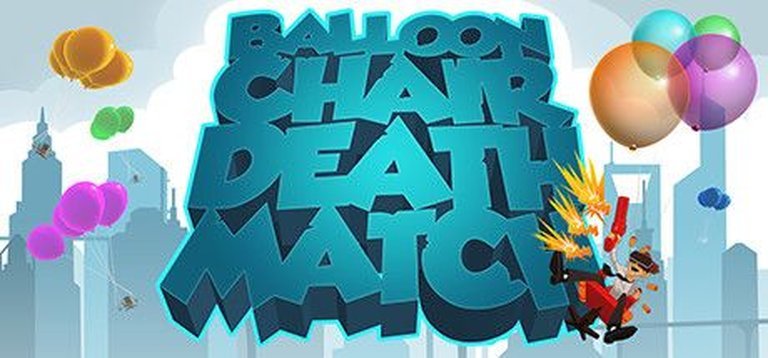
Balloon Chair Death Match is a VR action shooter where players pilot a balloon-suspended office chair hundreds of meters above the ground, engaging in chaotic combat with unique weapons like Pigeon Launchers and Laser Guns across sprawling cityscapes. Developed by Climax Studios, it features a 14-mission single-player campaign, multiplayer modes (Deathmatch/Team Deathmatch/Survival), 14 achievements, and cross-play support for Oculus Rift and HTC Vive with comfort settings to minimize VR discomfort.
Gameplay Videos
Where to Buy Balloon Chair Death Match
PC
Balloon Chair Death Match Cracks & Fixes
Balloon Chair Death Match Patches & Updates
Balloon Chair Death Match Reviews & Reception
steambase.io (73/100): This score is calculated from 52 total reviews which give it a rating of Mostly Positive.
Balloon Chair Death Match: Review
Introduction
In the nascent landscape of virtual reality gaming, few titles captured the absurd yet thrilling potential of the medium quite like Balloon Chair Death Match. Released in July 2017 by Climax Studios, this VR-exclusive action shooter promised a surreal experience: piloting an office chair hundreds of meters above cityscapes, tethered only by party balloons, while engaging in airborne combat with rival pilots. Its premise—equal parts Jules Verne-esque whimsy and Mad Max-esque carnage—was a bold statement for VR’s creative potential. Yet, despite its audacious concept, the game remains a cult curiosity, celebrated for its ingenuity but hampered by technical and community challenges. This review dissects Balloon Chair Death Match‘s place in gaming history, analyzing its development, mechanics, world-building, and legacy as a product of its time and a testament to VR’s uncharted ambitions.
Development History & Context
Studio and Vision:
Developed and published by Climax Studios—a veteran studio with roots tracing back to 1988 (known for titles like Sudeki and Overlord)—Balloon Chair Death Match emerged from a deliberate pivot into VR. The studio recognized the medium’s capacity for novel experiences, aiming to create a game that leveraged VR’s immersive strengths while minimizing its weaknesses. The vision, as articulated in promotional materials, was to fulfill players’ “unobtainable dreams” of weightless flight and chaotic combat, blending accessibility with absurdity.
Technological Constraints:
Released amidst the first wave of mainstream VR adoption (2016–2018), the game operated within strict hardware limitations. It required specific minimum specs: an Intel i5-4590 or AMD FX 8350 CPU, GTX 970/R9 290 GPU, and 4GB RAM, targeting early adopters of HTC Vive and Oculus Rift. Crucially, it was a seated VR experience, designed to reduce motion sickness—a forward-thinking choice given the era’s prevalent issues with locomotion in VR. The use of tracked motion controllers for aiming and movement demonstrated an understanding of VR’s tactile potential, though the seated constraint limited spatial interaction.
Gaming Landscape:
2017 was a pivotal year for VR. While Beat Saber and Superhot VR were defining immersive experiences, many VR titles struggled with content scarcity and high entry barriers. Balloon Chair Death Match arrived as an antidote: a self-contained, arcade-style shooter with low barriers to entry. Its focus on short, chaotic matches and a robust single-player campaign reflected the era’s trend toward bite-sized VR experiences, aiming to attract both casual and hardcore gamers. However, the competitive online multiplayer landscape was overcrowded with free-to-play titles, making its $14.99 price point a hurdle for a niche product.
Narrative & Thematic Deep Dive
Plot and Setting:
The game exists in an alternate reality where balloons dominate transportation, rendering traditional vehicles obsolete. Players assume the role of a Balloon Chair pilot—presumably a renegade or entertainer—tasked with navigating two sprawling, vertically oriented cities: Floatonia City and a unnamed metropolis with monorail systems. The narrative, however, is deliberately skeletal. There are no cutscenes, no dialogue, and no overarching story beyond the implied anarchy of aerial combat. This abstraction serves the gameplay, placing emphasis on emergent chaos over scripted plot.
Thematic Analysis:
Balloon Chair Death Match explores themes of absurd escalation and competitive freedom. The juxtaposition of mundane office chairs with deadly weapons (e.g., “Pigeon Launchers” that fire explosive birds) and fantastical flight mechanics satirizes modern life’s mundane routines, transforming them into high-stakes spectacle. The balloons symbolize fragility and unpredictability—a single shot can send plummeting to one’s doom—mirroring the precariousness of VR itself as an experimental medium. The lack of traditional characters forces players to project their own narratives onto the experience, turning each match into a darkly comedic ballet of destruction.
Dialogue and Characters:
With no human characters or spoken dialogue, the “narrative” is conveyed through gameplay mechanics and environmental storytelling. The monorail trains, for instance, act as environmental hazards (“don’t play chicken with the trains”), while pickups like “Mr. Spongy Face” (a bouncy shield) inject slapstick humor. This silence is intentional, letting the physics and player interactions drive the story—a bold choice for an era fixated on cinematic VR experiences.
Gameplay Mechanics & Systems
Core Loop:
The gameplay revolves around two interconnected systems: balloon management and combat. Players use a virtual joystick in their left hand to steer, while their right hand wields a six-shooter. Altitude is controlled by inflating balloons (to ascend) or shooting them (to descend), creating a delicate risk-reward balance. Combat focuses on popping opponents’ balloons to force them into a “death match,” where a final shot ensures elimination. This loop is deceptively simple yet skill-demanding, requiring spatial awareness and precision aiming.
Combat and Progression:
Five unique weapons differentiate combat styles:
– Revolver: Standard sidearm with high accuracy.
– Laser Gun: Rapid-fire but overheat-prone.
– Pigeon Launcher: Area-of-effect damage.
– Shotgun: Close-range devastation.
– Harpoon Gun: For tethering and disabling.
Progression is lightweight, tied to 14 achievements (e.g., “Deadeye” for popping 100 balloons, “City Slicker” for completing city challenges). These encourage mastery but lack depth, as no character progression or unlocks exist beyond cosmetic bragging rights.
Multiplayer and Modes:
The game offers:
– Campaign: 14 mission-based challenges across two cities.
– Bot Matches: Solo or co-op deathmatches against AI.
– Online Multiplayer: Deathmatch, Team Deathmatch, and Survival modes.
Cross-play between Oculus Rift and HTC Vive was a forward-thinking feature, but the mode was plagued by low player counts, making matchmaking rare. Survival mode—waves of bot opponents—proved the most enduring draw, though its high difficulty (e.g., “Bring It On!” required reaching wave 10) frustrated newcomers.
UI and Controls:
The minimalist UI prioritizes immersion: a gas meter (for altitude control), ammo counter, and minimap. Comfort settings (e.g., vignetting to reduce motion sickness) were commendable, but controls had quirks. Some players reported bugs like decoupled head tracking, while others found the seated experience limiting for those expecting room-scale VR.
World-Building, Art & Sound
Setting and Atmosphere:
The two cities—Floatonia (more whimsical) and its unnamed counterpart (industrial)—are rendered in a stylized, low-poly aesthetic. Skyscrapers loom like monoliths, their glass facades reflecting the sky, while tiny cars and monorails create a sense of scale. The world feels alive, with dynamic clouds and ambient sounds, yet its verticality encourages players to explore rooftops and alleyways, turning each match into an aerial safari.
Visual Direction:
Artistically, the game embraces absurd minimalism. Balloons burst in satisfyingly cartoonish fashion, and weapon effects are vibrant (e.g., green laser beams). The office chair’s mundane design—cushions, armrests—jarringly contrasts with the chaos, grounding the fantasy. Textures are basic but functional, optimized for VR’s performance demands.
Sound Design:
Audio reinforces the game’s anarchic tone. Gunshots are punchy, balloon pops are crisp, and the city’s ambient hum (distant sirens, wind) creates immersion. The most memorable element is the monorail train’s deafening horn—a warning that often arrives too late, leading to comical deaths. Music is sparse, focusing on dynamic tension during combat, which heightens the stakes without overwhelming players.
Immersion and Presence:
Balloon Chair Death Match excels in VR presence. The seated position makes players feel genuinely perched on an edge, leaning instinctively to avoid collisions. Balloon physics, though simplified, provide tactile feedback, making altitude adjustments feel weighty and consequential.
Reception & Legacy
Launch Reception:
Upon release, Balloon Chair Death Match polarized players. On Steam, it garnered a “Mostly Positive” score (73%, based on 52 reviews), with praise for its “fun gameplay” and “unique concept.” Critics like GameCut highlighted its “tactile dogfights” and accessibility. However, complaints about motion sickness and a “lack of players” in multiplayer were common. The niche price point ($14.99) and VR exclusivity limited its audience, ensuring it remained a cult favorite rather than a mainstream hit.
Critical and Player Sentiment:
– Positive: Celebrated for its creativity, polished controls, and replayability in Survival mode.
– Negative: Criticized for shallow gameplay depth and reliance on bots.
– Mixed: Appreciation for its VR comfort features but frustration with the seated experience.
Evolution of Reputation:
Over time, Balloon Chair Death Match has been re-evaluated as a pioneering VR experiment. Its influence is subtle but visible in later titles like Hover Junkers (chaotic physics) and The Light Brigade (vertical aerial combat). Steam reviews from 2023 still lament its “dead multiplayer,” yet players express nostalgia for its unbridled joy. It remains a case study in VR’s early ambitions—flawed but fearless.
Legacy:
The game’s legacy is twofold:
1. As a Time Capsule: It embodies 2017 VR’s experimental spirit, where concepts trumped polish.
2. As a Design Template: Its seated VR model, comfort settings, and weapon variety informed later VR shooters.
Notably, Climax Studios has not revisited the IP, leaving it as a standalone curiosity.
Conclusion
Balloon Chair Death Match is a flawed gem—an audacious VR experiment that succeeded more as a concept than a product. Its genius lies in transforming a mundane object (an office chair) into a vessel for high-fantasy combat, a feat that remains unmatched in its absurdity and charm. The gameplay, while repetitive, offered moments of pure, unadulterated fun—especially in Survival mode or during chaotic multiplayer matches. Yet, its reliance on a shrinking player base, technical quirks, and limited longevity prevent it from being a classic.
In the pantheon of VR history, Balloon Chair Death Match occupies a unique space: it’s a reminder of the medium’s early struggles and potential. It’s not a masterpiece, but it’s a vital one—a testament to the risks developers took when VR was still finding its voice. For players willing to embrace its quirks, it offers a glimpse into a world where gravity is optional, and death comes with a pop.
Verdict: A bold, flawed, and unforgettable entry in VR’s canon, worthy of preservation for its sheer audacity. ★★★☆☆ (3/5) – A cult classic with a heart of chaos.