
- Release Year: 2022
- Platforms: PlayStation 4, PlayStation 5, Windows
- Publisher: Maximum Games, LLC, Maximum Games Ltd
- Developer: Beijing Magic Fish Technology Co., Ltd.
- Genre: Action
- Perspective: Diagonal-down
- Game Mode: Single-player
- Gameplay: Puzzle elements, Stealth, Survival horror
- Setting: Fantasy
- Average Score: 62/100
Description
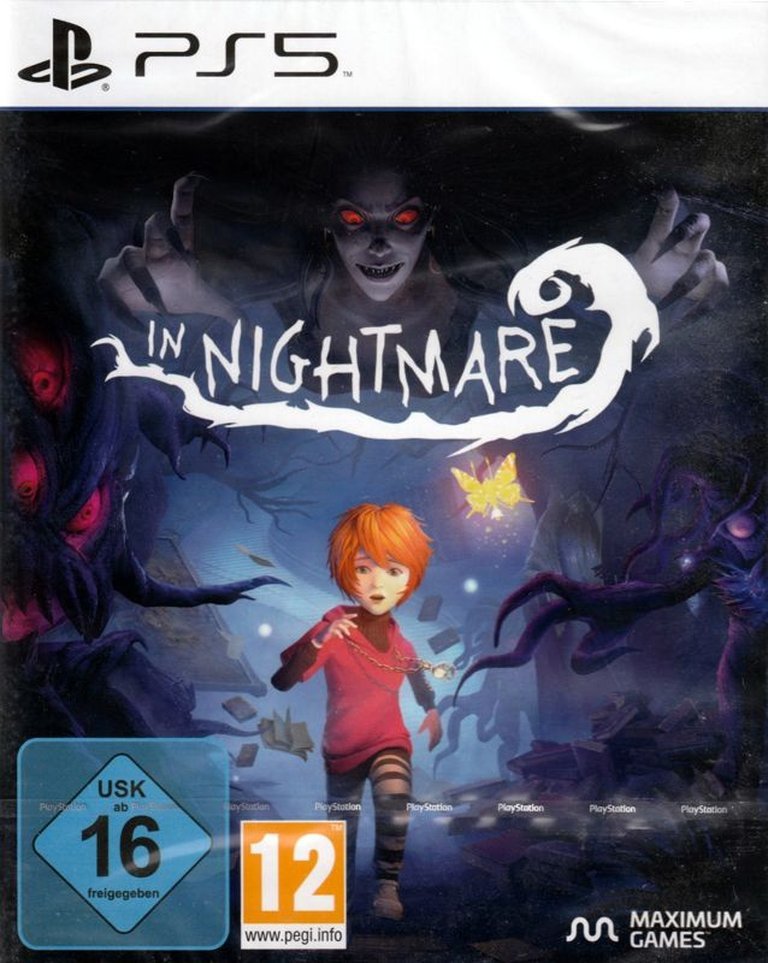
In Nightmare is a survival horror game that follows a young boy named Bill who escapes into a dark, twisted dream world reflecting his childhood trauma from a broken family. Set in an isometric, 2D scrolling fantasy environment, players navigate through nightmare-themed levels based on Bill’s past memories—such as his home, school, and an amusement park—while solving puzzles, evading terrifying monsters born from his psychological struggles, and uncovering the truth hidden within his mind.
Gameplay Videos
Where to Buy In Nightmare
PC
In Nightmare Free Download
In Nightmare Cracks & Fixes
In Nightmare Mods
In Nightmare Guides & Walkthroughs
In Nightmare Reviews & Reception
metacritic.com (80/100): A beautiful landscape touching on the process of working through trauma.
explosionnetwork.com (25/100): I haven’t finished before reviewing.
fingerguns.net (40/100): Its execution leaves it languishing in disappointment.
apptrigger.com (80/100): A beautiful landscape touching on the process of working through trauma.
monstercritic.com (85/100): The subject matter and its handling is quite masterful.
In Nightmare: A Journey Through a Fractured Mind
Introduction
In the crowded landscape of indie horror, In Nightmare emerges as a bold yet flawed exploration of childhood trauma. Developed by Beijing Magic Fish Technology Co., Ltd. and published by Maximum Games, this title promises a psychological descent into a young boy’s subconscious, where memories morph into monsters and fear becomes physical. Yet, as we peel back its layers, we find a game grappling with its own identity—caught between the atmospheric dread of Little Nightmares and the narrative ambition of Silent Hill. This review will dissect In Nightmare‘s intricate tapestry of trauma, examining how its ambitious vision collides with mechanical imperfections. Our thesis is clear: while the game delivers a hauntingly beautiful world and a poignant metaphor for healing, it ultimately succumbs to repetitive gameplay, technical instability, and narrative opacity, relegating it to a footnote in the genre’s history rather than a landmark achievement.
Development History & Context
Beijing Magic Fish Technology Co., Ltd., a relatively obscure Chinese studio, crafted In Nightmare with a distinct vision: to translate childhood trauma into a playable nightmare. Published by Maximum Games (known for diverse catalog releases), the game launched on March 29, 2022, for PlayStation 4, expanding to PS5, PC, and Nintendo Switch. Built on the Unity engine, it capitalized on indie-friendly development tools but faced constraints inherent to smaller studios.
The release landscape was saturated with “child-in-horror” titles like Little Nightmares, making comparisons inevitable. Magic Fish Studio’s answer was an isometric perspective—a deliberate divergence from side-scrollers—aiming to evoke a sense of disorientation and introspection. However, this choice introduced technical hurdles. Unity’s flexibility couldn’t mask limitations in animation fidelity and performance optimization, particularly on PS5. The game’s core concept—purifying a fractured mind through puzzle-solving and stealth—was noble but ambitious for a debut project, resulting in a product that felt both undercooked and overambitious.
Narrative & Thematic Deep Dive
In Nightmare revolves around Bill, a boy shattered by familial dissolution, bullying, and guilt-induced trauma. His coma becomes a literal battleground where his subconscious manifests repressed memories as grotesque monsters. The narrative unfolds through environmental storytelling: decaying mansions, sterile hospitals, and nightmarish funhouses represent pivotal life events. Themes of guilt, abandonment, and self-redemption permeate each level, with “purifying” monsters symbolizing the arduous process of confronting trauma.
The storytelling relies on fragmented notes, spectral flashbacks, and environmental cues, avoiding explicit dialogue. This approach mirrors Miyazaki-esque ambiguity but stumbles in execution. Notes are riddled with typos (“egnite the fireplace”) and awkward phrasing, breaking immersion. Bill’s voice—supposedly that of a child—adopts unnaturally clinical introspection (“Why do people manipulate?”), creating tonal dissonance. Key plot points, like the cause of his coma or his family’s fate, remain frustratingly vague, forcing players into speculative interpretation. The abrupt ending—Bill awakening alone in an abandoned hospital—feels incomplete, suggesting sequel bait rather than thematic closure. While the concept of “monsters as manifestations of guilt” is potent, its delivery undermines emotional resonance, reducing Bill’s journey to a series of disconnected vignettes rather than a cohesive catharsis.
Gameplay Mechanics & Systems
In Nightmare blends stealth, puzzle-solving, and light platforming in a top-down perspective, but its mechanical core is marred by inconsistency.
Stealth & Evasion: Players hide in closets, distract enemies with thrown objects, and use Bill’s spirit companion—a Navi-like fairy—to scout paths. However, enemy AI is rudimentary, with predictable patrol patterns. Stun orbs (limited-use items) trivialize encounters, encouraging players to sprint past threats rather than engage in tense hide-and-seek. This renders the horror toothless, transforming sequences meant to induce anxiety into tedious slogs.
Puzzles: These range from clever environmental riddles (e.g., aligning symbols to unlock doors) to obtuse, illogical challenges. A school-level maze of endless doors exemplifies poor design, offering no clear clues and forcing repetitive backtracking. Puzzles often halt momentum, breaking immersion—a critical flaw in a horror game reliant on sustained tension. Platforming sections compound issues, with delayed jump inputs and a fixed camera obscuring hazards. Bill’s movements feel sluggish, and deaths from misjudged leaps (due to camera obstruction) are frequent and infuriating.
Progression: Collectibles (vinyls, memory fragments) offer minimal reward, mostly cosmetic skins. The spirit’s upgrades (detection range, flight distance) feel underutilized, as its abilities are rarely essential. Save-file corruption bugs (e.g., resetting to the prologue mid-chapter) further erode trust in the game’s systems. Ultimately, the loop—find keys, solve puzzles, evade monsters—becomes monotonous, lacking the dynamism to sustain engagement beyond the initial hours.
World-Building, Art & Sound
In Nightmare‘s art direction is its triumph. Environments are vivid, distorted reflections of Bill’s psyche: a gothic mansion splintered by trauma, a kaleidoscopic crystal cave, and a grotesque circus funhouse. Colors clash violently—deep blacks against neon pinks—heightening unease. Textural details, like light refracting through crystalline walls or peeling wallpaper in a school, showcase meticulous craft. Creature design is similarly evocative: smaller horrors (e.g., the ghostly “Witch Lady”) exude uncanny dread through jerky animations and whispers. Larger foes, however, suffer from stiff, clay-like movements that feel unintentionally comedic.
Sound design amplifies the atmosphere, with ambient drones and dissonant piano scores inducing anxiety. Enemy footsteps and distant growls create genuine tension, though musical motifs repeat excessively. The silence of the protagonist—no dialogue, only gasps and wails—adds to the isolating tone. Yet technical flaws tarnish this polish. Screen-tearing and frame-rate drops plague PS5 gameplay, and the fixed camera often obscures critical paths during stealth or platforming. These issues disrupt immersion, turning moments of beauty into frustrations.
Reception & Legacy
In Nightmare received a lukewarm critical reception, with a Metacritic score of 53 (“Mixed or Average”). Praise centered on its artistry and thematic ambition: App Trigger lauded it as a “beautiful landscape touching on trauma” (8/10), while ZTGD called the subject matter “masterful” (85%). However, the majority highlighted flaws: Finger Guns scored it 40%, calling it a “pale competitor” to genre peers, and Worth Playing noted it left players “more frustrated than frightened” (45%).
User reviews were harsher, with a Metacritic user score of 4.5. Complaints centered on bugs, poor controls, and a “boring” narrative. Commercially, the game underperformed, overshadowed by titles like Little Nightmares II. Its legacy is one of unrealized potential—a cautionary tale about ambition without polish. While it influenced no direct successors, it remains a reference point for discussing indie horror’s pitfalls: fragmented narratives, technical instability, and the difficulty of translating psychological depth into engaging gameplay.
Conclusion
In Nightmare is a game of stark contrasts: a visually stunning world undermined by repetitive mechanics, a poignant narrative buried under obtuse design, and ambitious themes crippled by technical flaws. Its depiction of trauma as a literal nightmare is conceptually rich, but the execution falters—typos, save bugs, and a camera that fights the player turn its psychological depth into a slog. For horror enthusiasts seeking atmospheric dread, it offers fleeting moments of brilliance; for players valuing cohesive design, it is a cautionary tale.
In the end, In Nightmare is a fractured experience—much like its protagonist. It reminds us that in gaming, vision alone is insufficient; execution is the bridge between ambition and art. While it may not haunt the annals of history, its remnants—a twisted mansion here, a poignant note there—linger as a testament to the delicate line between a nightmare and a masterpiece. Verdict: A deeply flawed, intermittently captivating journey best approached with tempered expectations.