
- Release Year: 2010
- Platforms: iPad, iPhone, Windows Phone, Windows, Xbox 360
- Publisher: Fun Infused Games
- Developer: Fun Infused Games
- Genre: Action
- Perspective: Top-down
- Game Mode: Co-op, Single-player
- Gameplay: Arcade, Shooter
- Setting: Futuristic, Sci-fi
- Average Score: 85/100
Description
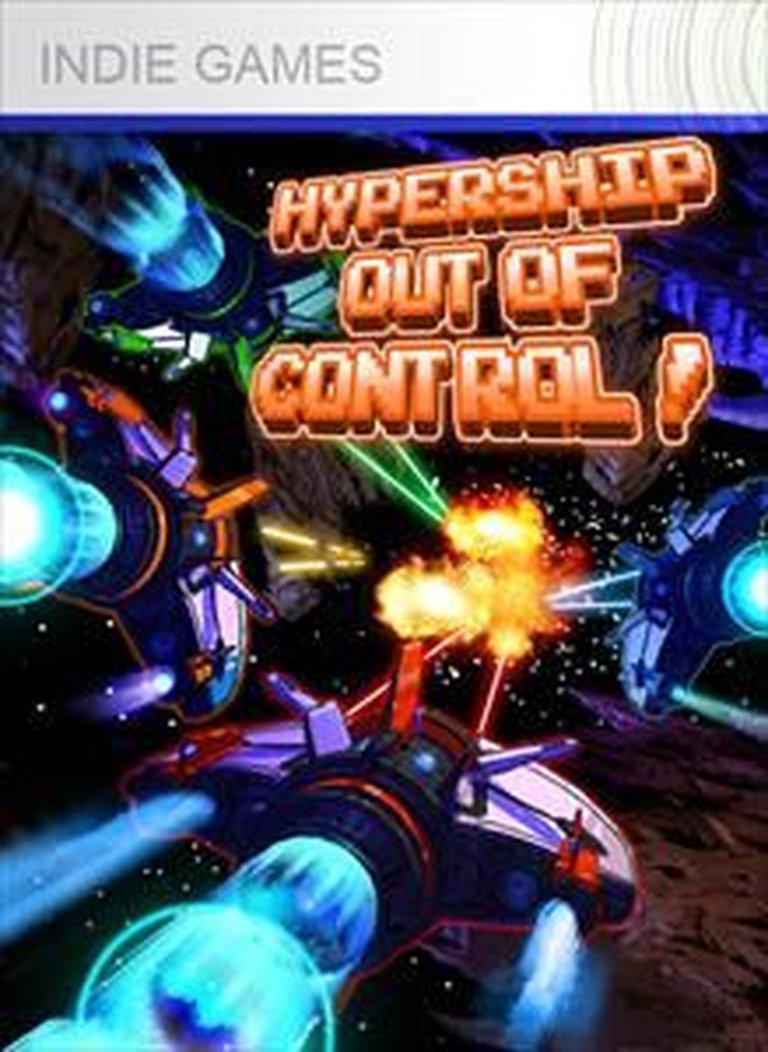
Hypership Out of Control is a top-down arcade shooter where players pilot a perpetually accelerating spaceship that cannot stop, forcing them to shoot enemies, dodge obstacles, and collect coins to achieve high scores before crashing. The game features single-player and multiplayer modes (up to four players) with options like standard, hardcore, and practice modes, and includes a unique revival mechanic where crashed teammates can be rescued by surviving players.
Gameplay Videos
Where to Buy Hypership Out of Control!
PC
Hypership Out of Control! Reviews & Reception
metacritic.com (85/100): Stupidly addictive.
zeboyd.com : If you like old-school high score chasing arcade games, you need this game ASAP.
Hypership Out of Control!: Review
Introduction
In an era saturated with hyper-realistic blockbusters and sprawling open worlds, Hypership Out of Control! emerges as a defiant throwback to the golden age of arcade shooters. Released initially on Xbox 360 in 2010, this top-down sci-fi gem from indie developer Fun Infused Games thrusts players into a perpetually accelerating spacecraft, where survival hinges on split-second reflexes and strategic coin collection. Its premise—brakes are out, the accelerator is jammed, and death is inevitable—perfectly encapsulates a pure, unadulterated high-score chase. This review argues that Hypership Out of Control! transcends its humble origins through masterful design, relentless addictive gameplay, and a reverence for retro classics, cementing its status as a timeless arcade experience that proves depth thrives within simplicity.
Development History & Context
Hypership Out of Control! emerged from the fertile grounds of the Xbox Live Indie Games (XBLIG) scene, a platform democratizing development for small studios. Fun Infused Games, essentially the creative vision of Kris Steele, served as sole developer, programmer, artist, sound designer, and writer—a testament to the era’s resourcefulness. The game leveraged Microsoft’s XNA framework, allowing Steele to build a polished experience despite indie constraints.
Released on September 15, 2010, for 80 Microsoft Points (under $1), it arrived during a pivotal moment for digital distribution. XBLIG fostered experimental titles, and Hypership capitalized on this by offering bite-sized, high-replay-value gameplay. Its subsequent ports—iOS (2011), Windows Phone (2011), Windows (2015 via Steam)—demonstrated its cross-platform appeal. The narrative behind the credits is equally telling: Steele handled most aspects himself, with Liam Tarpey composing its retro synth soundtrack and Jon Watte contributing the high-score system. This scrappy yet passionate development ethos mirrors the game’s core philosophy: maximum impact with minimal resources.
Narrative & Thematic Deep Dive
Hypership Out of Control! strips narrative to its barebones essence, framing itself as a “trashy sci-fi novel from 1994.” The premise is unflinchingly absurd: you command a failing starship hurtling through space at ever-increasing speeds. Your space-brakes are out, the accelerator is stuck, and survival is impossible. This setup eschews complex lore in favor of thematic purity—inevitability versus defiance. Every coin collected, every obstacle dodged, feels like a futile yet heroic battle against entropy.
The game’s “insults,” credited to Steele, inject dark humor. Upon crashing, players are met with taunts like “Your piloting skills are as broken as your ship,” reinforcing the narrative’s tone of gallows humor. There are no characters or dialogue; instead, the ship becomes a tragic hero, and the player’s score its legacy. This minimalist approach focuses attention on gameplay, transforming the act of survival into a compelling story of personal perseverance.
Gameplay Mechanics & Systems
The core loop is deceptively simple: shoot obstacles, collect coins, and survive. Yet its execution reveals layers of depth:
- The Unstoppable Acceleration: The ship’s speed increases continuously, forcing players to react to escalating chaos. This creates a relentless tension, where survival becomes a dance between risk and reward.
- Obstacles and Power-Ups: Asteroids, mines, and alien structures litter the path. Power-ups (like a temporary “super gun”) add strategic depth, but their placement often demands treacherous navigation.
- Coin Economy: Coins serve dual purposes—they boost scores and, in Coin Down mode, act as a health bar. This mechanic transforms collection into a high-stakes gamble, with routes favoring safety or maximum points.
- Mode Variety:
- Normal: Three lives per stage with escalating speed.
- Hardcore: One life for ultimate challenge.
- Super Speed: Removes speed limits for pure chaos.
- Coin Down: Unlimited lives but a constantly draining coin counter.
- Practice: For honing skills.
- Multiplayer (1-4 Players): Co-op is a standout feature. Crashed players can be revived by teammates, fostering camaraderie or chaotic sabotage—a “New Super Mario Bros.” dynamic in space.
The UI is minimalist yet functional, with crisp visuals and responsive controls. The “one-more-go” appeal stems from its perfect difficulty curve: easy to learn, brutally hard to master.
World-Building, Art & Sound
Hypership’s world is a neon-drenched, retro-futuristic dreamscape. The top-down perspective emphasizes speed and claustrophobia as obstacles rush toward the screen. Steele’s pixel art is vibrant and clean, with glowing coins, explosive asteroids, and sleek ship designs evoking classic titles like Asteroids. The sci-fi setting is functional—alien structures and space debris imply a universe in disarray, aligning with the game’s theme of decay.
Sound design is equally retro-tinged. Liam Tarpey’s synth-heavy soundtrack pulses with arcade energy, perfectly syncing to the gameplay’s rhythm. Sound effects—laser blasts, explosions, coin chimes—are crisp and nostalgic, immersing players in a digital arcade. This audiovisual cohesion creates an atmosphere of controlled chaos, where beauty lies in the blur of motion and the symphony of destruction.
Reception & Legacy
Hypership Out of Control! was met with critical acclaim, particularly for its accessibility and addictive design. On Xbox 360, it scored 85% on MobyGames, with Eurogader.net praising its “incessant one-more-go appeal” and Brash Games calling it “deliciously retro.” Upon iOS release, it maintained momentum with an 85 Metascore, with 148Apps deeming it “a must-own” and TouchArcade lauding its “lovingly crafted retro style.”
Commercially, its low price point (80 Microsoft Points / $1.99 on Steam) made it a hit, especially on mobile. Its legacy lies in its influence on indie arcade games. The sequel, Hypership Still Out of Control! (2014), refined but struggled to innovate—a common indie pitfall. Yet the original’s emphasis on pure score-chasing and local multiplayer remains influential, inspiring titles like Geometry Wars and Vampire Survivors to blend simplicity with depth. Its Steam community (86/100 player score) and enduring presence on app stores testify to its timeless appeal.
Conclusion
Hypership Out of Control! is a masterclass in distilled gameplay. It eschews modern bloat for a laser-focused experience where every coin, shot, and near-miss resonates with weight. Kris Steele’s indie triumph proves that innovation thrives not in complexity, but in perfecting a single, compelling idea. Its retro aesthetic, punishing yet fair mechanics, and multiplayer chaos make it a perennial favorite. While its narrative is intentionally thin, its thematic core—defiance against inevitable failure—resonates deeply. As a historical artifact, it encapsulates the XBLIG era’s spirit; as a game, it remains an essential pilgrimage for arcade purists. Verdict: A timeless high-score classic that belongs in every discerning gamer’s library.