
- Release Year: 2005
- Platforms: Windows, Xbox 360
- Publisher: Alpha Secret Base
- Developer: Alpha Secret Base
- Genre: Action, Puzzle
- Perspective: Top-down
- Game Mode: Single-player
- Gameplay: Grid-based, Puzzle, Sokoban, Terrain traversal, Tool use
- Setting: Post-apocalyptic, Wasteland
- Average Score: 70/100
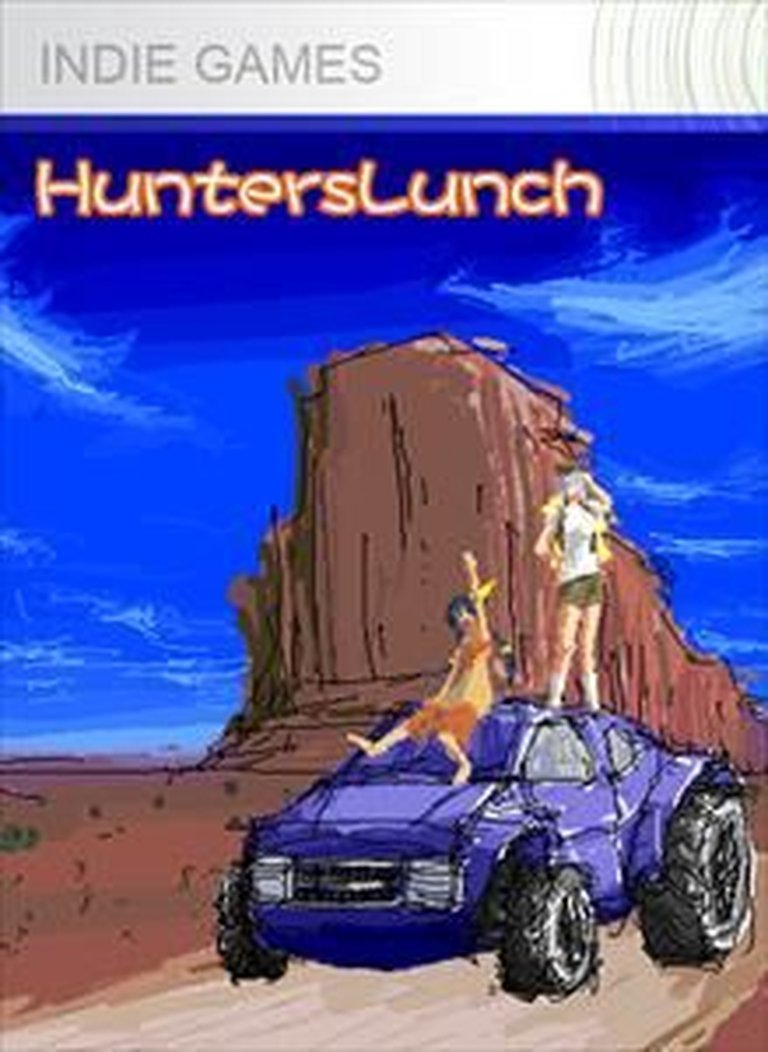
Description
Set in a perilous wasteland teeming with wolves and monsters, HuntersLunch follows young Natsuki as she navigates treacherous terrain after her buggy breaks down, forcing her to solve 30 top-down puzzles using tools like hammers and bridges while avoiding enemies. This sequel to SummerVacation challenges players to manipulate terrain-specific obstacles—requiring on-foot travel on spiked ground and buggy use on rocky paths—with gameplay reminiscent of Sokoban, featuring replayable solution videos, multiple characters, and selectable background music tracks.
HuntersLunch: A Puzzle Adventure in the Wasteland
Introduction
In the vast, sun-scorched wastelands of gaming history, certain titles emerge not as blockbusters, but as charming, self-contained gems. HuntersLunch (2005), a top-down puzzle game from indie developer Alpha Secret Base, is precisely such a treasure. As the sequel to 2003’s SummerVacation, it continues the saga of Natsuki—a young girl navigating perilous terrain—but this time, survival hinges not on summer escapades, but on wit and resourcefulness. Though released in an era dominated by heavyweights like Resident Evil 4 and God of War, HuntersLunch carved its niche by blending classic puzzle mechanics with anime aesthetics and a deceptively simple premise: reach your lunch while avoiding wolves and monsters. This review dissects how HuntersLunch masterfully distills survival into a 30-stage puzzle odyssey, examining its design, legacy, and place in the Natsuki-san series.
Development History & Context
Alpha Secret Base, a small Japanese studio, crafted HuntersLunch as a follow-up to SummerVacation, establishing it as part of the niche Natsuki-san series. Released for Windows on April 8, 2005, and later ported to Xbox 360 on October 22, 2009, the game emerged during a pivotal year in gaming. 2005 marked the launch of the Xbox 360, shifting industry focus toward high-definition graphics and online play. Yet, HuntersLunch remained defiantly retro: a top-down, single-screen puzzle game echoing 1980s classics like Adventures of Lolo and Sokoban. This contrast highlights its developer’s vision—a deliberate rejection of graphical arms races in favor of pure, distilled gameplay. Technologically, it was constrained by its indie origins, eschewing 3D for crisp 2D sprites and straightforward mechanics. The Xbox 360 port, handled by the same studio, preserved this ethos, adapting controls to a controller without reinventing its core. The result was a title that thrived on ingenuity, not spectacle, embodying the spirit of mid-2000s indie experimentation.
Narrative & Thematic Deep Dive
HuntersLunch’s narrative is minimalist yet evocative. Natsuki, stranded in a hostile wasteland after her buggy breaks down, must traverse treacherous terrain to reach safety—symbolized by her lunch. The plot serves as a framing device for puzzles, but it injects tension through environmental storytelling: wolves lurk in the shadows, spiked land threatens to impale her, and crumbling rocks hint at the wasteland’s decay. Thematic depth emerges from its contrast between vulnerability and resilience. Natsuki’s journey underscores resourcefulness—she repurposes tools (hammers, shovels) to overcome obstacles, mirroring real-world survival logic. The absence of dialogue forces players to infer her determination through gameplay: every solved puzzle feels like a small victory against desolation.
Character dynamics are subtle. While Natsuki is the protagonist, a second playable character, Mimika, offers replay value with implied differences in movement or strategy. Unlockable outfits from SummerVacation serve as narrative callbacks, rewarding long-time fans and deepening the series’ continuity. Thematically, HuntersLunch explores frailty and ingenuity: Natsuki is physically vulnerable but mentally sharp, turning wastelands into playgrounds of logic. The “lunch” goal becomes a metaphor for hope—a primal desire to return to safety amid chaos.
Gameplay Mechanics & Systems
At its core, HuntersLunch is a real-time puzzle game where each stage is a self-contained riddle. Players guide Natsuki (or Mimika) across single-screen maps, using terrain-specific traversal and environmental tools to reach the goal. Key mechanics include:
-
Terrain Restrictions:
- Rocky terrain: Only passable via buggy.
- Spiked land: Navigable only on foot.
- Water: Requires bridges.
This duality forces constant, strategic toggling between vehicle and pedestrian modes, adding layers to spatial reasoning.
-
Tools and Interactions:
- Hammer: Destroys rocks, clearing paths.
- Shovel: Digs holes to fill with drums or trap enemies.
- Drums: Pushable blocks that bridge gaps or block attacks.
- Bridges: Placed to cross water.
Tools must be combined creatively—e.g., digging a hole to fill with a drum, then bridging water to reach lunch.
-
Enemies and Threats: Wolves and monsters patrol stages, punishing missteps. Their AI is rudimentary but effective, creating pressure as players multitask between puzzles and survival.
-
Progression and Replayability:
- 30 stages escalate in complexity, introducing new tool combinations.
- An efficiency replay system records optimal solutions, encouraging players to refine strategies.
- Five BGM tracks and two playable characters add replay value, though mechanics remain identical across characters.
Controls are tight and intuitive—direct, responsive movement ensures frustration stems from puzzle logic, not clunky inputs. The UI is minimalist, with clear icons for tools and objectives.
World-Building, Art & Sound
The wasteland is a character in its own right. Its harshness is rendered through distinct environmental hazards: jagged rocks, piercing spikes, and murky water. Top-down perspective maximizes visibility, turning each stage into a diorama of danger. Visually, the game adopts a vibrant anime/manga aesthetic. Natsuki’s expressive sprite contrasts with the desolate backdrop, her bright clothing a beacon against muted earth tones. Enemy designs—snarling wolves, abstract monsters—blend cartoonish charm with threatening silhouettes, balancing accessibility with tension.
Art direction emphasizes clarity: tools and terrain are instantly recognizable, and animations (e.g., Natsuki dusting off her boots) add personality. Backgrounds suggest a larger world—distant mountains and ruins hint at Natsuki’s wider journey beyond the puzzle screens.
Sound design is functional yet atmospheric. Five BGM tracks range from peppy, adventurous melodies to tense, drum-driven rhythms, letting players tailor the mood. Sound effects are crisp: hammer strikes, drum rolls, and enemy growls provide tactile feedback. The absence of voice work reinforces the game’s focus on silent, focused gameplay, making every click and clank feel deliberate.
Reception & Legacy
HuntersLunch launched with minimal fanfare. On Windows, it garnered no mainstream reviews, and its Xbox 360 port in 2009 fared similarly. MobyGames records only three player ratings (averaging 3.4/5), while VGChartz lists a paltry two Xbox 360 owners and a community score of 7.2/10. Critics ignored it, likely due to its niche appeal and lack of marketing. Yet, it cultivated a cult following among puzzle enthusiasts drawn to its Sokoban-inspired depth.
Its legacy lies in its series context. As the middle entry in the Natsuki-san trilogy (sandwiched between SummerVacation and Ganbare Natsuki-san), it refined the formula established by its predecessor. While the series remained obscure, HuntersLunch exemplified indie devotion: small studios could thrive on pure gameplay without AAA budgets. Its influence is indirect, seen in indie titles like Unpacking or Lorelei and the Laser Eyes, which similarly distill complex themes into minimalist puzzles.
Conclusion
HuntersLunch is a masterclass in focused design. In a gaming landscape obsessed with scale and spectacle, it stands as a testament to the enduring power of clever puzzles and charming art. Its flaws—minimal narrative, repetitive visuals—are overshadowed by its elegant mechanics and satisfying progression. While it never achieved mainstream success, its legacy endures as a cult classic, beloved for its ingenuity and heart.
For puzzle aficionados, it is a hidden feast—a 30-stage banquet of logic set against the harsh beauty of the wasteland. For historians, it represents a golden era of indie experimentation, proving that the most memorable games need not be the loudest. In the pantheon of puzzle adventures, HuntersLunch may be a niche entry, but within its wastelands, it offers treasures worth discovering.