
- Release Year: 2010
- Platforms: Windows
- Publisher: Reflexive Entertainment Inc.
- Developer: Howling Moon Games
- Genre: Adventure
- Perspective: First-person
- Game Mode: Single-player
- Gameplay: Hidden object, Puzzle elements
- Setting: Horror
- Average Score: 67/100
Description
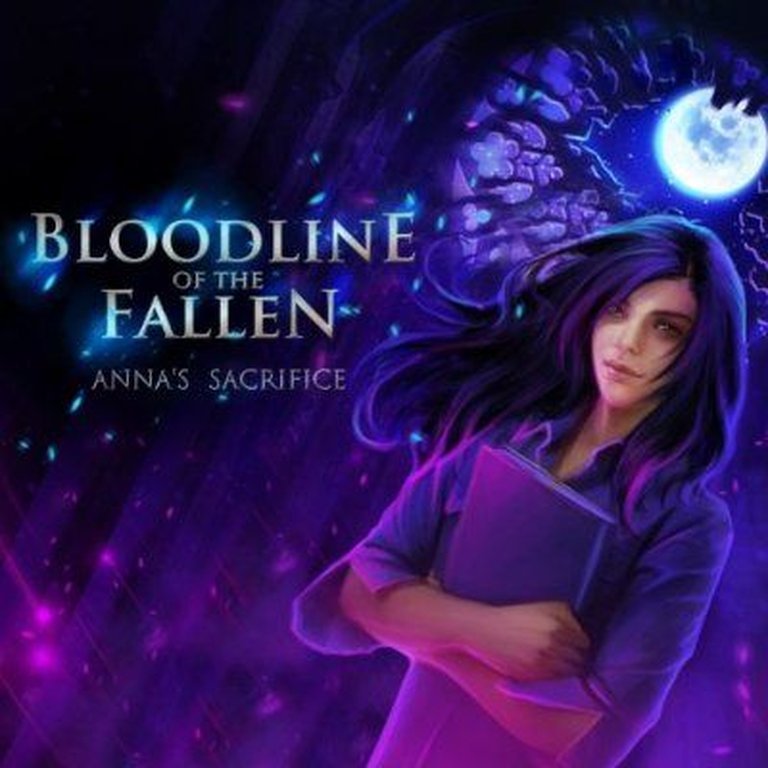
After Anna writes a book exposing her father’s past involvement with a dark cult, he is murdered and she is plagued by nightmares of sinister rituals. Teaming up with two friends, she travels globally to unravel her family’s connection to the secret society in this hidden object adventure filled with puzzle challenges and horror-themed investigation.
Gameplay Videos
Bloodline of the Fallen: Anna’s Sacrifice Guides & Walkthroughs
Bloodline of the Fallen: Anna’s Sacrifice Reviews & Reception
gamezebo.com : Its object hunts are gorgeous and creative, but its story is pure gibberish.
Bloodline of the Fallen: Anna’s Sacrifice: Review
Introduction
In the shadowed corridors of casual gaming history, Bloodline of the Fallen: Anna’s Sacrifice emerges as a bold, if flawed, experiment in merging the accessible hidden-object genre with dark, occult storytelling. Released in October 2010 by Howling Moon Games under publisher Reflexive Entertainment, this Windows-exclusive shareware title thrusts players into a haunting narrative of cults, family secrets, and sacrifice. While its hand-painted visuals and inventive gameplay puzzles hint at untapped potential, the game’s legacy is defined by its dichotomy: a breathtaking aesthetic wrapped in a narrative so baffling it becomes its own undoing. This review dissects Anna’s Sacrifice as a product of its time, dissecting its ambitions, execution, and place in the evolution of narrative-driven casual games.
Development History & Context
Bloodline of the Fallen: Anna’s Sacrifice was crafted by Howling Moon Games, a studio with a penchant for hybrid genres, evidenced by their concurrent work on titles like GabCab and Bigfoot: Chasing Shadows. The project was shepherded by producer Ion Hardie and executive producer Lee Ing, with Duane Beckett serving as both game designer and story writer. Reflexive Entertainment, known for casual hits like Wik and the Fable of Souls, leveraged its distribution network to position the game as a premium hidden-object experience.
Technologically, the game embraced the era’s casual-game ecosystem: it required Windows XP/Vista, a modest 1.2 GHz CPU, 512 MB RAM, and relied on Adobe Flash Player 10 for its runtime. This constraints-driven environment necessitated efficient asset loading and scene transitions, yet the team still delivered lush, hand-painted environments. The 2010 gaming landscape saw hidden-object games (HOGs) dominating platforms like Big Fish Games, criticized for repetitive gameplay but hungry for differentiation. Anna’s Sacrifice aimed to inject psychological horror and globe-trotting mystery into the formula, a move both ambitious and risky in a market prioritizing accessibility over narrative depth.
Narrative & Thematic Deep Dive
The plot follows Anna, a writer who defies her father’s dying wish by publishing his memoirs about a sinister cult. His murder plunges her into a nightmare-tinged investigation, aided by two unnamed friends, as she travels from Russia to jungles, seeking answers about her family’s occult legacy. The narrative framework—unearthing dark family secrets through supernatural clues—carries potent thematic weight: generational trauma, the consequences of truth, and the burden of heritage. However, execution falters dramatically.
Dialogue and quest logic are described by reviewers as “gibberish” (GameZebo) and “overwrought gobbledegook.” Scenes transition abruptly (e.g., Russia to a jungle shaman’s hut) with no clear motivation, and objectives often defy logic (e.g., building a hut because “if it’s wet, they’ll stay resolute”). Cult lore is presented through cryptic text panels, but their symbolism is never contextualized, reducing the occult themes to atmospheric window dressing. Characters lack development: Anna is a passive protagonist, while shamans and cultists exist as plot devices rather than fleshed-out figures. The central mystery—whether her father’s tales were real—never coheres, leaving players adrift in a sea of disconnected vignettes.
Gameplay Mechanics & Systems
At its core, Anna’s Sacrifice is a hidden-object game where players scour cluttered scenes for listed items. The right-hand panel displays words, actions (e.g., “spray bees”), or pictorial clues, adding welcome variety beyond simple text lists. A hint system highlights items but is artificially limited to three concurrent hints with a 1.5-minute recharge—a design choice intended to encourage strategic use but criticized as needlessly restrictive.
The game’s true innovation lies in its diverse mini-games, deployed between HOG sequences:
– Symbol Matching: Using a magnifying glass to find hieroglyphs in tomes.
– Assembly Puzzles: Reassembling torn family portraits or adjusting room temperatures to unlock secret doors.
– Action Sequences: Photographing “silent witnesses” (e.g., an owl) or clicking on “blood drinkers” (vampires) emerging from coffins.
– Logic Challenges: Grinding leaves in specific potion-making orders or following arrow sequences on snake drawings.
Yet these mechanics suffer from inconsistency. Some puzzles (e.g., temperature adjustment) are intuitive, while others (e.g., identifying “mirrored elements” as broken glass shards) frustrate due to ambiguous objectives. Smaller objects—like single letters (A, B, C)—blend into backgrounds, creating artificial difficulty. The camera mechanic, while thematically fitting, offers no gameplay difference from a standard cursor, highlighting the game’s tension between innovation and execution.
World-Building, Art & Sound
Anna’s Sacrifice excels in its visual direction. Art director Rajesh Persaud’s team delivered hand-painted scenes of striking vibrancy and detail: Russian locales evoke cold grandeur, jungle huts feel claustrophobic and ancient, and recurring motifs like wolves or vultures enhance the horror atmosphere. The first-person perspective immerses players in these environments, though the static compositions occasionally limit interactivity.
Sound design, credited to Igor Grosul and George Hufnagl, amplifies the occult unease. Ambient sounds—creaking wood, distant howls, and ritualistic chants—complement the visuals without overpowering them. Music swells during key moments, though its thematic motifs (e.g., minor-key strings for cult scenes) remain generic. The audio-visual synergy succeeds in generating dread, even when the narrative falters, making the game’s world a character in its own right.
Reception & Legacy
Upon release, Anna’s Sacrifice garnered muted critical and player reception. GameZebo’s 70% review praised its “gorgeous and creative” object hunts but lamented the “pure gibberish” plot, calling the game “beautiful, if baffling.” Players scored it 3.0/5, with minimal engagement. Commercially, as a shareware title on platforms like Big Fish Games, it likely performed modestly, overshadowed by more straightforward HOGs.
Its legacy is one of cautionary curiosity. The game is rarely cited in industry retrospectives, though it exemplifies the 2010s trend of “elevated” casual games attempting narrative weight. Its influence is negligible, but its experimental mini-games and art direction prefigure later narrative-driven HOGs like The Black Mirror series. Today, it survives as a niche artifact—a reminder that ambition without clarity can undermine even the most visually compelling visions.
Conclusion
Bloodline of the Fallen: Anna’s Sacrifice is a game of stark contrasts. Its hand-painted vistas and inventive puzzles showcase the artistic heights achievable within casual gaming constraints, while its incoherent narrative and flawed mechanics reveal the genre’s pitfalls. It succeeds as a sensory experience—evoking dread through art and sound—but fails as a story. For historians, it stands as a bold misstep: a title that dared to infuse HOGs with psychological horror but lacked the narrative scaffolding to support its ambition.
Verdict: A visually striking but narratively fractured artifact. Recommended for genre enthusiasts seeking atmospheric curiosities, but not for those prioritizing coherent storytelling. Its place in history is secured not as a masterpiece, but as a testament to the challenges—and occasional glories—of pushing genre boundaries.