
- Release Year: 2017
- Platforms: Windows
- Publisher: Bartoš Studio
- Developer: Bartoš Studio
- Genre: Action
- Perspective: 1st-person
- Gameplay: Shooter
- Setting: Futuristic, Sci-fi
- Average Score: 82/100
Description
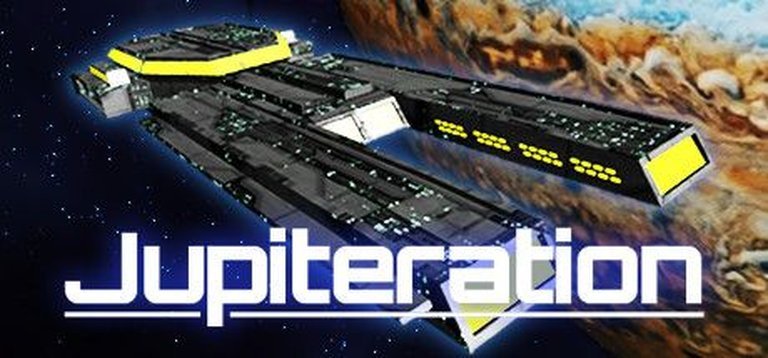
Jupiteration is a Sci-Fi arcade shooter designed for virtual reality headsets like HTC Vive and Oculus Rift, where players take on the role of a stranded spaceship pilot fighting waves of alien crafts and bosses. Utilizing a shield for defense or evasion, players progress through multiple areas while upgrading weapons such as a laser pistol, sniper rifle, and minigun, ultimately facing off against the final boss in a VR-optimized experience.
Where to Buy Jupiteration
PC
Jupiteration Guides & Walkthroughs
Jupiteration Reviews & Reception
steambase.io (75/100): Mostly Positive
store.steampowered.com (90/100): All Reviews: Positive
Jupiteration: Review
Introduction
In the nascent days of virtual reality gaming, when the HTC Vive and Oculus Rift were still carving their place in mainstream consciousness, Jupiteration emerged as a testament to the unbridled ambition of indie developers. Released on March 10, 2017, Bartoš Studio’s VR-exclusive wave shooter arrived at a pivotal moment—one where the industry was desperately seeking content to justify expensive hardware investments. While its name may not echo through the annals of gaming history like Half-Life: Alyx or Superhot VR, Jupiteration stands as a fascinating microcosm of early VR’s potential and limitations. This review deconstructs its legacy as a competent, if flawed, arcade experience that captures the raw excitement of immersion while ultimately succumbing to the constraints of its era. Jupiteration is not a revolutionary title, but rather a preserved artifact—a functional, if simplistic, embodiment of VR’s formative years.
Development History & Context
Bartoš Studio, a small, virtually unknown developer, crafted Jupiteration with a singular, focused vision: to deliver a pure, arcade-style shooting experience built from the ground up for VR. In 2017, the VR landscape was a Wild West of experimentation. The success of titles like Space Pirate Trainer (2016) proved that wave-based shooters could be a viable genre for the medium, but developers grappled with the steep technological barriers of the time. Bartoš Studio’s approach was pragmatic: prioritize stability and accessibility over innovation. The game was optimized for the first-generation Vive and Oculus Rift, requiring a minimum of an Intel i5 2400 CPU and GTX 980 GPU—a testament to the era’s performance compromises.
Crucially, Jupiteration was designed for “the best user experience in VR,” meaning its development cycle centered on intuitive motion controls and room-scale immersion. The studio released several patches post-launch, including v1.04 (April 2017) to adjust difficulty and v1.05 (May 2017) to address performance issues on lower-end hardware. These updates reveal a developer responsive to early adopters’ feedback, yet constrained by the resources and market pressures of an indie studio. The game’s $2.99 price point (later reduced to $1.49) positioned it as an accessible entry point for VR enthusiasts, reflecting a common strategy in 2017 to price VR content lower than traditional titles to drive adoption.
Narrative & Thematic Deep Dive
Jupiteration’s narrative is a minimalist sci-fi trope, stripped to its core to serve the gameplay loop. Players assume the role of an unnamed spaceship pilot stranded in hostile space, tasked with battling through waves of alien UFOs to confront a final boss. There are no cutscenes, no dialogue, and no character development—only the stark, silent struggle for survival. This intentional omission of narrative depth places the emphasis squarely on gameplay, echoing classic arcade titles like Galaga or Asteroids. However, it also highlights the game’s primary limitation: a lack of emotional resonance.
Thematically, Jupiteration leans into archetypal sci-fi motifs of isolation and humanity versus alien threat. The “stranded pilot” premise evokes Alien-esque helplessness, while the relentless enemy waves symbolize an overwhelming, faceless antagonist. The absence of human allies reinforces the theme of solitude in the void of space. Yet, the game fails to explore these ideas beyond surface-level aesthetics. The narrative is purely functional—a justification for combat rather than a narrative vehicle. This approach, while efficient for an arcade shooter, prevents Jupiteration from transcending its genre confines and achieving the storytelling heights of contemporaneous single-player VR experiences like Wilson’s Heart.
Gameplay Mechanics & Systems
Jupiteration’s gameplay is a distilled wave shooter formula, optimized for VR’s strengths. The core loop involves surviving six waves of increasingly difficult alien enemies before a climactic boss battle. Combat is visceral and tactile: players wield a laser pistol as their primary weapon, with upgrades (damage, fire rate) unlocking through progression. Secondary weapons—sniper rifles, machine guns, and more—are temporarily available as pickups, each with limited ammo, encouraging strategic use.
The shield mechanic is the game’s standout feature. Players can activate a defensive barrier to deflect projectiles or dodge attacks, adding a layer of tactical decision-making to the relentless shooting. The shield HUD displays wave progress, a subtle yet effective touch that enhances immersion. Movement is handled via room-scale locomotion, allowing players to physically dodge incoming fire—a critical element for VR engagement.
However, the systems exhibit notable flaws. Enemy variety is limited, with UFOs and large boss crafts offering only superficial differences in behavior. The weapon upgrade system feels shallow, lacking meaningful customization depth. Critically, a persistent achievement bug—”Battery is dead: Let the final boss die of exhaustion”—remains unfixed since launch, as confirmed by community reports in 2024. This oversight undermines the sense of progression and highlights the game’s rushed polish. Additionally, the difficulty curve is uneven, with early levels feeling punitive due to limited initial resources, a problem addressed in v1.04’s patch but not fully resolved.
World-Building, Art & Sound
Jupiteration’s world is a compact, self-contained space environment, divided into several distinct arenas. The art direction is functional rather than innovative, favoring a gritty sci-fi aesthetic with metallic textures and neon accents. Explosions shower the screen with debris, a visual flourish designed to maximize the chaotic intensity of VR combat. Post-launch updates improved lighting and shadow quality, enhancing the atmosphere’s cohesion. While not graphically groundbreaking, the art style effectively conveys the game’s arcade-like urgency.
The sound design, though not extensively detailed in sources, complements the visuals. Weapon impacts and explosions provide satisfying auditory feedback, creating a soundscape that reinforces the action. The absence of a musical score is a deliberate choice, likely to maintain focus on the spatial audio cues that guide players in VR. This minimalist approach works, as the enemies’ proximity and direction are communicated through sound, heightening immersion. Overall, the world-building prioritizes gameplay clarity over narrative depth, ensuring that players are always aware of threats and objectives in the 360-degree space.
Reception & Legacy
At launch, Jupiteration received a muted reception. Steam data indicates a “Mostly Positive” rating based on 24 reviews (as of 2026), with 75% positive scores. Players lauded its accessibility and polished VR controls but criticized its repetitive gameplay and lack of content. One Steam review aptly summarized it as a “poor man’s Space Pirate Trainer,” acknowledging its functional nature while underscoring its derivative nature. The absence of professional critic reviews (noted by Metacritic) reflects its niche appeal; Jupiteration flew under the radar of mainstream gaming outlets.
Commercially, the game found modest success as part of the Bartoš Studio VR Bundle (2017), which bundled it with Tengutana and EggTime 2. Its legacy lies in its role as an early VR benchmark. It exemplifies the genre’s simplicity in 2017—wave-based combat, intuitive motion controls, and arcade pacing—while also highlighting its limitations: shallow mechanics, underdeveloped narrative, and technical hiccups. The game’s Windows Mixed Reality support (added in December 2017) demonstrated a commitment to expanding VR accessibility, though it did little to bolster its reputation.
Influence-wise, Jupiteration left no discernible mark on subsequent titles. It remains a footnote in VR history, referenced primarily in discussions of 2017’s experimental phase. Yet, its persistence on platforms like Steam and its inclusion in preservation databases (e.g., MobyGames) underscore its value as a cultural artifact—a snapshot of when VR developers prioritized pure, unadulterated action over narrative or innovation.
Conclusion
Jupiteration is a product of its time and ambitions: a competent, if unremarkable, VR wave shooter that delivers on the core promise of immersion without aspiring to greatness. Its strengths lie in its responsive VR controls, satisfying combat loop, and commitment to arcade pacing—qualities that make it a fleeting but enjoyable experience for enthusiasts of the genre. However, its narrative thinness, mechanical repetition, and unresolved bugs prevent it from standing the test of time.
As a historical document, Jupiteration holds greater significance than as a game. It encapsulates the experimental spirit of 2017’s VR scene, where indie developers raced to fill the void between hardware and software. Bartoš Studio’s creation, while flawed, is a testament to the passion that drove the medium’s early adoption. For modern players, it serves as a curiosity—a window into a bygone era of virtual reality. For historians, it is a functional artifact illustrating the genre’s formative stages. Jupiteration is not a masterpiece, nor is it a failure. It is simply Jupiteration: a modest, memorable blip on the radar of VR’s evolution, preserved for posterity.