
- Release Year: 1994
- Platforms: PC-98, PlayStation, SEGA Saturn, Windows
- Publisher: Acer Third Wave Software (Beijing) Co., Ltd, KOEI Co., Ltd., Koei Tecmo Games Co., Ltd.
- Developer: KOEI Co., Ltd.
- Genre: Compilation, Strategy, Tactics
- Perspective: Top-down
- Game Mode: Single-player
- Gameplay: Turn-based
- Setting: Ancient, China, Historical events, Imperial
- Average Score: 7/100
Description
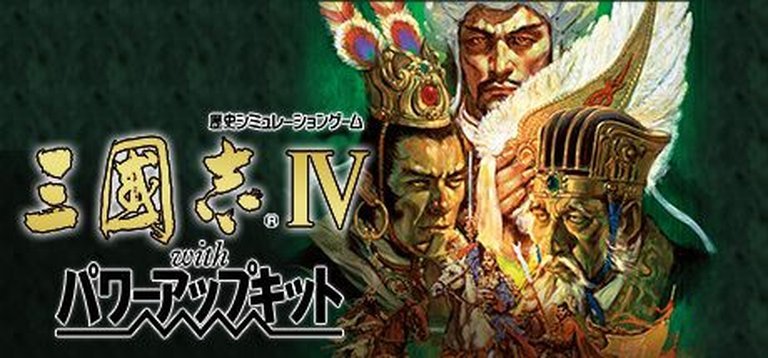
Romance of the Three Kingdoms IV with Power Up Kit is a compilation of the base game and its expansion, set in ancient China during the turbulent Three Kingdoms period. This turn-based strategy game features an isometric perspective, over 450 officers to command, and introduces ‘Frontier Tribes’ as a diplomatic element, allowing players to engage in historical warfare and tactics.
Gameplay Videos
Romance of the Three Kingdoms IV with Power Up Kit Guides & Walkthroughs
Romance of the Three Kingdoms IV with Power Up Kit Reviews & Reception
mobygames.com (7.0/100): KOEI is rare example that proves some developers can create better sequals than its already legendary predecessors…
Romance of the Three Kingdoms IV with Power Up Kit: Review
Introduction
In the annals of strategic gaming, few franchises command the reverence of KOEI’s Romance of the Three Kingdoms. Spanning decades and generations of hardware, this series has chronicled the epic clash of warlords in ancient China with a blend of historical authenticity and grand ambition. Romance of the Three Kingdoms IV with Power Up Kit (1994), a compilation of the base game Wall of Fire and its expansion Sangokushi IV: Power Up Kit, stands as a pivotal refinement of this legacy. It elevates the series’ complex diplomacy, visceral warfare, and character-driven narratives to new heights, offering a remarkably deep simulation of a nation torn by ambition and conflict. This review posits that IV with Power Up Kit represents the zenith of the series’ early evolution—a masterclass in turn-based strategy that, while constrained by its era, remains a towering achievement in historical simulation and a cornerstone of KOEI’s enduring influence.
Development History & Context
Developed by KOEI Co., Ltd. under the visionary guidance of Kou Shibusawa, Romance of the Three Kingdoms IV with Power Up Kit emerged in 1994 for the NEC PC-98, a dominant Japanese computer platform of the era. Shibusawa’s team, veterans of historical simulations like Nobunaga’s Ambition, sought to refine the series’ formula by amplifying strategic depth and narrative immersion. The PC-98’s technical limitations—a modest CPU, RAM, and reliance on floppy disks—presented significant challenges for the game’s ambitious scope. Yet KOEI ingeniously leveraged these constraints, optimizing the game’s isometric engine and turn-based systems to deliver a seamless experience.
The gaming landscape of 1994 was dominated by DOS-based strategy games in the West, but KOEI carved a unique niche through its dedication to East Asian history. IV arrived amidst a burgeoning interest in complex wargames, yet distinguished itself by prioritizing character relationships and political maneuvering over pure military conquest. The Power Up Kit (1994) was not merely an addendum but a critical evolution, addressing player feedback by introducing unprecedented customization and replayability. Its later ports to PlayStation (1997), SEGA Saturn (1997), and Windows (1999) expanded its reach, while the 2017 Steam release brought it to modern audiences, albeit with compromises like removed video cutscenes due to licensing issues. This journey across platforms underscores KOEI’s commitment to preserving and enhancing a seminal work.
Narrative & Thematic Deep Dive
Romance of the Three Kingdoms IV with Power Up Kit draws its narrative foundation from Luo Guanzhong’s 14th-century novel Romance of the Three Kingdoms, itself a dramatization of China’s tumultuous 3rd-century civil war. The game meticulously weaves historical authenticity with fictional liberties, offering players a tapestry of ambition, betrayal, and loyalty. Players assume roles of warlords like Cao Cao, Liu Bei, or Sun Jian, each imbued with distinct traits and ambitions that shape their paths toward unifying China under their rule.
The base game’s narrative revolves around the classic struggle for the Han Dynasty’s collapse, but the Power Up Kit injects profound thematic richness through its three new scenarios:
– “Ganung, Unifies the World”: A fictional “what if” where Cao Cao seizes all but three territories, forcing players to overthrow a near-omnipotent emperor. This explores themes of authoritarianism and the fragility of power.
– “The Continent is Devastated and Three Heroes Rise”: A “blank slate” scenario starting with Sun Jian, Cao Cao, and Liu Bei holding single territories and equal resources. It examines how character and leadership shape destiny amid chaos.
– “King of Kings, Rises in the North and South”: A historically grounded follow-up to Liu Bei’s death, focusing on the southern rebellion of Meng Huo. It delves into cultural conflict and the cost of expansionism.
Character interactions drive the narrative’s soul. With over 450 officers—each boasting unique biographies, loyalties, and ambitions—relationships form the core of the drama. Generals defect based on perceived slights, advisors plot behind the scenes, and even heirs inherit skills and grudges. The Power Up Kit‘s “General’s Plan Suggestion” system adds spontaneity, with officers proposing risky gambits like poisonings or ambushes, testing the player’s trust and strategic nerve. This web of human ambition transforms conquest from a mechanical exercise into a tragedy of flawed heroes, where victory often comes at the cost of moral compromise.
Gameplay Mechanics & Systems
At its core, IV with Power Up Kit is a turn-based grand strategy game where players manage kingdoms across a hexagonal map of ancient China. Each turn represents a month, demanding meticulous balancing of resources, diplomacy, and military might. The core loop revolves around five interconnected systems:
-
Kingdom Management: Players govern cities, allocating food, gold, and troops. Infrastructure development (e.g., granaries, markets) affects stability and growth, while neglect breeds rebellion. The Power Up Kit‘s editor allows players to modify city data, enabling custom scenarios with altered resource distributions.
-
Diplomacy and Intrigue: Relations with other warlords fluctuate through negotiations, marriages, and alliances—until broken by betrayal. The “Frontier Tribes” mechanic, introduced in the expansion, adds a layer of external diplomacy, where players must appease or conquer nomadic groups to secure borders. Spies, assassins, and rumor-mongering offer tools to destabilize rivals, though the AI’s aggressive use of these in the Power Up Kit raises the stakes significantly.
-
Character and Officer System: Officers serve as the game’s beating heart. Each possesses stats for leadership, intelligence, and combat prowess, alongside hidden traits like ambition and loyalty. Players can recruit, promote, or dismiss them, with the Power Up Kit letting players edit abilities and even create custom officers. The “Specialty Inheritance” mechanic ensures that when a ruler dies, a compatible heir may inherit their skills, adding dynastic depth.
-
Combat: Battles unfold on field maps and within besieged castles, blending tactical depth with grand-scale warfare. Units include infantry, cavalry, archers, and siege engines like catapults and chariots. The Power Up Kit adds “final battles inside castles,” where defenders must hold key structures amid chaotic close-quarters combat. Terrain and weather influence outcomes, with wind or fire turning the tide. Single combat mode, a Power Up Kit addition, lets officers duel one-on-one, resolving conflicts through dice rolls and character stats—a nod to the novel’s dramatic showdowns.
-
Scenarios and Replayability: Beyond the historical campaign, the Power Up Kit offers three fictional scenarios and an “Ilgito” mode for arena-style character tournaments. The encyclopedia, another expansion feature, provides detailed officer backgrounds, enriching the lore. These features, combined with the map and editor, ensure near-infinite replayability.
The UI, though austere by modern standards, is remarkably efficient. Color-coded city indicators and officer portraits streamline management, while the Power Up Kit‘s improved AI actively counters stale strategies, making conquest a dynamic challenge.
World-Building, Art & Sound
Romance of the Three Kingdoms IV with Power Up Kit transports players to a meticulously realized Three Kingdoms-era China. The game’s world-building excels in its fidelity to historical geography and culture, with cities like Luoyang and Chengdu positioned accurately, each bearing unique strategic and economic traits. The map’s isometric perspective, rendered in detailed pixel art, captures the scale and diversity of ancient China—from northern steppes to southern jungles. The Power Up Kit enhances this with special effects like realistic rain animations and battle sequences featuring coiling dragons, adding visual flair without sacrificing clarity.
Art direction prioritizes authenticity over spectacle. Officers are represented by digitized portraits reflecting their historical personas; Liu Bei’s benevolent gaze contrasts with Cao Cao’s shrewdness. City illustrations, while simple, evoke architectural styles, and the game’s UI uses traditional Chinese motifs to reinforce its setting. This artistry, combined with the Power Up Kit’s graphical tweaks, creates an immersive atmosphere of historical grandeur.
Sound design is where the game truly shines, particularly in the Power Up Kit. The original game’s MIDI-based soundtrack, composed by Jun Nagao and Kunio Kubota, is already lauded for its “oriental paradise” melodies—haunting strings and percussive rhythms that evoke the era’s epic scope. The Windows and Saturn versions upgrade this to semi-orchestral arrangements, with WAV-based sound effects for clashing swords and marching troops. These audio elements transform routine turns into dramatic sagas, making resource management feel like the prelude to war. The absence of voice acting is mitigated by the music’s emotive power, which remains a hallmark of the series.
Reception & Legacy
Upon release, Romance of the Three Kingdoms IV with Power Up Kit received critical acclaim for its depth and refinement. Critics praised the “beautiful music,” improved graphics, and sophisticated diplomacy, with one reviewer noting it was “about as good as it gets for historical strategy.” The game’s commercial success was bolstered by multi-platform releases, finding audiences on PC, consoles, and later, via digital re-releases. However, some detractors argued the series formula had stagnated, with “basically the same story” as previous installments.
Over time, its reputation has solidified as a landmark in strategy gaming. The Power Up Kit‘s innovations—editing tools, new scenarios, and AI improvements—became series staples, influencing titles like Romance of the Three Kingdoms IX‘s “Gathering of Heroes” mode. Modern players, particularly on Steam, offer mixed reviews (55% positive), citing its steep learning curve and dated interfaces as barriers, but acknowledging its unparalleled strategic depth. Culturally, it preserved interest in the Three Kingdoms narrative for Western audiences, acting as a gateway to novels and adaptations like the 1995 CCTV series (whose footage appeared in CD-ROM versions).
Conclusion
Romance of the Three Kingdoms IV with Power Up Kit stands as a towering achievement in historical simulation, a game where the clash of swords is inseparable from the weight of human ambition. Its masterful blend of turn-based strategy, character-driven storytelling, and rich world-building remains influential, even if its technical constraints now feel archaic. The Power Up Kit is not merely an expansion but a transformative vision, one that redefined replayability and customization for the genre. While newcomers may find its complexity daunting, veterans will discover a masterpiece of design—a game where every turn is a negotiation, every battle a drama, and every choice echoes through history. In the pantheon of strategy gaming, IV with Power Up Kit is not just an entry in a series; it is a testament to the power of simulation to bring epic sagas to life. For those willing to heed its call, it offers an unforgettable journey into the heart of ancient China’s greatest conflict.