
- Release Year: 2000
- Platforms: Windows
- Publisher: Microsoft Corporation
- Developer: Microsoft Corporation
- Genre: Compilation
- Perspective: Not specified
- Game Mode: Single-player
- Gameplay: Card game, Pinball, Puzzle, Strategy
- Average Score: 68/100
Description
Microsoft Windows 2000 includes a compilation of five classic pre-installed games: 3D Pinball (a pinball simulation), Minesweeper (a logic puzzle of uncovering hidden mines), Solitaire (a card game of building ascending suit sequences), Spider Solitaire (a multi-pile card game requiring strategic sorting), and FreeCell (a solitaire variant where all cards are face-up and must be arranged by suit). These games were seamlessly integrated into the operating system, offering accessible entertainment for users across different skill levels.
Microsoft Windows 2000 (included games): Review
Introduction
In the annals of digital history, few artifacts are as ubiquitously familiar yet curiously unexamined as the games bundled within Microsoft Windows 2000. Released on February 17, 2000, as part of the professional-grade NT 5.0 operating system, this compilation—comprising 3D Pinball: Space Cadet, FreeCell, Minesweeper, Spider Solitaire, and Solitaire—transcended mere diversion. It became a cornerstone of the Windows ecosystem, shaping how millions interacted with their computers long before the era of app stores and mobile gaming. These titles were not standalone products but integrated utilities, designed to demystify graphical interfaces while offering moments of respite. This review deconstructs this unlikely suite of “system software,” arguing that its genius lay in its elegant fusion of accessibility, pedagogy, and addictive simplicity. In an era dominated by complex PC titles like Diablo II and Deus Ex, these humble games revolutionized casual gaming by embedding it directly into the digital workspace.
Development History & Context
The genesis of Windows 2000’s games is rooted in Microsoft’s long-standing philosophy of using entertainment as a Trojan horse for technological adoption. Solitaire, created in 1988 by intern Wes Cherry, was explicitly designed to teach novice Windows users mouse-based drag-and-drop mechanics—a lesson disguised as leisure. Similarly, Minesweeper debuted in the 1990 Microsoft Entertainment Pack for Windows, evolving into a staple of the OS. By 2000, Microsoft’s internal development had refined these prototypes into polished, stable experiences optimized for the NT kernel. The technological constraints of the era were significant: Windows 2000 prioritized stability over spectacle, meaning its games eschewed cutting-edge graphics in favor of lightweight, reliable code.
The gaming landscape of 2000 was a powder keg. The PlayStation 2 launched in March, heralding the dawn of 128-bit consoles, while PC gaming saw landmark releases like Diablo II and Age of Empires II. Against this backdrop, Windows 2000’s included games operated in a parallel universe. They were not competitors but cultural phenomena—accessible to anyone with a pre-installed OS, requiring no downloads or installations. Their design reflected Microsoft’s dual goals: to acclimate users to GUI navigation (e.g., Solitaire’s drag-and-drop) and to showcase Windows’ multitasking capabilities (e.g., alt-tabbing between 3D Pinball and a spreadsheet). The games’ persistence across Windows versions from 95 to XP underscores their role as the OS’s silent ambassadors.
Narrative & Thematic Deep Dive
While devoid of explicit plots, these games thrive on implicit narratives and thematic universes. Minesweeper casts the player as a demining expert in a war-torn landscape. Each cleared tile represents reclaimed territory, while numbered tiles serve as tactical intelligence. The absence of a story makes player imagination pivotal—defusing a minefield becomes a heroic act of logic.
Solitaire and Spider Solitaire embody the archetypal struggle against chaos. In Solitaire, the initial shuffled tableau represents disorder, and the player’s task is to impose sequence upon randomness, building foundations from Ace to King. This mirrors the broader human desire for order amid entropy. Spider Solitaire elevates this with its 10-pile battlefield, where the narrative tension escalates with each suit added. The game’s three modes (1, 2, or 4 suits) reflect escalating complexity, from a tranquil garden (1 suit) to a multi-front war (4 suits).
FreeCell introduces a theme of strategic liberation. Dealt all cards face-up, the player must navigate a chess-like puzzle, using four “free cells” as temporary sanctuaries. The narrative is one of calculated risk—every move is a gambit to free trapped cards.
Finally, 3D Pinball: Space Cadet provides the suite’s sole explicit narrative. Borrowed from Full Tilt! Pinball, it immerses players as a Space Cadet training for the “Pinball Defense Academy.” Missions like launching satellites or destroying asteroids frame pinball as a sci-fi epic, complete with a “gopher” mascot and a “gravity well” obstacle. This whimsical framing transforms arcade physics into a story of galactic heroism.
Gameplay Mechanics & Systems
The suite’s brilliance lies in its diversity of mechanics, each a masterclass in distilled design.
-
Minesweeper: A grid-based logic puzzle where players deduce mine locations from numerical clues. The Beginner mode’s 9×9 grid (introduced in Windows 2000, up from 8×8) reduced mine probability to 12.3%, solving a long-standing balance issue. Intermediate (16×16, 40 mines) and Expert (30×16, 99 mines) layers scale challenge precisely. The “reveal adjacent empty squares” mechanic for “0” tiles creates satisfying chain reactions, while right-click flags introduce defensive strategy.
-
Solitaire: Klondike Solitaire’s core loop—moving cards between columns in alternating colors—is refined by Windows 2000’s 1-card or 3-card draw options. The latter adds strategic depth, forcing players to plan multiple moves ahead. The UI’s drag-and-drop feel is tactile, and the “undo” feature (a rarity in 2000) mitigates frustration.
-
Spider Solitaire: This variant uses a 10-column tableau, demanding spatial reasoning. Cards can only be moved in descending sequences, and foundations must be built by suit. The 1-suit mode is a gentle introduction, while 4-suit mode becomes a brutal test of memory and foresight. Dealing 10 new cards at a time injects high-stakes tension.
-
FreeCell: All 52 cards are visible, eliminating luck. The four free cells act as temporary buffers, enabling complex card shuffling. The game guarantees solvability, turning it into a pure logic puzzle akin to chess. Its ruleset (e.g., black 6 over red 7) is deceptively simple but allows for emergent complexity.
-
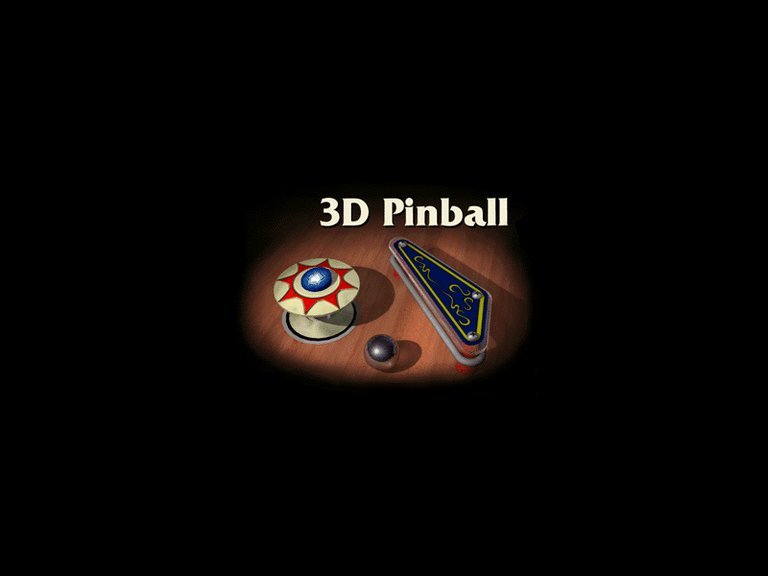
3D Pinball: Space Cadet: Borrowed from Full Tilt! Pinball, this table features realistic physics, ramps, and bumpers. Objectives include hitting “bumper targets” or launching satellites. The multiball mechanic and score multiplier system reward skill, while the “gopher” and “gravity well” provide unique challenges. Its integration into Windows made it arguably the most accessible pinball game ever.
World-Building, Art & Sound
The suite’s art and sound design prioritize functionality over flair, yet create cohesive micro-worlds. Minesweeper uses a minefield motif with stark grey grids and bomb icons, while Solitaire and Spider Solitaire feature crisp card suits and classic green felt tables. The UI’s 3D beveled edges and drop shadows evoke Windows 2000’s “Professional” aesthetic—clean, corporate, yet inviting.
3D Pinball stands apart with its vibrant 3D polygonal graphics. The space theme is rendered with primary colors, starship motifs, and dynamic camera angles. Shadows and particle effects (e.g., ball trails) ground the arcade fantasy in tangible physics. Sound design is minimal but effective: Minesweeper’s tile clicks, Solitaire’s card shuffles, and Pinball’s flippers clinking provide satisfying feedback. FreeCell’s soft “whoosh” when moving cards reinforces its cerebral tone.
Reception & Legacy
Windows 2000’s games were never commercially reviewed as a standalone product, but their cultural reception was seismic. Solitaire and Minesweeper became productivity busters, with studies (as cited in The Friendly Orange Glow) revealing they were among Windows’ most-used applications. FreeCell’s solvability made it a favorite among purists, while 3D Pinball’s accessibility turned casual gamers into high-score chasers.
Legacy-wise, the suite cemented the “casual game” genre. Microsoft later expanded this with Hearts and Spider Solitaire in XP, but the move to Windows 8—where Solitaire was removed to push a paid Microsoft Solitaire Collection—sparked backlash. The games’ absence underscored their cultural significance; they were not just “time-wasters” but shared digital rituals. Their influence persists in modern mobile titles like 2048 and Plague Inc., which distill mechanics to their purest forms. Critically, they are now studied as early examples of “productivity entertainment”—a blueprint for embedding games into non-gaming platforms.
Conclusion
Microsoft Windows 2000’s included games are a paradox: technically part of an operating system, yet universally recognized as a definitive gaming collection. They represent the pinnacle of “software as entertainment,” proving that profound engagement need not require cutting-edge graphics or sprawling narratives. Minesweeper taught logic, Solitaire taught patience, FreeCell taught strategy, and 3D Pinball taught pure arcade joy—all through interfaces that felt like second nature.
Their legacy endures not in critical acclaim but in cultural ubiquity. They democratized gaming, embedding it into the daily lives of millions and proving that the most enduring games are often the simplest. In an era of AAA blockbusters, Windows 2000’s suite remains a masterclass in elegant, purposeful design. It is less a “game” and more a digital heirloom—a perfect, pixelated time capsule of an era when the most profound adventures fit inside a folder labeled “Accessories.”
Verdict: A flawless fusion of utility and entertainment, this compilation is an unsung masterpiece of game design—a testament to the power of simplicity. 9.5/10.