
- Release Year: 2023
- Platforms: Windows
- Publisher: MediaCube Games
- Developer: Iris Trummer, Johannes Schatteiner, Sandro Figo
- Genre: Strategy, Tactics
- Perspective: Diagonal-down
- Game Mode: Single-player
- Gameplay: Point and select, Strategy, Tactics, Turn-based
- Average Score: 94/100
Description
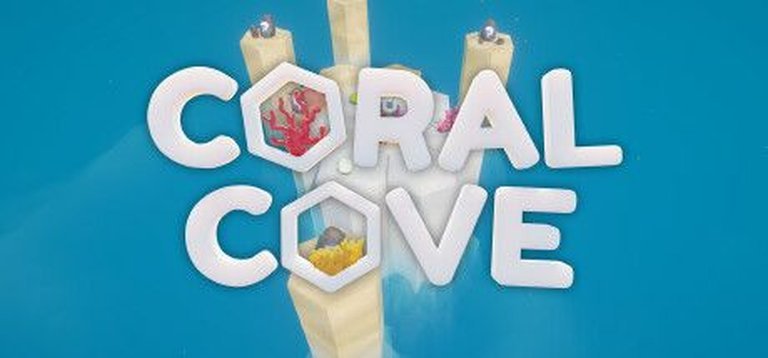
Coral Cove is a turn-based strategy game set in an underwater reef where players strategically place coral tiles to build and maintain a thriving ecosystem. The gameplay involves managing coral farms that autonomously spread, surviving periodic shockwaves that destroy disconnected corals, and deploying fish with cleaning abilities to remove dead coral tiles, all while utilizing various rewards to enhance the reef’s growth and connectivity.
Where to Buy Coral Cove
PC
Coral Cove: Review
Introduction
In the vast, often turbulent ocean of indie game development, Coral Cove emerges as a tranquil yet strategically profound gem. Created by students at FH Salzburg, this turn-based strategy game invites players to restore a polluted underwater reef by merging corals on a hexagonal grid. Its legacy lies not in blockbuster spectacle, but in its elegant fusion of match-3 mechanics, resource management, and environmental storytelling. Coral Cove demonstrates how a student project—born from passion and collaboration—can carve a unique niche in a crowded market. This review argues that the game’s success stems from its deceptively simple core loop, which belies deep strategic layers and a poignant ecological narrative, making it a standout title in the indie strategy genre.
Development History & Context
Developed by a core trio of programmers—Sandro Figo, Iris Trummer, and Johannes Schatteiner—as a Master’s project at FH Salzburg, *Coral Cove evolved significantly during its 1.5-year development cycle. What began as a third-person multiplayer concept pivoted dramatically into a turn-based strategy game, driven by a vision to blend relaxing gameplay with tactical depth. The team leveraged limited resources: 15 people total (8 developers, 7 contributors), with students handling 3D modeling, texturing, and sound design. This academic origin is key: the game was crafted to innovate within constraints, using hex grids and procedurally generated maps to maximize replayability without blockbuster budgets.
Released on April 24, 2023, Coral Cove debuted in a gaming landscape saturated with casual and strategy titles. It distinguished itself through its underwater setting and “match 3-like” mechanics—a rare hybrid in a year dominated by survival games and narrative RPGs. The game’s subsequent recognition—including the PGDA Talent Award and a Gamescom booth—underscored how its student roots fueled creativity, turning limitations into strengths. Its free-to-play model and Steam Deck compatibility further reflected its indie ethos, prioritizing accessibility over graphical fidelity.
Narrative & Thematic Deep Dive
At its heart, Coral Cove is a parable of ecological restoration. The narrative, though minimal, is woven into its gameplay: players start with a reef decimated by pollution, tasked with reviving it by strategically placing coral cards. The story unfolds through environmental storytelling—overgrown tiles, lifeless patches, and emerging fish populations—rather than explicit dialogue or cutscenes. This absence of traditional narrative forces players to interpret the reef’s state as a living ecosystem, where every coral placement feels like an act of defiance against decay.
The central theme is incremental regeneration. Merging three corals of the same level into a higher-grade one mirrors real-world ecological healing, where small, sustained efforts yield transformative results. The “shockwave” mechanic—destroying disconnected corals—symbolizes the fragility of ecosystems; even a single severed branch can collapse the whole. Fish swarms, which autonomously clean dead coral, introduce symbiosis, hinting at interdependence in natural recovery. While the narrative lacks traditional characters, the reef itself becomes the protagonist, its growth reflecting hope amid desolation. This environmental message is never preachy, emerging organically from gameplay—a testament to the design team’s restraint.
Gameplay Mechanics & Systems
Core Loop: The gameplay revolves around a hand of coral cards placed on a hexagonal grid. Players merge three identical corals to create a higher-level version, expanding their reef. Each placement requires tactical foresight: corals must connect to the central reef to survive the periodic “shockwave,” which destroys disconnected fragments. This introduces a constant tension between expansion and consolidation.
Key Systems:
– Shockwave: A visible countdown timer creates urgency. Disconnected corals are destroyed when it expires, forcing players to prioritize adjacency and pathfinding.
– Fish Swarms: Unlocked via upgrades, these clean dead coral tiles automatically within a radius (visible on hover). Their placement is crucial, as dead corals block growth and waste limited card draws.
– Rewards: Acquired through gameplay, these fall into two categories: instant (e.g., coral farms that spawn new corals) or placeable (e.g., structures that affect adjacent tiles). Visual cues (blue outlines for valid placement) aid clarity.
– Resource Management: Coral cards are finite; players must balance immediate expansion with long-term strategy. Merging efficiency—avoiding over-merging—yields more cards, rewarding precision.
UI/UX: A minimalist point-and-click interface works well, but the tutorial’s brevity caused confusion. Steam discussions reveal common issues: players struggled with shockwave timing, fish mechanics, and reward logic. The developer’s responsive community engagement (e.g., clarifying rules in forums) mitigated this, but a more robust in-game tutorial would improve accessibility. The hexagonal grid and free camera offer strategic flexibility, though the 3D perspective can occlude small tiles.
World-Building, Art & Sound
Setting: The game’s underwater world is a character unto itself. Procedurally generated seascapes feature varied biomes—from sandy shallows to deep trenches—each with unique hazards (e.g., currents affecting coral spread). The hexagonal grid tiles resemble ocean floor fragments, reinforcing the feeling of piecing together a broken ecosystem.
Visual Design: Stylized 3D models prioritize readability over realism. Corals burst with neon pinks, blues, and greens, creating a vibrant contrast against muted, sandy backgrounds. Fish animations are simple but expressive—swarms pulse like living clouds, while solitary fish dart between tiles. The “diagonal-down” perspective gives a godlike view of the reef, emphasizing player agency as a steward. Lighting effects, like shimmering water caustics, enhance immersion without overwhelming the pastel palette.
Sound Design: The soundtrack (by Markus Wilfinger and Tobias Knoblechner) blends ambient synths with aquatic melodies, evoking calm and wonder. Sound effects are purposeful: the gentle plink of coral placement contrasts with the thunderous crack of a shockwave. Fish movements emit soft clicks, and coral pops accompany merges. This audio layer transforms the grid into a living space, making even routine actions feel tactile.
Reception & Legacy
Launch Reception: Coral Cove debuted to a “Very Positive” Steam rating (93% of 147 reviews). Players praised its “relaxing yet strategic” loop, vibrant art, and innovative mechanics. However, criticism centered on its steep learning curve; several reviews cited confusion with shockwaves and fish mechanics, though the developer’s post-launch tutorials and Discord support helped. Commercially, it found a niche as a “chill strategy” title, with 50,516 units sold by October 2025 and a dedicated player base of 10,347.
Legacy: The game’s influence extends beyond sales. Its win of the PGDA Talent Award spotlighted Austria’s game education programs, and its Gamescom booth exposed it to industry professionals. Coral Cove has inspired indie developers to blend match-3 and strategy genres, particularly in environmental storytelling. Its student-team success story resonates with aspiring creators, proving that passion can overcome resource limitations. Over time, its reputation has solidified as a “hidden gem”—a game whose depth rewards patient players, fostering a small but passionate community.
Conclusion
Coral Cove is a masterclass in minimalist design, transforming a simple premise into a rich, emotionally resonant experience. Its fusion of match-3 merging with hex-grid strategy creates a loop that is both accessible and deeply tactical, while its environmental themes elevate it beyond a casual puzzle game. Though its tutorial shortcomings and visual simplicity may deter some, the game’s commitment to player agency—through shockwave mechanics, fish symbiosis, and procedural replayability—ensures enduring appeal.
As a historical artifact, Coral Cove embodies the potential of student-led innovation: it turned academic constraints into creative strengths and carved a distinct identity in a crowded market. Its legacy lies not in reinventing genres, but in perfecting their intersection—proving that the most profound games often emerge from the smallest ideas. For players seeking a meditative yet mentally stimulating experience, Coral Cove is not just a game, but a testament to the quiet power of restoration. It stands as a luminous reef in the indie ocean, beautiful, vital, and worthy of preservation.