
- Release Year: 2023
- Platforms: Linux, Windows
- Publisher: Amaxang Games
- Developer: Amaxang Games
- Genre: Action
- Perspective: Diagonal-down
- Game Mode: Single-player
- Gameplay: Survival horror
- Setting: Fantasy
- Average Score: 50/100
Description
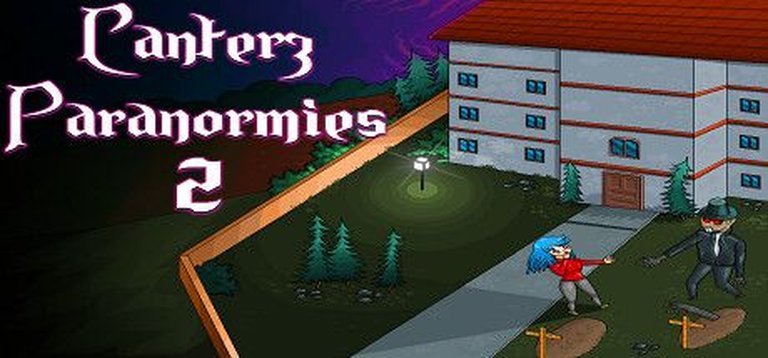
Canterz Paranormies 2 is a 2D top-down survival horror game set in a fantasy world, where players assume the role of the renowned US paranormal investigation team Canterz Paranormies. Tasked with exploring a Kentucky house near a cemetery, the team must navigate supernatural horrors and investigate eerie phenomena through direct control and atmospheric exploration.
Where to Buy Canterz Paranormies 2
PC
Canterz Paranormies 2 Patches & Updates
Canterz Paranormies 2 Guides & Walkthroughs
Canterz Paranormies 2: A Deep Dive into the Shadows
Introduction
In the ever-expanding pantheon of indie horror, few titles embody the scrappy, unfiltered spirit of solo development like Canterz Paranormies 2. Released on January 20, 2023, by solo developer Anamik Majumdar under the AMAXANG Games label, this 2D top-down survival horror game arrives as a modest yet fascinating artifact—a love letter to paranormal investigation tropes and a testament to the raw potential of one-person game design. Though its runtime clocks in at a mere half-hour and its scope is deliberately intimate, Canterz Paranormies 2 carves out a niche by blending retro pixel aesthetics with earnest storytelling. This review will dissect its place in the horror landscape, examining how its constrained vision—born from both artistic intent and technical limits—ultimately defines its legacy as a flawed, memorable curiosity.
Development History & Context
Canterz Paranormies 2 emerged from the singular vision of Anamik Majumdar, a developer whose prolific output (including titles like Ryo The Haunted Office and Shelley’s Haunted House) underscores a deep engagement with low-budget horror tropes. As a solo project, the game’s development was shaped by Majumdar’s self-imposed constraints: handling all graphics, animation, programming, and design in-house while outsourcing only the music—a choice that highlights both ambition and pragmatism. Technologically, the game targets legacy hardware, with minimum requirements including Windows XP/Vista/7/8/10, a 1GHz dual-core processor, and 4GB RAM. This focus on accessibility reflects a deliberate effort to reach audiences underserved by AAA bloat, a strategy rooted in the indie horror boom of the late 2010s and early 2020s.
Released during a saturated market of “walking simulator” horrors, Canterz Paranormies 2 positioned itself as a niche offering. Its Steam launch saw bundling with other AMAXANG titles (e.g., Indie Horror Games Bundle), a common tactic for indie visibility. The Linux port further signals an ethos of inclusivity, though the absence of macOS support hints at resource limitations. Majumdar’s candid admission of being a “solo indie game developer” becomes the game’s defining meta-narrative: a work where constraints breed creativity, and imperfections become part of its charm.
Narrative & Thematic Deep Dive
The plot of Canterz Paranormies 2 is a textbook paranormal investigation scenario, distilled to its pulp essence. Players assume James, the lead investigator of the eponymous “Canterz Paranormies” team, dispatched to a Kentucky home at the behest of Jun, a terrified homeowner. Jun’s backstory—haunted after attending a relative’s funeral at a nearby cemetery—establishes a classic “cursed object” trope: an evil spirit followed her home, manifesting as dark apparitions, sentient furniture, disembodied growls, and a basement reeking of decay. The narrative hinges on James’s mission to document evidence and expel the entity, prioritizing procedural urgency over character depth.
Characterization is functional rather than nuanced. Jun’s plea for help (“I was really concerned for the safety of her family and her kids”) establishes stakes but lacks nuance, while James remains a silent vessel for player agency. The dialogue, though sparse, leans into B-movie melodrama, with phrases like “Are you ready to accept the challenge?” evoking schlocky horror serials. Thematically, the game explores vulnerability and the intrusion of the supernatural into domestic spaces. The basement’s foul odor and cemetery’s spectral echoes transform mundane spaces into liminal zones, mirroring real-world anxieties about safety and home. However, these themes remain surface-level, unexplored through deeper gameplay or narrative twists. The “evil spirit” functions as a generic antagonist, its motives unexplained—a deliberate choice that prioritizes atmosphere over lore.
Gameplay Mechanics & Systems
Core gameplay revolves around exploration and investigation, framed as a survival horror experience. Players navigate the Kentucky house, cemetery, and a “spirit world” via top-down 2D controls, with direct input mapping to movement and interaction. The loop is simple: investigate paranormal hotspots using scientific equipment (e.g., REM pods, SLS cameras, night vision) while avoiding lurking spirits. Yet, the term “survival horror” feels aspirational; there are no combat mechanics, health systems, or fail states. Encounters with spirits are scripted jump scares—a door slams, a figure flickers—requiring nothing more than player reflexes to endure.
Progression is linear and achievement-driven. Steam’s 14 achievements (e.g., “Outside Family Home is Unlocked”) gate exploration, encouraging thoroughness but offering no meaningful rewards. The UI is minimalist, prioritizing clarity over flair, with equipment menus accessible via single-key presses. While this simplicity ensures accessibility, it sacrifices depth. The “paranormal investigation” mechanic boils down to triggering scripted events, lacking the emergent tension of games like Phasmophobia. Still, the developer’s commitment to authenticity shines through: equipment names (e.g., “SLS” for Spirit Box) reference real paranormal tools, grounding the experience in a recognizable niche.
World-Building, Art & Sound
Canterz Paranormies 2’s world is built on atmospheric restraint, with pixel-art environments that evoke retro classics like Alone in the Dark. The Kentucky house is rendered in muted earth tones, its hallways and cluttered rooms designed for claustrophobic tension. Pixel art leans into anime-inspired character designs—James’s sprite features large, expressive eyes—contrasting with the game’s mature content descriptors (gore and blood). This juxtaposition creates tonal dissonance, as cute aesthetics clash with visceral horror elements like bloodstains.
Sound design is the game’s weakest aspect, acknowledged even by the developer. While no audio details are provided in sources, the reliance on outsourced music and absent critical commentary imply a lack of cohesion. Ambient effects (creaking floors, growls) likely serve as generic tension builders, failing to elevate the sparse environments. The cemetery and basement areas promise thematic richness—the former evoking death, the latter primal fear—but visual repetition (dark corridors, static sprites) dilutes their impact. Yet, the game’s strengths lie in its restraint: low-resolution textures and flickering lights create a lo-fi creepiness, echoing the analog horror movement.
Reception & Legacy
Upon release, Canterz Paranormies 2 received minimal critical attention, with Metacritic and major outlets offering no reviews. Its reception was instead shaped by player feedback, which is sparse but telling. Steam’s 2:1 positive-to-negative user ratio (as per Steambase) highlights a divisive experience: one review praised its “atmospheric” tension, while another criticized its “half-hour runtime” and lack of depth. Bundling strategies likely drove initial sales, but the game’s niche appeal limited cultural penetration.
Its legacy resides in the developer’s oeuvre. Majumdar’s subsequent releases (Ashentia Hauntings, Mei Paranormies) build on this template, refining exploration mechanics while retaining the same low-fi aesthetic. Canterz Paranormies 2 also reflects broader trends: the rise of solo-developed horror and Steam’s ecosystem for “walking simulators.” It influences peers by proving that micro-budget games can evoke emotion through atmosphere alone, even as it warns against sacrificing interactivity for narrative. Historically, it stands as a footnote—an earnest experiment in constrained horror, remembered more for its creator’s persistence than its innovation.
Conclusion
Canterz Paranormies 2 is a paradox: a game defined by its limitations yet elevated by its sincerity. As a 30-minute paranormal investigation, it delivers fleeting thrills and thematic resonance but falters in gameplay depth and polish. Its pixel art and anime aesthetic are charming, while its focus on domestic horror taps into primal fears. Yet, the absence of player agency and repetitive structure relegate it to a niche experience—best suited for horror completists or fans of retro aesthetics.
In the annals of video game history, Canterz Paranormies 2 occupies a humble space—a testament to Anamik Majumdar’s passion and the democratizing power of indie development. It may not redefine horror, but it embodies the spirit of experimentation that keeps the genre vital. For those willing to embrace its brevity and imperfections, it offers a shadowy corner of the paranormal world—haunted, not by malevolent spirits, but by the ghosts of unfulfilled potential. Verdict: A flawed, fascinating footnote in indie horror, worth exploring for its scrappy ambition but unlikely to linger in the long-term memory.