
- Release Year: 2012
- Platforms: Android, iPad, iPhone, Linux, Macintosh, Ouya, Windows
- Publisher: Ayopa Games LLC., Drowning Monkeys Games
- Developer: Drowning Monkeys Games
- Genre: Strategy, Tactics
- Perspective: Diagonal-down
- Game Mode: Single-player
- Gameplay: Strategy, Tactics, Turn-based combat
- Average Score: 75/100
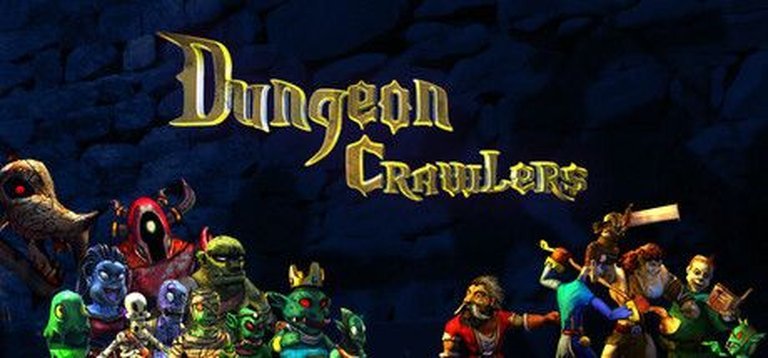
Description
Dungeon Crawlers is a turn-based strategy game set in a fantasy-themed dungeon environment, where players navigate labyrinthine levels, battle monsters, avoid traps, and collect treasure. Featuring a 2D scrolling perspective and released on multiple platforms including iPhone, iPad, Android, Ouya, Linux, Windows, and Macintosh, the game emphasizes tactical gameplay within its Unity-powered framework.
Where to Buy Dungeon Crawlers
PC
Dungeon Crawlers Mods
Dungeon Crawlers Reviews & Reception
metacritic.com (75/100): Give me good solid gameplay mechanics combined with witty writing any day of the week.
metacritic.com (75/100): Featuring oversaturated imagery, fun animations, and a healthy attempt at humor, Dungeon Crawlers looks great and offers a fun experience.
Dungeon Crawlers Cheats & Codes
PC
On the main menu, press Options. Scroll down to the bottom and click the redeem code button. Then a popup box will show and you enter the codes in there and hit OK.
| Code | Effect |
|---|---|
| BlitzGreg | outfit for Greg from Youtuber Blitz |
| SlimeSlime | outfit for Sir Bunalot, plant slime |
| EngineerBeaver | outfit for Benny Beaver from Youtuber Real Civil Engineer |
| jokefish | outfit for Dolly from Youtuber Jokefish |
| oberkommissar | outfit for Scrappy from Youtuber Oberkommissart |
| dex69 | outfit for Scrappy from Youtuber Dex |
| Drae | outfit for Benny Beaver from Youtuber Drae |
| Sir Knightalot | outfit for Sir Bunalot |
| Mizhisheng | outfit for Felina |
| KirakiraDoll | outfit for Cuddline |
| TheWanderingVillage | outfit for Felina |
| Gambonanza | outfit for Sir Bunalot |
| haoweikou | outfit for Squiddy |
| Bestsushiinthedungeon | outfit for Squiddy |
| Cazylia | outfit for Nanny Fran |
| TimeToGrind | outfit for Anne Bunny |
| NeoSundae | outfit for Baroness von Frost |
Mobile
On the main menu, press Options. Scroll down to the bottom and click the redeem code button. Then a popup box will show and you enter the codes in there and hit OK.
| Code | Effect |
|---|---|
| BlitzGreg | outfit for Greg from Youtuber Blitz |
| SlimeSlime | outfit for Sir Bunalot, plant slime |
| EngineerBeaver | outfit for Benny Beaver from Youtuber Real Civil Engineer |
| jokefish | outfit for Dolly from Youtuber Jokefish |
| oberkommissar | outfit for Scrappy from Youtuber Oberkommissart |
| dex69 | outfit for Scrappy from Youtuber Dex |
| Drae | outfit for Benny Beaver from Youtuber Drae |
| Sir Knightalot | outfit for Sir Bunalot |
| Mizhisheng | outfit for Felina |
| KirakiraDoll | outfit for Cuddline |
| TheWanderingVillage | outfit for Felina |
| Gambonanza | outfit for Sir Bunalot |
| haoweikou | outfit for Squiddy |
| Bestsushiinthedungeon | outfit for Squiddy |
| Cazylia | outfit for Nanny Fran |
| TimeToGrind | outfit for Anne Bunny |
| NeoSundae | outfit for Baroness von Frost |
Dungeon Crawlers: Review
Introduction
In the vast, ever-evolving landscape of video game genres, few archetypes encapsulate the primal thrill of exploration, combat, and discovery quite like the dungeon crawler. From the text-based depths of Rogue (1980) to the gothic loot factories of Diablo (1996), these games have offered players a potent blend of strategic depth and escapist fantasy. Into this storied tradition stepped Dungeon Crawlers, a 2012 title from Drowning Monkeys Games that promised a “fun and funny” twist on the formula—one that imagined a Ghostbusters-esque squad battling supernatural threats in subterranean labyrinths. Yet, while its mobile debut garnered cautious praise, the game’s PC incarnation (2015) was met with scathing criticism, leaving a legacy defined by its ambition rather than its execution. This review dissects Dungeon Crawlers through the lens of its design, context, and reception, arguing that despite its clever premise and accessibility, the game ultimately succumbs to technical flaws, narrative flatness, and shallow mechanics, relegating it to a footnote in the genre’s history.
Development History & Context
Dungeon Crawlers emerged from the crucible of the early 2010s mobile boom, a period when touch-screen devices and Unity-powered indie games democratized game development. Created by Drowning Monkeys Games (later LLC) and published by Ayopa Games LLC, the title launched on iPhone and iPad in January 2012, capitalizing on the rising popularity of tactical RPGs on mobile platforms. Its developers envisioned a streamlined experience—”easily accessible,” as the Steam store blurb emphasized—stripping away the complex stat-tracking of traditional crawlers in favor of “launch and play” immediacy. This ethos reflected the era’s shift toward casual gaming, where bite-sized sessions and intuitive controls reigned supreme.
The game’s cross-platform expansion (Android, Ouya, Linux, Windows, Macintosh by 2015) underscored its ambition to transcend mobile limitations. However, this transition exposed inherent tensions. While Unity enabled robust 2D visuals and portability, it also highlighted the constraints of a design optimized for touchscreens. On PC, the game’s diagonal-down perspective and turn-based pacing felt at odds with keyboard-and-mouse controls, a disconnect exacerbated by what critics termed an “uninspired interface design” (148Apps). Contextually, Dungeon Crawlers arrived amid a resurgence of dungeon crawlers—both classic revivals (e.g., Legend of Grimrock, 2012) and indie darlings (e.g., Dungeon of the Endless, 2014). Yet, unlike its peers, it lacked the depth or innovation to stake a claim in this competitive space, ultimately becoming a casualty of its own hybrid identity: too simple for hardcore tactics fans, yet too complex for casual mobile gamers.
Narrative & Thematic Deep Dive
At its core, Dungeon Crawlers pitches a high-concept premise: “What if Ghostbusters were set in a dungeon?” This premise, however, never materializes into a coherent narrative. The story follows a generic party of adventurers—likely riffing on the “bust ghosts, get loot” motif—yet the dialogue, as noted by Hooked Gamers, is “cursed with a lame narrative.” Characters lack development, motivations remain unexplored, and the humor, intended as a selling point, falls flat. For instance, the Steam store’s promise of a “hilarious story” rings hollow when the game relies on one-dimensional archetypes and predictable jokes that rarely land.
Thematically, the game fails to engage with the genre’s traditional pillars of heroism and immersion. While dragori Games defines dungeon crawlers as experiences centered on “overcoming obstacles to achieve grand goals,” Dungeon Crawlers reduces this to a shallow grind for treasure. The narrative’s potential to parody or subvert fantasy tropes is squandered, resulting in a forgettable plot that serves merely as a backdrop for combat. Even the Ghostbusters analogy feels undercooked; there’s no sense of camaraderie, no memorable antagonists, and no thematic resonance beyond surface-level gags. In contrast, classics like The Bard’s Tale (1985) leveraged humor to enhance character depth, but here, it exists in a vacuum, making the narrative a missed opportunity to elevate the experience beyond its mechanical loops.
Gameplay Mechanics & Systems
Dungeon Crawlers touts itself as a “streamlined” turn-based strategy game, but its mechanics reveal a game of two halves: one half accessible, the other frustratingly underdeveloped. The core loop—exploring dungeons, fighting monsters, and looting—is executed with competent simplicity. Movement and combat are grid-based, with diagonal-down perspective offering clear sightlines. Turn-based pacing, as AppSpy noted, provides “fun, strategic depth,” especially when positioning characters to exploit enemy weaknesses. Loot systems encourage engagement, with randomized drops offering incremental upgrades that incentivize continued play.
However, this simplicity becomes a liability. The absence of a skill tree, deep equipment customization, or meaningful character progression, as Everyeye.it criticized, reduces tactics to a repetitive cycle of “attack, heal, repeat.” Combat lacks the tactical nuance of peers like Final Fantasy Tactics; enemy AI is rudimentary, and environmental puzzles are conspicuously absent. Worse, the game’s accessibility is undermined by technical flaws. On PC, Hooked Gamers lamented “riddled with bugs,” including pathfinding errors and unresponsive controls that break immersion. The UI, described as “uninspired” (148Apps), clutters the screen with oversized icons, while camera controls on mobile (per Gamezebo) require excessive zooming to target enemies. Ultimately, Dungeon Crawlers’ mechanics promise depth but deliver a shallow experience—challenging only due to poor design, not strategic ingenuity.
World-Building, Art & Sound
Visually, Dungeon Crawlers leans into a vibrant, cartoonish aesthetic that aligns with its comedic tone. The game’s “oversaturated imagery” (AppSmile) and “fun animations” create a colorful, if generic, dungeon world. Character designs are quirky but derivative—think stylized adventurers and goofy monsters—while environments, though varied, lack the atmospheric depth of genre benchmarks like Ultima Underworld: The Stygian Abyss (1992). Unity’s capabilities allow for smooth 2D scrolling, but the art direction fails to evoke a sense of place; dungeons feel interchangeable, stripped of the lore-driven immersion that defines great crawlers.
Sound design, a critical omission in the source material, remains a black box. Given the game’s emphasis on humor, one might expect voice acting or a jaunty soundtrack to bolster its comedic elements. Instead, silence or generic audio cues likely underscore the experience, further flattening the atmosphere. In contrast, modern crawlers like Darkest Dungeon (2016) use sound to heighten tension and personality, but Dungeon Crawlers’ audio-visual presentation, while competent, fails to elevate its world beyond functional aesthetics.
Reception & Legacy
Dungeon Crawlers’ reception is a study in contrasts, reflecting its bifurcated audience and platform. On iOS, the game earned a “Generally Favorable” Metascore of 75, with critics praising its “witty writing” (Gamezebo) and “humorous plot” (AppSpy). TouchArcade likened it to “Shining Force meets Diablo,” highlighting its blend of accessibility and depth. Yet, the PC port (2015) was a critical disaster. Hooked Gamers awarded it a paltry 39%, calling it “riddled with bugs” and “frustrating,” while Everyeye.it dismissed its mechanics as “too simple for an RPG.” This chasm underscored the game’s identity crisis: a mobile title shoehorned onto desktop without meaningful adaptation.
Commercially, Dungeon Crawlers left little impact. Collected by only 11 players on MobyGames and absent from best-of lists (e.g., TheGamer’s classic crawlers), it failed to achieve cult status. Its legacy is one of missed potential—a game that, despite its mobile success, exemplifies the pitfalls of cross-platform development. Influentially, it contributed little to the genre’s evolution, overshadowed by contemporaries like Legend of Grimrock (2012) that embraced the crawler’s core tenets of exploration and challenge. As dungeon crawlers continue to thrive in indie spaces (e.g., Tainted Grail, 2019), Dungeon Crawlers stands as a cautionary tale: accessibility without depth is a hollow victory.
Conclusion
Dungeon Crawlers is a game of fractured ambitions. Its premise—blending Ghostbusters humor with dungeon-crawling tactics—held promise, and its streamlined design offered a refreshing alternative to stat-heavy RPGs. Yet, execution undermined this vision. The narrative remains a flat parody, mechanics are shallow and buggy, and the world fails to captivate. While mobile players found moments of joy in its turn-based combat and loot systems, the PC port exposed the design’s fragility, leaving a legacy of critical disdain.
In the annals of dungeon crawler history, Dungeon Crawlers occupies a minor, almost forgettable niche. It lacks the narrative depth of Eye of the Beholder, the mechanical brilliance of Diablo, or the immersive world-building of Ultima Underworld. Instead, it serves as a reminder that accessibility must be balanced with substance to endure. For genre enthusiasts, it’s a curio—worth a glance for its comedic angle but ultimately a footnote in a lineage defined by grander adventures. In the end, Dungeon Crawlers crawls, but it never conquers.