
- Release Year: 2024
- Platforms: Windows
- Publisher: Alexandre Gilotte, Thierry Gilotte
- Developer: Alexandre Gilotte, Thierry Gilotte
- Genre: Role-playing (RPG)
- Perspective: Diagonal-down
- Game Mode: Single-player
- Gameplay: Tactical RPG, Turn-based
- Setting: Fantasy Medieval
Description
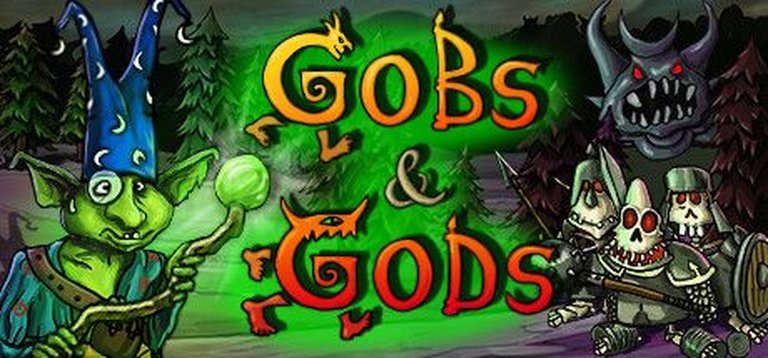
In ‘Gobs & Gods’, players are revered as a deity by goblins in a whimsical medieval fantasy world, where they must hire, equip, and lead a band of eccentric creatures through free exploration and tactical turn-based combat. Navigate procedurally generated dungeons, mage towers, and villages while tackling absurdly unique quests, leveling your expendable goblin army, and absorbing their experience as a fallen god to unlock new powers after setbacks.
Gameplay Videos
Where to Buy Gobs & Gods
Gobs & Gods Patches & Updates
Gobs & Gods Guides & Walkthroughs
Gobs & Gods Reviews & Reception
steamcommunity.com : Outstanding game!
Gobs & Gods Cheats & Codes
PC Demo
After clicking the direction sign, press ‘G’ twice and then select the dialog option ‘Try to pronounce the formula’.
| Code | Effect |
|---|---|
| G, G | Unlocks the demo secret item and completes the quest |
Gobs & Gods: Review
Introduction
In the crowded 2024 landscape of tactical RPGs, where titans like Dragon Age: The Veilguard and Warhammer 40,000: Space Marine 2 dominated headlines, one scrappy indie title emerged with a defiantly bizarre premise: what if you were a god to a horde of expendable, flatulent goblins? Released on July 19, 2024, Gobs & Gods isn’t just a game—it’s a love letter to absurdity, a masterclass in leveraging constraints into charm, and a surprisingly poignant exploration of power and mortality. Developed by Alexandre and Thierry Gilotte, two brothers with no prior industry experience, this tactical RPG eschews epic sagas for the petty squabbles of goblinkind, crafting an experience that is simultaneously hilarious, strategic, and deeply unconventional. This review dissects how a year-long passion project, born from a desire to “go full goblin mode,” evolved into one of the most refreshingly original indies of its year, proving that humor and heart can outshine AAA polish.
Development History & Context
The story of Gobs & Gods begins not in a boardroom, but in a brotherly collaboration. Alexandre Gilotte handled coding while Thierry Gilotte created art, with both contributing to design. As Alexandre candidly shared on Reddit, the project started as a “fun project to work on,” a personal experiment rather than a commercial venture. This humble origin is crucial to understanding the game’s DNA: the Gilottes were absolute beginners, with Alexandre’s day job being “almost” a developer. They deliberately sidestepped complexity, sticking to 2D, turn-based gameplay, and minimal animations to avoid performance pitfalls they couldn’t confidently solve. The choice of Godot 3.5 as their engine was pragmatic, though they used it unconventionally—defining nothing in the editor and instantiating everything via C# code. This scrappy approach extended to content: no localization was attempted due to perceived complexity, and marketing was an afterthought. After a grueling year-long hiatus from Alexandre’s main job (June 2023–June 2024), they released the game with under 1,000 wishlists and a price point of $11.99—intentionally low to undercut similar titles in the $20+ range. Contextually, Gobs & Gods arrived during a golden era for indie tactical RPGs, where games like Battle Brothers and Wartales had proven that deep mechanics could thrive without AAA budgets. The Gilottes aimed for a hybrid of Heroes of Might and Magic 3’s exploration and Battle for Wesnoth’s combat, but their greatest constraint—their own inexperience—became their greatest strength, forcing innovation over imitation.
Narrative & Thematic Deep Dive
At first glance, Gobs & Gods’ narrative seems deceptively simple: you, a mysterious entity, are mistaken for a god by goblins in a fantasy realm. But beneath its goofy veneer lies a sharp, self-aware deconstruction of RPG tropes. The world is a playground of dark comedy—quests involve helping a goblin retrieve a stolen turnip from a rival tribe or convincing a mage to stop using “excessive glitter.” As the Gilottes intended, the tone is light and silly, with dialogue dripping with French-accented wit. “This world is beyond saving anyway,” one quest bluntly states, subverting the “chosen one” archetype. The goblins themselves are the stars, each with randomized personality traits—optimists, pessimists, gluttons—that color their commentary. Upon entering a smelly dungeon, a pessimistic gob might mutter, “Why is everything always sticky?” while an optimist chirps, “Think of the XP!” This system transforms exploration into a character-driven sitcom. Thematically, the game excels in its bleak yet funny take on power. As a “god,” you command goblins to fight and die, only to absorb their essence upon death via a brilliant twist: devotion points. This mechanic reframes loss as progress, turning mortality into a resource. The narrative subtly questions whether godhood is about benevolence (Nurturing path), intellectual curiosity (Nerdy path), or petty cruelty (Sadistic path)—paths expanded in post-launch updates. Ultimately, Gobs & Gods isn’t about saving the world; it’s about finding meaning in the absurd, one dead goblin at a time.
Gameplay Mechanics & Systems
Gobs & Gods’ gameplay loop is a masterful fusion of sandbox freedom and tactical depth. Exploration is the cornerstone: you freely roam a medieval-fantasy world, from smelly dungeons to prosperous villages, with a procedural-generation option for replayability. The world reacts dynamically to your goblin band; their commentary during travel (“This castle smells of regret!”) reinforces the game’s personality. Combat shifts to a hexagonal grid, where tactical decisions are paramount. Each goblin operates on action points for movement, attacks, or spells, with a limited “essence” resource for flashy abilities. AI opponents move simultaneously, and a toggle allows real-time mode for quick skirmishes. This blend ensures battles are brisk yet strategic. The progression system is the game’s crown jewel: goblins gain XP and perks when they survive battles, but when they perish, you absorb their experience into “devotion points.” This transforms setbacks into opportunities, letting you unlock godly powers (e.g., lightning bolts or healing auras) while rebuilding your army. Quests are a highlight—absurd, text-heavy, and frequently self-aware. A typical task: “Help Bob retrieve his stolen pipe from the Gobbo Brothers (who are also goblins).” Unlike traditional RPGs, quests rarely involve world-saving; instead, they’re goblin-scale scams or trivialities that reward humor over heroics. UI is minimalist but functional, prioritizing clarity over flair. Post-launch updates like the God’s Path system (January 2025) added meaningful choices, with passive bonuses and late-game quests tied to Sadistic, Nerdy, or Nurturing philosophies. While the core loop is robust, occasional balance quirks—like overpowered early-game spells—remind players of its indie origins.
World-Building, Art & Sound
The world of Gobs & Gods is a triumph of constrained creativity. Despite its medieval-fantasy setting, it avoids clichés through sheer absurdity: dungeons ooze green sludge, villages are plagued by sentient cheese, and magic is as likely to backfire spectacularly as succeed. This is a world where goblins are the “nicest inhabitants,” their society a chaotic mix of petty rivalries and bizarre superstitions. The Gilottes’ art style leans into their limitations: simple 2D sprites with minimal animations (goblins mostly bob statically) and hand-drawn environments. What lacks polish gains charm—goblins’ exaggerated expressions and beards (added in a post-launch patch) become endearing quirks. The diagonal-down perspective offers a classic RPG feel, while the color palette is vibrant yet slightly washed-out, evoking a storybook aesthetic. Sound design, composed by Scott Buckley under a Creative Commons license, perfectly complements the tone: lighthearted, adventurous tracks underscore exploration, while combat features whimsical clangs and magical fizzes. Crucially, the goblins’ voices are text-based, with speech bubbles reflecting their moods. A pessimist might sigh, “We’re all going to die,” mid-battle, injecting dark humor into tense moments. Together, these elements craft a world that feels lived-in and self-aware—a place where the divine is mundane, and the mundane is divine.
Reception & Legacy
At launch, Gobs & Gods flew under the radar, reflecting its tiny marketing budget. With only 1,000 wishlists and a $11.99 price point, it sold around 400 copies, garnering 35 overwhelmingly positive reviews on Steam. Players praised its humor (“The funniest game I’ve played in years”), tactical depth, and the ingenious devotion system. However, its reception was niche, with most comparisons drawing lines to Battle Brothers, a game it both emulates and subverts. The Gilottes noted this pigeonholing was a double-edged sword: it attracted Battle Brothers fans but obscured its broader accessibility and unique tone. Culturally, the game found a following through grassroots efforts: a Reddit post on the Battle Brothers subreddit and a feature on Turn-Based Livers boosted visibility post-release. Discord, with 46 members (10% of players), became a vital hub for feedback, leading to rapid patches that fixed bugs and refined UI. Its legacy is already taking shape. As a case study, it demonstrates how scrappy indies can thrive by embracing constraints—its “imperfect” animations became a signature style, and its dark humor carved a distinct identity. For players, it’s a cult classic; for developers, it’s proof that passion projects can resonate if they dare to be weird. In the 2024 Wikipedia list of tactical RPGs, it stands as a testament to the year’s indie diversity.
Conclusion
Gobs & Gods is more than a game; it’s a defiant, joyful anomaly in a risk-averse industry. It succeeds not by competing with AAA productions, but by redefining what a tactical RPG can be—funny, flawed, and unapologetically goblin-centric. The Gilottes’ year-long labor of love, born from shared creativity and technical constraints, yielded a title with a rare alchemy: heart in its humor and depth in its systems. The devotion mechanic, alone, is a modern classic, turning loss into levity and failure into power. While its sales may be modest, its impact is outsized, proving that a game about divine goblins can feel more human than any epic saga. In a year saturated with sequels and spectacles, Gobs & Gods reminds us that sometimes the most divine experiences come from the most absurd premises. For fans of tactical RPGs with a penchant for the puerile, it’s not just recommended—it’s essential. Here’s to hoping the Gilottes keep the gob-god saga going, one update at a time.