
- Release Year: 2010
- Platforms: Windows
- Publisher: dtp entertainment AG, Matrix Games, Ltd.
- Developer: Code Force Limited
- Genre: Strategy, Tactics
- Perspective: Top-down
- Game Mode: Single-player
- Gameplay: 4X, Business simulation, Managerial
- Setting: Futuristic, Sci-fi
- Average Score: 67/100
Description
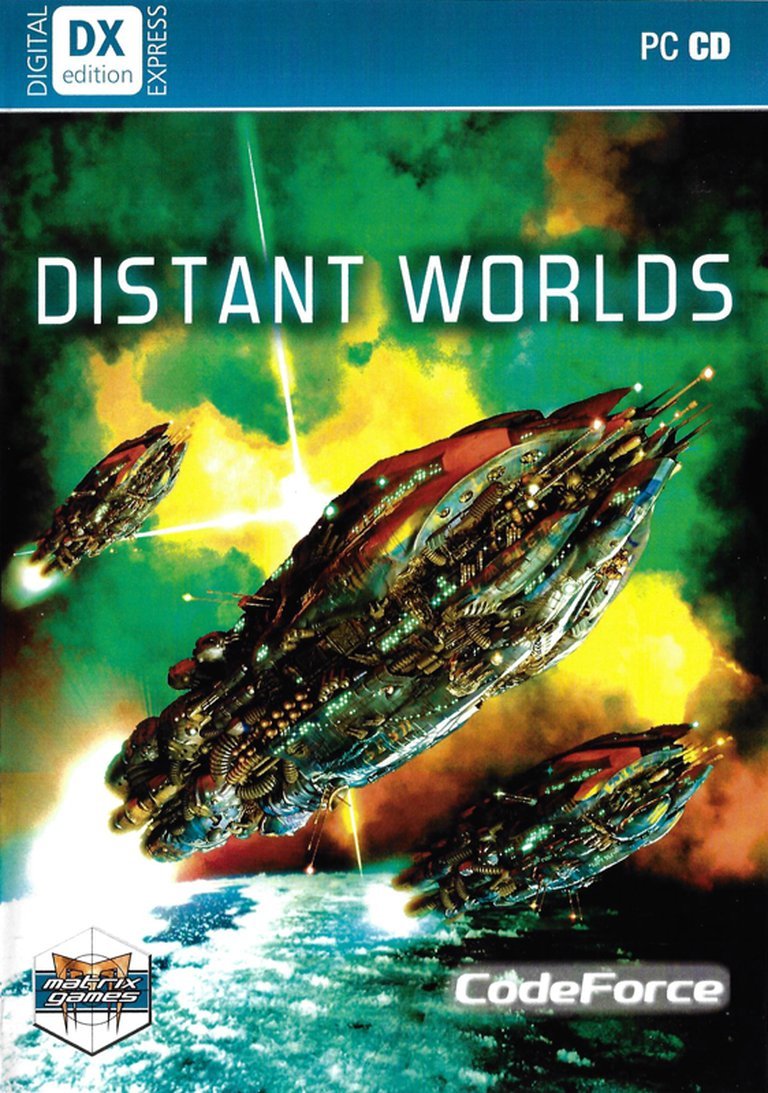
Distant Worlds is a vast space strategy game set in a galaxy of up to 1,400 star systems and 50,000 planets, moons, asteroids, and other celestial bodies, where players control a customizable race to expand their empire through exploration, colonization, and diplomacy while managing governmental systems, economies, research, ship design, and interstellar relations to uncover cosmic secrets and survive future threats.
Gameplay Videos
Distant Worlds Patches & Updates
Distant Worlds Mods
Distant Worlds Guides & Walkthroughs
Distant Worlds Reviews & Reception
metacritic.com (67/100): Distant Worlds brings a breath of fresh air into the x4-genre, but only if you like micromanagement. Although newcomers can have fun also, thanks to the possibility of automation.
Distant Worlds: Review
Introduction
In the crowded pantheon of 4X space strategy games, Distant Worlds (2010) stands as a colossus—a testament to the ambition of a single developer and the power of publisher support. Created by Code Force’s Elliot Gibbs and published by Matrix Games, it redefined the genre with its unprecedented scale and audacious automation systems. Yet its journey was fraught with technical hurdles, economic teething problems, and a steep learning curve. This review dissects Distant Worlds‘ legacy—not merely as a game, but as a living, breathing galaxy that evolved through expansions into the definitive Universe edition (2014). Its thesis is clear: Distant Worlds is a flawed masterpiece that, through iterative refinement, captured the sublime thrill of galactic empire-building in a way no other game has dared to replicate.
Development History & Context
The Visionary and the Visionary
Elliot Gibbs, Code Force’s sole developer, conceived Distant Worlds as a response to the micromanagement tedium plaguing 4X titles. His core innovation was a “living galaxy” simulated through a dual public-private economy, where AI-driven freighters, miners, and pirates autonomously created emergent narratives. Matrix Games, founded in 1999 by veterans of strategy gaming, recognized this potential and signed Gibbs in the late 2000s. Director of Product Development Erik Rutins later described the vision as “magical,” praising the private sector’s ability to transform logistics from a chore into a spectacle.
Technological Constraints and Era-Specific Challenges
Developed on a shoestring budget with a tiny team (Gibbs, a handful of artists, and Matrix’s support staff), Distant Worlds initially relied on placeholder art and a rudimentary interface. Its real-time engine was controversial in a genre dominated by turn-based systems like Master of Orion and Space Empires. Rutins defended the choice: “Real-time worked with exploration and the living galaxy feel.” Yet late-beta economic “game-breakers” nearly doomed launch, as last-minute code changes crippled resource distribution—a Rutins-acknowledged embarrassment that required rapid patching. The 2010 gaming landscape favored accessible titles (Civilization V), making Distant Worlds’ complexity a commercial risk.
Expansions and Evolution
Matrix Games’ commitment to post-launch support was pivotal:
– Return of the Shakturi (2010): Introduced the insectoid Shakturi as the galaxy-threatening antagonists, adding narrative weight.
– Legends (2011): Implemented leader characters, diplomacy overhauls, and UI refinements.
– Shadows (2013): Focused on economic rebalancing, espionage systems, and AI improvements.
These transformed the game from a niche title into a polished experience culminating in Distant Worlds: Universe (2014), which bundled all content with modding support.
Narrative & Thematic Deep Dive
The Galaxy’s Backstory: Echoes of a Fallen Civilization
Distance Worlds‘ narrative unfolds through exploration and artifact discovery, revealing a cataclysmic past. Five centuries prior, the insectoid Shakturi Axis waged war against the Freedom Alliance (led by humans, Kiadians, and Ackdarians). The Alliance deployed the Xaraktor virus to annihilate the Shakturi, but the plague spiraled out of control, wiping out 99% of galactic life. This “Age of Shadows” left behind ruins, derelict fleets, and mechanoid guardians—echoes of a utopian civilization now lost. The Shakturi’s return in Return of the Shakturi serves as the central antagonist, forcing players to confront a recurring existential threat.
Themes: Civilization, Cycles, and Consequence
The narrative embodies cyclical history: empires rise, fall, and rebuild, repeating ancient mistakes. Themes include:
– The Weight of Power: Players face moral choices like orbital bombardment or enslaving species, impacting galactic reputation.
– Neglectful Precursors: Ancient civilizations’ hubris led to self-destruction, a cautionary tale for players.
– Economic Determinism: The private sector’s autonomy underscores that empires are systems, not just conquests.
Dialogue is sparse, conveyed through events (e.g., pirate negotiations) and leader interactions (Legends), but the galaxy’s ruins and emergent stories generate richer narratives than scripted text.
Gameplay Mechanics & Systems
The Dual Economy: State vs. Private Sector
Distant Worlds’ core innovation is its simulated economy. Players control state-owned fleets and buildings, while private entities—freighters, mining stations, tourist liners—operate autonomously. Taxes on private trade fund the state, but disrupting supply lines (via pirates or war) collapses revenue. This creates a delicate balance: protecting trade routes boosts treasury but diverts military resources.
Automation as Gameplay
Players delegate tasks via advisors:
– Ship Roles: Set construction ships to auto-build mining stations or exploration ships to auto-scout.
– Advisors: Choose between “Suggest and Execute” (AI acts without approval) or “Suggest Only” (player retains control).
This mitigates late-game bloat but risks AI blunders—a Rutins-acknowledged flaw where high-level strategy falters.
Exploration and Discovery
Galaxies house 1,400 star systems with 50,000 celestial bodies. Exploration is methodical: sensors reveal system counts, but planet types/resources require proximity. Ruins and anomalies grant research bonuses or narrative clues (e.g., the “Death Ray” superweapon). Nebulae act as natural chokepoints, forcing strategic “star-hopping” via hyperdrives with limited range.
Diplomacy and Reputation
First contact triggers nuanced interactions: pirates offer protection-for-credits, while empires negotiate trade treaties or military alliances. Actions like breaking pacts or bombing planets affect a “reputation meter,” influencing diplomatic standing. The Shadows expansion added espionage agents for sabotage or theft.
Combat and Design
Ships use a subsystem damage model: armor degrades, weapons disable, and hyperdrives fail mid-battle. The ship designer allows modular customization—e.g., “Beam Spam” pulse blasters or “Death Ray” salvaged relics. Fleets in Universe adopted tactical formations (e.g., capital ships shielded by escorts), adding depth to engagements.
World-Building, Art & Sound
A Galaxy of Contrasts
Distance Worlds‘ setting blends procedural generation with handcrafted lore. Each race—humans, insectoid Boskara, spider-like Dhayut—has unique traits (e.g., Gizureans’ rapid breeding). Planets vary from volcanic worlds to oceanic moons, with independent colonies offering narrative hooks (e.g., enslaved races revolting). The backstory’s ancient war permeates ruins and derelict fleets, creating archaeological tension.
Visual and Sonic Design
- Art: Placeholder art in early builds gave way to functional 2D sprites. Universe added map overlays for resource flows and diplomacy, enhancing clarity.
- Sound: Minimalist audio emphasizes immersion—warp jumps distort, weapons crackle, and silent voids underscore galactic loneliness.
The atmosphere is one of awe and melancholy, juxtaposing vibrant trade routes with derelict graveyards.
Reception & Legacy
Launch: A Rocky Debut
Initial reviews were mixed (70% MobyGames average). Critics praised scale and automation but criticized UI clutter and economic bugs:
– Cyber Stratege (80%): “The galaxy is immense, but automation reduces tedium.”
– GameLand (80%): “Citizens pilot their ‘lokhans’ to tour nebulae—this is living sci-fi.”
– SpaceSector.com (50%): Called it “overwhelming and sterile,” later revising to 88% post-Shadows after fixes.
The Long Shadow of Universe
Universe (2014) redeemed the series, earning Rock Paper Shotgun’s “Best Strategy Game” award. Its Metacritic score (81/100) reflected improved stability and content. Influences permeated later titles: Stellaris’ automation and Galactic Civilizations III‘s modular ship design owe debts to Distant Worlds. Its legacy lies in proving 4X could thrive in real-time without sacrificing depth.
Conclusion
Distant Worlds is a paradox: a game whose greatest strengths—scale, automation—were born from its greatest weaknesses—complexity and bugs. Through Matrix Games’ relentless support and Gibbs’ vision, it evolved from a flawed curiosity into a benchmark for galactic grand strategy. Its economy, though initially broken, became a masterclass in emergent storytelling. The Shakturi threat, ancient ruins, and private freighters weaving through nebulae crafted a universe more alive than many scripted epics.
Yet it remains niche, demanding patience and tolerance for abstraction. For those willing to invest, however, Distant Worlds: Universe offers an unparalleled experience: the role of an emperor who can command fleets or watch the galaxy unfold, a silent observer in a living cosmos. It is not a game for everyone, but for the strategist who dreams of empires, it is nothing short of sublime.
Verdict: A flawed but transcendent achievement that redefined 4X gaming. Its legacy endures in every autonomous freighter and every starlit system waiting to be explored.