
- Release Year: 2017
- Platforms: Windows
- Publisher: Fair Weather Studios, L.L.C.
- Developer: Fair Weather Studios, L.L.C.
- Genre: Role-playing (RPG), Strategy, Tactics
- Perspective: Top-down
- Game Mode: Single-player
- Gameplay: Tactical RPG
- Setting: Futuristic, Sci-fi
- Average Score: 60/100
Description
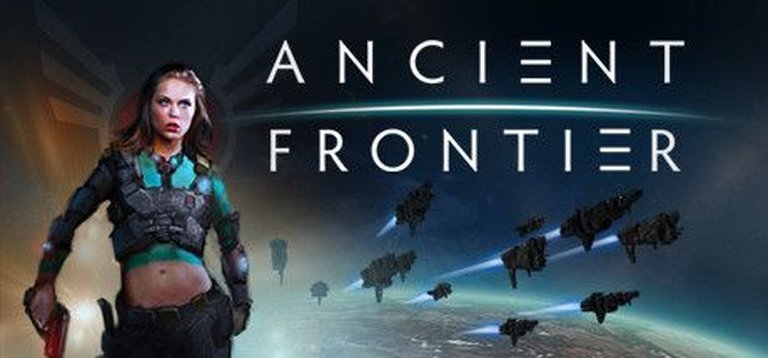
Ancient Frontier is a turn-based strategy RPG set in a futuristic space frontier, where players lead fleets through a narrative of warring factions, corporations, and privateers. With two campaigns, over 35 unique ships, and a tech tree for customization, players explore, conquer, and liberate sectors across detailed deep space maps while managing resources and tactical combat.
Where to Buy Ancient Frontier
PC
Ancient Frontier Cracks & Fixes
Ancient Frontier Patches & Updates
Ancient Frontier Guides & Walkthroughs
Ancient Frontier Reviews & Reception
opencritic.com (60/100): Ancient Frontier never fires on all cylinders, which is unfortunate as clearly there was a lot that went into the game.
metacritic.com (40/100): Bought with huge discount, and still doesn’t worth the money.
chalgyr.com (80/100): Ancient Frontier is a great example of what a small but dedicated studio can do. It might not have AAA bells and whistles, but the core game is a fantastic blend of deep strategy yet approachable interface that is very easy to sink hours into.
Ancient Frontier Cheats & Codes
PC
Press F1 to activate the trainer, then press the corresponding NumPad key for the desired cheat.
| Code | Effect |
|---|---|
| NumPad1 | Infinite HP |
| NumPad2 | Infinite AP |
| NumPad3 | One Hit Kills |
| NumPad4 | Super Attack Range |
| NumPad5 | Super Damage |
| NumPad6 | Unlimited Moves |
| NumPad7 | Unlimited Actions |
| NumPad8 | Unlimited Counters |
| NumPad9 | Change Hydrium By 500 |
| NumPad0 | Change Photo Energy By 500 |
| NumPad/ | Change Data By 500 |
Ancient Frontier: Review
Introduction
In the vast, uncharted expanse of the video game cosmos, few titles embody the scrappy ambition of indie development quite like Ancient Frontier. Released on September 21, 2017, by Fair Weather Studios, this turn-based strategy RPG propels players into a lawless future frontier where corporations, galactic governments, and privateers vie for dominance. Despite its modest origins—a passion project from a two-person team in Decorah, Iowa—it carves a niche as a surprisingly engaging blend of tactical depth and narrative ambition. This review deconstructs Ancient Frontier through its development, narrative, mechanics, artistry, and legacy, arguing that while it stumbles in execution, its core design and heartfelt passion secure it as a commendable, if flawed, entry in the space-strategy canon.
Development History & Context
Ancient Frontier emerged from the singular vision of Fair Weather Studios, LLC, a boutique outfit founded by Christian Mosbo (game design) and Benjamin Moore (art). Their journey began not with space operas, but with a late-1990s Java game titled Silent Frontier—a project Mosbo revisited decades later to birth Ancient Frontier. This genesis imbues the game with a sense of lineage, as Mosbo explicitly aimed to “revisit the story and update… in both story, visuals, and game-play experience” while “creating greater depth in the lore” established in their debut title, Bladestar (Fair Weather Studios Press Kit).
Technologically constrained by a three-person team (rounded out by composer Mimi Page) and Unity’s accessible framework, the studio prioritized iterative design and community responsiveness. The 2017 release window coincided with a saturated indie strategy landscape, where titles like XCOM 2 and Endless Space 2 dominated, yet Ancient Frontier carved its identity through its intimate scale and focus on narrative-driven tactics. Its development was marked by rapid post-launch patches (e.g., v1.0.1 addressing game-hanging bugs), underscoring the team’s dedication to refining their vision despite resource limitations (Chalgyr’s Game Room).
Narrative & Thematic Deep Dive
Set in a distant future where humanity’s tendrons stretch into lawless space, Ancient Frontier weaves a tapestry of political intrigue centered on warring factions, double-crossing corporations, and rogue privateers. The universe expands upon the lore of Bladestar, introducing two major factions (e.g., the Galactic Union and Koralon Dominion) and three sub-factions (Fair Weather Studios Press Kit), each with distinct ideologies and agendas. Players assume the role of a fleet commander, shaping their destiny through choices that align with or subvert these power structures.
The narrative unfolds through two full-length campaigns, driven by voiced dialogue and lore snippets. However, the storytelling exhibits pronounced unevenness. As Chalgyr’s critique notes, the writing “is not very strong,” leading to “awkward interactions” that undermine character development. Voice acting, while ambitious, suffers from stiffness; Rachael Messer (as Alayana) delivers standout performances, but overall delivery fails to land emotional punches (Chalgyr’s Game Room). Thematically, the game explores colonialism, corporate greed, and the moral ambiguity of frontier expansion, but these themes are often buried under clunky exposition. Still, the universe-building compensates with clickable lore entries that enrich factions like the resource-hungry megacorporation Aether Dynamics, offering glimpses into a vibrant cosmos.
Gameplay Mechanics & Systems
Ancient Frontier’s core gameplay revolves around hexagonal-map, turn-based tactical combat with RPG progression. Players command over 35 unique ships—from nimble fighters to massive capital vessels—customizing loadouts and unlocking technologies via an extensive Tech Tree (Fair Weather Studios Press Kit). Combat employs a dynamic initiative system, forcing players to adapt strategies based on shifting turn orders. Ships exhibit distinct strengths (e.g., anti-capital torpedoes vs. point-defense lasers), encouraging synergistic fleet compositions.
Resource management adds strategic layers: three resources (fuel, credits, alloy) must be balanced to deploy fleets, fueling a risk-reward dynamic where overextending can cripple operations (Chalgyr’s Game Room). Missions range from story-driven assaults to side quests for fuel, with failure having tangible consequences. While the tutorial effectively teaches basics, UI issues—such as non-intuitive unit-hover information and a fickle camera—hinder fluidity. Ship combat feels tactile, with laser beams leaving scorch marks on asteroids, but pathfinding quirks and repetitive sound effects (e.g., droning engines) mar immersion. Long-term, the Tech Tree’s depth shines, enabling diverse playstyles, though early encounters feel simplistic compared to later, complex battles.
World-Building, Art & Sound
The game’s art direction strikes a balance between ambition and pragmatism. Benjamin Moore’s designs render ships with industrial grit—patchwork hulls, glowing engines, and weapon ports—evoking a lived-in, frontier aesthetic. Asteroid fields and nebulae backdrops provide visual variety, though the camera system struggles to zoom in for details, occasionally obscuring critical unit positions (Chalgyr’s Game Room). The hexagonal maps, while functional, lack the environmental dynamism of contemporaries, relying on rotating asteroids to break monotony.
Sound design is a mixed triumph. Mimi Page’s score elevates every engagement, blending “heavier drum beats” with “higher notes” to heighten tension without overwhelming the player (Chalgyr’s Game Room). Weapon effects are distinct—lasers crackle, missiles—whoosh—yet ambient ship movement grows grating. Voice acting, noted earlier as stiff, is complemented by professional casting (per IMDb listings: Christopher Escalante, Jordan Hunter Jones), though script limitations prevent true character depth. Together, these elements craft an atmosphere of isolation and peril, where the vastness of space feels both awe-inspiring and indifferent.
Reception & Legacy
At launch, Ancient Frontier garnered modest praise and criticism. Critics lauded its accessibility and tactical depth; Link Cable Gaming awarded it 85%, declaring it “a really solid offering” for strategy newcomers (MobyGames). Conversely, Gameplay (Benelux) lamented that “te veel fouten en bugs” (too many errors and bugs) prevented it from reaching its potential. The community responded positively to post-launch patching, with fixes for asteroid-collision crashes and UI refinements (Chalgyr’s Game Room). Commercially, it remains a niche title, collected by only 7 players on MobyGames, but its legacy endures through its DLCs—Ancient Frontier: Quests & Events and Ancient Frontier: The Crew—which expanded its narrative and gameplay.
Influence-wise, Ancient Frontier exemplifies the strengths of small-scale development: agile iteration, passionate world-building, and genre accessibility. While it didn’t spawn imitators, it stands as a testament to how indie teams can carve unique spaces in crowded genres. Its cult status among tactics enthusiasts underscores its overlooked merits, particularly in ship customization and factional storytelling.
Conclusion
Ancient Frontier is a paradox—a game of bold vision constrained by execution. Its turn-based combat, rich universe, and relentless post-launch support reveal a studio in love with its craft. Yet, narrative stumbles, technical jank, and UI quirks prevent it from ascending beyond “hidden gem” status. For players seeking a manageable entry into space strategy, it offers hours of satisfying fleet command and political maneuvering. For the industry, it serves as a poignant reminder that ambition and passion can outweigh polish. In the annals of video game history, Ancient Frontier may not be a landmark, but it is a valiant voyage—one worth charting for its untamed spirit and unyielding heart.