
- Release Year: 2016
- Platforms: Linux, Macintosh, Windows
- Publisher: HFM Games
- Developer: HFM Games
- Genre: Action, Sports
- Perspective: 3rd-person (Other), Diagonal-down
- Game Mode: Co-op, Single-player
- Gameplay: Direct control, Football, mixed sports, Olympiad, Party game, Soccer, Wrestling
- Setting: Comedy
- Average Score: 50/100
Description
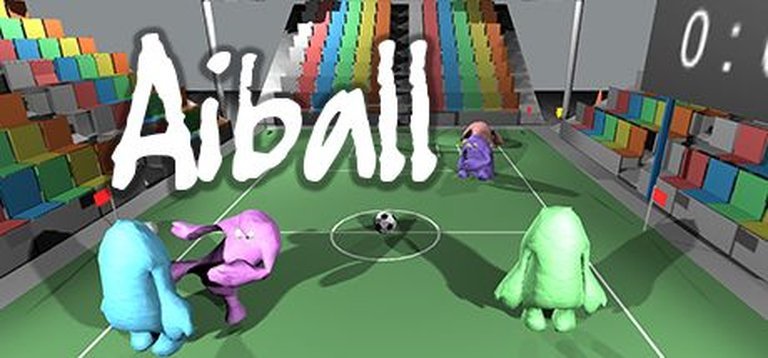
Aiball: Drunks is a chaotic party game set in a parallel universe where players control silly, drunken Aiballs in a variety of physics-based minigames including football, obstacle courses, wrestling battles, and even combat with weapons, all wrapped in a comedic and absurd narrative.
Aiball: Drunks Reviews & Reception
steambase.io (51/100): Aiball has achieved a Steambase Player Score of 51 / 100.
store.steampowered.com (50/100): All Reviews: Mixed (143) – 50% of the 143 user reviews for this game are positive.
Aiball: Drunks: Review
Introduction
In the crowded and often cynical landscape of digital storefronts, few titles capture the strange limbo between ambitious concept and tragic abandonment quite like Aiball: Drunks. Released on June 22, 2016, this chaotic party game from HFM Games promised a surreal blend of physics-based sports, combat, and absurdist humor. Its premise—controlling humanoid “Aiballs” from a parallel universe who play football, wrestle, and moonlight as “drunken porters”—suggested a delightfully unhinged experience. Yet, Aiball: Drunks is far more than a footnote of forgotten Early Access failures. It is a cautionary tale about developer-publisher trust, the fragility of digital ownership, and the ephemeral nature of interactive art. This review will dissect the game’s fractured journey—from its promising, if janky, beginnings to its infamous replacement by an unrelated product—and evaluate its place in gaming history through a lens of both playful mechanics and profound betrayal.
Development History & Context
HFM Games, a small and enigmatic studio, launched Aiball: Drunks into the Wild West of Steam’s Early Access program in mid-2016. The game was built on the Unity engine, a pragmatic choice for a small team aiming for cross-platform compatibility (Windows, macOS, Linux). The studio’s vision, as articulated in promotional materials, was ambitious: a physics-driven sandbox where players could engage in diverse activities beyond the initial “football” mode, including obstacle courses, wrestling, and even a “fight to the death” with weapons. The inclusion of a “drunken porters” minigame hinted at a satirical commentary on labor and absurdity. However, the Early Access framework revealed significant constraints. The initial release offered only one playable mode (football) with rudimentary mechanics, and the developer’s promise of a full rollout within a year—complete with new modes, customization, and community feedback—remained unfulfilled. The broader gaming landscape of 2016 was saturated with physics-based indie experiments (e.g., Human: Fall Flat, Octodad), making Aiball’s simplistic presentation and lack of polish difficult to overlook. By March 2019, HFM Games had vanished from Steam, abandoning their promise to nurture the game. In a move that would redefine the title’s legacy, the studio performed a digital shell game: they replaced Aiball: Drunks with Penguin Cretins, an entirely unrelated penguin-obstacle-course game. This “switcheroo” rendered the original unplayable on macOS and Linux for existing owners, as the new game lacked support for those platforms. The silence from both HFM Games and Valve—despite user reports of fraud—underscored the ethical vacuum at the heart of Aiball’s development.
Narrative & Thematic Deep Dive
If Aiball: Drunks had a narrative, it existed in its fragmented, absurdist lore rather than a cohesive plot. The game’s “story” was conveyed through its Steam store description and character design: Aiballs were presented as parallel-universe doppelgängers of humanity, sharing our love for sports but infused with surreal chaos. The “drunken porters” mode, though never implemented, was the most thematically resonant concept. It satirized the drudgery of menial labor by framing it as a physics-based struggle, with Aiballs presumably staggering under the weight of packages while intoxicated. This juxtaposition of mundane work and bizarre whimsy echoed themes of alienation and existential silliness, akin to Kerbal Space Program’s blend of scientific ambition and slapstick failure. The planned modes—like “escape from kindergarten” or “fight to the death”—suggested a broader commentary on power dynamics and survival in a world governed by arbitrary rules. Yet, the game’s actual narrative content was minimal. Dialogue was nonexistent, and character depth was limited to the Aiballs’ gait and physics-based mishaps. The comedic tone relied on visual gags—a footballer tripping over their own feet, a wrestler comically flailing—but without consistent development, these moments felt random rather than thematically cohesive. Ultimately, Aiball’s narrative was less a story than a set of unresolved ideas, leaving players to imagine the satire it might have delivered.
Gameplay Mechanics & Systems
The core gameplay loop of Aiball: Drunks revolved around physics-based interactions, a hallmark of the Unity engine but executed with mixed results. The sole available mode, football (soccer), was a chaotic free-for-all. Players controlled Aiballs—squat, limbless characters—using keyboard or mouse inputs, attempting to kick a ball into a goal. The physics engine, intended to create emergent comedy, often resulted in frustration. Characters slid unpredictably, collisions felt weighty and unresponsive, and the ball’s trajectory was frequently nonsensical. Combat, promised in the form of wrestling and weapon-based battles, was entirely absent from the Early Access build. Character progression was nonexistent; there were no levels, abilities, or customization options beyond the base models. The UI was rudimentary, with basic menus for player selection and match settings. A key flaw was the lack of AI, forcing players to rely on local multiplayer (up to 10 players via split-screen). While this theoretically amplified the “party game” appeal, the shallow mechanics made extended sessions tedious. The developer’s planned “drunken porter” mode—implying physics-based labor challenges—could have rescued the experience by leaning into absurdist problem-solving, but it remained a phantom feature. In essence, Aiball’s gameplay was a skeleton: a single mode with unrefined mechanics, held together by the hope of content that never materialized.
World-Building, Art & Sound
Aiball: Drunks’s world-building was fragmented, defined more by its concept art than in-game execution. The “parallel universe” setting was communicated through the Aiballs’ design: simple, rounded characters with oversized heads and stubby limbs, evoking a sense of childlike alienation. Environments were sparse, featuring generic grass fields and basic goalposts, with no distinct locales beyond the football pitch. The art style was cartoonish and minimalist, using bright primary colors to offset the physics engine’s jank. Though technically competent for a Unity title, the visuals lacked polish—textures were blurry, and animations were stiff. Sound design was even more underdeveloped. The game featured no music, relying instead on repetitive, generic sound effects for kicks, collisions, and crowd (non)reactions. The absence of an audio track deprived the experience of atmosphere, leaving the physics-driven chaos feeling hollow. The “drunken” aspect of the title was purely cosmetic; characters exhibited no altered behavior or audio cues to suggest intoxication. This failure to integrate the theme visually or auditorily underscored the game’s unfinished state. The art and sound, while functional, did little to build a cohesive world, leaving players adrift in a space that felt more like a tech demo than a realized universe.
Reception & Legacy
At launch, Aiball: Drunks garnered a tepid but not hostile reception. Steam reviews at the time of its Early Access debut were cautiously optimistic, with players praising the potential for chaotic multiplayer and the novelty of the Aiball aesthetic. However, the lack of content and polish quickly soured sentiment. By 2019, when the game was replaced by Penguin Cretins, the tone had shifted to outrage. User reviews on Steam exploded with accusations of fraud, with players like “murdockscott” lamenting that the new game “would not run” on their systems. The developer’s brief 2020 response—that the change was due to “a change of character” and that they would “return the old name and version”—was seen as a hollow gesture. Valve’s inaction despite numerous reports cemented Aiball’s status as a cautionary tale about Steam’s lax oversight. Commercially, the game was a modest success at launch (priced at $1.99, later discounted to $0.99), but its legacy is defined by infamy. Aiball: Drunks is now synonymous with “asset flipping” and developer malpractice, frequently cited in discussions about Steam’s refund policies and digital ownership. It has influenced no subsequent games, but it remains a benchmark for failure—a reminder that even the most charming concepts can be destroyed by broken promises. In the annals of gaming history, it stands not as a work of art, but as a monument to unfulfilled potential.
Conclusion
Aiball: Drunks is a paradox: a game that was simultaneously unpolished and underdeveloped, yet conceptually rich enough to inspire fleeting hope. Its physics-based multiplayer and absurdist premise offered a glimpse of a fun, if flawed, party experience. However, the studio’s abandonment of the project and its subsequent replacement with Penguin Cretins transformed it from a forgotten curiosity into a symbol of digital exploitation. The game’s legacy is one of betrayal—of players who paid for a promise and received only silence. While its mechanics were shallow and its world-building skeletal, the sheer audacity of its premise and the tragedy of its execution make Aiball: Drunks a uniquely compelling case study in video game history. It is, in the end, less a game than a ghost: a fleeting moment of chaotic potential that evaporated into the ether, leaving behind a cautionary echo in the digital ether. For historians, it serves as a stark reminder that the most enduring “games” are not always the ones we play, but the ones that play us. Verdict: A fascinating failure, historically significant but artistically hollow.