
- Release Year: 1998
- Platforms: Arcade, Dreamcast, PlayStation 3, PlayStation, PS Vita, PSP, Windows
- Publisher: Acclaim Entertainment, Inc., JVC Music Europe, Ltd., Square Enix Co., Ltd., Taito Corporation, Unbalance Corporation
- Developer: Taito Corporation
- Genre: Action
- Perspective: 3rd-person (Other)
- Game Mode: Hotseat, Single-player
- Gameplay: Fighting
- Setting: Cyberpunk, dark sci-fi
Description
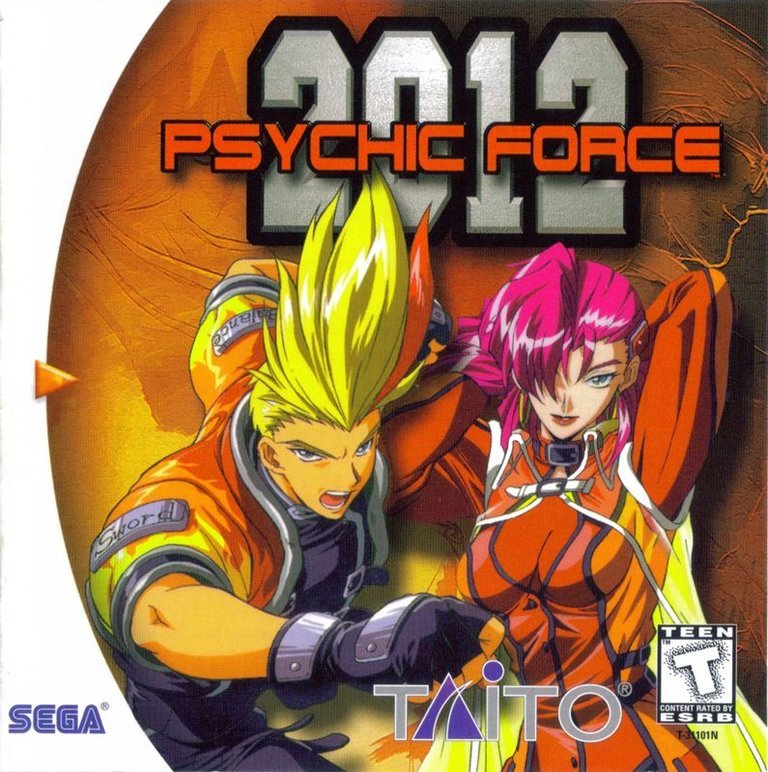
Psychic Force 2012 is a sequel set in a cyberpunk future where psychics battle in aerial combat within a giant floating cube arena. Players choose from ten unique characters, each wielding distinct psychic abilities, energy attacks, and mid-flight weapons, controlled via three buttons whose effects vary with distance. The game features life and power meters, special moves that drain energy (with recharge and expansion mechanics), and modes including training, versus, and story—where anime-inspired visuals depict ideological conflicts between psychic factions over human co-existence.
Gameplay Videos
Psychic Force 2012 Free Download
Psychic Force 2012 Cracks & Fixes
Psychic Force 2012 Patches & Updates
Psychic Force 2012 Mods
Psychic Force 2012 Guides & Walkthroughs
Psychic Force 2012 Cheats & Codes
PC
Access Windows Registry (REGEDIT.EXE) and go to HKEY_CURRENT_USER/Software/TAITO/PF2012/SpFlags. Set the value of ‘Burn’, ‘Keith’, and ‘Wong’ to 1.
| Code | Effect |
|---|---|
| HKEY_CURRENT_USER/Software/TAITO/PF2012/SpFlags | Enable secret characters (Burn, Keith, Wong). |
Dreamcast
| Code | Effect |
|---|---|
| At character selection screen, highlight fighter and press B | Alternate costumes (not in story mode). |
| Place game disc in PC CD-ROM drive | Unlock hidden .BMP images in root directory. |
| B14E2FE8 000003E8 | Infinite Health Player 1 (Gameshark/Action Replay US) |
| 32393121 000003E8 | Infinite Health Player 2 (Gameshark/Action Replay US) |
| 568F6237 000003E8 | Infinite Health Player 1 (Action Replay EU) |
| DA6096BF 000003E8 | Infinite Health Player 2 (Action Replay EU) |
| 014DA8E2 000003E8 | Unlimited Health Player 1 (CodeBreaker) |
| 014DA8E2 00000000 | No Health Player 1 (CodeBreaker) |
| 0D4DA8E2 000003E8 014DA8E2 000002EE | 75% Health Player 1 (CodeBreaker) |
| 0D4DA8E2 000003E8 014DA8E2 000001F4 | 50% Health Player 1 (CodeBreaker) |
| 0D4DA8E2 000003E8 014DA8E2 000000FA | 25% Health Player 1 (CodeBreaker) |
| 0D4DA8E2 000003E8 014DA8E2 00000001 | 1-Hit Death Player 1 (CodeBreaker) |
| 014DA7DA 000003E8 | Unlimited Health Player 2 (CodeBreaker) |
| 014DA7DA 00000000 | No Health Player 2 (CodeBreaker) |
| 0D4DA7DA 000003E8 014DA7DA 000002EE | 75% Health Player 2 (CodeBreaker) |
| 0D4DA7DA 000003E8 014DA7DA 000001F4 | 50% Health Player 2 (CodeBreaker) |
| 0D4DA7DA 000003E8 014DA7DA 000000FA | 25% Health Player 2 (CodeBreaker) |
| 0D4DA7DA 000003E8 014DA7DA 00000001 | 1-Hit Death Player 2 (CodeBreaker) |
Psychic Force 2012: Review
Introduction
In the pantheon of fighting games, few titles embody the experimental spirit of the late 1990s quite like Psychic Force 2012. As the ambitious sequel to Taito’s 1996 cult hit Psychic Force, it dared to reimagine the genre through a prismatic lens of anime aesthetics, psychic warfare, and three-dimensional aerial combat. Yet, despite its intriguing premise and technical ambition, Psychic Force 2012 remains a divisive entry—one lauded for its innovation but equally criticized for its execution. This review deconstructs Taito’s audacious experiment, examining its legacy through the lens of its narrative, mechanics, artistry, and reception. Ultimately, we shall ascertain whether Psychic Force 2012 stands as a flawed masterpiece or a historical footnote in the evolution of fighting games.
Development History & Context
Psychic Force 2012 emerged from Taito’s creative crucible during a period of seismic shifts in the fighting game landscape. Released in Japanese arcades on June 25, 1998, it built upon the foundation of its predecessor but sought to refine its radical 3D “arena” combat system. Developed by Taito’s internal team—directed by Hiroshi Aoki and Kōjirō Modeki, with Takeshi Kamimura producing—the game ran on Taito’s proprietary Wolf 3-DFX hardware, leveraging 3Dfx Voodoo graphics to render its polygonal characters and environments. This technological choice allowed for fluid character animations and dynamic scaling effects, though it would later prove a challenge for home console ports.
The late 1990s were a golden age for fighting games, dominated by 2D titans like Street Fighter III and The King of Fighters, alongside early 3D experiments such as Tekken 3 and Virtua Fighter 3. Psychic Force 2012 positioned itself as a radical alternative, emphasizing aerial mobility and psychic projectiles over grounded footsies. The Dreamcast port (March 1999 in Japan, November 1999 in North America) capitalized on Sega’s new console, becoming one of its earliest fighting games. Critically, the PlayStation port—renamed Psychic Force 2 in Western markets—introduced three returning characters from the original Psychic Force (Sonia, Brad, and Genma) and added modes like “Psy-Expand,” but suffered from noticeable downgrades in graphical fidelity. This fragmentation across platforms exemplified the era’s transitional nature, where arcade perfection rarely translated seamlessly to home hardware.
Taito’s vision was clear: to create a game that blended anime’s dramatic flair with accessible, high-flying combat. As Modeki noted, the team sought to “flesh out” the original’s mechanics while introducing new tactical layers. Yet, the game’s niche appeal—appealing more to anime enthusiasts than hardcore fighting purists—reflected Taito’s broader strategy of pursuing experimental projects alongside mainstream successes like G-Darius.
Narrative & Thematic Deep Dive
Set in 2012, two years after the events of the original Psychic Force, the narrative thrusts players into a dystopian world torn by ideological warfare between two factions of psychically empowered beings (“Psychiccers”). Keith Evans, the series’ enigmatic anti-hero, resurrects his organization NOA as “Neo NOA,” vowing to establish a Psychiccer-only utopia by any means necessary. Opposing him is Richard Wong, his former strategist, who breaks away to form “The Army,” a militant group seeking to dominate humanity and eliminate rivals. Caught in this crossfire are independent Psychiccers, including the new protagonist, Might, a young hunter grappling with his role in perpetuating violence, and Patty, his companion searching for her missing mother.
The plot unfolds through static anime-inspired cutscenes and in-engine sequences, emphasizing personal allegiances over geopolitical grandeur. Themes of duality permeate the narrative: Keith’s utopian dream versus Wong’s despotic ambitions, Might’s duty versus his conscience, and the recurring motif of “family” as both a weapon and a casualty. Characters like Carlo and Regina, siblings loyal to Keith, embody blind devotion, while Gudeath—a gravity-wielding brute—represents raw, nihilistic power. The narrative’s strength lies in its character-driven drama; Burn Griffiths, frozen in the original’s climax, awakens to confront both factions, his arc questioning whether Psychiccers and humans can coexist.
However, the storytelling suffers from stilted dialogue and pacing issues. Cutscenes often prioritize melodrama over nuance, with repetitive declarations of “destiny” and “justice.” Yet, the central conflict—psychic freedom versus human survival—resonates as a timeless cautionary tale, echoing real-world debates on power, persecution, and coexistence. Taito’s world-building, though sparse in lore, effectively establishes a society where psychic abilities are both a gift and a curse, with factions exploiting fear and hope to justify their ends.
Gameplay Mechanics & Systems
Psychic Force 2012‘s core innovation lies in its three-dimensional combat arena, a floating cube with six walls where characters engage in aerial duels. Movement is fully three-dimensional, enabling players to dash, strafe, and evade in any direction—a radical departure from 2D fighters. Controls are elegantly simplified: a three-button scheme (Guard, Weak Attack, Strong Attack) with distance-based inputs. Weak attacks generate low-cost projectiles for zoning, while strong attacks consume 30% of the Psycho Gauge to unleash devastating energy blasts or melee combos.
The game’s signature resource management revolves around the Psycho Gauge, which fuels special moves and defensive abilities. As the Life Gauge depletes, the Psycho Gauge expands, allowing for up to 200% energy allocation—a risk-reward system encouraging aggressive play. New mechanics include:
– Retreat Barrier: A defensive maneuver that interrupts attacks but consumes 50% Psycho Gauge.
– Slide Dash: A sidestep that evades projectiles.
– Hyper Charge: A life-draining move that boosts attack power.
– Psy-Impulse: A counter-attack triggered when hitting a wall.
– Barrier Break: A costly (50% Psycho Gauge) move to shatter an opponent’s guard.
Each of the ten original characters (plus three in Psychic Force 2) boasts unique psychic affinities—Might’s lightning, Patty’s sonic waves, Regina’s fire—enabling distinct playstyles. Might, for instance, excels at rushdown with fast dashes, while Gudeath’s gravity attacks control space. However, the combat system reveals flaws: the reliance on projectile spam at mid-to-long range can lead to stalemates, and the Psycho Gauge’s depletion often leaves players defenseless. The Dreamcast port’s AI was criticized for its punishing difficulty, while the PlayStation version adjusted controls to simplify shielding.
Modes include Arcade (timed battles against random opponents), Story (character-specific narratives with static cutscenes), Versus, and the PS1-exclusive Psy-Expand (a tutorial-like mode unlocking alternate moves). While the Story Mode adds narrative depth, its static visuals and repetitive matchups underwhelm. Ultimately, Psychic Force 2012 offers a compelling tactical framework but struggles with balance and execution, making it a game of high highs (acrobatic combos, cinematic supers) and frustrating lows (input errors, environmental jank).
World-Building, Art & Sound
Taito’s artistic direction in Psychic Force 2012 is a triumph of anime-inspired aesthetics married to 3D technology. The game’s cyberpunk-tinged world is defined by its arenas, each set within the floating cube but backdropped by vivid, dynamic environments—futuristic cityscapes, stormy oceans, and crystalline temples. These stages, though static, use parallax scrolling and dynamic lighting to create depth, with the cube’s transparent walls framing the action like a diorama. Character designs, by Tsutomu Matsuda and Noritaka Kawamoto, lean into anime tropes: exaggerated proportions (Might’s spiky hair, Patty’s petite frame), flamboyant costumes (Carlo’s tailored suit, Regina’s battle gown), and elemental motifs. The visual style, reminiscent of 90s shōnen anime, gives the game a distinct identity, even if character models suffer from blocky textures in home ports.
The sound design, led by Zuntata composer Hideki Takahagi, blends synth-heavy electronica with orchestral flourishes, amplifying the game’s dramatic tension. Each character has a theme reflecting their personality—Gudeath’s industrial beats, Genshin’s serene traditional instruments—while sound effects crackle with psychic energy (lightning zaps, sonic booms). The Japanese voice acting, retained in Western releases, adds gravitas to cutscenes, though English subtitles occasionally feel disjointed. The arcade’s stereo sound amplifies the chaos of combat, with directional audio enhancing spatial awareness during aerial skirmishes.
However, the PlayStation port’s graphical downgrade—darker palettes, reduced frame rates, and simplified effects—undermined Taito’s vision. Similarly, the Dreamcast version, while sharper, suffered from occasional pop-in. Despite these flaws, the game’s artistry remains its most enduring legacy, creating a world where psychic powers feel both magical and lethal.
Reception & Legacy
Upon its release, Psychic Force 2012 garnered a mixed reception that underscored its niche appeal. In Japan, it debuted as the second-most successful arcade game in August 1998, per Game Machine, indicating strong initial traction. Western critics, however, were divided. The Dreamcast version scored a middling 59% on MobyGames, with outlets like Computer and Video Games (80%) praising its “kooky” innovation but Next Generation lambasting it as a “waste of money and time.” Common praises included its unique 3D mechanics and anime flair, while criticisms targeted “awkward controls” (Futuregamez.net), “degraded graphics” (Jeuxvideo.com), and a “lack of depth” (Game Revolution). The PlayStation port fared worse, with Video Games (German) awarding it a scathing 28% for its “hanebüchen gameplay.” Commercially, the game failed to achieve mainstream success, overshadowed by Dreamcast juggernauts like SoulCalibur.
Over time, Psychic Force 2012‘s reputation has undergone reevaluation. Fighting game enthusiasts now recognize it as a precursor to titles emphasizing aerial mobility and projectile play, such as Senko no Ronde and Dragon Ball FighterZ‘s blast mechanics. Its influence is most evident in Taito’s later work, like Fighters Impact and Bujingai: The Forsaken City. The game’s cult status endured through re-releases, including the PlayStation 2’s Psychic Force Complete (2005) and a 2012 arcade revival via NESiCAxLive. Yet, its legacy remains bittersweet—a testament to Taito’s ambition, but also a reminder of the challenges in translating arcade innovation to home consoles.
Conclusion
Psychic Force 2012 stands as a fascinating artifact of fighting game history—a bold, flawed experiment that prioritized innovation over refinement. Its 3D aerial combat system, psychic resource management, and anime-driven narrative were ahead of their time, yet technical limitations and design imbalances prevented it from reaching its full potential. As a product of its era, it reflects the late 90s’ appetite for genre experimentation, even as it struggled against the era’s technical constraints and market expectations.
In retrospect, Psychic Force 2012 earns its place not as a classic, but as a noble failure—a reminder that pushing boundaries often invites criticism. Its artistry and ambition resonate more profoundly than its mechanics, offering a glimpse into an alternate timeline where fighting games embraced three-dimensional freedom earlier and more gracefully. For modern players, it remains a curio—a challenging, visually striking experience best approached with tempered expectations. Yet, its influence echoes in contemporary games that dare to defy convention. In the grand tapestry of gaming history, Psychic Force 2012 is a vibrant, if frayed, thread—imperfect, but undeniably unforgettable.