
- Release Year: 2017
- Platforms: Android, iPad, iPhone, Macintosh, Windows
- Publisher: Glitch Games Ltd
- Developer: Glitch Games Ltd
- Genre: Escape room, Puzzle
- Perspective: 1st-person
- Game Mode: Single-player
- Gameplay: Hidden object
- Setting: Fantasy
- Average Score: 69/100
Description
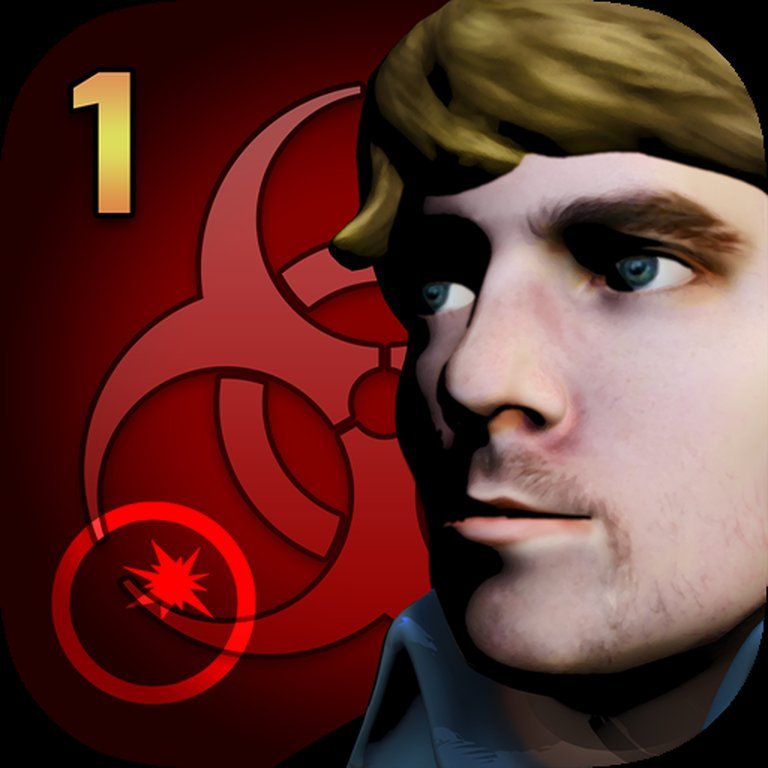
All That Remains: Part 1 is a first-person survival puzzle game set in a mysterious fantasy bunker, where players must escape by solving intricate hidden object and point-and-click challenges. The game tasks players with searching for clues, deciphering codes, and unlocking doors to uncover the story behind their confinement in this immersive room escape adventure.
Gameplay Videos
Where to Buy All That Remains: Part 1
PC
All That Remains: Part 1 Reviews & Reception
pocketgamer.com : All That Remains: Part 1 is an ‘escape the room’-style puzzler that offers up a decent challenge.
All That Remains: Part 1: Review
1. Introduction
The click of a rotary phone, the hum of a fluorescent light, the faint crackle of a two-way radio—these are the sounds of confinement, of a world reduced to a single room. All That Remains: Part 1 (2017), developed by UK-based micro-studio Glitch Games, plunges players into this claustrophobic tableau. As Campbell Price, you awaken in a Cold War-era bunker, your memory fragmented and your sister’s voice pleading from above. This isn’t merely an escape-room game; it’s a testament to the puzzle-adventure renaissance of the mid-2010s, where meticulous environmental storytelling and fiendish logic puzzles converged to create a uniquely harrowing experience. Yet its legacy is one of duality: a brilliantly crafted challenge that simultaneously defined a niche and exposed its pitfalls. This review argues that All That Remains is a masterclass in atmospheric puzzle design, marred by accessibility issues and technical quirks, ultimately standing as a vital, if imperfect, artifact in the evolution of mobile and indie gaming.
2. Development History & Context
Glitch Games, founded by programmer Graham Ranson and artist Simon Pearce, was a quintessential “bedroom studio” that carved out a niche for itself with the Forever Lost trilogy (2013–2015). All That Remains emerged as their most ambitious project to date, leveraging the Solar2D/Corona middleware to deploy across iOS, Android, Windows, Mac, and even Nintendo Switch. Released on June 22, 2017, it arrived during the peak of mobile escape-room mania, titles like Dooors (2011) and The Room (2012) having primed audiences for tactile, environmental puzzles. Glitch’s vision was clear: to create a “micro” experience with macro impact, blending intricate puzzles with a compelling narrative. As Ranson noted in interviews, the studio aimed to challenge players without hand-holding, embodying a “trust the player” ethos. Technologically, the game’s fixed/flip-screen 2D perspective and point-and-click interface were deliberate choices, echoing classic adventure games while optimizing for touch-screen devices. However, this ambition clashed with the era’s constraints: limited mobile processing power and the need for cross-platform compatibility occasionally led to performance hiccups, as players later reported crashes and UI bugs.
3. Narrative & Thematic Deep Dive
The narrative unfolds with minimalist elegance. Campbell wakes in a bunker, his father Duncan’s legacy of paranoia now literalized in steel and concrete. His sister Clara’s voice crackles over a walkie-talkie, revealing an apocalyptic scenario—chemical attacks? Nuclear fallout?—that forces them into separate hiding places. Duncan’s death, implied by Clara’s radio pleas (“Dad didn’t make it”), casts a shadow over the bunker, turning it into a tomb of half-truths and faded memories.
The dialogue, delivered via voice acting, oscillates between sibling banter and grim tension. Clara’s quips (“Hungry clocks? Dad’s joke was terrible, but mine’s worse!”) inject dark humor, yet her underlying urgency—“You’ve got to hurry, Camp. I don’t know how long I’m safe here”—grounds the narrative. Clues emerge through environmental storytelling: a letter referencing Hawthorne (a nod to Glitch’s Forever Lost), a calendar marking birthdays (Campbell’s and Clara’s), and cryptic graffiti hinting at Duncan’s prepper paranoia. The central theme is safety as illusion. The bunker, designed to protect, becomes a cage, while the outside world—revealed only through fragmented radio reports—is a hellscape. This duality interrogates prepper culture: Is paranoia foresight or madness? The game’s refusal to over-explain the apocalypse mirrors Campbell’s fragmented memory, forcing players to piece together meaning from scraps, much like escaping the bunker itself.
4. Gameplay Mechanics & Systems
All That Remains revolves around two core loops: exploration and puzzle-solving. As a first-person point-and-click adventure, it emphasizes tactile interaction—turning dials, sliding panels, and combining items. Inventory management is critical: Campbell collects a wrench, a sponge, a Tetris-like wooden piece, and a camera, which becomes the game’s signature tool. The “Glitch Camera” allows players to photograph clues, reducing backtracking and mimicking real-world note-taking—a brilliant UX innovation that elevates the genre.
Puzzles range from cerebral to obtuse. Early challenges involve logical deduction: cracking a computer password by entering “INCORRECT” (per a sticky note’s meta-humor) or aligning height-chart symbols with barrel numbers (6-9-7). Later, players must rotate photos to match wall patterns or solve pipes puzzles using clues from a fridge (A-J arrows). Some puzzles are elegantly integrated: using a vodka-soaked sponge to clean a radiation gauge ties item combination to environmental storytelling. Others, like the Moscow time-zone globe puzzle, rely on obscure real-world knowledge, frustrating players.
The UI, however, betrays the game’s indie roots. The point-and-click interface can be imprecise, with small targets leading to accidental exits. A notorious bug—where the back button vanishes during the keypad puzzle—left players stranded, forcing restarts. Auto-save mitigates frustration but can’t compensate for the game’s occasional “puzzle wall” moments, where progress halts for hours without clear direction. There’s no hint system, a deliberate choice by Glitch that honors the genre’s hardcore roots but alienates casual players. As one Steam review lamented: “I love logic, but these puzzles are so far out you need a PhD to solve them.”
5. World-Building, Art & Sound
The bunker is a character in itself. Glitch Games’ art direction leans into illustrated realism, with detailed textures that evoke 1980s Cold War anxiety: peeling paint, flickering CRT monitors, and rotary phones that require manual dialing. The visual palette is dominated by ochres, grays, and sickly greens, mirroring the game’s themes of decay and paranoia. Subtle details—a bloodstain on a wall, a “poop near a toilet” (per the Steam mature content description)—add texture without sensationalism.
Sound design amplifies the atmosphere. Richard J. Moir’s soundtrack blends ambient drones with dissonant piano notes, evoking dread without overbearing. The radio static and Clara’s voice acting are highlights—her performance balancing sibling warmth with palpable fear. Yet audio inconsistencies mar the experience: muffled sound during key moments and a lack of spatial audio undermine immersion. The absence of dynamic sound cues, like bunker groans or distant sirens, leaves the world feeling static. Despite this, the art and sound collectively transform the bunker into a character, its spaces tight and oppressive, each room a new layer of Duncan’s legacy.
6. Reception & Legacy
At launch, All That Remains polarized critics. Pocket Gamer praised its “complex and entertaining puzzles,” calling it a “decent challenge,” while Adventure Gamers lauded its “trademark darkness and cleverness.” However, technical flaws and difficulty drew fire. Steam’s 69% approval rating (13 reviews) reflects this divide, with positive reviews hailing its “fiendishly clever puzzles” and negative ones citing “game-breaking bugs” and “nonsensical solutions.” Mobile players echoed these sentiments, with App Store reviews noting crashes and UI snags (e.g., the missing back button).
Over time, the game’s reputation has stabilized. It’s now seen as a cult classic within the Glitchverse, celebrated for its atmosphere and mechanical rigor. Its influence is evident in later escape-room games like Escape F1rst (2018), which adopted its multi-stage puzzle design, but it didn’t revolutionize the genre. Instead, it exemplified the strengths and limitations of the mobile puzzle-adventure: intimate, demanding, and unapologetically niche. The unresolved cliffhanger—Campbell escaping the bunker as the world collapses—fueled demand for a Part 2, but Glitch pivoted to Veritas (2018), leaving All That Remains as a tantalizing fragment of a larger, unfinished story.
7. Conclusion
All That Remains: Part 1 is a game defined by its contradictions. It’s a testament to Glitch Games’ mastery of atmosphere and puzzle design yet hampered by its own ambition. The bunker’s oppressive beauty and cerebral puzzles create an unforgettable experience, but technical issues and a punishing difficulty curve prevent it from reaching its full potential. As a historical artifact, it captures the zenith of mobile escape-room gaming—a moment when indie studios could craft AAA-level puzzles in miniature form. For puzzle purists, it remains essential, a benchmark for environmental storytelling and logical consistency. For others, it’s a cautionary tale about the perils of uncompromising design.
Verdict: A flawed but vital entry in the puzzle-adventure canon. All That Remains rewards patience with moments of pure epiphany, yet its legacy is one of unrealized promise. It stands as a reminder that the most enduring games are often those that challenge us—leaving us, like Campbell, with nothing but our wits and the echo of a sister’s voice.