
- Release Year: 2014
- Platforms: Macintosh, PlayStation 4, Tomahawk F1, Windows
- Publisher: Fuze Technology (Shenzhen) Co., Ltd., Rising Star Games Ltd., Singapore University of Technology and Design
- Developer: SUTD Game Lab
- Genre: Action, Puzzle
- Perspective: Top-down
- Game Mode: Single-player
- Average Score: 64/100
Description
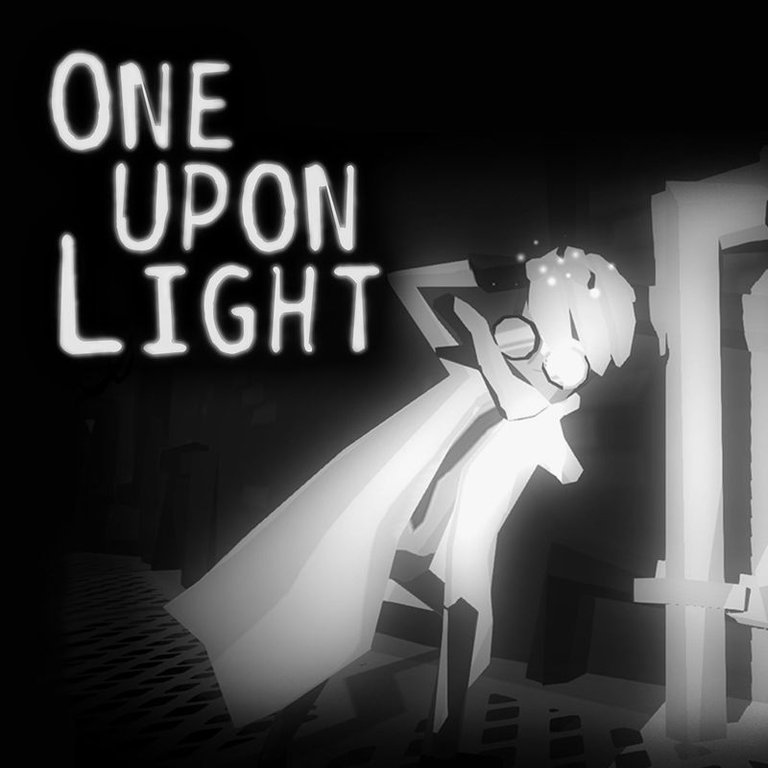
One Upon Light is a top-down, 2D puzzle-action game where players explore a mysterious laboratory after light becomes a deadly force. As a scientist navigating shadowy environments, players must avoid lethal light beams while solving intricate puzzles by manipulating shadows and environmental interactions to uncover the truth behind the lab’s catastrophic light anomaly.
One Upon Light Guides & Walkthroughs
One Upon Light Reviews & Reception
metacritic.com (70/100): A really fun and challenging experience blended in really well with a little story.
metacritic.com (70/100): An easily accessible puzzler with decent challenge, but it’s a shame the game isn’t longer with a better narrative.
metacritic.com (60/100): Feels more suitable for mobile platforms, but still enjoyable.
metacritic.com (60/100): Well-crafted game with good graphics and sound, but timing-based puzzles can be frustrating.
metacritic.com (60/100): Great ideas but needs better execution, more content, and balanced difficulty.
metacritic.com (50/100): A neat little game hidden in the shadows that doesn’t shine brightly enough.
metacritic.com (40/100): An intriguing puzzle game let down by dull visuals and tiresome design.
metacritic.com : Controls are absolutely terrible with input lag and unresponsive buttons.
monstercritic.com (80/100): What I enjoyed most is not having the story revealed to me all at once. You had to keep playing in order to find out the entire truth. It just motivated me to keep playing despite how difficult some of the puzzles can be. Playing a game that was entirely monochrome just added to the experience.
monstercritic.com (70/100): One Upon Light is a great purchase for puzzle fans looking for something slightly different.
monstercritic.com (70/100): The atmosphere and story can keep you hooked despite frustrating puzzles.
the-gamers-lounge.com (65/100): One Upon Light does what it sets out to do well. A fresh take on the puzzle genre, mixing in a bit of story and the tension of a horror game, Once Upon Light weaves a short, thrilling tale.
christcenteredgamer.com (74/100): The black and white visuals are simple and work well for this puzzle game.
One Upon Light: Review
Introduction
In the pantheon of indie puzzle games, few concepts are as elegantly simple yet profoundly unsettling as One Upon Light. Released in 2014 by Singapore University of Technology and Design’s (SUTD) Game Lab, this top-down monochromatic odyssey turns the fundamental relationship between light and shadow on its head. Here, light is not illumination or safety; it is a lethal, instantaneous death sentence. As a scientist awakening in the wreckage of a failed experiment at Aurora Science Labs, the player must navigate a world where shadows are the only sanctuary. While its legacy is modest compared to genre titans, One Upon Light remains a fascinating artifact—a product of academic ambition with a bold, underrealized vision. This review deconstructs its development, narrative, gameplay, artistic merit, and enduring impact to argue that despite its flaws, it represents a daring experiment in atmospheric puzzle design that deserves deeper recognition.
Development History & Context
Roots in Academia: One Upon Light emerged from an unlikely crucible: the Singapore University of Technology and Design. SUTD Game Lab, an academic collective of students and faculty, developed the title as a passion project, leveraging Singapore’s burgeoning indie scene. This academic origin is evident in the game’s meticulous focus on mechanistic puzzle design over commercial polish. The project debuted as a finalist at the 5th Independent Games Festival China 2013, winning “Best Game,” signaling its early promise as a creative outlier in a landscape dominated by Western and Japanese studios.
Technological Constraints and Vision: Built on Unity, the game embraced the engine’s flexibility to render its stark, real-time shadow physics. Lead programmers Chuah Chong Yunn, Ng Xi Hui, and Wong Yi crafted a system where shadows were not static textures but dynamic, physics-driven entities. This allowed for emergent solutions to puzzles, though it also introduced performance inconsistencies. The team’s vision was explicitly anti-commercial: they prioritized atmospheric tension over accessibility, aiming to create a “true test of skill, brains and photophobia,” as the Steam store description boasts. This idealism, however, clashed with the practical realities of indie development, where budget and timeline constraints often necessitate compromise.
Release Landscape: Upon its October 28, 2014 PlayStation 4 launch, One Upon Light entered a market saturated with indie darlings like Fez and Braid. Its monochrome aesthetic and “light as death” mechanic differentiated it, but its timing was unfortunate. 2014 saw the rise of narrative-driven indies (Transistor, Sunless Sea), while One Upon Light offered a sparser, more abstract experience. Rising Star Games later ported it to PC and Mac in 2016, broadening its reach but failing to ignite significant commercial success. The game’s obscurity persists, with only 7 players collecting it on MobyGames—testament to its limited footprint.
Narrative & Thematic Deep Dive
A Fragmented Mystery: The narrative unfolds through fragmented newspaper clippings collected at each level’s end. These clippings reveal the story of Aurora Science Labs’ catastrophic experiment: an attempt to harness light energy gone awry, turning illumination into a lethal force. The protagonist, a nameless scientist, awakens amidst debris with amnesia, tasked with piecing together the disaster through environmental storytelling and scattered headlines. This approach—story as collectible—mirrors games like Limbo but feels more perfunctory. Headlines like “Researcher Vanishes During ‘Light Harvesting’ Experiment” provide broad strokes, yet the lack of dialogue, character names, or deeper lore renders the backstory haunting but hollow.
Thematic Resonance: Thematically, One Upon Light explores hubris in science and the duality of progress. The lab’s sterile, decaying environment symbolizes the fragility of human ambition: experiments that promise “for progress, for humanity… for science” instead unleash existential terror. Light, typically a symbol of enlightenment, becomes the antagonist—a poetic inversion suggesting how unchecked discovery can corrupt. The protagonist’s photophobia is a physical manifestation of vulnerability, forcing players to embrace darkness as survival. Yet the game never fully interrogates these ideas. Themes of isolation and existential dread simmer beneath the surface but remain underdeveloped, sacrificed for gameplay austerity.
Character and Worldbuilding: The protagonist is a cipher—a vessel for the player’s actions rather than a defined character. His silent journey through ruined labs, conveyor belts, and flickering light sources creates a sense of pervasive dread, but without meaningful interaction or dialogue, emotional engagement remains elusive. The worldbuilding is similarly functional: the lab’s industrial design (gears, crates, flickering lamps) serves puzzles over storytelling. While this enhances the game’s oppressive atmosphere, it also limits narrative depth, reducing characters to environmental props and the plot to a series of disconnected events.
Gameplay Mechanics & Systems
Core Loop: Shadows as Sanctuary: One Upon Light’s genius lies in its inversion of traditional puzzle norms. The player cannot defeat enemies or wield weapons; survival hinges on manipulating shadows to create fleeting safe paths. Early levels teach basic mechanics: pushing crates to block light sources, timing dashes across flickering shadows, and using switches to deactivate lamps. This loop is initially satisfying, demanding spatial reasoning and patience. However, the game’s top-down perspective can obscure critical details, leading to trial-and-error deaths that feel punitive rather than fair.
Innovations and Flaws: The mid-game introduction of the Shadow Echo device marks the gameplay’s zenith. Players can “record” a shadow, freezing it in place even after the original light source moves. This mechanic adds temporal layers to puzzles, requiring foresight and multi-step planning. For example, freezing a shadow to hold down a switch while moving a crate across a light-drenched floor creates complex, rewarding solutions. Yet execution is inconsistent. As noted by GamingLives, “the automatic checkpoints seem to get further… leading to much frustration.” While invisible checkpoints are plentiful, they often reset progress through multiple puzzle steps, exacerbating tedium.
Combat and Progression: There is no traditional combat; light is the sole antagonist. “Death” is instantaneous and visually minimal—the protagonist simply frazzles into static—a choice that tones down gore but reduces tension. Progression is linear, with each of the 21 levels introducing new elements (e.g., conveyor belts, shadow-absorbing materials). However, the difficulty spikes dramatically mid-game. TheSixthAxis criticizes puzzles where “fun wasn’t being had because of timing,” while user reviews on Metacritic decry “input lag” and unresponsive controls that turn spatial puzzles into controller-throwing exercises. Character progression is nonexistent, focusing purely on mechanical mastery.
UI and Polish: The UI is minimalist: a health bar (irrelevant given instant death), a counter for collected clippings, and a button prompt for interaction. Yet polish issues plague the experience. As a Metacritic user notes, “the interact button is unresponsive, meaning you will often not let go or grab the object you intended to.” For a game reliant on precision, such flaws undermine its core challenge.
World-Building, Art & Sound
Monochrome Mastery: Visually, One Upon Light is its strongest asset. The black-and-white aesthetic, inspired by classic cartoons, creates a timeless, haunting aesthetic. Shadows are rendered with stark gradients, while light sources—flickering bulbs, glowing machinery—feel predatory. The top-down perspective ensures clarity, though environments occasionally blend into visual noise. Game Art Director Simon Strauss and Ang Yi Xin’s work excels in conveying decay: rusted gears, peeling paint, and fractured architecture tell the story of the lab’s collapse without exposition. This visual consistency reinforces the theme of light as corruption, making the world feel oppressive yet cohesive.
Atmosphere and Immersion: The monochrome palette is not merely stylistic; it is a gameplay tool. By stripping color, the game forces players to focus on shadow dynamics, heightening immersion. As ParentingPatch observes, the art style “encourages creativity and imagination.” However, the world lacks verticality and environmental storytelling. Labs are static backdrops, with no interactive elements beyond puzzles. This limits the sense of place, turning environments into obstacle courses rather than lived spaces.
Sound Design: Audio is functional but forgettable. ChristCenteredGamer notes that “background music and sound effects get the job done, but are forgettable.” Guo Yuan, Jeremy Goh, and Sharon Kho’s soundtrack is sparse—mostly ambient drones and mechanical hums—intended to amplify tension but often fading into background noise. Sound effects (clanking crates, humming lights) are crisp but repetitive. Without voice acting or dynamic audio cues, the world feels muted, diminishing the stakes of light-based peril. The only standout is the death sound—a sharp crackle—that provides fleeting feedback.
Integration of Elements: When art, sound, and gameplay align, the experience shines. Navigating a room with swinging lamps while the soundtrack pulses with urgency creates genuine dread. Yet these moments are fleeting. The lack of audio-visual synergy in later puzzles—where complex mechanics occur in silence—highlights the game’s inconsistent polish. Ultimately, the world-building is compelling in concept but underdelivered in execution.
Reception & Legacy
Launch Reception: Critical reception at launch was mixed, mirroring the game’s polarizing nature. Metacritic aggregates a “Mixed or Average” score of 59/100 based on 9 reviews. PSX Extreme (65%) praised its “originality and challenge,” while Use a Potion! (58%) lamented its “frustrating difficulty spikes.” Common themes included admiration for the core concept but criticism for pacing and control issues. GamingLives noted that “the difficulty jumps mid-game,” while TheSixthAxis called it “very mechanical” and lacking in atmosphere. Commercially, One Upon Light was a footnote, with no sales data available but clear evidence of limited reach (e.g., only 7 collectors on MobyGames).
Evolution of Reputation: Over time, the game’s reputation has settled as a niche curiosity. It is remembered for its academic origins and bold premise rather than its execution. Enthusiast sites like Brash Games (PC, 80%) lauded its “fun and challenging experience,” while mainstream outlets dismissed it. Its legacy is primarily as a case study in indie development—proof that university labs can produce innovative ideas but often lack the polish of commercial studios. Notably, it has not spawned direct sequels or clones, though its “light as death” mechanic shares DNA with games like The Light: Remake (2020).
Industry Influence: While not trendsetting, One Upon Light contributed to the indie puzzle genre’s diversity. Its emphasis on environmental interaction over combat predates titles like Baba Is You (2019), though it lacks their systemic depth. SUTD Game Lab’s success at IGF China also highlighted Southeast Asia’s growing role in indie development, paving the way for studios like Toge Productions (Coffee Talk). However, the game’s flaws—especially its difficulty spikes and sparse narrative—limited its influence, cementing it as a cult favorite rather than a landmark.
Conclusion
Verdict and Historical Placement: One Upon Light is a flawed masterpiece of ambition over execution. Its core concept—turning light into a lethal antagonist—is a stroke of genius, offering a fresh perspective on puzzle design. The monochrome art and shadow mechanics create a uniquely oppressive atmosphere, while the academic development lends it an experimental charm. Yet these strengths are undermined by inconsistent difficulty, control issues, and a narrative that feels more like a collection of notes than a cohesive story. As ChristCenteredGamer concludes, it is “fun in short spurts but lacks incentive to keep interest for longer periods.”
In the annals of video game history, One Upon Light occupies a curious space. It is not a genre-redefining classic like Portal, nor a commercial failure like No Man’s Sky. Instead, it is a testament to the risks of indie ambition—a game that dares to be different but stumbles in its delivery. For puzzle enthusiasts seeking a cerebral, atmospheric challenge, it offers moments of brilliance. For mainstream audiences, its frustrations likely outweigh its innovations. Ultimately, One Upon Light is a shadowy footnote: a reminder that in the pursuit of originality, even the most elegant concepts can be dimmed by imperfect execution. Yet its existence enriches the medium, proving that the darkest games can still illuminate bold ideas.