
- Release Year: 2018
- Platforms: Windows
- Publisher: etherane
- Developer: etherane
- Genre: Action
- Perspective: Diagonal-down
- Game Mode: Single-player
- Gameplay: Puzzle elements, RPG elements, Visual novel
- Setting: Fantasy
- Average Score: 90/100
Description
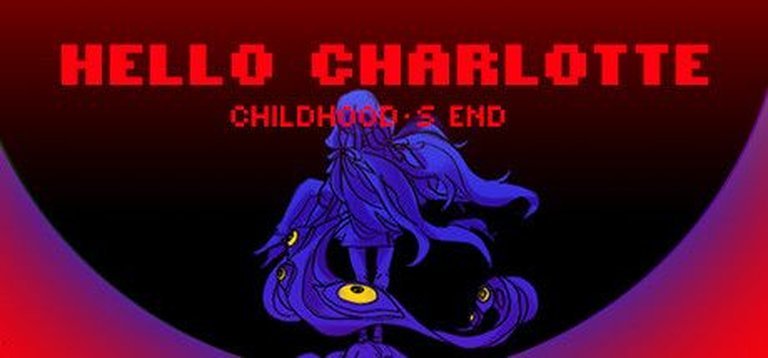
Hello Charlotte: Childhood’s End is a dark fantasy horror RPG visual novel with puzzle elements, set in a surreal and unsettling world. Developed by etherane and released for Windows in January 2018, it’s the third entry in the Hello Charlotte series, featuring anime art style and a diagonal-down perspective that immerses players in its psychologically twisted narrative filled with surreal imagery and existential themes.
Gameplay Videos
Where to Buy Hello Charlotte: Childhood’s End
PC
Hello Charlotte: Childhood’s End Patches & Updates
Hello Charlotte: Childhood’s End Mods
Hello Charlotte: Childhood’s End Guides & Walkthroughs
Hello Charlotte: Childhood’s End Reviews & Reception
metacritic.com (91/100): Hello Charlotte childhoods end is the perfect conclusion to the amazing hello Charlotte trilogy. Every line of dialogue, every visual choice, and every minor detail is carefully placed and accumulates to one of the best payoffs I’ve experienced. Absolute cinema!
gaming-charts.com (91.49/100): Hello Charlotte: Childhood’s End is a captivating indie RPG that blends visual novel storytelling, exploration, and puzzle-solving into a surreal and emotional journey.
steamcommunity.com : Utterly perfect. 10/10 play it
raijin.gg (98.06/100): Hello Charlotte: Childhood’s End holds a 98.06% positive rating on Steam, based on 3,095 player reviews. This places the game in the overly positive category, indicating a nearly unanimous player consensus.
Hello Charlotte: Childhood’s End: Review
Introduction
Hello Charlotte: Childhood’s End isn’t merely a video game—it’s a haunting psychological labyrinth masquerading as a final episode. As the third installment in etherane’s surreal sci-fi horror series, this 2018 release detonates expectations of a straightforward narrative conclusion, replacing traditional catharsis with a fractal explosion of meta-commentary, body horror, and existential dread. Its legacy is defined by this deliberate obfuscation: a cult achievement that simultaneously frustrates and captivates in equal measure. This review argues that Childhood’s End represents a masterclass in subverting interactive storytelling conventions, using RPG Maker’s constraints to forge an unforgettable experience that redefines what a “finale” can be—not an answer, but a terrifyingly beautiful question mark painted in blood and glitch art.
Development History & Context
Born from the singular vision of indie developer etherane, Hello Charlotte: Childhood’s End emerged from a landscape dominated by low-budget RPG Maker experiments in 2018. The series itself began as a niche curiosity—EP1: Junk Food, Gods and Teddy Bears (2015) and EP2: Requiem Aeternam Deo (2016)—establishing a tone blending cosmic horror with absurdist satire. By 2018, the indie scene was saturated with psychological thrillers, yet etherane carved a niche through radical commitment to narrative density. Technologically, the game leveraged RPG Maker’s limitations as a strength: its diagonal-down perspective and anime/manga aesthetic became tools for surreal unease. The studio’s vision, articulated via the Steam synopsis, aimed to create “a prosumer noise machine, a virulent insect, an obscene revelation—a thank you,” framing the game as both a self-contained entity and a deconstruction of gaming’s fourth-wall conventions. This context is crucial: Childhood’s End wasn’t just a game but a defiant artistic statement in an era increasingly focused on accessibility.
Narrative & Thematic Deep Dive
The plot defies linear summary. At its core, it revolves around Charles Eyler, a tormented author who drowns himself after familial tragedy, subsequently creating a vast, multi-layered universe (the “House”) populated by Charlotte “units” (Q84, V19, O91, etc.). The narrative operates on three intertwined planes:
– The Meta-Narrative: Events of EP1 and EP2 are revealed to exist within a TV world inside Charles’s dying reality. The “Charlotte” players controlled was actually Scarlet Eyler (Charles’s dead sister’s consciousness) possessing a Charlotte body (O91), trapped in a recursive loop to save the Oracle.
– Cosmic Horror: The Mother, a grotesque entity birthing Charlottes from egg-sacs, represents primal creation and destruction. Her existence reframes the entire series as a cosmic game of survival and suffering.
– Psychological Descent: Charles’s mental collapse—marked by hallucinations (e.g., the glitching “Umbrella Man”) and unreliable narration—blurs reality with fiction. The stairwell scene where young Anri and Charles witness bullying mirrors real-life trauma, grounding the surrealism in human pain.
Themes spiral outward: identity fragmentation (multiple Charlottes as facets of a shattered whole), creation as cruelty (Charles’s universe born from trauma), and the impossibility of escape (cycles repeating across floors). Dialogue layers irony and despair (“All ended well. There was nothing to be sad about”) with brutal honesty, making the cryptic plot a cathartic, if agonizing, journey. As one Steam review noted, it’s “a story about giving… and the horrid truth of your own existences.”
Gameplay Mechanics & Systems
Childhood’s End subverts traditional gameplay, prioritizing atmosphere over mechanics:
– Exploration & Puzzle Solving: The core loop involves navigating the House’s surreal floors (e.g., Landfill, Logos Village) via diagonal-down movement. Puzzles range from environmental (placing a USB stick in a console) to inventory-based, often requiring obscure item combinations. Some feel perfunctory, serving as narrative segues rather than challenges.
– Visual Novel & Dual Routes: Storytelling dominates, with branching paths (e.g., the “Charles” vs. “Scarlet” routes) offering divergent perspectives on the same events. Choices are rare but impactful, altering endings and character revelations.
– RPG Elements: Light progression includes discovering books (world-building lore) and interacting with tenants (enigmatic NPCs). Combat is absent, replaced by survival horror tension evoked through grotesque visuals and sound.
– Innovations: The Linq drug mechanic (used to access memories) cleverly parallels gameplay with narrative, while the achievement system (“Disposable Soul,” “Brainiac or Just a Cheater?”) incentivizes deep engagement with the lore.
Flaws emerge: Puzzles occasionally frustrate with obtuse logic, and the walking-simulator pace may disengage action-oriented players. Yet these “flaws” align with the game’s ethos: discomfort as design.
World-Building, Art & Sound
The House itself is a character—a sentient, decaying structure reflecting Charles’s psyche. Its 11 floors act as metaphysical strata, each hosting a Charlotte unit (e.g., V19 on Floor 1/2) and distinct micro-worlds: a landfill choked with refuse, a village of faceless figures. This architecture visualizes themes of entrapment and cyclical decay.
Art direction amplifies unease. Anime-style sprites clash with body horror (e.g., the Mother’s egg-sacs), creating cognitive dissonance. Static glitches and distorted textures mimic corrupted data, implying the universe’s fragility. Color palettes shift from pastel nostalgia (the “True Realm”) to bile-greens and crimsons in cosmic horror sequences.
Sound design is masterful. Ambient drones swell into cacophonies during tense moments, while subtle sound effects (dripping water, static bursts) immerse players in the House’s decay. Voice acting is minimal, enhancing the uncanny silence that underscores dread. The result is a world that feels both intimate and infinite—like a fever dream one can’t escape.
Reception & Legacy
Upon release, Childhood’s End polarized audiences. Steam reviews (98% positive from 3,100+ users) laud its emotional resonance (“touched my heart in a way that’s hard to put into words”) while criticizing its opacity (“confusing but not in a bad way”). Critics noted its maturity: themes of suicide, self-harm, and existential despair earned a PEGI 16 rating. Commercially, it found success as a cult hit (40,81K units sold on Steam), buoyed by word-of-mouth from players who hailed it as “perfect cinema” or “a masterpiece.”
Its legacy is profound. It influenced indie horror by proving narrative ambition could trump budget, inspiring games like Slay the Princess (2023) to embrace surrealism. Etherane’s work paved the way for Hello Charlotte: Heaven’s Gate (2018) and Charlotte: Dragon Slayer (2022), expanding the lore. Yet its true impact lies in redefining finales: it traded satisfaction for introspection, leaving players grappling with its questions long after the credits roll. As one gamer quipped, “it ruined my fucking life. I couldn’t imagine a world where it doesn’t exist.”
Conclusion
Hello Charlotte: Childhood’s End is an enigma—a game that repels with its complexity yet compels with its vulnerability. It succeeds not as a conventional finale but as an interactive artifact, blending RPG Maker’s limitations into a tapestry of grief, identity, and cosmic absurdity. Its flaws—obtuse puzzles, tonal whiplash—become strengths in a narrative that demands active deconstruction. For players seeking catharsis, it offers only echoes; for those willing to embrace the void, it delivers transcendence. In the pantheon of interactive storytelling, Childhood’s End stands as a monument to the power of ambiguity—a digital ghost in the machine, whispering that the most profound endings aren’t conclusions, but beginnings.