
- Release Year: 2016
- Platforms: PC, Windows
- Publisher: 1C Company
- Developer: Storm in a Teacup S.R.L.
- Genre: Simulation
- Perspective: Behind view
- Game Mode: Single-player
- Gameplay: Aviation, Flight, Simulation
- Average Score: 70/100
Description
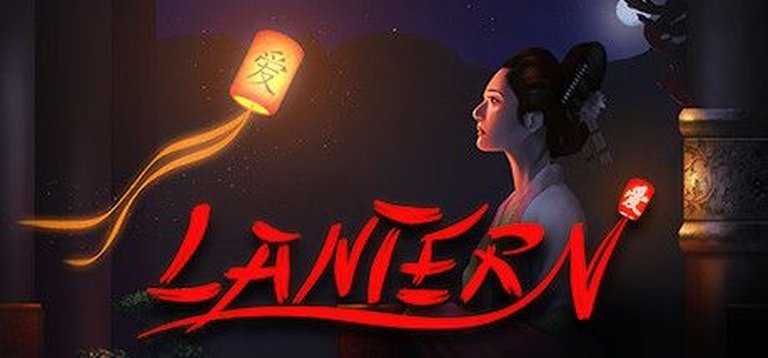
Lantern is a serene exploration game set in a dying, colorless world inspired by eastern Asian architecture and culture. Players guide a small paper lantern—transported by the wind—through four distinct areas, igniting hope and restoring life to a realm devastated by an Asian princess’s sorrowful tears. The mission involves interacting with the environment by lighting other lanterns, reviving petrified animals, and activating mechanisms, all to remind the world of the power of love.
Gameplay Videos
Where to Buy Lantern
PC
Lantern Free Download
Lantern Patches & Updates
Lantern Guides & Walkthroughs
Lantern Reviews & Reception
metacritic.com (70/100): Lantern is a peculiar adventure, different and, in some ways, unique. Is a short and condensed trip, designed to appeal the lovers of simple and relaxing interactive experiences.
uploadvr.com : Lantern is well-made. Fans of meditative adventures such as Flower and Journey will find a lot to love here, as the addictive nature of slowly returning life and color to a black and white world is infectious and rewarding on a purely visual basis, although simplistic and boring if the genre isn’t for you.
skarredghost.com : If you’re wondering if the game is truly relaxing, yes, it is. And the background music is really beautiful and calming… But, honestly speaking, the game can become boring after some times
saveorquit.com : In Lantern you have your work cut out for you and you can progress at your own set pace. No rush, no enemies (not even time, our constant real life foe) and the perfect getaway for those that dream of the Far East.
Lantern: Review
Introduction
In an industry often dominated by high-octane action, sprawling narratives, and competitive multiplayer, Lantern (2016) emerges as a serene, meditative counterpoint. Developed by Italian studio Storm in a Teacup and published by 1C Company, this indie exploration game invites players to guide a magical lantern through a desolate, colorless world, restoring life and vibrancy through acts of love. While it shares DNA with minimalist masterpieces like Flower and Journey, Lantern carves its own identity through unique mechanics and a distinctly East Asian-inspired aesthetic. Yet, beneath its tranquil surface lies a product of both ambition and compromise—a beautiful, if flawed, testament to the potential of “relaxing” games. This review argues that Lantern succeeds as a sensory experience and a heartfelt fable but is undermined by technical limitations and repetitive gameplay, ultimately positioning it as a charming yet niche curiosity in the history of interactive art.
Development History & Context
Storm in a Teacup, founded by Carlo Ivo Alimo Bianchi, crafted Lantern as part of their ethos of creating “finest experiences in video gaming” with a focus on community-driven artistry. The studio’s prior work, including the atmospheric N.E.R.O.: Nothing Ever Remains Obscure, established a reputation for visually striking, emotionally resonant indie games. Lantern’s development was constrained by its modest budget and the nascent VR landscape of 2016. Built on Unity, the engine allowed for accessible cross-platform support but also imposed limits on graphical fidelity and optimization. The game’s vision, as articulated by Creative Director Bianchi, was to distill gameplay to its purest form: a “virtual coloring book” where the player’s only role is to spread warmth and color. Technologically, it supported Oculus Rift, HTC Vive, and OSVR—a bold move for an indie title, yet one that would reveal critical execution flaws. The 2016 gaming climate saw rising demand for “zen” games amid a saturation of violent or competitive titles. Lantern arrived as part of this wave, positioning itself as an affordable ($4.99–$6.99) antidote to gaming-induced stress, though its ambitions for VR immersion outpaced the available hardware and design maturity of the era.
Narrative & Thematic Deep Dive
Lantern’s narrative is a minimalist fable, told not through dialogue or exposition but through environmental storytelling and symbolism. The game opens with a 2D animation depicting a princess so consumed by sadness and unrequited love that her tears drain the world of color, reducing it to a monochrome wasteland. This tragedy sets the stage for the player’s journey: guiding a solitary, red lantern—the embodiment of hope and love—across four distinct realms, each corresponding to a season (Summer, Autumn, Winter, Spring). The princess remains an unseen force, her sorrow a palpable absence rather than a tangible antagonist. The lantern itself is the sole protagonist, its silent journey a metaphor for healing and renewal.
Themes revolve around emotional resilience and the transformative power of empathy. The act of coloring the world—igniting lanterns, reanimating animals, and activating windmills—serves as a gameplay manifestation of love’s capacity to combat despair. This is underscored by East Asian cultural motifs, such as the lantern’s design (bearing the Chinese/Japanese character for love) and the architecture of the realms, which draw from Japanese pagodas, Chinese villages, and Zen gardens. The narrative’s simplicity is both its strength and weakness; it avoids over-explanation, allowing players to project their interpretations onto the world, yet it lacks the layered storytelling of peers like Journey. The absence of named characters or complex dialogue shifts focus to environmental storytelling, where the gradual return of color symbolizes collective healing—a poignant if unspoken thesis about interconnectedness.
Gameplay Mechanics & Systems
At its core, Lantern is a flight-based exploration game with a “painting” mechanic. Players control the lantern’s movement via controller or keyboard/mouse, though the former is heavily recommended. The controls are deceptively simple: hold a button to accelerate, tilt the analog stick to steer, and use shoulder buttons for bursts of light. However, implementation reveals significant flaws. Keyboard/mouse controls are “borderline impossible,” with a cursor that frequently disappears, while the controller scheme, though smoother, lacks rebinding options—a baffling omission for a 2016 title.
The gameplay loop revolves around traversing each season-themed realm to “restore” it. Flying over gray landscapes unleashes the lantern’s light, which paints the environment in vibrant hues (e.g., turning forests green, rivers blue). This act also triggers secondary effects: animals awaken from petrified states, windmills begin spinning, and dormant lanterns float skyward. Progress is measured by the percentage of the realm colored, with a festival-like sequence of lanterns rising marking completion. Each realm introduces minor variations—Summer’s coastal villages, Winter’s snow-laden forests—but the core loop remains unchanged, leading to monotony after the first two hours.
Innovative systems are few but noteworthy. The “painting” mechanic offers tactile satisfaction, akin to a digital watercolor experience. VR support, however, is a critical failure. The game lacks motion controls or even basic comfort features like field-of-view adjustments, leading to severe motion sickness. As one reviewer noted, the continuous camera banking and acceleration in VR create “the best way to make someone puke in few seconds.” Additional flaws include the absence of a save system—forcing players to replay entire levels—and no difficulty scaling. The result is an experience that feels more like an interactive screensaver than a game, prioritizing ambiance over engagement.
World-Building, Art & Sound
Lantern’s world is its greatest triumph, a stunning fusion of East Asian aesthetics and minimalist design. The four realms are meticulously crafted: Summer features lush, rolling hills and bamboo groves; Autumn showcases crimson maple forests and pagodas; Winter offers icy mountains and frozen waterfalls; and Spring bursts with cherry blossoms and vibrant ponds. Each realm’s architecture—from torii gates to curved rooftops—draws authentically from Japanese and Chinese traditions, while the environmental shift from grayscale to full color creates a powerful visual metaphor for hope.
The art style favors low-poly models with soft curves and visible edges, evoking papercraft or origami. This simplification, far from being crude, lends the world a dreamlike quality. Textures are painterly, with a focus on bold, flat colors that echo traditional East Asian art. The lantern itself, with its red silk and glowing core, serves as a focal point, its warm light contrasting starkly against the initial desolation.
Sound design complements the visuals. Andrea Remini’s soundtrack blends plucked instruments (koto, guzheng) with ambient synths, evoking tranquility but suffering from limited variation. The same few tracks repeat, undermining the “restful” promise, while environmental sounds—rustling leaves, lapping water, distant chimes—enhance immersion. In VR, the 360-degree audio deepens the sense of presence, though technical issues like frame drops mar the experience. Overall, the world-building excels in atmosphere, creating a space that feels both ancient and timeless, even if its artistry outshines its interactivity.
Reception & Legacy
Upon release, Lantern received mixed-to-positive reviews, reflecting its dual nature as an artistic success and a technical compromise. Critics lauded its visuals and relaxation factor. Italian outlet Everyeye.it scored it 70/100, calling it a “peculiar adventure, different and, in some ways, unique,” while SpazioGames praised its VR accessibility (despite flaws). Metacritic aggregated a modest score based on limited reviews, with Eurogamer Italy noting its emotional resonance. Player reviews on Steam were more divided, with 65% positive ratings highlighting its beauty but criticizing brevity and controls. A common complaint centered on VR-induced nausea, with one user lamenting, “I’ve VR legs and I felt sick.”
Commercially, Lantern achieved modest success as a budget title, frequently bundled with Storm in a Teacup’s other games (e.g., Enki and N.E.R.O.). Its legacy lies in its niche contribution to the “walking simulator” genre. It remains a benchmark for meditative game design, often compared to Flower for its color-restoration mechanic, though it lacks the latter’s polish. The game’s VR shortcomings also served as a cautionary tale for indie developers, highlighting the need for tailored comfort features. Over time, Lantern has been rediscovered as a cult favorite among fans of minimalist art games, particularly for its ability to evoke calm in a chaotic medium. Yet, it never reached the cultural impact of Journey, its influence largely confined to specific indie circles.
Conclusion
Lantern is a game of contrasts: a breathtaking visual poem hampered by repetitive gameplay and technical missteps. It succeeds as an emotional experience, using its East Asian-inspired world and “love as light” metaphor to create moments of genuine tranquility. The act of coloring the desolate landscape is undeniably beautiful, a digital act of healing that resonates long after the credits roll. However, its flaws—poor controls, VR nausea, and a lack of depth—prevent it from achieving the timeless status of its peers. For players seeking a brief, meditative escape with a controller in non-VR mode, Lantern is a worthwhile journey. For those craving innovation or challenge, it feels like a missed opportunity.
In the pantheon of video games, Lantern occupies a humble but important space: a testament to the power of simplicity and artistry in an industry often obsessed with complexity. It reminds us that games can be more than just challenges—they can be acts of empathy. While it may not revolutionize the medium, it stands as a poignant, if imperfect, lantern in the dark, illuminating a path toward gentler, more mindful interactive experiences. For that, it deserves a place in the history of gaming’s most heartfelt experiments.