
- Release Year: 2021
- Platforms: PlayStation 4, PlayStation 5, Windows, Xbox One, Xbox Series
- Publisher: Frontier Developments plc
- Developer: Frontier Developments plc
- Genre: Compilation, Special edition
- Perspective: Third-person
- Game Mode: Single-player
- Average Score: 78/100
Description
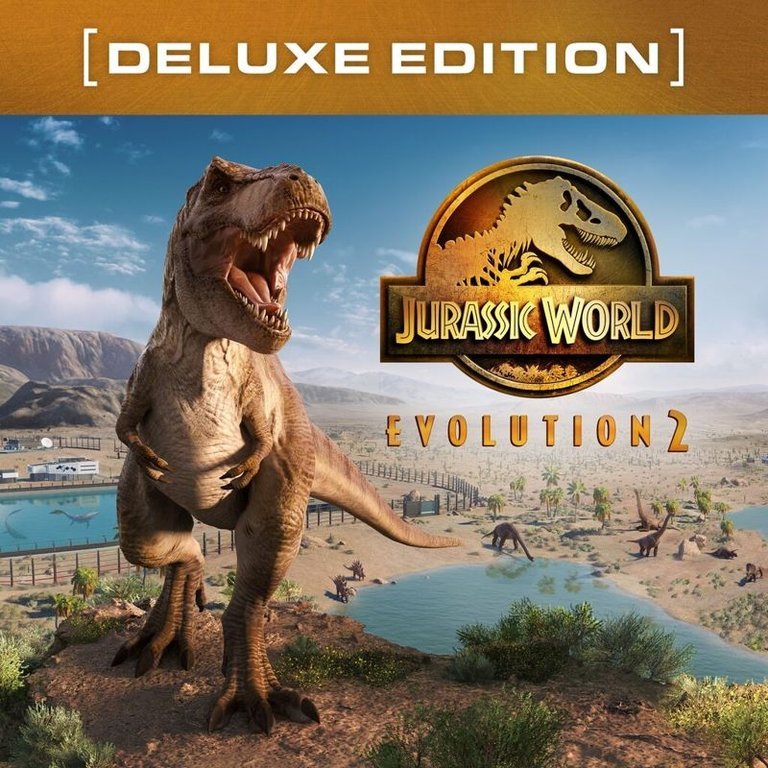
Jurassic World Evolution 2 (Deluxe Edition) is a construction and management simulation game where players build and operate their own Jurassic World theme park, tasked with creating habitats for over 75 prehistoric species including dinosaurs, pterosaurs, and marine reptiles. Set between the events of Jurassic World: Fallen Kingdom and Jurassic World Dominion, the game features dynamic animal territories where creatures compete for resources, pack-hunting AI behaviors, and a reworked terrain tool for habitat customization. The Deluxe Edition bundles the base game with the Deluxe Upgrade Pack, offering an expanded park management experience with enhanced gameplay mechanics and visual fidelity.
Gameplay Videos
Jurassic World: Evolution 2 (Deluxe Edition) Mods
Jurassic World: Evolution 2 (Deluxe Edition) Guides & Walkthroughs
Jurassic World: Evolution 2 (Deluxe Edition) Reviews & Reception
metacritic.com (78/100): Jurassic World Evolution 2 is a much better game than its predecessor was at launch.
ign.com : A big improvement on the original, but as a management game it’s still frozen in amber.
gaming.net : Jurassic World Evolution 2 sinks its teeth into the ideal sandbox.
opencritic.com (79/100): Jurassic World Evolution 2 is chaotic, delightful proof that managing dinosaurs is no walk in the Jurassic park.
Jurassic World: Evolution 2 (Deluxe Edition): Review
Introduction
The Jurassic Park franchise has long captivated audiences with its blend of scientific wonder and catastrophic chaos, a duality that has proven fertile ground for interactive experiences. Frontier Developments’ Jurassic World: Evolution (2018) established a competent foundation for the management sim genre, but its sequel, Jurassic World: Evolution 2 (Deluxe Edition), released in November 2021, transcends its predecessor with audacious ambition. This comprehensive review delves into how the Deluxe Edition—bundling the base game and the Deluxe Upgrade Pack with five exclusive species—delivers a more immersive, chaotic, and thematically resonant park-building experience. By expanding the scope beyond isolated islands, refining AI systems, and weaving a canonical narrative, Evolution 2 evolves from a functional simulator into a compelling exploration of humanity’s hubristic dance with prehistory. Its true triumph lies in balancing meticulous management with the raw, untamable spectacle of living dinosaurs, creating a game that is both a loving tribute to the films and a significant leap forward for the franchise’s interactive legacy.
Development History & Context
Frontier Developments, the studio renowned for meticulous park-building simulations like Planet Coaster and Planet Zoo, approached Evolution 2 with the singular goal of rectifying the shortcomings of its 2018 predecessor while embracing the broader cinematic universe. Director Rich Newbold and producer Adam Woods spearheaded a vision to move beyond the confined Muertes Archipelago, constructing a “world-evolved” experience set across diverse mainland biomes. Technologically, Frontier leveraged its proprietary COBRA engine to exploit next-generation hardware, enabling more dynamic weather, larger maps, and a sophisticated AI overhaul for the prehistoric inhabitants. The development team collaborated closely with Universal Pictures, gaining access to the studio’s extensive sound library and film assets to ensure canonical authenticity. This collaboration was particularly crucial for the campaign, which bridges Jurassic World: Fallen Kingdom and Jurassic World: Dominion, featuring voice performances from Jeff Goldblum (Ian Malcolm) and Bryce Dallas Howard (Claire Dearing). Announced during Summer Game Fest 2021, the game faced a competitive release window, alongside high-profile PC titles, but benefited from the marketing synergy surrounding the upcoming Dominion film. Frontier’s commitment to post-launch support—evidenced by eight major DLC packs and free updates—further solidified the game as a living, evolving platform, transforming the Deluxe Edition into a definitive package for franchise enthusiasts.
Narrative & Thematic Deep Dive
Evolution 2’s campaign presents a compelling, canon-approved narrative that recontextualizes the fallout from Fallen Kingdom. Players assume the role of a Department of Fish and Wildlife manager tasked with containing dinosaurs now loose across North America, working alongside Claire Dearing to establish non-profit sanctuaries. The story is punctuated by Ian Malcolm’s philosophical musings on chaos theory and humanity’s reckless interference with nature, themes that resonate deeply with the franchise’s core ethos. Characters like Ramsay Cole (Mamoudou Athie) and Dr. Lewis Dodgson (Campbell Scott) from Dominion add political intrigue, while the introduction of a rogue black-market operation in the Malta Expansion explores the commodification of life. Dialogue balances earnest drama with Malcolm’s signature wit, creating a narrative that feels authentic to the films. Thematically, the game grapples with inescapable consequences: dinosaurs are not mere assets but autonomous beings whose territorial disputes and predatory instincts shatter human control. The narrative reinforces the franchise’s cautionary tale about genetic hubris, culminating in scenarios where player decisions—whether to euthanize aggressive hybrids or risk containment—force confrontations with moral ambiguity. This narrative depth transforms the campaign from a tutorial into a thoughtful exploration of responsibility, elevating it beyond mere park management.
Gameplay Mechanics & Systems
Evolution 2 refines the core management loops with significant mechanical depth, though occasional complexity borders on tedium. The core gameplay revolves around constructing enclosures, managing resources, and maintaining guest and dinosaur satisfaction—a delicate balance amplified by the introduction of mainland biomes like forests and deserts, each with unique terrain challenges. The terrain tool is completely reworked, requiring players to plant specific flora to support herbivores, adding a layer of ecological realism. Dinosaurs now exhibit complex territorial behaviors, with AI-driven pack hunts, dominance hierarchies, and dynamic resource competition that make enclosures feel like living ecosystems. The staff management system introduces meaningful consequences: overworked scientists sabotage facilities, while veterinarians and rangers handle injuries and escapes via mobile units. Genome sequencing allows for trait customization—adding resilience to disease but risking aggression—creating strategic dilemmas during incubation.
The four game modes cater to diverse playstyles:
– Campaign: A 6-8 hour story-driven tutorial that introduces mechanics but feels brief for the price.
– Challenge: Timed scenarios demanding efficiency and risk management.
– Sandbox: Unrestricted creativity, though initial maps are locked behind progression grind.
– Chaos Theory: “What-if” scenarios reimagining film moments (e.g., the San Diego Incident from The Lost World), offering nostalgic twists.
Key improvements include the long-awaited addition of flying and marine reptiles, which require dedicated aviaries and lagoons with new mechanics like rock platforms. However, flaws persist: unlocking species for Sandbox is excessively grindy, and the UI can overwhelm with nested menus. Despite these issues, the core loop of nurturing dinosaurs while managing crises—like storm-induced power failures or T-Rex rampages—remains deeply satisfying.
World-Building, Art & Sound
Evolution 2’s world-building shifts from isolated islands to sprawling continental landscapes, with maps three times larger than its predecessor. Biomes range from redwood forests to arid deserts, each influencing environmental challenges like extreme temperatures or dense foliage that impacts dinosaur visibility and guest movement. The art direction prioritizes cinematic authenticity, with dinosaurs rendered in breathtaking detail—their scales, muscle movements, and idle animations (e.g., Carnotaurus resting on its tail) are nothing short of spectacular. Flying reptiles like Quetzalcoatlus soar with fluid grace, while marine species like Mosasaurus glide through lagoons with lifelike fluid dynamics. Environmental storytelling shines in locations like Biosyn Valley, overgrown with primitive flora and hidden research facilities, evoking the films’ sense of wonder and dread.
Sound design is a masterclass in fan service, incorporating John Williams’ iconic themes with new compositions by Joanna Pena. Dinosaur roars are faithfully recreated, from the guttural bellow of a T-Rex to the shriek of a Dimorphodon, while ambient sounds like rustling fernae or distant thunder immerse players. The voice acting, particularly Goldblum’s chaotic charm and Howard’s determined resolve, elevates cutscenes. However, repetitive guest audio and a lack of dynamic crowd reactions occasionally break immersion. Despite this, the overall audio-visual synergy creates an atmosphere where every dinosaur sighting feels momentous, transforming park management into a visceral, awe-inspiring experience.
Reception & Legacy
Upon release, Evolution 2 garnered “generally favorable” reviews, with Metacritic scores reflecting its improved foundation: 77 (PC), 79 (PS5), 81 (Xbox One), and 74 (Xbox Series X). Critics lauded its enhanced AI, graphical fidelity, and expanded scope, with IGN praising the “exciting ways to interact with dinosaurs” and Game Informer hailing it as “a dynamic and deadly park-building experience.” However, criticism was leveled at shallow economic systems and the grindy unlock progression, with PCGamesN noting that “disastrous events beyond your control still aren’t any fun.” Commercially, early PC sales lagged due to competition, but console versions performed strongly, amassing 500,000 players across platforms within two weeks. Frontier’s post-launch strategy—releasing eight DLC packs adding over 20 species and two story expansions—bolstered long-term engagement, culminating in a “Best Simulation Game of the Year” award at the NAVGTR Awards.
Legacy-wise, Evolution 2 set a new benchmark for licensed simulations by prioritizing AI-driven emergent behavior over rigid mechanics. Its success influenced titles like Jurassic World Evolution 3 (2025) and demonstrated the viability of narrative-driven campaigns in management sims. For fans, it remains the definitive Jurassic park experience, balancing chaos and control in a way that honors the franchise’s spirit while pushing genre boundaries.
Conclusion
Jurassic World: Evolution 2 (Deluxe Edition) stands as a monumental achievement in the management simulation genre, transforming the promise of its predecessor into a breathtaking, chaotic reality. By expanding the world, deepening dinosaur behaviors, and weaving a compelling narrative, Frontier Developments has crafted an experience that is both a loving homage to the films and a mechanically refined simulation. While the progression grind and occasional UI frustrations temper perfection, the sheer joy of watching a Tyrannosaurus rex roar at trespassing guests or guiding a ranger team through a storm to tranquilize a rampaging Allosaurus is unparalleled. The Deluxe Edition, with its exclusive species and content, encapsulates the game’s evolution into a definitive package for Jurassic enthusiasts. It is, in essence, a testament to the franchise’s enduring appeal—a world where wonder and danger coexist, inviting players not just to build parks, but to confront the primal thrill of life beyond control. Final Verdict: An essential, teeth-gnashing triumph that cements Evolution 2 as the apex of interactive Jurassic storytelling.