
- Release Year: 2023
- Platforms: Windows
- Publisher: Aerie Digital
- Developer: Aerie Digital
- Genre: Strategy, Tactics
- Perspective: Side view
- Game Mode: Online Co-op, Single-player
- Gameplay: Deckbuilding, Roguelike, Turn-based
- Average Score: 90/100
Description
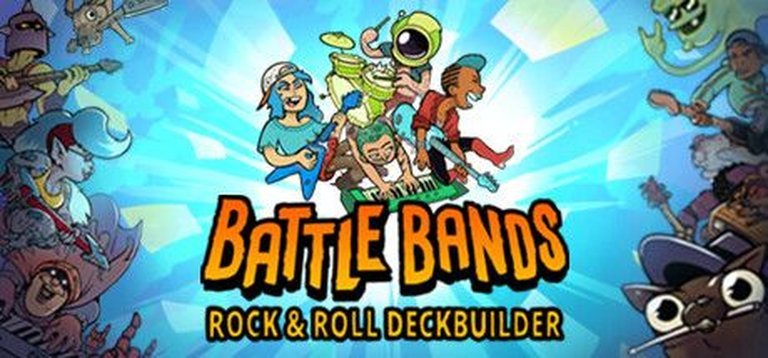
Battle Bands: Rock & Roll Deckbuilder is a turn-based deckbuilding card game set in the fantasy world of Riff City, where players assemble a four-member band to perform songs using randomly drawn cards, generating hype to defeat opponents in solo campaigns, cooperative battles against offbeat bosses, or multiplayer tournaments with up to 8 players.
Where to Buy Battle Bands: Rock & Roll Deckbuilder
PC
Battle Bands: Rock & Roll Deckbuilder Reviews & Reception
metacritic.com : Battle Bands is a truly interesting deckbuilder that accomplishes everything it sets out to do.
thegamingreview.com : Battle Bands, then, is a really fun and well put together deck builder. Very much worth a recommendation.
Battle Bands: Rock & Roll Deckbuilder: Review
1. Introduction
In the crowded landscape of deckbuilding roguelites, few games dare to fuse strategic card mechanics with the unbridled energy of rock and roll. Battle Bands: Rock & Roll Deckbuilder emerges as a bold, amplified riff on established formulas, turning the fantasy of becoming a rock legend into a tactical symphony. Developed and published by Portland-based indie studio Aerie Digital, this Windows-exclusive title stormed onto Steam in November 2023 after a year-long Early Access period, earning critical acclaim for its innovative multiplayer structure and infectious personality. As a game historian, I contend that Battle Bands transcends its niche premise to deliver a masterclass in strategic synergy, transforming the abstract act of “playing cards” into a visceral, collaborative performance where every decision resonates like a power chord. By harmonizing deckbuilding depth with chaotic, band-based teamwork, it carves out a unique legacy in the modern indie renaissance.
2. Development History & Context
Aerie Digital’s journey with Battle Bands began in 2021, leveraging Steam Next Fest to showcase an Early Access build on March 17, 2022. Founded by veterans of narrative-driven games, the studio aimed to distill the cathartic spirit of live music into a competitive format—a vision shaped by the rising popularity of multiplayer deckbuilders like Marvel Contest of Champions and the roguelite boom epitomized by Slay the Spire. Technically, the game utilized the Epic Games engine for its core systems, PhysX for physics interactions, and FMOD for dynamic audio, enabling a blend of procedural card generation and responsive soundscapes. The 18-month Early Access period was pivotal; it refined the game’s signature “band-as-entity” mechanics, where four distinct instruments (guitar, bass, keyboard, drums) synergize through shared energy pools. This development cycle also capitalized on the nascent trend of “co-op vs. AI” experiences, positioning Battle Bands as a counterpoint to the predominantly solo-focused genre. By November 2023, the full release arrived with polished 4v4 “Royale Mode” tournaments and a robust progression system, capitalizing on the post-pandemic demand for socially engaging digital experiences. Its timing was astute, arriving just as games like Balatro proved that thematic novelty could drive mainstream appeal in saturated card-game markets.
3. Narrative & Thematic Deep Dive
Set in the neon-drenched, fantasy city of Riff City, Battle Bands weaves a gloriously absurd narrative of musical ambition. The plot unfolds through a campaign mode where players lead a customizable band—dubbed “The Chosen Few” by default—from garage-gig obscurity to global stardom. The story’s charm lies not in intricate lore but in its satirical take on rock tropes: opponents include a “living potato” keyboardist, a disco-fighting robot, and a Viking metal band that waxes lyrical about “dragon riffs.” Dialogue is sparse but punchy, delivered through on-screen quips like “Your solo’s weaker than a broken string!” or “My bass has more soul than your entire band!” Thematic core revolves around the duality of collaboration and competition. Each band member represents a role—frontman (guitar), backbone (bass), melody (keyboard), and rhythm (drums)—mirroring real-band dynamics where individual skill must coalesce for collective success. This ethos extends to the “Reign” cards, which transform based on the band’s current “musical era” (e.g., punk or progressive rock), subtly critiquing genre tribalism. Ultimately, the game champions the rock ethos of “playing for the crowd,” turning “hype” (the victory metric) into a stand-in for artistic validation—a theme resonant with indie musicians’ struggles for recognition.
4. Gameplay Mechanics & Systems
Battle Bands’ genius lies in its reimagining of deckbuilding as a collective performance. At its core, it’s a turn-based card game where four players (or AI/controlled allies) simultaneously contribute to a “song,” each playing cards from their personal deck representing instrument-specific riffs, solos, or stage effects. The loop unfolds in three phases:
– Deck Construction: Players select an instrument class, unlocking hundreds of cards (e.g., “Power Chord” for guitar, “Bass Drop” for bass) with unique effects like dealing damage, stealing opponents’ energy, or amplifying allies’ hype. Synergies are crucial—e.g., pairing a drummer’s “Cymbal Crash” with a guitarist’s “Feedback Loop” for massive hype gains.
– Battle Rounds: Each player draws 5 cards and allocates energy (a shared resource pool) to play them. The twist? Cards can target opponents, benefit allies, or build “song segments,” which progressively unlock hype multipliers. Turns end when the band exhausts energy or passes, creating tense risk-reward calculus: overextend to dominate a segment or conserve resources for a counterattack?
– Progression: Victories earn “Backstage Pass XP” and “Tokens,” unlocking cosmetic upgrades (e.g., custom vans, “van buddies”) and new cards. Roguelike elements permadeath in Tour Mode, forcing strategic depth over time.
Key Innovations:
– Resource-Sharing: Energy transfer between bandmates incentivizes teamwork—e.g., a bassist might lend energy to a guitarist for a game-winning solo.
– 4v4 Royale Mode: 64-band single-elimination tournaments amplify chaos, with real-time coordination via ping systems.
– AI-Assisted Play: Solo players can issue commands to AI bandmates, blending control with accessibility.
Flaws: While Turn-Based Tactics are robust, some card RNG can feel punitive in higher difficulties. UI clarity falters during complex synergies, though the hand-drawn aesthetic mitigates this.
5. World-Building, Art & Sound
Riff City is a vibrant caricature of music history, blending 1950s diner aesthetics with cyberpunk stages and psychedelic forests. Art direction leans into bold, hand-drawn cartoonishness—think Jet Set Radio meets Brütal Legend. Character designs are standout: anthropomorphic instruments (e.g., a drumming cactus), spiky-haired guitarists, and keyboard cats evoke a living, breathing rock universe. Environments like “The Gritty Amp” bar or “The Colosseum of Strings” stadium are layered with eastercheggs, from graffiti nodding to real bands to dynamic lighting synced to gameplay.
Sound design is the game’s soul. FMOD’s implementation generates dynamic tracks built from card-play—each “riff” card layers a unique guitar, bass, or drum snippet into a coherent song, crescendoing as hype builds. The soundtrack, composed by Aerie Digital’s team, merges chiptune energy with prog-rock ambition, featuring genres from arena rock to synthwave. Crucially, music isn’t just ambiance; it’s a tactical tool, with tempo changes affecting card efficiency. This synergy creates a “sonic feedback loop,” where victories feel like genuine concerts. Sound effects—a shredding guitar’s wah, a drum fill’s boom—are punchy and satisfying, turning card plays into auditory fireworks. Together, art and sound transform gameplay from a strategic exercise into a multisensory rock opera.
6. Reception & Legacy
Upon release, Battle Bands garnered a “Very Positive” Steam rating (90% positive from 169 reviews at launch, later climbing to 91% from 201 reviews by 2026). Critics praised its multiplayer innovation, with But Why Tho? calling it “completely playable and enjoyable from day one.” TheGamingReview lauded its “strategy depth” and “banging soundtrack,” while Steambase highlighted its 91/100 Player Score. Commercially, it moved 15.47K units on Steam, fueled by $19.99 pricing and wishlist buzz (5.14K wishlists).
Its legacy is twofold:
– Genre Influence: It popularized “co-op deckbuilding,” inspiring titles like Cruel Bands Career (2020) and pushing Slay the Spire-like games toward multiplayer. The “band-as-character” template influenced music-themed games, notably Deathbulge: Battle of the Bands (2023).
– Community Impact: Steam user tags like “Roguelike Deckbuilder” and “Character Customization” reflect its cult following. Its 56 achievements and free “Backstage Pass” cosmetics fostered long-term engagement.
Controversially, some critics lamented its lack of a deeper narrative, but this was offset by its accessibility—unlike niche predecessors like Battle of the Bands (2008), Battle Bands welcomed casual players without sacrificing depth.
7. Conclusion
Battle Bands: Rock & Roll Deckbuilder is more than a game; it’s a love letter to the chaotic, communal joy of rock music. By merging deckbuilding’s strategic rigor with the unpredictable alchemy of teamwork, Aerie Digital crafted an experience that’s as cerebral as it is cathartic. Its art, sound, and multiplayer systems converge to create something rare: a title that feels both innovative and timeless. While minor UI hiccups and occasional RNG frustration prevent perfection, these are negligible flaws in a game that celebrates imperfection as part of rock’s charm. As a historian, I posit Battle Bands will be remembered as a genre pivot—proving that even saturated niches can thrive with bold theming and social mechanics. For anyone who’s ever dreamed of shredding on stage, this isn’t just a game; it’s a backstage pass to legend. Final Verdict: 9/10—A Masterclass in Thematic Synergy and Chaotic Fun.