
- Release Year: 2014
- Platforms: Windows, Xbox 360
- Genre: Action, Arena shooter
- Perspective: 1st-person
- Game Mode: Co-op, Online Co-op
- Gameplay: Arena shooter, Shooter
- Average Score: 98/100
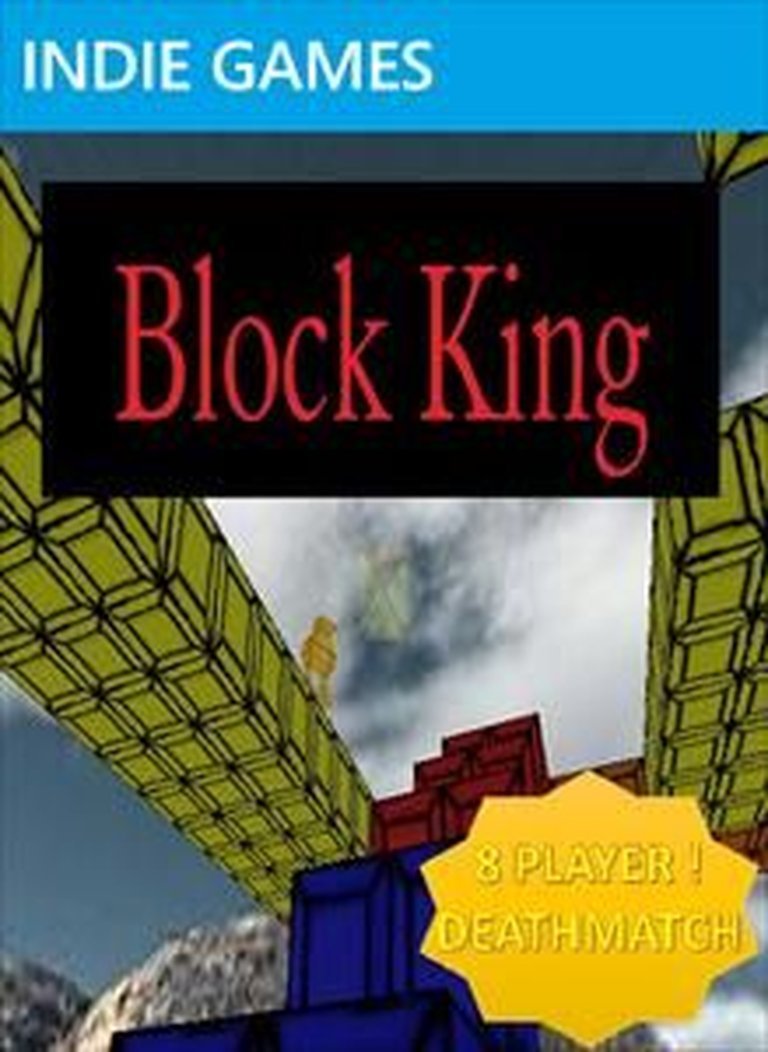
Description
Block King is an action-packed first-person shooter where players engage in fast-paced block-styled arena combat across both offline and online multiplayer modes. Supporting 1-2 players offline and up to 8 players online, the game emphasizes addictive group gameplay with direct control mechanics, originally released on Xbox 360 in 2014 and later ported to Windows in 2017 at an accessible price point.
Where to Buy Block King
PC
Block King Patches & Updates
Block King Guides & Walkthroughs
Block King Reviews & Reception
store.steampowered.com (100/100): Matches themselves can last a few seconds or almost a minute, with tense duels and fancy footwork ultimately making up the difference between victory and defeat.
mobygames.com (100/100): Matches themselves can last a few seconds or almost a minute, with tense duels and fancy footwork ultimately making up the difference between victory and defeat.
Block King: Review
Introduction
In the saturated arena of digital combat, few games manage to distill the essence of competitive play into such pure, adrenaline-fueed moments as Block King. Debuting on Xbox Live Indie Games (XBLIG) in December 2014 before migrating to Steam in 2017, this arena shooter from solo developer Chris Antoni defies conventional expectations. With matches that can conclude in mere seconds or stretch to tense, minute-long standoffs, Block King embodies a minimalist philosophy where victory hinges on spatial awareness, split-second reflexes, and the ruthless manipulation of the environment. This review argues that while its single-player offerings are skeletal, Block King achieves a rare form of brilliance through its hyper-focused multiplayer design—a testament to Antoni’s vision of distilled, accessible chaos. As a historical artifact, it represents a bold experiment in low-budget, high-impact arena combat, leaving an indelible mark on the indie multiplayer landscape.
Development History & Context
Block King emerged from the fertile yet overlooked ecosystem of XBLIG, a platform where small developers could publish games with minimal oversight. Chris Antoni, acting as both sole developer and publisher, operated with a shoestring budget but a clear ambition: to create the “fastest, most intense shooter” possible. Released on December 9, 2014, the game capitalized on the Xbox 360’s digital distribution channels, targeting players seeking bite-sized, competitive experiences amid an era dominated by AAA shooters like Call of Duty: Advanced Warfare and Halo 5. The XBLIG platform, though constrained by technical limitations and a niche audience, allowed for rapid iteration—a necessity for a developer working alone. Antoni’s vision was uncomplicated: strip away complex narratives and systems, leaving only raw, competitive mechanics. The 2017 Steam port expanded accessibility, leveraging PC’s modding potential and broader multiplayer infrastructure, though it retained the core design ethos. This context is crucial: Block King was born from indie constraints, not industry trends, making its success all the more remarkable.
Narrative & Thematic Deep Dive
Block King deliberately eschews traditional narrative, instead weaving its themes into its very gameplay. The central conceit—a multi-layered, destructible arena where players blast floors to eliminate opponents—serves as a metaphor for fragility and opportunity. Each match is a microcosm of survival, where the environment itself is both weapon and trap. The game’s sparse lore—hinted at through unlockable character models and skins—suggests a post-industrial arena where “Block Kings” rise through combat prowess. This abstraction allows players to project their own narratives onto the experience: is it a gladiatorial spectacle? A technological experiment? The lack of dialogue or cutscenes reinforces the theme of immediate consequence, where every action (or inaction) carries irreversible weight. Thematically, it explores risk versus reward: grabbing power-ups mid-match offers advantages but leaves players vulnerable, mirroring real-world gambits. While some may lament the absence of story, the narrative vacuum is, in fact, a strength, forcing engagement purely through mechanics.
Gameplay Mechanics & Systems
At its core, Block King is a masterclass in distilled mechanics. Players control geometric avatars in first-person arenas, armed with a primary tool: floor-destroying blasts. The loop is deceptively simple: destabilize the terrain beneath opponents to send them plummeting to their doom. Yet, this simplicity masks profound depth. Matches are defined by asymmetrical risk—players can blast floors beneath themselves to evade attacks, but this sacrifices positioning. Power-ups amplify this tension: Blast Off grants extreme vertical mobility for aggressive plays, High Jump enables defensive repositioning, while Camouflage and Lasers favor stealth or ranged dominance. Unlockable models and skins (earned via “multiplayer points” from victories) add visual customization without altering balance, a smart design choice. The combat system favors movement and prediction over twitch reflexes, rewarding players who understand physics and arena geometry.
The UI is minimalist, with clear visual feedback for damage and power-ups. However, the single-player mode is notably underdeveloped, relying on AI bots that lack the adaptability of human opponents. Multiplayer is the true heart of the game, supporting 2-8 players locally or online. Matches are lightning-quick, averaging 30 seconds, fostering addictive replayability. As theXBLIG review noted, “fancy footwork ultimately mak[es] the difference between victory and defeat,” highlighting how movement mastery trumps raw aggression. Flaws exist—online matchmaking for the XBLIG version suffered from a small community, and the Steam port’s 1v1 duels can feel repetitive without active lobbies. Yet, when synced with friends, Block King achieves a rare, organic flow where every match is a unique puzzle of chaos and control.
World-Building, Art & Sound
Block King’s world-building is functional rather than immersive, serving gameplay above all else. Arenas are abstract, multi-tiered platforms with industrial textures—metal grids, concrete slabs, and hazard lights—evoking a sterile, experimental facility. This starkness focuses attention on player movement and environmental destruction, eliminating distractions. The blocky, geometric character designs (unlockable shapes like cubes, pyramids, and spheres) reinforce the game’s minimalist aesthetic while allowing for visual identity through skins. Color palettes are vibrant, with contrasting hues for players and hazards, ensuring instant clarity in fast-paced skirmishes.
Sound design is equally utilitarian. Effects—blasts, falls, power-up activation—are crisp and impactful, providing tactile feedback without cluttering the audio landscape. The absence of a traditional score heightens tension, leaving only the mechanical sounds of destruction and player actions. This stripped-down approach creates an atmosphere of concentrated urgency, where every creak of a falling floor or laser blast feels consequential. While it lacks the narrative depth of games like BioShock, its art and sound coalesce to serve the core gameplay, proving that functional design can be as compelling as thematic ambition.
Reception & Legacy
Block King launched with critical silence on XBLIG, but its multiplayer-focused design earned fervent word-of-mouth praise. TheXBLIG review in 2015 declared it “at its addictive best when played with friends,” acknowledging that technical limitations (like a sparse online community) were mitigated by local play. The Steam port (2017) revitalized its reception, boasting a 96% positive rating on Steam based on 27 reviews. Players lauded its “fast and fun” pace, with one Steam user calling it a “genuinely good game” worth its “$1.99 asking price.” However, complaints about the thin single-player experience and occasional matchmaking issues persisted.
Legacy-wise, Block King remains a cult classic in the indie multiplayer sphere. It prefigured modern “party shooter” trends like Fall Guys by emphasizing emergent chaos over complex rules, though its influence is more indirect. Antoni’s success as a solo developer inspired others to pursue similarly focused projects, while the Steam port’s active modding community (evidenced by 17 user guides) extended its lifespan. Critically, it’s remembered as a gem of XBLIG—an era of experimentation now overshadowed by indie platforms like itch.io. Its place in history is secured as a testament to minimalist design: a game that proves depth can emerge not from complexity, but from ruthless distillation.
Conclusion
Block King is a paradox: a game with deliberately thin content that delivers an experience of astonishing depth. Its legacy lies not in narrative or graphical prowess, but in its unwavering commitment to competitive purity. For solo players, it’s a fleeting curiosity, but in multiplayer, it becomes a dance of destruction and triumph—a testament to Chris Antoni’s vision. As a historical artifact, it represents a high-water mark for XBLIG and a blueprint for accessible arena shooters. While its single-player flaws and technical constraints prevent it from being a timeless classic, Block King endures as a pure, distilled expression of competitive joy. In a gaming landscape often bloated with ambition, its three-second victories and minute-long duels remind us that sometimes, the most profound experiences come not from complexity, but from the courage to simplify. Block King is, and remains, a king of its own chaotic domain.