
- Release Year: 2015
- Platforms: PlayStation 3, PlayStation 4, Windows, Xbox One
- Publisher: Electronic Arts, Inc.
- Genre: Compilation
- Perspective: First-person
- Game Mode: Online PVP, Single-player
- Gameplay: Shooting, Team-based combat, Vehicles
- Setting: Modern, Urban
- Average Score: 71/100
Description
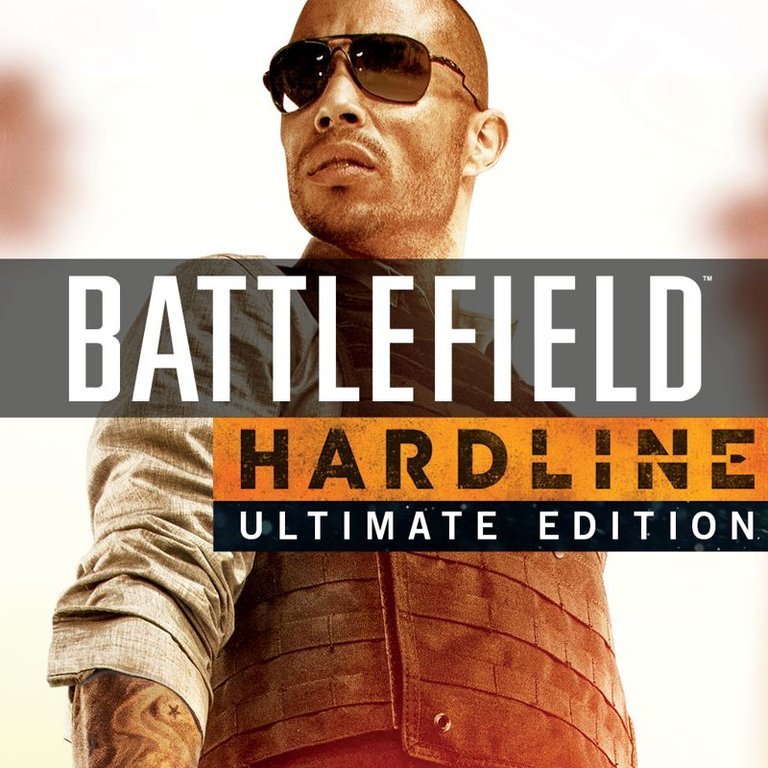
Battlefield: Hardline – Ultimate Edition is a compilation featuring the base game and all major DLC expansions, shifting the series’ focus from military warfare to intense crime-focused conflict. Set in urban environments, players engage as either police Special Response Units or criminals across dynamic maps with the Levolution mechanic, utilizing military-grade weapons alongside police equipment like tasers and handcuffs. The game introduces innovative multiplayer modes such as Heist, Rescue, Hotwire, and Blood Money, offering fresh tactical gameplay while retaining the franchise’s signature large-scale destruction.
Gameplay Videos
Where to Buy Battlefield: Hardline – Ultimate Edition
PC
Battlefield: Hardline – Ultimate Edition Cracks & Fixes
Battlefield: Hardline – Ultimate Edition Mods
Battlefield: Hardline – Ultimate Edition Guides & Walkthroughs
Battlefield: Hardline – Ultimate Edition Reviews & Reception
ign.com : Unlike most video game bad guys, these enemies actually respect the badge of a police officer, and that gives you options.
metacritic.com (73/100): Superficially it might look like a reskin, but Battlefield Hardline is no cop out.
Battlefield Hardline – Ultimate Edition: Review
Introduction
Battlefield Hardline – Ultimate Edition represents one of the most ambitious and divisive experiments in the Battlefield franchise’s storied history. Released in March 2015 by Electronic Arts, it marked a radical departure from the series’ signature military warfare, plunging players into a gritty, morally ambiguous world of police corruption and heists. Developed by the visionary team at Visceral Games—fresh off the success of Dead Space—and leveraging the powerful Frostbite 3 engine, this “Ultimate Edition” compilation bundled the base game with all its major expansions (Criminal Activity, Robbery, Getaway, and Betrayal), alongside exclusive content like gold battlepacks. While initially met with mixed critical reception, Hardline has since earned a cult following for its reimagined multiplayer and surprisingly nuanced single-player campaign. This review dissects Hardline’s legacy as a flawed yet forward-thinking entry that dared to ask: what if Battlefield traded tanks for tasers?
Development History & Context
The genesis of Battlefield Hardline lies in a calculated risk by Visceral Games and EA. Development began as early as 2012, shortly after Dead Space 3 shipped, under the creative direction of Ian Milham. The studio aimed to pivot the franchise away from its military roots, inspired by the success of television crime dramas like The Wire and Breaking Bad. This “cops and robbers” concept was codenamed “Omaha” internally and leaked prematurely in 2014, forcing an early reveal. Visceral collaborated with DICE and Criterion Games to adapt the Frostbite 3 engine for urban environments, a technical challenge given the need for detailed interiors, destructible environments, and vehicles that weren’t tanks.
The gaming landscape of 2015 was pivotal. Battlefield 4 (2013) had left the franchise reeling from launch-day bugs, and fatigue with military shooters was palpable. Hardline‘s shift to contemporary crime was a bold counterpoint, though it sparked skepticism among purists. EA delayed the game from October 2014 to March 2015 to refine multiplayer feedback from a massive open beta that drew 7 million participants—a record at the time. Notably, the final resolution adjustments (900p on PS4, 720p on Xbox One) highlighted the era’s platform wars, while the game’s launch on PS3 and Xbox 360 made it the last Battlefield title for those consoles. Visceral’s closure in 2017 cemented Hardline as their swan song, a bittersweet footnote in the series’ evolution.
Narrative & Thematic Deep Dive
Hardline‘s single-player campaign unfolds like a serialized crime drama, chronicling Detective Nicholas “Nick” Mendoza’s (voiced by Philip Anthony-Rodriguez) descent from idealistic rookie to fugitive. Set across Miami, Los Angeles, and the Florida Everglades, the narrative follows a drug-war investigation that unravels a web of police corruption orchestrated by Captain Julian Dawes (Benito Martinez). The plot hinges on a classic “halfway switch”: after Dawes frames Nick for murder, he escapes prison three years later and allies with his former partner Khai Minh Dao (Kelly Hu), drug dealer Tyson Latchford, and hacker Marcus “Boomer” Boone (Eugene Byrd) to dismantle Dawes’ private military firm, “Preferred Outcomes.”
The script, penned by Rob Auten and Tom Bissell, balances cliché with self-awareness. Dialogue crackles with dark humor—like a $10 million cocaine haul ruined by a forklift accident—and subtle character moments, such as Khai’s simmering resentment and Nick’s moral compromises. Themes of institutional corruption permeate the story; Dawes embodies the “war on crime” as a hollow justification for power, while Nick’s journey questions whether justice is possible within a broken system. The episodic structure, complete with recaps and “next time” previews, apes television conventions, though the narrative suffers from predictable twists (e.g., a Tea Party-esque militia serving as cartoonish villains) and a downer ending that leaves Nick’s fate ambiguously unresolved. Despite its flaws, the campaign’s emphasis on player choice—via stealth takedowns or lethal force—adds unexpected depth, making Nick a compelling anti-hero caught between the badge and betrayal.
Gameplay Mechanics & Systems
Hardline reimagines Battlefield’s core loops through a policing lens, blending tactical depth with arcade thrills. The single-player campaign introduces innovative mechanics: the “scanner” gadget tags enemies and evidence, while non-lethal takedowns (handcuffing suspects) yield more XP than kills, rewarding stealth. Levels are semi-open, allowing players to flank, use distractions (e.g., bullet casings), or breach doors with sledgehammers. However, AI inconsistencies—enemies often behaving like static targets—and a progression system that unlocks noisy firearms for stealth players undermine the experience.
Multiplayer is Hardline‘s crown jewel. It retains the series’ 64-player chaos but introduces asymmetrical factions: police (Enforcers, Mechanics, Operators, Professionals) versus criminals. New modes define the experience:
– Heist: Criminals breach vaults to steal cash while police defend.
– Blood Money: Teams race to retrieve money from a central crate and deposit it in trucks.
– Hotwire: Players capture “flags” by driving cars at high speeds, creating dynamic chases.
– Rescue and Crosshair: Tight 5v5 rounds with hostages or VIPs, emphasizing precision over scale.
Gadgets like grappling hooks and zip-lines enable verticality, though often requiring sacrifice (e.g., forgoing armor). The class-based progression—unlocking weapons, attachments, and cosmetic “battlepacks”—feels robust, but the shift from military gear to police equipment (tasers, ballistic shields) creates a unique identity. Levolution returns, with maps like “Downtown” featuring a crane that collapses into buildings. Ultimately, Hardline delivers the most varied Battlefield multiplayer to date, though smaller maps and vehicle-focused modes can feel claustrophobic compared to Battlefield 4‘s grandeur.
World-Building, Art & Sound
Hardline‘s world-building excels in its meticulous recreation of American urban decay and opulence. Miami’s neon-lit streets, LA’s sun-drenched highways, and the murky Florida Everglades are rendered with Frostbite 3’s signature detail, from graffiti-splattered walls to rain-slicked alleyways. Levolution events—like sandstorms in “Dust Bowl” or hurricanes in “Riptide”—infuse maps with unpredictable chaos, while heist locations (e.g., a bank vault or growhouse) feel lived-in. Art direction leans into a hyper-stylized realism, with character models capturing the wear on detectives’ uniforms or the menace of gang leaders.
Sound design elevates the atmosphere: weapons crackle with authenticity, cars screech during chases, and Paul Leonard-Morgan’s score oscillates between tense strings and heist-themed jazz. Voice acting is uniformly strong, particularly Kelly Hu’s nuanced portrayal of Khai and Benito Martinez’s chilling Dawes. Environmental storytelling shines through collectibles (e.g., evidence logs) and Easter eggs, like a rare reload animation where characters comically fumble firearms. However, the world occasionally feels sterile outside mission hubs, lacking the organic chaos of titles like Grand Theft Auto V. Still, Hardline captures the adrenaline of high-speed pursuits and the tension of SWAT raids better than most.
Reception & Legacy
Upon release, Battlefield Hardline received mixed-to-positive reviews. Aggregated scores on Metacritic ranged from 71 (PC/Xbox One) to 73 (PS4), with praise heaped on its multiplayer innovation and accessibility. IGN lauded its “fresh campaign” and “something for everyone” multiplayer, awarding an 8/10, while Game Informer criticized the campaign as “a mess” but deemed multiplayer “worthy of the Battlefield name.” Sales were robust, topping the UK charts and becoming March 2015’s best-seller in the U.S., reflecting market curiosity. However, criticism centered on a predictable plot, AI flaws, and a progression system that misaligned rewards with playstyles.
In retrospect, Hardline‘s legacy has evolved. It is now regarded as a cult favorite, particularly for modes like Heist and Hotwire, which influenced later titles. The game’s focus on asymmetrical warfare and police tactics prefigured trends in games like Rainbow Six Siege. Visceral’s closure adds poignancy; Hardline stands as their final, imperfect masterpiece. The Ultimate Edition’s inclusion of all DLC—adding 16 maps and new modes—extended its lifespan, though its servers for PS3/Xbox 360 were shut down in 2024. While it never achieved the mythos of Battlefield 3 or Bad Company 2, Hardline remains a bold outlier: a game that traded battlefield heroics for morally gray heists, proving that sometimes the best wars are fought on city streets.
Conclusion
Battlefield Hardline – Ultimate Edition is a testament to the franchise’s capacity for reinvention. Visceral Games crafted a product that was simultaneously flawed and visionary, a game where the thrill of a getaway chase outshone the campaign’s narrative shortcomings. Its multiplayer remains a high-water mark for asymmetric design, blending Battlefield’s scale with intimate, heist-focused tension. The single-player, while uneven, offered a rare exploration of ethical dilemmas in a shooter genre often defined by black-and-white morality.
Visually audacious and mechanically inventive, Hardline ultimately suffers from the burden of its ambition—a campaign that couldn’t fully escape cop-show tropes and systems that felt at odds with their intentions. Yet, its legacy endures. As the last Battlefield game for a console generation and Visceral’s final project, it symbolizes a pivotal moment where the franchise dared to change lanes. For players seeking a break from military combat or a chaotic multiplayer experience that rewards teamwork over lone-wolf heroics, the Ultimate Edition remains a compelling package. In the pantheon of Battlefield, Hardline is not a masterpiece, but it is an essential, unforgettable outlier—a cop show with the soul of a blockbuster.