
- Release Year: 2017
- Platforms: Windows Apps, Windows, Xbox One
- Publisher: Mediatonic Ltd
- Developer: Flaming Fowl Studios, Mediatonic Ltd
- Genre: Strategy, Tactics
- Perspective: 1st-person
- Game Mode: Single-player
- Gameplay: Collectible card, evil choices, Good, Trading
- Setting: Fantasy
- Average Score: 64/100
Description
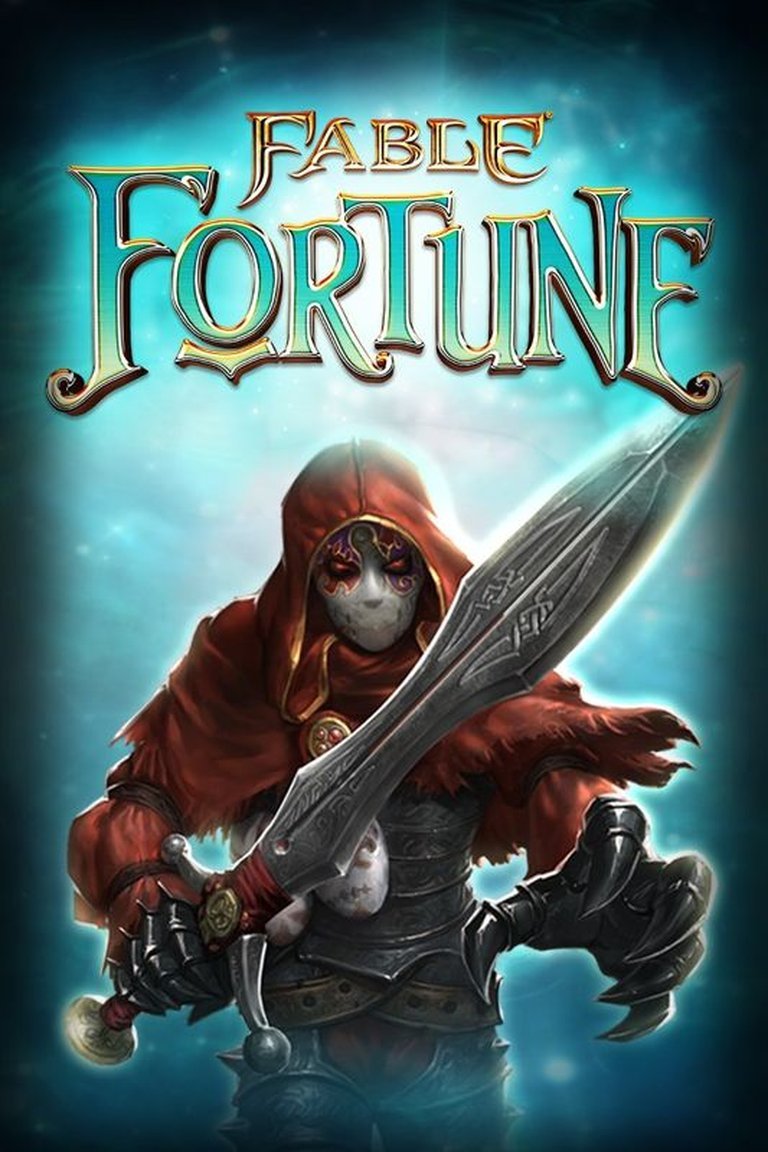
Fable Fortune is a free-to-play trading card game set in the fantasy world of the Fable series, where players engage in strategic battles using decks of cards while making choices that shape their good-evil alignment. Developed by Flaming Fowl Studios and Mediatonic Ltd, the game features beloved characters and humor from the franchise, including The Dog, and incorporates a unique upgrade system that evolves cards based on player decisions. Released in 2017 on Windows and Xbox One, it blends collectible card mechanics with the moral choices characteristic of the Fable universe.
Gameplay Videos
Fable Fortune Guides & Walkthroughs
Fable Fortune Reviews & Reception
metacritic.com (63/100): Fable Fortune doesn’t reinvent the wheel, and the few new things it brings to the table are not that good.
opencritic.com (65/100): Fable Fortune is a good experiment that has some great ideas, such as the co-op mode or the morality system, but overall its shortcomings prevent it from being a valid option in the CCG genre.
Fable Fortune: Review
Introduction
In the shadow of Lionhead Studios’ untimely closure in 2016, a small band of ex-developers embarked on a remarkable odyssey to resurrect a project born from the ashes of Fable Legends. The result was Fable Fortune, a digital collectible card game (CCG) promising to distill the soul of Albion—the whimsical, morally complex world of Peter Molyneux’s RPG series—into fast-paced tactical battles. This review will argue that while Fable Fortune admirably captured the franchise’s signature humor, lore, and moral duality, it ultimately succumbed to the brutal realities of a saturated CCG market. Its innovative mechanics, particularly the morality system, were overshadowed by derivative gameplay, technical polish issues, and a fatal inability to carve a distinct identity against titans like Hearthstone. Through an exhaustive analysis of its development, narrative, gameplay, and legacy, we uncover a game of noble intentions that became a poignant footnote in the Fable saga.
Development History & Context
Fable Fortune emerged from an unannounced project at Lionhead Studios in October 2014, conceived by the team behind Fable Anniversary. Spearheaded by producer Craig Oman and creative director Mike West (a Lionhead veteran since Fable II), the game began life as a potential companion app to Fable Legends, designed to fill downtime between matches with Fable-themed card battles. Its core design mantra was simple yet revolutionary: it had to be Fable. This meant embedding the series’ British humor, quest-based progression, and, crucially, its morality system—a feature conspicuously absent from the then-dominant Hearthstone. Lionhead pitched the concept through a prototype “crappy-looking 2D card game” to Microsoft’s gatekeepers, including Xbox head Phil Spencer, who posed a critical question: “How are you going to take them on?” This spurred the team to envision Fortune as a standalone title with deep, cross-platform integration, including mobile aspirations.
The dream imploded in March 2016 when Microsoft shuttered Lionhead, killing Fable Legends and leaving Fortune in limbo. In a bold move, Oman negotiated the Fable license from Microsoft and formed Flaming Fowl Studios (FFS) with West and technical director Marcus Lynn. Their Kickstarter campaign in May 2016 aimed for £250,000 but collapsed at £58,852, citing challenges in crowdfunding a free-to-play title and genre skepticism among Fable fans. Salvation arrived via Mediatonic, who provided funding and co-development, evolving the prototype into a polished product. Technically constrained by Unity and a shoestring budget, FFS prioritized cross-play between PC and Xbox One and leveraged Mediatonic’s expertise in CCG mechanics. The game entered Early Access in July 2017—nearly three years after its inception—launching fully in February 2018 during a CCG landscape dominated by established giants, setting the stage for its uphill battle.
Narrative & Thematic Deep Dive
While lacking a traditional campaign, Fable Fortune weaves narrative through its setting, quests, and the franchise’s moral core. The game is steeped in Albion’s lore, featuring iconic locations like Oakvale and Brightwood as arenas, and characters reimagined as collectible cards. Each match opens with a “Quest,” such as “Albion’s Got Magic” or “Hero’s Call,” demanding specific actions (e.g., casting three spells or defeating five units). Completing these quests unlocks a binary choice: embrace Good or Evil. This isn’t mere flavor text; it dynamically alters gameplay. Choosing Good might upgrade the hero into a benevolent figure with a halo, enabling healing abilities and cards like The Dog gaining Taunt and Divine Shield. Evil choices, conversely, transform the hero into a horned aggressor, unlocking explosive spells and units like sappers that deal damage on death.
The dialogue and character design brim with quintessential Fable humor—a necromancer’s head held by his granddaughter, or a Farmer riding a Pig as a hero. The narrator’s quips and quest descriptions (“Would you kindly fetch my lost chicken?”) echo the series’ satirical tone. Thematically, the game powerfully distills Fable‘s essence: consequence. A quest to “save a village” (Good) yields defensive buffs, while “sack a village” (Evil) grants offensive ones. This system creates emergent storytelling, where each match becomes a micro-drama of heroism or villainy. Yet, the narrative impact is diluted by shallow quest variety and the absence of a cohesive overarching story, leaving the world-building feeling more like a theme park than a living Albion.
Gameplay Mechanics & Systems
At its core, Fable Fortune is a streamlined CCG where players construct 30-card decks around unique heroes, each with distinct abilities. Matches begin with 3 gold (scaling to 10), and the second player receives a “Trophy” card to offset first-move advantage. Turn-based combat involves summoning units (e.g., Balverines, Hobbes), casting spells, and activating hero powers, all governed by resource management. A standout feature is the Guard system: players can spend 1 gold to assign any unit to defensive duty, blocking incoming attacks. This adds strategic depth, allowing players to protect key units or heroes dynamically. The morality system elevates the genre. Completing three quests per match triggers alignment choices, permanently shifting hero aesthetics and card effects. A “Good” Crimson the Shapeshifter might summon protective medics, while “Evil” her unleashes explosive beasts.
Deck-building supports creativity with a crafting system—salvaging cards yields “ink” to craft new ones—though rarity tiers (Common to Fabled) often dictated power. Co-op mode allowed two players to battle AI-controlled bosses, sharing health and units, fostering camaraderie. However, the gameplay loop suffered from derivative design. Its mechanics mirrored Hearthstone‘s resource system and minion combat, with innovations like Guard and morality feeling underdeveloped. Early reviews criticized limited card variety at launch (150 cards), balance issues, and a slow pace. The UI, while clean, lacked polish, and matches often devolved into linear attrition. Despite its potential, Fable Fortune struggled to escape Hearthstone‘s shadow, with critics noting its failure to “reinvent the wheel.”
World-Building, Art & Sound
Fable Fortune triumphs in translating Albion’s visual and auditory identity. The art style—a vibrant 2.5D blend of painterly landscapes and character illustrations—faithfully captures the series’ whimsical British fantasy. Iconic locales like Bowerstone Market are rendered with charming detail, from thatched roofs to cobblestone streets. Characters, though card-based, exude personality: The Dog’s loyal grin, a Balverine’s menacing snarl, and even humorous touches like a Hero in chicken armor. The animation is lively, with units clashing and spells bursting with flair. Sound design is equally immersive, boasting the series’ iconic narrator delivering wry commentary, accompanied by a folksy score that evokes Albion’s rustic charm. Voice acting, featuring British accents and playful inflections, reinforces the game’s comedic tone.
Yet, technical shortcomings marred the experience. On PC, textures could be blurry, and frame drops occurred during intense matches. The sound engine, while rich, occasionally suffered from glitched audio cues. Compared to Hearthstone‘s slick polish, Fable Fortune felt rough around the edges, a casualty of its small-team development and rushed launch. Despite this, the art and sound remained a triumph, offering a warm, nostalgic return to Albion for fans.
Reception & Legacy
At launch, Fable Fortune received mixed reviews, reflecting its strengths and flaws. Metacritic scores averaged 63 (PC) and 70 (Xbox One), with IGN praising its “novel ideas” like the morality system but lamenting its “lack of polish” compared to competitors. Critics universally lauded its Fable integration—IGN called it “a fun way to dive back into a treasured series,” while Eurogamer highlighted the “rejoicing” in seeing Albion’s universe anew. However, Gameplay (Benelux) dismissed it as a Hearthstone “kloon,” and CGMagazine noted it offered “little that hasn’t been done better.” Commercially, the game struggled; peak concurrent players on Steam reached 562 in February 2018, plummeting to near-zero by 2020. Its free-to-play model failed to sustain revenue, leading Mediatonic and FFS to announce its shutdown in January 2020, with servers closing in March.
Legacy-wise, Fable Fortune is a cautionary tale. It innovated with morality and co-op but was outpaced by genre saturation. Its development story—resurrected from Lionhead’s ashes—resonates with Fable fans, who fondly recall its potential. Yet, it left no lasting imprint on CCGs, overshadowed by Hearthstone and Magic: The Gathering Arena. As the final Fable project from Lionhead’s original team, it symbolizes an era’s end, a footnote in the franchise’s history that underscores the challenges of reviving beloved IPs in competitive markets.
Conclusion
Fable Fortune stands as a testament to passion and perseverance. It successfully distilled Fable‘s soul—its humor, lore, and moral depth—into a CCG format, with the morality system and co-op mode as genuine innovations. Yet, it was ultimately undone by timing and execution. Its derivative gameplay, technical polish issues, and inability to carve a niche in a crowded market relegated it to obscurity. For Fable fans, it offered a fleeting, charming return to Albion; for the industry, it’s a poignant reminder that innovation alone is insufficient without flawless execution and market timing. In the pantheon of video game history, Fable Fortune is a bittersweet entry: a game of noble intentions that fell short of its potential, yet one that honors the spirit of a beloved franchise in its own small, flawed way. Its legacy is not one of revolution, but of resilience—a final flicker of Albion’s magic in an unforgiving digital world.