
- Release Year: 2024
- Platforms: Browser, Windows
- Developer: Bocdagla, Nanocirs, Soteck
- Genre: Action
- Perspective: Behind view
- Game Mode: Single-player
- Gameplay: Automobile, Driving
Description
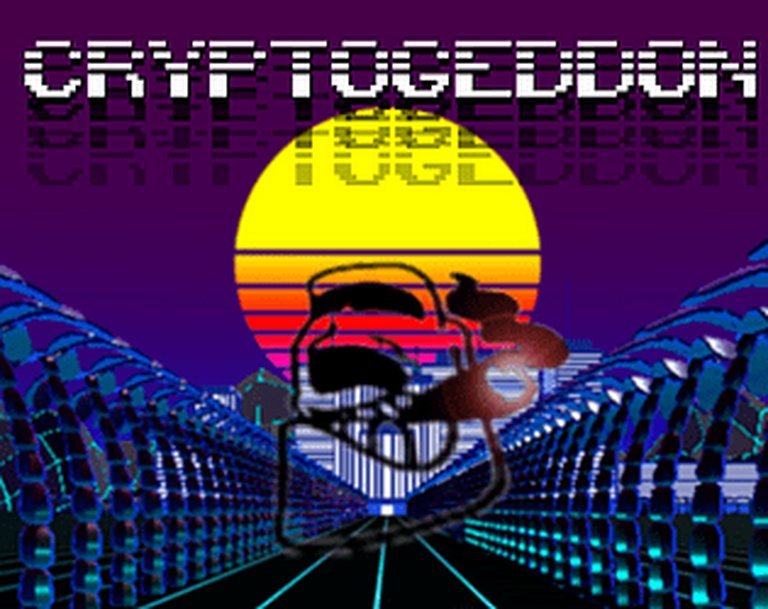
In Cryptogeddon, players assume the role of a cryptoplayer, the villain of the modern era, navigating an action-packed world from behind the wheel of an automobile. The game features direct vehicular control and a behind-the-view perspective, immersing players in a contemporary setting where driving and villainy intertwine.
Cryptogeddon: Review
Introduction
In the saturated landscape of indie games, few titles manage to distill a concept as potent and timely as “Cryptogeddon.” Released in January 2024 as a free, name-your-price title on itch.io, this action-arcade hybrid from developers Soteck, Bocdagla, and Nanocirs presents itself as a deceptively simple proposition: You’re a cryptoplayer. You’re the villain of the modern era. Also you drive a car. Yet beneath this surface lies a fascinating convergence of digital destruction, retro-futurism, and a nascent narrative about information warfare. Born from Todd Dow’s broader vision of a world where secrets collapse and digital sovereignty becomes the ultimate battleground, Cryptogeddon (2024) serves as both a standalone arcade experience and a prelude to his ambitious tabletop RPG project. This review dissects the game’s execution, contextualizes its place in indie gaming, and evaluates its legacy as a harbinger of deeper cyberpunk storytelling. While its runtime is brief and mechanics are pared to essentials, Cryptogeddon delivers a cathartic, synthwave-soaked power fantasy that lingers long after the final building crumbles.
Development History & Context
The Genesis of a Digital Apocalypse
Cryptogeddon’s origins trace back to Todd Dow’s earlier work as an information security specialist. Presented at SecTor 2013, Dow’s initial concept framed Cryptogeddon as an infosec training tool—a “digital scavenger hunt” simulating the collapse of secrets in an era of pervasive surveillance. Here, players solved puzzles using tools like TrueCrypt, SSH, and Metasploit to recover stolen data, expose vulnerabilities, or track cybercriminals. This mission-based approach, however, was never fully realized until Dow’s 2024 pivot to game development.
Indie Roots and Technical Constraints
The 2024 game emerged from Mini Jame Gam #26, a game jam demanding rapid prototyping. Built in Godot 3D 4.2—a celebrated open-source engine—Cryptogeddon showcases remarkable efficiency. Its assets are a testament to indie collaboration: DavidKBD’s synthwave soundtrack, Valen’s sound effects, Foster Azrael’s low-poly car model, and free fonts (e.g., Jotson’s “Gravity Pixel Font”) were sourced from the itch.io community. This modular approach reflects both budget constraints and a design philosophy focused on core gameplay over polish. The absence of a leaderboard or complex progression systems, as noted in Dow’s developer commentary, was a deliberate choice to streamline delivery, prioritizing “simplicity” over monetization or meta-competitiveness.
The Gaming Landscape of 2024
Released amid a resurgence of synthwave aesthetics (e.g., Hotline Miami, Katana ZERO), Cryptogeddon tapped into nostalgia for 80s futurism while resonating with contemporary anxieties about digital privacy. Its free, browser-accessible format aligned with the indie ethos of accessibility, while its Godot foundation highlighted the engine’s growing viability for 3D projects. As a game jam entry, it embraced the “short, sweet, and memorable” ethos of arcade classics, positioning itself as a quick dopamine hit rather than an epic saga.
Narrative & Thematic Deep Dive
Minimalism as Narrative Design
Cryptogeddon’s narrative is audaciously minimalist. The official blurb—“You’re a villain”—and the absence of cutscenes, dialogue, or lore pages might suggest a void. Yet this emptiness is thematically deliberate. The game rejects traditional storytelling, instead embedding its premise in the player’s actions: every crushed building, every screeching tire, every explosion is a statement about power in a world where “cryptoplayer” implies a god-like, unaccountable presence. As Dow’s broader Cryptogeddon universe posits, the true narrative is the erosion of privacy itself. Here, the player isn’t just a villain—they’re the harbinger of a “cryptogeddon,” a digital apocalypse where secrets are no longer viable.
Themes: Destruction as Liberation
The game’s core themes revolve around chaos, control, and catharsis. By eschewing traditional objectives (save the world, defeat a villain), Cryptogeddon frames destruction as an end in itself. This mirrors the “villain” fantasy: unchecked agency in a brittle digital society. The lack of moral consequence—no collateral damage penalties, no ethical dilemmas—serves as a commentary on the impunity of cyber warfare, where anonymity in the digital realm mirrors the player’s unchecked rampage. Yet beneath this nihilism lies a hint of subversion: the synthwave aesthetic, with its neon-drenched rain-slicked streets, evokes a retro-utopia now in ruins. The buildings aren’t just obstacles; they’re symbols of a flawed system ripe for collapse.
From Infosec to Allegory
While the standalone game doesn’t explicitly explore Dow’s TTRPG themes of “ethics under pressure” or “global systems on the brink,” it lays the groundwork. The act of “cryptoplaying” here is a microcosm of the TTRPG’s grander vision: where hackers, operators, and influencers reshape reality through digital means. In 2024, this is reduced to car-bound mayhem; in Dow’s 2026 TTRPG, it becomes a cerebral, high-stakes drama. The game’s brevity forces players to project their own narratives onto its world—a blank canvas for fantasies of rebellion or ruin.
Gameplay Mechanics & Systems
Core Loop: Destruction as Progression
Cryptogeddon’s gameplay is a masterclass in distilled arcade design. Players pilot a low-poly car through a grid of destructible buildings in a neon-lit city. Controls are direct and responsive: accelerate, brake, steer, and boost. The goal is simple: cause maximum destruction. Points are awarded for toppling structures, with combo multipliers for chain reactions. A timer or score limit (varies by play session) adds urgency, encouraging repeat attempts to beat high scores.
Accessibility and Challenge
The game’s difficulty curve is gentle. Buildings crumble with satisfying physics, and the car handles like a dream, allowing even novices to wreak havoc. This accessibility is intentional, aligning with Dow’s goal of a “stress-relief” experience. Yet subtle depth emerges in mastering momentum—using the car’s inertia to trigger cascading collapses—and exploiting environmental quirks (e.g., positioning for multi-building combos). The lack of progression systems (no unlocks, no levels) keeps the focus on pure skill, but also limits long-term engagement.
Godot’s Technical Prowess
Built in Godot 4.2, the game leverages the engine’s strengths for rapid prototyping. 3D physics are snappy, destruction effects are visceral, and performance remains stable even with dozens of simultaneous explosions. The behind-the-view camera ensures clarity during high-speed maneuvers, while the minimalist HUD (score, timer) avoids clutter. However, technical constraints are evident: textures are basic, and the environment lacks interactivity beyond destructible buildings. No pedestrians, traffic, or dynamic weather—choices that prioritize performance over immersion.
NFT Integration and Modern Trends
The inclusion of “nft” as a tag on itch.io hints at nascent blockchain integration, though the game itself doesn’t feature NFTs. This likely reflects experimental rather than functional design, perhaps signaling Dow’s awareness of Web3 trends in gaming. For now, it’s a footnote—a reminder of Cryptogeddon’s status as a product of its indie-infused moment.
World-Building, Art & Sound
Synthwave Aesthetic: A Retro-Futuristic Dreamscape
Cryptogeddon’s visual identity is its strongest asset. The game drips with synthwave nostalgia: towering skyscrapers bathed in pink and blue neon, perpetual dusk, and a cityscape that mirrors the romanticized futurism of Drive or Tron. This isn’t just style—it’s world-building. The low-poly aesthetic, while simple, evokes a bygone era of arcade games, contrasting with the game’s modern themes of digital warfare. The city itself feels both a utopia (clean, orderly) and a dystopia (empty, awaiting ruin), embodying the “five minutes into the future” ethos of Dow’s TTRPG.
Sound Design: The Engine of Atmosphere
DavidKBD’s soundtrack is the game’s soul. Pulsating synths, driving basslines, and ethereal pads create a hypnotic backdrop that elevates destruction to a ritual. Sound effects—from the roar of the engine to the crunch of collapsing concrete—are punchy and tactile, feeding into the game’s catharsis. The absence of voice or ambient chatter reinforces the isolation of the “cryptoplayer,” leaving only the player and their digital mayhem.
Environmental Storytelling Through Absence
The world is sparsely populated, but this emptness is narrative. No civilians, no police, no infrastructure—only buildings waiting to fall. This sterility mirrors the game’s themes of a society hollowed out by digital dependency. Even the car, a symbol of freedom in other games, becomes an instrument of erasure. The art direction prioritizes mood over detail, using color and light to suggest a world where technology has outgrown humanity.
Reception & Legacy
Launch and Player Response
Upon release, Cryptogeddon garnered modest but positive attention. MobyGames lists no critic reviews, but player comments on itch.io echo its appeal:
– “Love the synth vibe!”
– “epic”
– “Que desestresante es destruir los edificios con el coche” (Spanish for “stress-relieving to destroy buildings with the car”).
The game’s free model and browser accessibility lowered barriers to entry, while its brevity (a 5–10 minute playthrough) made it shareable. It was collected by only one player on MobyGames, reflecting its niche appeal but underscoring its cult potential.
Influence on Indie Gaming
Cryptogeddon’s legacy lies in its fusion of aesthetics and mechanics. It exemplifies the “jam game” ethos—delivering a focused experience within tight constraints—and showcases Godot’s viability for 3D indies. Its synthwave style, while not revolutionary, adds to a growing canon of games using retro aesthetics to comment on modernity (e.g., Brotato, Vampire Survivors). More significantly, it bridges Dow’s infosec background and his ambition to explore cyberpunk themes through gameplay. The 2024 game is a prologue to his 2026 TTRPG, which aims to translate “cryptoplayer” fantasy into a narrative-rich tabletop experience.
The Road to the TTRPG
Todd Dow’s evolving vision positions Cryptogeddon as the foundation of a larger universe. Where the 2024 game is visceral and immediate, the TTRPG promises depth: ethics under pressure, geopolitical intrigue, and systemic collapse. While the standalone game may be a footnote, its core concept—the end of secrets—resonates in an era of data breaches and AI surveillance. As Dow noted, the TTRPG will explore “hard choices with real-world consequences,” a natural evolution of the 2024 game’s destructive catharsis into something more introspective.
Conclusion
Cryptogeddon (2024) is a paradox: a game that is both shallow and profound. On the surface, it’s a simple arcade experience where players destroy buildings in a synthwave dreamscape. Its mechanics are pared to essentials, its narrative is intentionally blank, and its runtime fleeting. Yet in its purity, it captures a zeitgeist—the anxiety of living in a world where digital omnipotence feels both liberating and terrifying. The game’s true value isn’t in its replayability or innovation, but in its role as a catalyst. It introduces players to Dow’s “cryptoplayer” concept, a hook that evolves into a complex cyberpunk universe in his upcoming TTRPG.
As a standalone product, Cryptogeddon excels as a short, stylish burst of catharsis. It’s a game for those who want to unwind to synthwave beats and watch pixels crumble. Its legacy, however, lies elsewhere. It’s the first step in Dow’s journey to explore the collapse of privacy through interactive media—a journey that transforms digital destruction into a meditation on power, ethics, and the fragile line between chaos and control. For indie gamers and cyberpunk enthusiasts alike, Cryptogeddon is a free download worth experiencing not just for its neon-soaked mayhem, but for the glimpse it offers into a future where secrets are no longer safe—and the villains are us.