
- Release Year: 2024
- Platforms: Android, Browser, Linux, Macintosh, Windows
- Publisher: Tymedust Games
- Developer: Tymedust Games
- Genre: Adventure
- Perspective: 3rd-person (Other)
- Game Mode: Single-player
- Gameplay: Visual novel
- Average Score: 94/100
Description
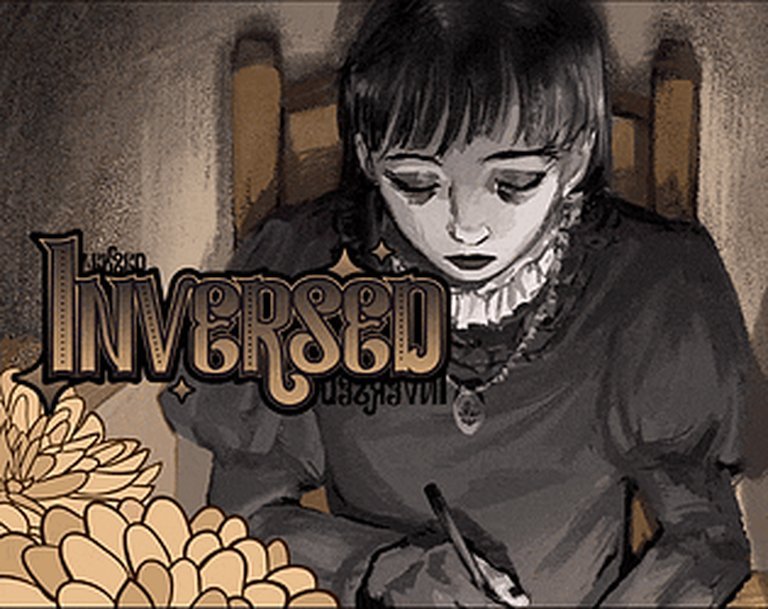
Inversed is a short atmospheric visual novel set in the mid-19th Century, where a poet struggles against time to complete her most important work. Players engage in a word-choice poetry minigame to create mysterious verses while navigating a narrative rich in psychological horror and goth aesthetics, featuring fully voiced dialogue and immersive storytelling designed for a brief 10-15 minute experience.
Where to Buy Inversed
PC
Inversed Guides & Walkthroughs
Inversed Reviews & Reception
store.steampowered.com : Any self-respecting psychological horror fan needs to play this. I would go as far as to say it’s a masterclass in atmospheric tension building.
Inversed: Review
Introduction
In the crowded landscape of 2024 releases, where blockbuster AAA titles and sprawling indie epics vie for attention, Inversed emerges as a quiet, haunting masterpiece—a micro-game that distills complex emotional and psychological horror into a mere 15 minutes. Created by solo developer Tymedust for the O2A2 Visual Novel Jam 2024, this free-to-play title defies its diminutive scope to deliver an experience that lingers long after its final, devastating revelation. Drawing comparisons to literary giants like Edgar Allan Poe and psychological horror classics, Inversed challenges players to confront the fragility of memory, the terror of mental illness, and the irreversible bonds of love. This review argues that Inversed is a triumph of constrained game design, proving that profound narrative impact can thrive within the tightest of limitations, setting a new benchmark for atmospheric storytelling in the visual novel genre.
Development History & Context
Tymedust Games, helmed by the enigmatic creator Tymedust, crafted Inversed under the stringent rules of the O2A2 VN Jam 2024, which mandated a maximum of 1,000 words and strict asset limitations. This micro-jam environment forced Tymedust to innovate ruthlessly, leveraging the Ren’Py engine to build a world through suggestion rather than exposition. The developer’s vision was clear: to explore the intersection of poetry, grief, and psychological decay, drawing inspiration from Victorian gothic literature and personal themes of familial trauma. Collaborating with a small but dedicated team—including artist Alcinus (whose hand-drawn visuals define the game’s aesthetic), voice actor Ariel Graham (whose performance elevates the narrative), and composer Koi-discovery (whose soundtrack underscores the dread)—Tymedust transformed constraints into creative fuel.
Released on July 14, 2024, across multiple platforms (Windows, Linux, macOS, Android, browser), Inversed arrived in a year saturated with high-profile games. Yet its free-to-play status, brevity, and focus on raw emotional resonance allowed it to carve out a unique niche. The gaming landscape of 2024, as documented by Wikipedia’s exhaustive release lists, was dominated by sequels, remasters, and live-service titles, making Inversed’s intimate, standalone narrative feel refreshingly radical. It stood not as a commercial product but as an artistic statement—a testament to the power of indie jams to foster experimental, deeply personal experiences.
Narrative & Thematic Deep Dive
Set in the mid-19th century, Inversed centers on Sheol, a “mid-19th Century poet/goth girl” voiced with haunting vulnerability by Ariel Graham. The premise is deceptively simple: Sheol fights time to compose a poem for her ailing mother. Yet this simple framework unravels into a harrowing exploration of psychological horror. The narrative unfolds through sparse, evocative dialogue and player-driven word choices in a poetry minigame, where selections subtly alter the tone of the verses Sheol writes. As the game progresses, the mother’s condition deteriorates from mere illness into a terrifying mental unraveling, hinted at through distorted voice effects and fragmented visuals.
The plot’s devastating twist—revealed through reversed dialogue and Sheol’s desperate pleas—exposes a darker truth: the mother, in a delusional state, has killed her own daughter, mistaking her gothic appearance for that of a monster. This twist reframes the entire narrative as a tragic cycle of grief and trauma. Sheol, who adored her mother’s “lively, bright, and energetic” spirit, becomes a victim of the very love she sought to immortalize through poetry.
Themes of decay permeate the narrative. The mid-19th-century setting evokes an era of romanticism and revolution, yet here it becomes a cage of stagnation and despair. Mental illness is portrayed not as a supernatural affliction but as a biological horror, mirroring real-world conditions like Alzheimer’s. The poetry itself—a minigame where players choose words—symbolizes the futility of language to bridge the divide between reality and delusion. As one reviewer noted, “Sheol very obviously loves her mother and thought the whole world of her, and then an illness comes and takes away her mother’s brightness leaving a hollow husk behind.” The game’s title, Inversed, hints at this inversion of love into terror, memory into oblivion.
Gameplay Mechanics & Systems
Inversed’s gameplay is a masterclass in minimalist design. Built as a visual novel with Ren’Py, it eschews traditional combat or progression in favor of a single, innovative mechanic: the poetry minigame. Players select words to form verses, with choices subtly influencing the tone of the poem and the mother’s responses. While one player noted that choices “didn’t always seem to impact the poem given,” this ambiguity reinforces the narrative’s themes of chaos and control in the face of mental decline. The minigame’s simplicity—reduced to word selection—avoids complexity, instead serving as a metaphor for Sheol’s desperate attempts to impose order on her mother’s unraveling mind.
The interface, designed by Skolaztika, is intentionally sparse. Fixed/flip-screen visuals and a muted color palette (dominated by sepia, black, and gray) evoke the game’s gothic, decaying atmosphere. Text effects by Wattson add subtle dynamism, with words warping and distorting during moments of psychological stress. Character progression is nonexistent—there are no stats or upgrades—emphasizing the narrative’s focus on inevitability.
The game’s linearity is both a strength and a limitation. Clocking in at under 1,000 words, Inversed delivers its story with relentless efficiency, but this brevity prevents deeper exploration of Sheol’s inner world. Yet what it lacks in complexity, it compensates for in emotional weight. The fully voiced performance by Ariel Graham is a standout, with her delivery of lines like “I’m not telling her that, no, no, no” capturing visceral panic and heartbreak. The Steam achievement system, while trivial, serves as a poignant callback to the game’s themes of futility—a trophy for experiencing a tragedy.
World-Building, Art & Sound
Inversed’s world-building is achieved through implication rather than exposition. The mid-19th-century setting is suggested through period-appropriate details—Sheol’s gothic attire, the dimly lit chamber, the quill and ink—but the true horror lies in the psychological space. The environment shifts from a place of creative refuge to a claustrophobic nightmare as the mother’s illness progresses. Walls seem to close in, and lighting flickers, mirroring Sheol’s fracturing sanity. The game’s fixed-screen perspective immerses players in Sheol’s confined world, making the external horror feel internal.
Alcinus’s hand-drawn art is the game’s visual anchor. Sheol’s design—pale skin, dark clothing, animated with subtle gestures—evokes both Victorian mourning and gothic subculture. As one reviewer remarked, “Sheol is drop dead gorgeous,” but her beauty is tinged with melancholy. The art style, described as “dark brooding poet game style,” shares DNA with games like Fear and Hunger, using sketchy lines and stark contrasts to amplify unease. The mother, initially vibrant, becomes a spectral figure as her mental state deteriorates, her features blurring into grotesque masks.
Sound design is equally integral. Koi-discovery’s soundtrack, a blend of ambient drones and dissonant piano notes, swells during moments of tension, while Freesound’s subtle effects—footsteps on creaking floors, ragged breathing—anchor the horror in reality. Ariel Graham’s voice acting is the game’s emotional core, her wavering tones capturing Sheol’s love, fear, and resignation. The final revelation—delivered through reversed, distorted dialogue—leaves players with a chilling auditory echo, a sonic manifestation of a mind broken beyond repair.
Reception & Legacy
Upon release, Inversed was met with immediate acclaim, particularly on itch.io, where it holds a 4.7/5-star rating based on 264 reviews. Players praised its “haunting,” “beautiful,” and “original” narrative, with many noting its emotional impact: “I almost cried,” wrote one, while another called it “the experience of the month for me.” The Steam launch on October 18, 2024, solidified its reputation, earning a “Very Positive” score (94% of 69 reviews positive). Critics lauded its “masterclass in atmospheric tension building” and “excellent use of limited dialogue,” though some noted its brevity as a double-edged sword.
The game’s legacy extends beyond critical praise. As part of Tymedust Games’ interconnected universe—teasing characters and lore from titles like Poetry in Purgatory and Pitstop in Purgatory—Inversed has become a gateway to a broader narrative world. Its exploration of mental illness resonated deeply in a year where games increasingly tackled psychological themes, influencing indie developers to prioritize emotional authenticity over spectacle. The O2A2 Jam’s constraints, once seen as limitations, are now viewed as a creative catalyst, proving that the most potent horror often lies in the spaces between words.
Conclusion
Inversed is a paradox: a game of almost nothing—1,000 words, 15 minutes of playtime, zero combat—that delivers everything. In an industry obsessed with scale and spectacle, Tymedust Games demonstrates that true horror and beauty thrive in the intimate, the fleeting, and the deeply human. Through its gothic poetry, devastating narrative, and masterful use of constraint, Inversed transcends its jam origins to stand as a landmark in psychological horror. It is a reminder that the most powerful stories are not those that shout the loudest, but those that linger in the silence after the final word. For players seeking an experience that is as intellectually stimulating as it is emotionally shattering, Inversed is not just a game—it is a masterclass in the art of less.