
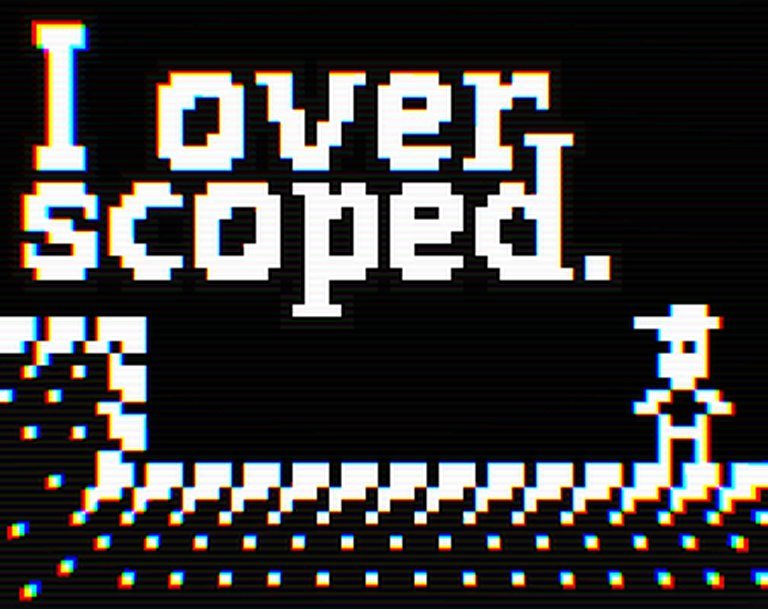
Description
I overscoped. is a puzzle-platform game developed by NitramiuZ for the GMTK Game Jam 2023, featuring a unique twist on the theme ‘Roles reversed.’ In this fully voice-acted adventure, players step into the shoes of a developer who has overscoped their game and must help them complete it. Set in a 2D side-scrolling world, the game offers an intriguing journey into the mind of a game developer, crafted in just 48 hours by a solo developer using the Godot engine.
I overscoped. Patches & Updates
I overscoped.: Review
Introduction
In the high-pressure crucible of game jams, where creativity battles the tyranny of the clock, few entries manage to transcend their constraints to become cultural touchstones. I overscoped., developed solo by NitramiuZ for the 2023 GMTK Game Jam, is one such anomaly. A self-aware meta-commentary on development struggles disguised as a whimsical puzzle-platformer, it immediately captivated players with its audacious premise: you must rescue an overwhelmed developer from their own ambition. This review argues that I overscoped. is not merely a clever jam experiment, but a masterclass in emergent storytelling and ludic subversion—a rare gem that transforms technical constraints into thematic brilliance while dissecting the very nature of game creation with wit and warmth.
Development History & Context
NitramiuZ conceived I overscoped. under the GMTK 2023 theme “Roles reversed,” tasked with reimagining player dynamics within 48 hours. The solo developer leveraged Godot Engine (chosen for its accessibility and rapid prototyping capabilities) and tools like Aseprite for art and FL Studio for audio, crafting the entire experience from scratch—a staggering feat given the jam’s notorious time crunch. Technical constraints defined the project: Godot 4’s limited Mac support led to platform-specific bugs, and the 48-hour window forced ruthless prioritization. Yet these limitations became creative catalysts: the developer’s vocal performance, recorded hastily in Swedish-accented English, became a signature charm, while the pixel art’s simplicity emerged as a stylistic strength, not compromise. Released on July 9, 2023, it landed amidst a deluge of 6,692 GMTK entries, yet its alchemy of polish and concept propelled it to #1 overall rank (among 166 rated games) with a 4.608/5 score, defying the typical “jam game” stigma.
Narrative & Thematic Deep Dive
The narrative unfolds as a surreal romp through the developer’s psyche, where abstract code manifests as physical puzzles. The plot is a distilled monologue of crisis: “Oh no! The developer overscoped the jam game, and now you must help him finish the game.” This setup is deceptively simple, yet it spirals into profound meta-commentary. The developer’s voice—alternately frantic, self-deprecating, and gleefully absurd—serves as both guide and punchline, dissecting the creative process with intimate familiarity. Key moments include the “compiling errors” that morph into tangible obstacles, symbolizing the friction between vision and execution. Thematically, the game embodies the duality of ambition and limitation: overscoping is framed not as failure, but as an essential, chaotic spark of creation. Dialogue drips with insider humor (“I wish coding what’s that easy lol,” quips one player), yet it resonates universally, capturing the universal fear of unfinished dreams and the joy of collaborative problem-solving. The ending—a simple “victory hat” drawn by the player—is a masterstroke: it reduces grandiloquent ambitions to a personal, tangible triumph, celebrating the small victories of creation.
Gameplay Mechanics & Systems
I overscoped.’s brilliance lies in its fusion of platforming, puzzle-solving, and creative expression. Core gameplay loops alternate between three modes:
– Platforming Sections: Standard 2D traversal, where player-drawn sprites (e.g., flowers, enemies) dynamically populate the world, adding personal flair and unpredictability.
– Coding Puzzles: Abstract logic challenges where players manipulate symbols (arrows, letters) to “compile” solutions. For instance, the door puzzle requires using a timer to slow the execution of an “R” command, mimicking debugging techniques. These puzzles are elegantly abstract, avoiding literal coding while evoking its essence.
– Sprite Creation: A grid-based drawing tool allowing pixel-art customization. Players design assets guided by prompts (“Make the enemy look scary”), yet many subvert expectations with whimsical creations (cute demons, sombreros), turning constraints into creative freedom.
The UI is minimalist yet functional, with a clean interface for puzzle inputs and a vibrant color palette for drawing. Progression feels organic: each puzzle solved or sprite drawn reinforces the player’s role as co-creator. Notably, the absence of traditional combat shifts focus to collaborative problem-solving, aligning perfectly with the “roles reversed” theme. Even minor flaws, like the occasionally finicky timer puzzle, enhance the authenticity of development struggles.
World-Building, Art & Sound
The game’s world—the developer’s “mind”—is a surreal dreamscape of floating platforms and geometric shapes, rendered in a lovable pixel-art style. Its minimalist aesthetic (reminiscent of There Is No Game) prioritizes clarity over detail, with subtle touches like floating particles adding atmospheric depth. The palette is dominated by warm earth tones and pastels, evoking a sense of playful creativity rather than dread. This visual restraint amplifies the game’s humor and meta-commentary, turning technical limitations into a cohesive artistic identity.
Sound design elevates the experience: fully voice-acted narration is a rarity for a 48-hour jam, yet NitramiuZ’s performance delivers endearing humor and warmth. The Swedish accent adds charm, while lines like “Believe me, I would also have loved to be able to have a few more puzzles” humanize the developer’s struggle. Composed in FL Studio, the chiptune soundtrack is unobtrusive yet effective, with melodies that subtly shift to mirror puzzle-solving triumphs or moments of frustration. Together, art and sound forge an intimate atmosphere, making the player feel like a trusted confidant in the creator’s chaotic journey.
Reception & Legacy
At launch, I overscoped. was hailed as a GMTK standout, earning near-universal acclaim for its innovation and polish. Player reviews overflowed with effusive praise:
“It was the first game that I really wanted to never end. I love it.“
“Fantastic idea! We loved being able to draw the sprites live! Super polished look & feel.”
The game’s legacy extends beyond jam accolades. It became a cult phenomenon on itch.io, with 86+ pages of user comments showcasing custom sprites and heartfelt requests for a full release. Critics lauded its meta-humor and emotional resonance, noting how it transcended “jam game” status to offer genuine insight into development. Its influence is evident in contemporary indie games that blend creator commentary with player agency, though none have matched its alchemy of brevity and depth. NitramiuZ’s promise of a 2024 Steam release (still pending, per itch.io updates) underscores its enduring appeal, while the developer’s follow-up, Maces and Dices, reflects the trust built through this project’s success.
Conclusion
I overscoped. is more than a clever jam entry—it is a profound love letter to the messy, exhilarating act of game creation. By transforming the chaos of overscoping into a playable narrative, NitramiuZ crafts an experience that is both deeply personal and universally resonant. The game’s genius lies in its constraints: the 48-hour deadline, solo development, and abstract puzzles coalesce into a cohesive whole, where every line of code, every pixel drawn, feels like a triumph over creative entropy. Its legacy is secured not by technical grandeur, but by its emotional authenticity: it makes players laugh at the absurdity of ambition and smile at the beauty of collaboration. In a landscape of bloated overpromises, I overscoped. stands as a timeless reminder that the most compelling games often emerge not from infinite resources, but from the courage to embrace imperfection. It is, quite simply, a masterpiece of ludic poetry.