
- Release Year: 2012
- Platforms: Macintosh, Windows
- Publisher: Big Fish Games, Inc
- Developer: Boomzap Pte. Ltd.
- Genre: Adventure
- Perspective: 1st-person
- Game Mode: Single-player
- Gameplay: Hidden object, Puzzle elements
- Setting: Fantasy
- Average Score: 83/100
Description
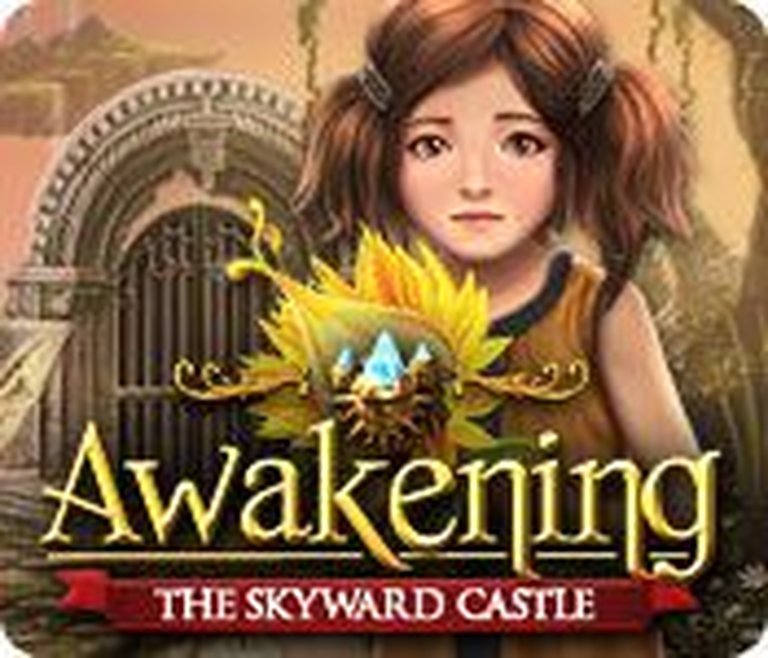
In ‘Awakening: The Skyward Castle’, Princess Sophia continues her hidden object puzzle adventure by locating her lost people in a floating castle, only to find the kingdom under a spell cast by an evil wizard. With no magic of her own, she must overcome obstacles and enemies through solving puzzles, finding hidden objects, and interacting with rescued friends, all set in a captivating fantasy world that serves as a key installment in the Awakening series.
Gameplay Videos
Where to Buy Awakening: The Skyward Castle
PC
Awakening: The Skyward Castle Guides & Walkthroughs
Awakening: The Skyward Castle Reviews & Reception
gamezebo.com (80/100): Awakening: The Skyward Castle is a solid fourth installment in an already captivating series.
jayisgames.com (86/100): Awakening: The Skyward Castle is the perfect capstone to this beautiful story and amazing series.
casualgameguides.com : Awakening: Skyward Castle is the perfect capstone to this beautiful story and amazing series.
Awakening: The Skyward Castle: Review
Introduction: The Capstone of a Casual Dynasty
In the landscape of casual gaming, few franchises have achieved the sustained popularity and narrative cohesion of Boomzap Entertainment’s Awakening series. By 2012, this hidden object puzzle adventure (HOPA) series had already captivated millions with its fairy-tale aesthetic, gentle difficulty curve, and the enduring quest of Princess Sophia. Awakening: The Skyward Castle, the fourth main installment, arrives not as a mere entry but as a narrative climax—the long-awaited moment where Sophia finally locates her lost people and confronts the swirling threats to her exiled kingdom. This review argues that The Skyward Castle represents the zenith of the classic Awakening formula: a masterful synthesis of refined gameplay, richer storytelling, and a poignant conclusion to Sophia’s initial journey. It is a game that understands its identity as a “comfort food” experience within the HOPA genre while subtly pushing its boundaries in puzzle design and thematic maturity, cementing its place as a landmark title in early 2010s casual adventure gaming.
Development History & Context: Boomzap’s Refined Vision
The Studio and Its Ethos: Boomzap Entertainment, founded in 2005 by Christopher Natsuume (Creative Director) and Allan Simonsen (Technical Director), carved its niche in the burgeoning casual market with a clear philosophy: accessible, story-driven games with high-quality art. Operating as a remote, globally-distributed team (with credits showing talent from Southeast Asia), Boomzap prioritized “fairy tale” aesthetics and family-friendly narratives. The Awakening series, beginning with The Dreamless Castle in 2010, was their flagship. The Skyward Castle (2012) benefited from three prior entries, allowing the team to iterate on core systems with confidence.
Technological and Market Context: Released in September 2012 for Windows and Mac, the game existed at the peak of the download casual game era, dominated by portals like Big Fish Games. The technical constraints were those of a 2D, point-and-click engine optimized for wide system compatibility and low file sizes. The “Collector’s Edition” model (featuring bonus content, wallpapers, and a built-in strategy guide) was the industry standard for monetizing dedicated fans. The gaming landscape was one where hidden object games were a dominant, if critically underappreciated, force. Competitors like Mystery Case Files or Dark Parables defined the space, but Boomzap’s Awakening distinguished itself through a continuous, serialized story and a less horror-focused, more whimsical tone.
Creative Vision: The provided credits reveal a dedicated team (42 individuals) with clear roles: a separate writing team (Paraluman Cruz, Si Yuan Wong) and a large art department led by Ben Wong (Buntut). The vision for The Skyward Castle was explicitly to be the “culmination” of Sophia’s journey—the title itself, Skyward Castle, refers to the floating fortress of her people, a location merely glimpsed in previous games. The developers aimed to transition Sophia from a lost princess to a proactive queen, a narrative shift that required more human characters and direct confrontation with the series’ antagonist, the wizard Dreadmyre, as referenced in the official description.
Narrative & Thematic Deep Dive: A Princess Forged in Wit
Plot Structure and Payoff: The narrative of The Skyward Castle is a direct sequel to The Goblin Kingdom, picking up with Sophia having flown toward the floating city on the winged unicorn, only to crash-land. The plot is elegantly divided into four chapters:
1. Landsong Village: Sophia repairs the landing zone (“Wingferry”), awakens its petrified inhabitants (the Wingferry family), and reactivates the ancient machinery to reach the Cloud Court.
2. Cloud Court: Navigating the castle’s lower, overgrown sections, she gains access to the inner keep by solving environmental puzzles, cultivating magical herbs, and forging alliances with creatures like a faun and a cockatrice.
3. The Skyward Castle: The emotional core. Sophia infiltrates her own ancestral home, now a fortress under Dreadmyre’s spell. Here, she discovers her old bedroom, confronts petrified friends and mentors (the cartographer, the maid), and uncovers the full horror of the curse.
4. Ascension: The final confrontation. Sophia boards the ghost ship of Captain Jackdaw, solves a series of nautical and magical puzzles to claim the “princess crown,” and performs a climactic ritual to purify the castle and her people, facing the spectral manifestation of Dreadmyre.
Character Evolution: Sophia is the rare HOPA protagonist with a defined arc. Crucially, she possesses no innate magic. Her tools are her pocket dragon (a small fire-breather she carries), her intellect, and the allies she rescues. This makes her victories feel earned. The game deepens the lore: we meet the first humans since the series began (the Wingferry family, Captain Jackdaw’s crew, the cartographer), fulfilling a long-held player curiosity. The wizard Dreadmyre is not a distant threat but a present, corrupting force whose influence permeates the castle. Supporting characters like the snarky goblin from prior games and the fairy owl Randolph provide continuity and levity.
Themes: The dominant theme is agency through intellect. Sophia solves problems with chemistry (making growth potions), engineering (repairing the crystal forge), and logical deduction, not magic. A secondary theme is restoration versus destruction. Sophia’s goal is to awaken and heal, not slay. The final puzzle sequence involves restoring the castle’s luminosity, not fighting a traditional boss. This gentle, restorative power fantasy is central to the series’ appeal. There’s also a quiet theme of memory and legacy, as Sophia pieces together her own past through objects in her bedroom and the tales of the petrified cartographer.
Gameplay Mechanics & Systems: A Peak of Hybrid Design
The Skyward Castle exemplifies the “hybrid” adventure model, seamlessly blending three core activities within a point-and-click framework.
Core Loop: Explore beautifully rendered, static screens → find hidden objects (used as inventory items) → solve environmental puzzles using those items and mini-games → advance the story to a new location. The loop is satisfying and rhythmically paced.
Innovative Puzzle Variety: The game’s greatest strength is its array of mini-games and puzzles, with each Awakening title introducing a signature mechanic. The Skyward Castle features nonograms (picross). As the JayisGames review notes, these are not just filler; they are integrated into the story (e.g., creating a “magic quilt” to revive a character). After completion, a standalone nonogram mode is unlocked from the main menu. Other puzzle types include:
* Inventory Logic: Pairing objects (screwdriver with screws), alchemical mixtures, and multi-step crafting (forging the goldenleaf bow).
* Mechanical: Sliding tile crests, rotating ring gates, pipe-rotation water systems, and gear connection puzzles.
* Pattern Recognition: “Quilt patch” puzzles (flipping tiles to match a row/column count), constellation matching, and musical note placement.
* Interactive Hidden Object Scenes: These are not simple lists. They often involve cause-and-effect (using a fly swatter on a fly to get a carrot), multi-layered reveals, and timed challenges (wardrobe puzzle). The walkthrough details dozens of these inventive scenes.
User Interface & Quality of Life: The interface is a masterclass in clarity for the genre:
* Journal: Divided into “Story” (lore and clues) and “Tasks” (objectives), providing essential narrative context.
* Map: A stunning, interactive map of the floating island allows one-click fast travel to previously visited locations, eliminating backtracking fatigue.
* Hint System (Ran the Owl): A refilling meter. “Sparkle” hints in relaxed mode, text advice in normal, and no hints in “Dreadmyre” difficulty.
* Cursor Language: Clear changes (hand, magnifying glass, arrow, chat bubble) indicate interactivity.
* Difficulty Levels: Three modes—Relaxed (sparkles, fast hints, guidance), Normal (slower hints, no guidance), Dreadmyre (no sparkles, no hint/skip, no guidance). This effectively triples the game’s accessibility and challenge spectrum.
Minor Flaws: The JayisGames review notes “tight clickable areas” in some hidden object scenes, a common HOPA complaint where precise clicking is required. Another potential issue, noted in a player comment on the same site, is achievement design: the game doesn’t easily allow post-completion replay for missed achievements without a new profile, which can frustrate completionists.
World-Building, Art & Sound: An Enchanted Palette
Setting and Atmosphere: The world is a luminously beautiful, hand-painted fantasy. The transition from the earthy, botanical Landsong Village to the crystalline, metallic Cloud Court and finally the majestic, sun-drenched Skyward Castle is visually dramatic. The sense of scale—a tiny Sophia against giant statues and machinery—emphasizes her vulnerability and the grandeur of her quest. The floating island setting, with its windmills, vineyards, and impossible geometry, creates a unique, cohesive geography that feels both magical and lived-in.
Visual Direction: The art, led by Ben Wong and a large team, is a defining feature. Colors are saturated but harmonious, with a focus on golds, greens, and blues. Character designs are expressive within the 2D style. The “petrification” effect—turning characters to stone—is handled with haunting beauty, avoiding grimness. The detail in environments is staggering: every lens flare on a crystal, every vine on a wall, feels intentional. The cutscenes and key stills maintain this high standard.
Sound Design: The soundtrack, by Fabian Hee, Jellene Khoh, and Shazrin Saleh, is appropriately “soothing” and orchestral, with leitmotifs for different areas (mysterious woodwinds for the forest, triumphant brass for the castle). Sound effects are crisp: the pop of the pocket dragon’s flame, the clink of items, the atmospheric wind. Voice acting is limited (likely to text boxes), which is standard for the genre and subgenre but maintains immersive reading.
Synergy: These elements work in concert. The beautiful art makes hidden object hunting a pleasure, not a chore. The soaring music elevates the moments of discovery and triumph. The world doesn’t just look inviting; it feels like a place worth saving, making Sophia’s mission emotionally resonant. This holistic aesthetic is why the series is consistently praised for its “gorgeous scenery” and “whimsical characters.”
Reception & Legacy: A Series Pinnacle with Lasting Footprints
Critical and Commercial Reception:
* Critics: The single aggregated critic score (from MobyGames) is 80%, based on a GameZebo review that awarded 4/5 stars. The review explicitly hails it as feeling like “a culmination” and praises the meeting of humans and Sophia’s history. It is advised that newcomers start from the beginning, indicating strong narrative continuity.
* Players: MobyGames shows a lower average of 2.8/5 from four player ratings. This disparity is common in casual games; players may rate on pure enjoyment or frustration with specific puzzles, while critics assess design and context. The JayisGames community rating is higher at 4.3/5 (38 votes), with the review calling it “one of the best adventure hybrids this year and a definite must play.”
* Commercial Success: While exact sales figures for this installment aren’t public, the series’ overall success is documented: over 17 million downloads across platforms by 2014. It is cited as “one of the oldest and most successful hidden object adventure franchises.” The Goblin Kingdom was a chart-topper, and The Skyward Castle likely continued that momentum, included in later bundles like the Awakening: l’Intégrale 5 Jeux.
Position within the Series: It is widely regarded as the narrative and mechanical peak of the “Sophia saga.” The Wikipedia entry notes it as the game where “players are excited to finally meet some humans.” CasualGameGuides called it the “perfect capstone to this beautiful story.” It successfully bridges the gap between the more isolated, fairy-focused adventures of the first three games and the epic, kingdom-saving finale in The Redleaf Forest.
Industry Influence: The Awakening series, and The Skyward Castle specifically, contributed to the HOPA genre’s standards:
1. Serialized Narrative: It proved that a casual game could sustain a continuous, character-driven story over multiple annual releases, fostering deep player loyalty.
2. Puzzle Ecosystem: The rotation of a signature puzzle type per game (mahjong, cards, tangrams, nonograms here) created a “collection” mentality and prevented fatigue.
3. Quality Assurance: Its consistent, high-quality art and polished UI set a benchmark for what core casual audiences expected from a premium title.
4. Difficulty Inclusivity: The three-tier difficulty system became a near-universal feature in later HOPAs, acknowledging a wide skill range.
The 2022-2023 remasters (Awakening Remastered) are a testament to its enduring legacy, updating the visuals for modern systems while preserving the beloved gameplay, introducing it to a new generation.
Conclusion: A Definitive Masterpiece of Casual Adventure
Awakening: The Skyward Castle is more than the sum of its hidden objects and puzzles. It is the emotional and mechanical culmination of a pioneering series. Boomzap Entertainment leveraged four years of experience to craft a game that is simultaneously a comforting return to form and a step forward in narrative weight. The hand-painted world remains breathtakingly beautiful, the soundtrack impossibly soothing, and the puzzle variety—anchored by the fresh introduction of nonograms—is inventively integrated into a story about resourcefulness and restoration.
Its flaws are minor (click targets, achievement replayability) in light of its achievements. It respects the player’s time with a brilliant map system, guides without hand-holding, and a difficulty spectrum that accommodates all. As the point where Princess Sophia’s personal journey intersects with the fate of her people, it delivers a satisfying narrative payoff that validates every puzzle solved in the preceding titles.
In the broader history of video games, The Skyward Castle does not redefine the medium, but it perfects a specific, beloved niche. It stands as a high-water mark for the hidden object puzzle adventure genre—a genre often dismissed as simplistic, but which, in the hands of Boomzap at their best, can offer profound aesthetic pleasure, intellectual challenge, and a genuinely heartfelt story. For historians, it is a prime example of how to build and conclude a serialized casual franchise with integrity. For players, it remains a timeless, enchanting journey well worth undertaking. Its legacy is secure: not just as a great Awakening game, but as one of the finest adventure hybrids of its era.
Final Verdict: 9/10 – A genre-defining masterpiece of narrative cohesion and puzzle design. Essential for HOPA fans and a shining example of casual game storytelling.