
- Release Year: 2006
- Platforms: Windows
- Publisher: PopCap Games, Inc.
- Genre: Compilation
Description
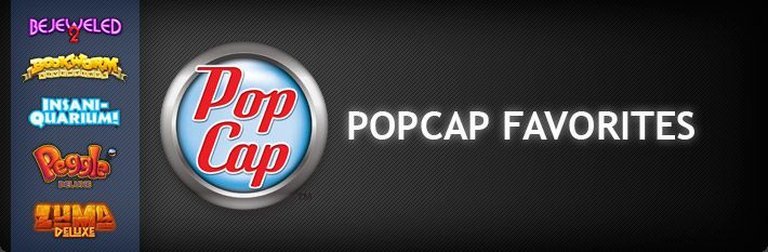
PopCap Favorites is a 2006 compilation video game for Windows that assembles a diverse collection of popular casual titles developed by PopCap Games. The bundle features well-known games such as Bejeweled 2: Deluxe, Bookworm Adventures, Insaniquarium! Deluxe, Peggle, and Zuma Deluxe, along with additional titles, offering a variety of puzzle, word, and arcade-style gameplay experiences in one convenient package.
PopCap Favorites: The Quintessential Compendium of Casual Gaming’s Golden Age
Introduction: A Time Capsule of Addictive Design
In the mid-2000s, the term “casual game” was undergoing a profound metamorphosis. No longer relegated to simplistic Solitaire clones or rudimentary Java applets, the genre was being redefined by a small Seattle studio that proved accessibility and depth were not mutually exclusive. PopCap Favorites, released on August 30, 2006 for Windows, is not a game in the traditional sense but a curated anthology—a digital museum exhibit capturing the precise moment PopCap Games ascended from a clever indie developer to the undisputed titan of the casual market. This compilation, featuring Bejeweled 2: Deluxe, Bookworm Adventures, Insaniquarium! Deluxe, Peggle, and Zuma Deluxe, serves as the ultimate testament to a pivotal design philosophy: that the most universally compelling experiences often arise from the most elegant, distilled mechanics. This review will argue that PopCap Favorites is historically significant not merely as a budget package, but as a cohesive manifesto of “PopCap polish,” a collection that collectively demonstrates the studio’s mastery of the “easy to learn, impossible to master” paradigm and its role in mainstreaming video games for a generation of players previously alienated by the industry’s complexity.
Development History & Context: From “Sexy Action Cool” to a Household Name
The story of PopCap Favorites cannot be separated from the origin myth of PopCap Games itself. The studio’s founding, as recounted by co-founders Jason Kapalka and Brian Fiete in the seminal 2010 Gamasutra interview, was born from a desire to create “core games” but pivoted triumphantly toward the casual space after the explosive, unexpected success of their first title. The company’s original, short-lived name, Sexy Action Cool, is a telling artifact of its early, unpolished aspirations—a name quickly discarded as Bejeweled (originally Diamond Mine) began attracting a broad, family-friendly audience.
The technological and business context of the era is crucial. The compilation’s release in 2006 sits at the confluence of several key trends:
1. The Dot-Com Bust Aftermath: The collapse of online advertising revenue, which Kapalka noted made Microsoft’s $1,500/month licensing fee for Bejeweled feel precarious, directly spurred the creation of the “Deluxe” downloadable model. As Fiete recalled, the idea to charge $20—suggested by Astraware’s Howard Tomlinson—was initially seen as “obscene” but became the cornerstone of PopCap’s profitability.
2. The Rise of the Digital Distribution: The compilation itself, sold as a Windows download, capitalized on nascent platforms like Steam (which had launched in 2003) and the growing comfort of consumers purchasing software directly online. It was a savvy move, bundling already-successful titles into a single, low-cost entry point.
3. The “Casual” Gold Rush: By 2006, the market PopCap helped define was exploding. The studio’s strategy, as described in the interview, was deliberately anti-“shotgun”: instead of publishing hundreds of games yearly, they focused on a smaller portfolio of highly polished, multiplatform titles. PopCap Favorites was the perfect expression of this strategy, repackaging their greatest hits for the PC audience.
4. Internal Evolution: The games in this compilation chart PopCap’s rapid maturation. Insaniquarium! Deluxe (2003) and Zuma Deluxe (2003) represent their earlier, arcade-y period. Bejeweled 2: Deluxe (2004) refined their flagship match-3 formula. Bookworm Adventures (2006) and Peggle (2007—note the compilation lists a 2007 release for a 2006 package, likely an early preview build or scheduling quirk) showcase their ambition to layer complex RPG and physics-based mechanics atop simple cores, a hallmark of their later “premium casual” era. The inclusion of Bookworm Adventures is particularly significant; as the Wikipedia entry details, it received a massive, $700,000 development budget—a staggering sum for a casual title at the time—and won “Downloadable Game of the Year” at the Interactive Achievement Awards, signaling that “casual” no longer meant “cheap.”
Narrative & Thematic Deep Dive: The Poetry of Simple Conflict
As a compilation, PopCap Favorites has no unified narrative. Its genius lies in the collective narrative DNA of its constituent parts, each exploring a fundamental, almost mythological, conflict through minimalist storytelling.
- Bejeweled 2: Deluxe presents a pure, abstract conflict: Order vs. Chaos. The player imposes geometric order on a grid of wild, colorful gems. Its “Journey” mode provides the faintest veneer of plot—a quest through mystical realms—but the narrative is the player’s own struggle against entropy, symbolized by the ever-rising “Devil” meter. The story is in the satisfying click of a cascade.
- Bookworm Adventures is the compilation’s sole true narrative game, and its structure reveals PopCap’s thematic ambition. The Wikipedia article meticulously details its RPG framework: Lex the Bookworm battles foes from Greek mythology (Medusa), One Thousand and One Nights, and Gothic fiction. The core narrative is a literal battle of wits, where vocabulary is weaponized. The theme is explicit: Knowledge is Power. The treasure items and progression system frame literacy as a heroic, leveling-up journey. Its removal from digital storefronts by EA in 2016, as noted, is a cultural loss, severing a key link to this unique genre-blending experiment.
- Insaniquarium! Deluxe tells a story of Nurturance vs. Consumption. The player is a god-like caretaker of a fish tank, feeding fish to make them grow, protecting them from outer-space predators, and ultimately evolving them into bizarre, money-generating creatures. The theme is playfulCreationism, a humorous inversion of typical predator-prey dynamics where the player’s role is to foster chaotic, profitable life.
- Peggle (included in what was likely a near-final state) is a modern fable of Determination vs. Adversity. Its 10 “Peggle Masters,” each with a distinct personality and special ability (embodied in the iconic “Peggle Theme” music), represent different approaches to the same basic challenge: clear all orange pegs. The narrative is implicit in the gameplay’s dramatic slow-motion ball drop and the ensuing cascade of success—a series of tiny, triumphant stories.
- Zuma Deluxe is pure, primal Chaos vs. Control. The player, as a frog, must prevent a.stream of colored balls from reaching a skull. The narrative is not in characters but in rhythm and tension; it’s a firefight against entropy, a test of pattern recognition and rapid response.
Collective Theme: Across this anthology, a clear PopCap thematic throughline emerges: The Triumph of Simple, Pure Systems Over Complex Threats. Whether it’s gem-swapping, word-forming, fish-feeding, ball-zapping, or peg-clearing, the player wins by understanding and manipulating a beautiful, self-contained set of rules. This is the anti-cutscene philosophy; the plot is the gameplay loop.
Gameplay Mechanics & Systems: The Anatomy of “Juice”
The compilation is a masterclass in comparative game design, revealing PopCap’s core tenets:
-
The “One Core Mechanic” Doctrine: Each game revolves around a single, brilliant mechanic: Match-3 (Bejeweled 2), Word Formation (Bookworm Adventures), Click-to-Feed (Insaniquarium!), Ball Physics (Peggle), and Chain-Shooting (Zuma). This focus allows for immense depth without overwhelming the player.
-
Progression as Discovery, Not Grind: Progression in these titles is rarely about stat increases. In Bookworm Adventures, Lex “levels up” by spelling words, directly tying character growth to the core skill. In Peggle, progression is unlocking new, whimsical “Peggle Masters” with unique powers, which changes the player’s strategic palette. Bejeweled 2‘s “Hypercube” and Zuma‘s power-ups are emergent rewards, not bought items.
-
“Juice” and Feedback: This is PopCap’s signature innovation. Every action is saturated with sensory feedback. The Wikipedia entry on Bookworm Adventures mentions gems with different effects; this is part of a larger system. The thwump of a gem in Bejeweled, the squelch of eating a bug in Insaniquarium, the dramatic zoom and chime in Peggle, the zap of a ball in Zuma—all are accompanied by visual particle effects, sound, and screen shake. As Fiete stated, the challenge was taking a “simple concept and execute it absolutely perfectly.” This “juice” makes the mechanical act of playing intrinsically rewarding.
-
Flawed Systems as Character: The compilation also preserves some dated quirks. Bookworm Adventures‘ Adventure mode, once completed, is permanently locked—a frustrating design now seen as archaic (the Wikipedia sequel entry notes this was fixed). The “Deluxe” versions, born from the pay-to-download model, sometimes include lengthy, unskippable intro logos (a relic of the commercial software era). These flaws are historical markers, reminders of the medium’s evolution.
World-Building, Art & Sound: Cohesive Whimsy
PopCap’s artistic identity is incredibly consistent, and Favorites showcases its evolution from cartoonish to charmingly detailed.
-
Visual Direction: The art style is best described as “hyper-friendly surrealism.” Insaniquarium‘s fish are grotesque yet cute; Peggle‘s unicorn-riding, lobster-wielding Peggle Masters are absurdly specific; Zuma‘s stone frog and tribal motifs hint at a lost world; Bookworm Adventures uses a clean, storybook aesthetic that makes lexical combat feel literary. This is not realistic; it is inviting. The colors are saturated, the outlines clear, the caricature exaggerated—perfect for lower-resolution displays of the mid-2000s and essential for readability during frantic gameplay.
-
Sound Design & Music: Sound is not atmospheric here; it is instructional and celebratory. The iconic Peggle theme (a frantic, oompah-infused fanfare) is the genre’s most famous leitmotf. The Zuma chant (“Zuma!”) is a rhythmic command. Bejeweled‘s cascades are a symphony of chimes. The audio design’s primary function is to provide immediate, unambiguous feedback for every player action, creating a closed sensory loop that heightens engagement. Voice acting, as in Bookworm Adventures (with Kapalka himself voicing Lex), is used sparingly but effectively for character.
-
Atmosphere Through Mechanics: The “world” is often the game board itself. The rising tension in Zuma as the ball chain nears the skull is created purely by speed and proximity. The “Great Library” of Bookworm Adventures is felt in the tactile arrangement of letter tiles. PopCap understood that atmosphere in casual games is best generated by systems, not scripted events.
Reception & Legacy: A Snapshot of a Changing Industry
Critically, the compilation itself was rarely reviewed as a standalone entity; its reception is the aggregated reception of its parts, which were already established hits.
-
At Launch (2006): Each title had already proven its mettle. Bejeweled 2 was a monster hit. Zuma and Insaniquarium were beloved arcade conversions. Bookworm Adventures was the critical darling, winning major awards and proving a “casual” game could have AAA-level production values and narrative ambition. Peggle would achieve its legendary status shortly after, largely through word-of-mouth and its inclusion in this very compilation. The bundle was a retail no-brainer, offering immense value and effectively serving as a “PopCap greatest hits” for the PC.
-
Evolving Reputation: Over time, PopCap Favorites has become a historical document. It represents the peak of PopCap’s pre-Plants vs. Zombies (2009) identity, before the studio’s full acquisition by EA in 2011. It captures the studio in its most creatively pure, format-defining phase. The later “Hits!” and “Greatest Hits” bundles expanded to consoles, but this first major Windows compilation is the purest distillation of their early 2000s output.
-
Influence on the Industry: The compilation’s existence proves several industry-shifting concepts:
- The “Deluxe” Model’s Dominance: The free web version / paid “Deluxe” version paradigm, born from Bejeweled’s success, became the standard casual business model for years.
- Cross-Platform Thinking: PopCap’s strategy, as Kapalka described, was to take hit games to every viable platform. This compilation was a PC-centric step in that journey, which would later see these titles on Xbox Live Arcade, PSN, mobile, and more.
- Quality as Brand Identity: By rigorously curating only their best, most polished titles, PopCap built a brand synonymous with reliability and fun. A “PopCap game” was a promise of a certain experience, a trust that this compilation leveraged fully.
- Genre Hybridization as Innovation: Bookworm Adventures was a watershed, proving that casual games could absorb RPG mechanics (health, treasure, progression) without losing accessibility. This opened the door for countless later hybrids.
Conclusion: The Definitive Verdict
PopCap Favorites is a 5-star compilation not because it innovates as a single package, but because it impeccably preserves the peak of a revolutionary design ethos. It is the Rosetta Stone for understanding the “casual revolution” of the 2000s—a period where games like these demonstrated that expansive audiences hungered for intelligent, polished, and deeply satisfying interactive experiences that did not require a manual, a controller with more than two buttons, or a 40-hour time commitment.
The compilation’s greatest strength is its curatorial confidence. It does not include filler; every game is a genre-defining classic in its own right. From the abstract perfection of Bejeweled 2 to the narrative ingenuity of Bookworm Adventures, from the frantic aquarium chaos of Insaniquarium! to the physics-based spectacle of Peggle and the rhythmic tension of Zuma, this collection represents the full, vibrant spectrum of PopCap’s early genius.
Its historical place is secure. It arrived at the perfect moment: when broadband was common enough for downloads, when the casual audience was identified but underserved, and when PopCap had exactly five masterpieces ready to define the market. For any historian of gaming, PopCap Favorites is essential. It is the sound of the casual genre coming of age, packaged in a single, joyfully clickable download. It remains, to this day, the perfect introduction to the golden age of the “irresistible game.”
Final Score: ★★★★★
An essential historical artifact and a timeless gateway to the zenith of casual game design.