
- Release Year: 2022
- Platforms: Nintendo Switch, Windows
- Publisher: Acute Owl Studio
- Developer: Acute Owl Studio
- Genre: Action, Simulation
- Perspective: Top-down
- Game Mode: Co-op, Single-player
- Gameplay: Arcade, Time management
- Setting: Fantasy
- Average Score: 96/100
Description
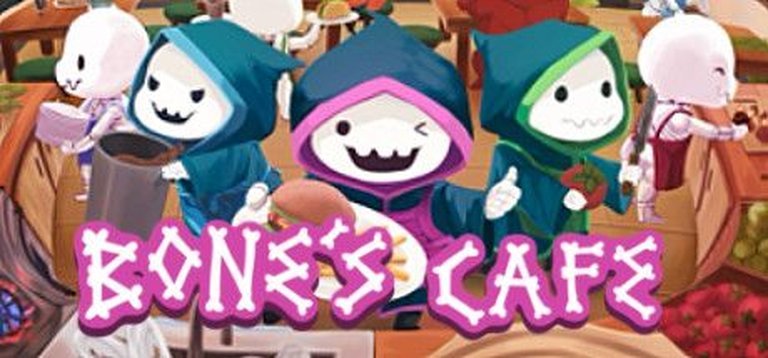
Bone’s Cafe is a fantasy-themed time management simulation game where players take on the role of Bones, a necromancer who operates a cafe. The premise blends cafe management with dark humor, requiring players to serve customers quickly while stealthily harvesting them for fresh ingredients and using their souls to raise an undead army for automation. With features like customizable cafe layouts, over 90 discoverable recipes, and cooperative multiplayer for 1-4 players in local or remote play, the game offers a unique arcade experience in a top-down 2D scrolling perspective.
Gameplay Videos
Where to Buy Bone’s Cafe
Bone’s Cafe Mods
Bone’s Cafe Guides & Walkthroughs
Bone’s Cafe Reviews & Reception
store.steampowered.com (96/100): “Bone’s Cafe is even more fun than killing customers usually is”
Bone’s Cafe: A Necromantic Masterpiece of Cozy Chaos and Culinary Carnage
Introduction: A Genre-Bending Delight
In the crowded landscape of the “cozy game” genre, where tending to farms, cafes, and shops has become a therapeutic digital balm for millions, Bone’s Cafe arrives not as a gentle breeze but as a bolt of lightning—dark, hilarious, and electrifyingly original. Released in October 2022 by the singularly focused Acute Owl Studio, this game masterfully dismantles the wholesome foundations of the restaurant management sim and rebuilds them with bones, sarcophagi, and a sardonic grin. It is a brilliant, subversive marriage of mundane simulation and macabre fantasy, wrapped in a deceptively cute pixel-art package. This review will argue that Bone’s Cafe is a landmark indie title of the early 2020s, a game that perfectly captures a post-pandemic appetite for stress-relieving chaos with a deeply personal, handcrafted feel. Its legacy lies in proving that a game can be simultaneously relaxing and profoundly unsettling, cooperative and strategically demanding, all while serving lukewarm lizard stew to an unsuspecting public.
Development History & Context: A Passion Project Forged in Unity
The Studio and Vision: Bone’s Cafe is the debut release from Acute Owl Studio, a micro-studio essentially comprised of three credited individuals: Sarah Richmond, Timothy Kidwell, and Cole Harmon. The developer’s own blog reveals the game’s origins as a “passion project and a test,” conceived not with commercial aspirations but as a creative playground. This lack of corporate pressure is palpable in the final product—a game brimming with quirky ideas, player-centric design choices, and a post-launch support cycle driven by community feedback rather than quarterly reports. The vision was clear from the outset: fuse the satisfying, incremental progression of a management sim with the irreverent, “evil” fantasy of being a necromancer, creating a dissonance that is the game’s core appeal.
Technological Constraints and Creative Flourish: Built in the accessible Unity engine, the game’s technical specs are famously minimalist (the Steam store lists “Potato” as both the minimum processor and graphics requirement). This constraint became a creative strength, enforcing a clean, readable 2D top-down visual style where gameplay clarity trumps graphical fidelity. The 500MB storage footprint is a testament to efficient asset management. The small team size meant every element—from the cheerful tune of the cafe bell to the squelchy sound of a customer being harvested—bore the unmistakable signature of its creators, primarily the multi-hyphenate Cole Harmon, who composed the soundtrack, designed sound effects, and provided voice acting. This all-in-one approach fostered a cohesive, if delightfully deranged, audiovisual identity.
The 2022 Gaming Landscape: Bone’s Cafe launched into a market saturated with cozy simulations (Stardew Valley clones, Animal Crossing heirs) and a rising tide of “dark” or “evil” management games like Overlord or Dungeons. It carved a unique niche by applying the peaceful, cafe-management template of games like Pixel Cafe or Sunny Cafe to a setting of literal, Operational cannibalism and soul-powered automation. Its Early Access launch in April 2022, followed by a polished 1.0 release in October, allowed the small studio to iteratively incorporate player feedback—evidenced by the extensive patch notes detailing balance changes, bug fixes for pathfinding, and community-requested features like the “Cafe Size Picker.”
Narrative & Thematic Deep Dive: The Philosophy of the Skull Ranking
The plot of Bone’s Cafe is skeletal on paper but rich in thematic subtext. Players assume the role of Bones, a necromancer who has apparently retired from world conquest to run a cafe. The “campaign” is a structured progression through increasing “Skull Rankings” (from 1 to 5 skulls), each rank unlocking larger cafe spaces and more complex recipes. This framing device is deliberately absurd. The narrative isn’t told through cutscenes but through the game’s very mechanics and UI: your “reputation” is a numerical value, your expansion is gated by a macabre metric, and your ultimate goal is to create the most efficient, profitable, and body-filled establishment possible.
Core Themes:
* The Commodification of Life and Death: This is the game’s beating, undead heart. Every customer is a dual entity: a source of revenue (paying for food) and a repository of “exotic ingredients” (flesh, blood, bones, souls). The act of “harvesting” them—a stealth-action mini-game where you must kill a customer in a back room without being seen—is the ultimate capitalist metaphor. Life itself is reduced to a resource node. The souls harvested fuel your undead workforce, creating a closed loop of consumption and production where the workers are literally made from the consumed.
* The Absurdity of Bureaucratic Evil: The game’s tone is a masterclass in juxtaposition. The UI is bright, friendly, and uses soft, round fonts. Achievement names like “Murderhobo” or “Serial Slaughter” are unlocked for killing 50 customers in a day. The “Mature Content Description” notes “Blood and implied cannibalism” with the same detached tone as a nutritional label. This isn’t edgy for shock’s sake; it’s a satire of the soul-crushing, repetitive nature of service industry work. Bones isn’t a villain; he’s a manager optimizing supply chains, and the supply chain is people.
* Cozy Horror and Dark Whimsy: The game’s setting is a “fantasy” realm, but one populated by cute animal-people (customers include bears, rabbit knights, and frog merchants) who willingly pay for a meal that may be their last. The atmosphere is more Tim Burton’s Corpse Bride than Diablo. The pixel art is colorful and expressive, making the acts of violence feel like a Punch and Judy show—cartoonish and consequence-free within the game’s diegesis. This creates a potent “cozy horror” vibe, where the player feels both at home and deeply complicit.
Gameplay Mechanics & Systems: The Symphony of Slaughter and Service
Bone’s Cafe is a real-time strategy/simulation game played from a top-down perspective. Its genius lies in how seamlessly it integrates four layered gameplay loops: Service, Harvesting, Automation, and Expansion.
1. The Service Loop (The Surface):
* Customers enter, sit at an open table, and peruse a customizable menu.
* The player (or players) must act as chef and/or server. As a chef, you stand at a station (chopping board, stove, fryer, mixer, etc.) and execute a recipe by pressing buttons in sequence. Recipes range from simple (coffee) to complex multi-station affairs (a full English breakfast).
* As a server, you pick up completed dishes from the kitchen pass and deliver them to tables.
* Innovation: The “Test Kitchen” allows you to experiment with any combination of ingredients (97+ recipes to discover) without consuming premium items, encouraging playful discovery. The “Menu Designer” lets you curate which dishes are available, forcing strategic specialization (e.g., a “Vegetarian” cafe that somehow still uses lizard meat?).
2. The Harvesting Loop (The Subtext):
* This is the game’s signature mechanic. After eating, some customers will go to the restroom. This is your cue.
* You must stealthily follow them, and in a separate “back room” screen, execute a quick-time-event style kill (axe, poison, spell) to acquire rare ingredients (e.g., “Tendon” from a wolf, “Soul” from a wizard) and, most importantly, their soul.
* Design Mastery: The risk/reward is perfect. Harvesting is time-consuming and risky—if caught by another customer, you get a reputational penalty. But the ingredients you gain are often essential for high-tier recipes or cafe upgrades, and souls are mandatory for the next loop.
3. The Automation Loop (The Power Spike):
* Souls are used at a “Summoning Circle” to create undead minions: Minions.
* Minions can be assigned one of several simple AI routines: Chef (repeats your last cooked recipe at a station), Server (delivers any dish to any customer), or Cleaner (washes dishes).
* System Depth: This is where the game transitions from frantic micro-management to satisfying macro-management. Assigning a minion to a repetitive station (like a Coffee Machine) frees you to handle complex multi-part dishes or conduct harvests. The number of minions you can summon is tied to your Skull Ranking, creating a fantastic progression curve where you systematically replace your own labor with undead labor. The patch notes show the developers constantly balancing summon limits and minion pathfinding, a clear sign of this system’s centrality and complexity.
4. The Expansion & Progression Loop (The Goal):
* Serving dishes earns “Reputation” (money) and “Skull Fragments.”
* Skull Fragments are used to increase your Skull Ranking, which unlocks larger cafe layouts (from a tiny 5×5 room to sprawling 15×15 complexes).
* Reputation is spent at the in-game shop on furniture (stations, tables, decorations), minion summoning, and cafe themes (Necromancer, Sci-fi, Nature).
* Innovative Structure: The “Cafe Designer” menu (a post-full-release addition) lets you freely choose any unlocked layout size at any time, removing the linearity and allowing for creative sandbox play after the campaign.
Flaws and Friction:
The game is not without its rough edges. Pathfinding for both customers and servers can occasionally be glitchy, a bug famously noted in patch notes (“Servers will no longer attempt to reach unreachable dishes”). The learning curve for recipe stations and efficient layout design is steep, especially in co-op where UI for assigning tasks can get cluttered. Some recipes are obscurely hidden, requiring specific, non-intuitive ingredient combinations. However, these are often framed as part of the game’s charm—the thrill of the discovery is part of the appeal, and the community has documented many secrets.
World-Building, Art & Sound: A Cute, Crooked Universe
Visual Direction & Atmosphere: The game’s world is its most immediate hook. Using a bright, saturated 2D pixel art style, it creates a fantasy town that feels both magical and mundane. The cafe interiors are customizable with themes: the default “Cute” theme has pastel walls and flower pots; the “Necromancer” theme adds skulls, candelabras, and dark tapestries. The dissonance is brilliant—you might be serving a pie to a smiling pig merchant while a skeleton chef chops onions in the background and a bloody corpse lies in a closet. The character sprites are wonderfully expressive, with customers showing boredom, joy, or anger via simple pixel animations. The UI is a standout, featuring a large, illustrated “recipe book” and clear, legible icons that make the complex systems approachable.
Sound Design as Narrative: Cole Harmon’s work is essential to the tone. The soundtrack is a collection of upbeat, melodic tunes that wouldn’t feel out of place in a standard cafe sim, creating a surreal layer of cognitive dissonance. The sound effects are where the wicked humor sings: the cheerful ding of the cafe doorbell, the satisfying slice of an axe, the guttural glug of a customer drinking a potion that will later poison them, the hollow rattle of a summoned skeleton’s bones. The voice acting is limited to grunts and exclamations, but their cartoony quality keeps the violence firmly in the realm of comedy. The masterful mix makes the act of harvesting feel mischievous rather than gruesome.
Reception & Legacy: From Niche Curiosity to Co-Op Staple
Critical and Commercial Reception: Bone’s Cafe arrived with little mainstream critic coverage (Metacritic shows “0 Critic Reviews” for PC), but it found its audience through streamers, YouTubers, and word-of-mouth in the cozy and simulation communities. Its Steam “Very Positive” rating (96% of 325+ reviews as of early 2026) is a testament to its success. Critic quotes pulled onto the store page—Rock Paper Shotgun‘s “even more fun than killing customers usually is” and PC Gamer‘s “profoundly concerning if you’re a member of the health department”—perfectly encapsulate the critical consensus: it’s a hilarious, well-designed game that is also deeply, hilariously wrong.
Player Reception and Community: The player reviews consistently praise:
* The Co-op Experience: The 1-4 player local/Remote Play co-op is repeatedly hailed as a highlight. Dividing tasks—one player harvesting, one managing menu, two cooking—creates a frantic, communicative, and hilarious shared experience.
* Addictive Progression: The Skull Ranking system and recipe discovery provide a compelling “just one more day” loop.
* Charming Chaos: The game’s willingness to be silly and dark is seen as a breath of fresh air in a genre often accused of saccharine sweetness.
* Developer Responsiveness: The patch logs show a studio deeply engaged with its community, fixing bugs, adding requested features (like the cafe renamer and minion skins), and localizing the game into seven languages including Japanese, French, and Dutch.
Influence and Place in History: Bone’s Cafe has not spawned countless imitators yet, but its influence is felt in the way it confidently merges disparate genres. It predicted and contributed to the “dark cozy” trend that followed. More importantly, it stands as a textbook example of successful indie development:
1. Scope-Conscious Design: A small team creating a deep, replayable experience within clear technical and resource limits.
2. Core Mechanic Dominance: One brilliant, resonant idea (harvesting customers) built out into a full systemic game.
3. Community as Partner: Using Early Access to refine balance and using patch notes as a dialogue with players.
4. Post-Launch Support: Continual updates, a successful port to the Nintendo Switch, and the announcement of a follow-up project (Grimshire, a “cozy farmsim with a dark undertone”) show a studio building a sustainable future from a singular, successful debut.
Its legacy is that of a cult classic—a game that may not have broken sales records but has broken the mold of its genre, embedding itself in the collective memory of players who value creativity, dark humor, and flawless cooperative design. It’s a game you don’t just play; you recommend, specifically for its bizarre and brilliant tonal alchemy.
Conclusion: A Definitive Verdict
Bone’s Cafe is an exceptional, essential game. It transcends its premise as a “cooking game but you’re a necromancer” to become a sharp, systemic critique of service-industry drudgery and a love letter to cooperative chaos. Its strengths are monumental: a perfect blend of shallow charm and deep strategy; a UI that teaches through play; a co-op mode that fosters genuine teamwork and laughter; and an artistic vision so consistent it feels authored by a single, deliciously warped mind. Its flaws are minor and largely patched, presented here only for completeness.
For historians, Bone’s Cafe represents a peak of the early-2020s indie scene: hyper-focused, community-driven, and unafraid of its own weirdness. For players, it is 8-10 hours of pure, unadulterated fun—whether solo, puzzling over the optimal kitchen layout, or with friends, cackling as you stealthily reduce a happy-go-lucky moose to ingredients. It is a game that understands the video game medium’s unique power to let us safely explore taboos, and it does so with such relentless, joyful energy that you can’t help but raise a glass (of suspiciously crimson liquid) to Acute Owl Studio.
Final Score: 9/10 — A Masterpiece of Macabre Management.