
- Release Year: 2016
- Platforms: Windows
- Publisher: Dagestan Technology
- Developer: Hipix Studio
- Genre: Action
- Perspective: Side view
- Gameplay: Platform, Shooter
- Setting: Futuristic, Sci-fi
- Average Score: 15/100
Description
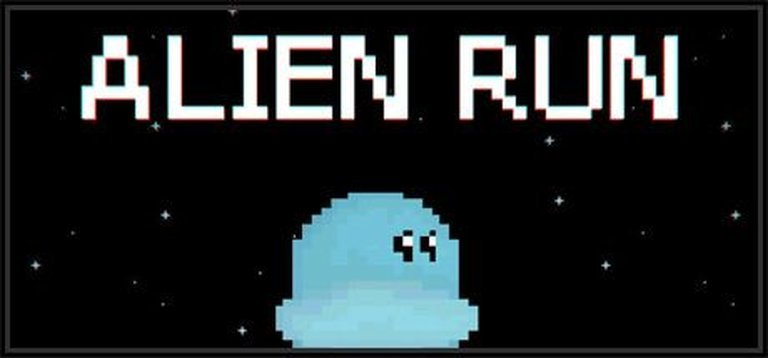
Alien Run is a 2D side-scrolling platform shooter set in a sci-fi universe, where players engage in fast-paced action by navigating futuristic environments, jumping and shooting to overcome alien threats in a direct-control gameplay experience.
Alien Run Reviews & Reception
metacritic.com (0/100): this game is broken.
metacritic.com (30/100): Тупо на 2 минуты. Все. Больше в игре ничего нету.
metacritic.com (0/100): this game is broken.
metacritic.com (30/100): Тупо на 2 минуты. Все. Больше в игре ничего нету.
Alien Run: A Forgotten Footnote in a Storied Franchise
Introduction: A Runner in the Shadows of Greatness
In the sprawling, often tumultuous history of Alien video games, there exists a vast chasm between the meticulously crafted atmospheric horror of Alien: Isolation and the messy, ambitious failures like Aliens: Colonial Marines. Nestled in the deepest, most obscure recesses of this spectrum lies Alien Run (2016), a game so structurally and conceptually insubstantial that it barely registers as a blip on the franchise’s radar. Developed by the shadowy Hipix Studio and published by Dagestan Technology, this Windows exclusive is not a survival horror epic, a tense first-person shooter, or even a competent reinterpretation of the Alien mythos. It is, by all accounts and available evidence, a profoundly generic 2D side-scrolling runner that cynically leverages a legendary license for minimal viable product. This review will argue that Alien Run is not merely a bad game, but a fascinating case study in licensed game卉丁—a title that represents the nadir of asset-flip, low-budget development, where the mere presence of the word “Alien” in the title is the primary, and nearly only, point of interest. Its legacy is one of immediate obscurity and玩家遗忘, a stark counterpoint to the thoughtful, reverent works that have defined the franchise’s digital legacy.
Development History & Context: The Bottom of the Barrel
The origins of Alien Run are shrouded in the same murkiness that defines much of its quality. The developer, Hipix Studio, leaves virtually no digital footprint. A cursory search reveals no prior notable titles, no developer interviews, and no public-facing presence beyond the game’s store pages. The publisher, Dagestan Technology, is similarly enigmatic, with its website (as listed on Rawg) suggesting a small-scale operation likely based in Russia, focusing on low-cost PC titles. This context is crucial: Alien Run emerged not from a studio with a pedigree in horror or action, but from what appears to be a contract workshop operating at the absolute periphery of the industry.
The game’s release in June 2016 places it in a specific technological and market landscape. The Steam Greenlight era was winding down, but the floodgates for indie “asset store” games were wide open. The “runner” genre—popularized by Temple Run and Subway Surfers—was experiencing a saturation point on mobile and was being clumsily translated to PC with simplistic mechanics. For a studio like Hipix, the path of least resistance was clear: license a recognizable sci-fi IP (the Alien name, though its connection to the franchise is purely nominal), purchase or cobble together basic 2D platformer assets, implement a three-lane runner control scheme, and release it at a budget price point. There is no evidence of a creative vision, a desire to interpret the Alien lore, or even a competent technical execution. Instead, Alien Run was almost certainly a product of economic opportunism—a quick, cheaply made game intended to capitalize on brand recognition before the market’s attention shifted elsewhere. It stands in diametric opposition to the four-year, 100-person, passion-driven development of Alien: Isolation, illustrating the vast gulf between a triple-A licensed work and a disposable piece of software.
Narrative & Thematic Deep Dive: A Story in Name Only
The “narrative” of Alien Run, as delivered in its official Steam store description, is a skeletal framework that would make the writers of the worst Alien comic books blush with shame. “In a faraway galaxy, an evil creature of alien origin has built energy-stealing mechanical machines on six planets. Unless all of those machines are destroyed, the planets will die and the evil plans of an unknown villain will be brought to life. The main character – a little alien named Lou decides to save the planets and stop the villain.”
This is not a story; it is a Mad Libs template. There is no exposition, no character motivation beyond a generic “save the planets,” and no connection to the Alien universe’s established lore—no Weyland-Yutani, no Xenomorphs, no Ripley, no sense of cosmic horror or corporate dread. The protagonist, “Lou,” is an indistinct, blue, cute-ish alien sprite that bears no resemblance to H.R. Giger’s biomechanical nightmare. The villain is an “evil creature of alien origin,” a phrase so vague it could apply to any number of generic sci-fi antagonists. The themes are equally barren. There is no exploration of humanity’s fragility against the cosmos, no commentary on corporate exploitation, no tension between synthetic and organic life. The game’s world is a series of interchangeable, brightly colored planets with backgrounds that imply sci-fi but say nothing meaningful. The narrative exists solely as a flimsy pretext for the gameplay loop, a mandatory checkbox for a game with a license. It is the literary equivalent of a placeholder text block, utterly forgettable and devoid of the thematic depth that has made the Alien franchise endure for over four decades.
Gameplay Mechanics & Systems: A Buggy, Repetitive Chore
Mechanically, Alien Run is a standard-issue endless runner with athree-lane system, as described in its store blurb: “Jump, run, crouch, and move between three layers to stay up!” However, player testimonials from Steam and Metacritic paint a picture of a deeply flawed implementation. The core loop is simple: control Lou as he auto-runs to the right, switching between three horizontal lanes to avoid obstacles (static hazards and enemies described as “bad mushrooms”), while presumably shooting or dodging towards some goal. But this simplicity is its downfall.
The most damning criticism is systemic. User “DreamOfHero” on Metacritic details a catastrophic progression bug: after defeating the boss on level 3.3 of the planet “Bestin,” the game locks that planet and forces the player to replay level 2.3 of another planet, “Kayloc.” Upon completing that, the game then forces a full replay of all levels on Bestin, creating an inescapable loop. This is not a minor glitch; it is a game-breaking bug that renders a significant portion of the content inaccessible, fundamentally breaking the core progression system. It speaks to a lack of any meaningful quality assurance.
Beyond the bugs, the fundamental gameplay is criticized as “damn repetitive” and “tiresomely boring” (david.artrex). The controls are immutably poorly configured, with keys for movement (W/S) and actions (Space for jump, Right Click for crouch) that are unintuitive and cannot be remapped—a cardinal sin for PC gaming. The visual clarity is also attacked; during fast-paced sections with flying obstacles, it is “sometimes difficult to identify which of the Tracks they are currently racing towards us,” leading to unfair “Game Over” instances based on poor readability rather than player skill. The game offers no meaningful progression, no power-ups that change gameplay, and no stakes beyond three lives. There is no crafting, no character upgrade, no strategic depth. It is a hollow mechanical shell, a testament to the idea that simply having “jumping” and “shooting” in a licensed game does not make it compelling.
World-Building, Art & Sound: Generic and Uninspired
If the narrative is barren, the presentation is equally generic. User reviews consistently describe the graphics as “grotto poor” (FreshIceTea), with a resolution effectively at 480p and a “pixelated colorful, idiosyncratically funny trashy art style” (david.artrex). This is not the lo-fi, practical, retro-futurism of Alien: Isolation—a style painstakingly recreated from 1970s concept art to evoke the original film. Instead, it is the cheap, cheerful, and completely disposable aesthetic of a browser game. The environments, described as “planets,” are flat, repetitive backdrops with no architectural or atmospheric detail that hints at the grim, industrial, or biomechanical hellscapes associated with the franchise. There is no sense of isolation, no oppressive atmosphere, no haunting sound design. The music is called “annoyingly flat” (david.artrex), serving only as a repetitive backdrop rather than an integral tension-building component.
This artistic failure is perhaps the most profound betrayal of the license. The Alien universe is defined by its iconic aesthetic: the dark, rain-slicked corridors of the Nostromo, the flickering fluorescent lights of the Sulaco, the grotesque, organic-hybrid structures of the derelict spacecraft. Alien Run presents none of this. Its world is bright, cartoonish, and safe—the absolute antithesis of the恐惧 and dread the franchise is built upon. It doesn’t just fail to capture the spirit of Alien; it actively works against it, creating a universe where Xenomorphs might feel out of place because the environment itself feels like a children’s playground.
Reception & Legacy: A Null Point in the Franchise Timeline
Alien Run‘s reception is a study in utter obscurity and disdain. It has no critic reviews on Metacritic or any major outlet. Its “Moby Score” on MobyGames is listed as “n/a,” indicative of a complete critical vacuum. The only available judgments are from a handful of user reviews, and they are universally scathing. On Metacritic, its user score is a catastrophic 0.8 out of 10, based on five reviews, all negative. The language is blunt: “This game is broken.” “Тупо на 2 минуты. Все. Больше в игре ничего нету.” (“Just 2 minutes. That’s it. There’s nothing more in the game.”). The consensus is that it is a broken, shallow, not-worth-the-money experience, even at a heavily discounted price.
Its commercial performance is unknown, but given its digital-only, budget-priced release on a relatively obscure storefront (Steam) and total lack of marketing, it almost certainly sold negligible copies. It has no sequels, no notable community, no speedrunning scene, and no cultural footprint. In the vast chronology of Alien games—from the pioneering Pac-Man-clone of 1982 to the masterpiece of Isolation—Alien Run is a black hole of relevance. Its legacy is purely as a cautionary tale: a reminder that even a storied franchise like Alien is not immune to being exploited for quick, low-quality cash grabs. It is the video game equivalent of a direct-to-video monster movie, existing only to fill a slot on a digital storefront and be forgotten by the next season. Unlike Aliens: Colonial Marines, which is infamous for its catastrophic failure and is endlessly dissected as a lesson in development hell, Alien Run is not even interesting enough to be infamous. It is simply there, and then it is gone.
Conclusion: Verdict and Historical Position
To arrive at a verdict on Alien Run is to state the obvious: it is a terrible game. But its true significance lies not in its poor quality, which is legion in the indie space, but in its contextual failure. As a piece of the Alien franchise’s 40+ year gaming history, it is an absolute zero. It contributes nothing to the lore, advances no gameplay innovations, showcases no artistic vision, and leaves no cultural impression. It is the video game equivalent of background noise.
When placed next to the deliberate, atmospheric horror of Alien: Isolation—a game that spent four years reverse-engineering the film’s aesthetic, built an unprecedented AI for its Xenomorph, and secured the original cast for DLC—Alien Run becomes a perfect negative benchmark. It demonstrates what happens when a license is treated not as a creative challenge or a sacred text to be honored, but as a mere sticker to be slapped onto a generic, hastily assembled product. Its place in video game history is as a footnote on the lowest possible rung of licensed adaptations. It is not a “so bad it’s good” curiosity; it is simply bad, and, worse, irrelevant. For scholars of the Alien franchise, Alien Run is useful only as proof of the market’s lowest common denominator. For players, it is a title to be avoided, a ghost in the machine of a franchise that otherwise consistently aims for, and sometimes achieves, greatness. In the end, Alien Run doesn’t run towards the legacy of its namesake—it runs in the opposite direction, into a void of its own making.