
- Release Year: 2023
- Platforms: Windows
- Publisher: indiegames3000
- Developer: indiegames3000
- Genre: Action Simulation
- Perspective: 3rd-person
- Gameplay: Business simulation, Managerial, Time management
Description
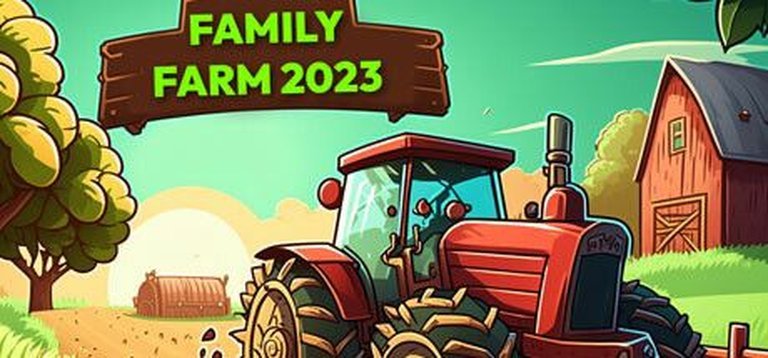
Family Farm 2023 is a simulation and management game where players own and operate an entire island farm, engaging in activities like growing over 22 crops, raising animals such as chickens and cows, operating factories including bakeries and milk plants, and customizing with decorations. Set in a vibrant, picturesque environment, it combines agricultural simulation with time management and business strategy, allowing players to creatively build and expand their dream farm through creative building and resource management.
Where to Buy Family Farm 2023
PC
Family Farm 2023: A Case Study in Obscurity and Market Saturation
In the vast, often-overlooked corners of digital storefronts lies Family Farm 2023, a title that embodies a specific, low-budget niche of the simulation genre. Released into a 2023 landscape already saturated with established farm sim giants and yearly iterations of management behemoths, this game from the enigmatic studio indiegames3000 represents a curious artifact of market trends, technical minimalism, and the enduring appeal of a tried-and-true concept executed with vanishingly little fanfare. This review argues that Family Farm 2023 is not a game to be judged by traditional critical standards of innovation or polish, but rather as a symptom of a hyper-casual, mobile-first design philosophy awkwardly transposed to the PC platform, ultimately serving as a footnote in the history of a genre it does little to advance.
Development History & Context: The “indiegames3000” Enigma
The story of Family Farm 2023 begins, and largely ends, with its developer and publisher: indiegames3000. This entity is a classic example of a prolific but anonymous “churn-and-burn” studio operating on the fringes of the indie scene. With a MobyGames profile and a Steam page bearing the same name, there is no public-facing “about” section, no developer blog, and no clear history of other notable titles. Their other listed release on MobyGames is a similarly obscure Forklift Simulator 2023, suggesting a business model focused on quickly producing thematic “simulator” or “manager” titles with “2023” appended to capitalize on search algorithms and seasonal trends.
The game was built in Unity, the industry’s most accessible engine, which aligns perfectly with a low-resource, cross-platform development strategy. The technological constraints are evident in the specifications: a minimum requirement of a Pentium processor, 1 GB of RAM, and Intel HD Graphics speaks to a game designed for the lowest common denominator of PC hardware, or more accurately, for systems that could also run a modern web browser—a telltale sign of its origins. This aligns it with the Facebook/social game Family Farm (developed by Century Games, a separate, major studio with a 50-million-user title), suggesting Family Farm 2023 may be an unauthorized, low-effort clone or a desperate attempt to ride the coattails of that established brand’s name recognition on a new platform. The “2023” in the title is pure branding, a timestamp meant to convey relevance in a landscape where yearly sports and management titles dominate.
The 2023 gaming landscape for farming and life sims was dominated by Stardew Valley (still a titan seven years post-launch), Story of Seasons: A Wonderful Life, Fae Farm, and the ever-present Farm Together 2. Against these polished, feature-rich competitors, Family Farm 2023 entered as a stark, budget-priced ($1.99 at launch, later discounted to $0.55) minimalist proposition, seemingly targeting an audience seeking an ultra-casual, low-commitment farming itch to scratch.
Narrative & Thematic Deep Dive: The Absence of Story
To analyze the narrative of Family Farm 2023 is to analyze a void. Unlike its narrative-rich cousins like Stardew Valley or My Time at Portia, this game possesses no discernible plot, characters, or dialogue. The Steam store description frames the premise in purely functional terms: “you will become a true farmer and own an entire island, where you are the boss.” This is a pure ludonarrative premise—the narrative is the activity itself. The theme is unapologetically unbridled agricultural capitalism and creative autonomy.
The absence of NPCs with quests, relationships to build, or personal stories to uncover is its most defining—and damning—thematic choice. There is no “heart” to the farm, no community to integrate into. The “Family” in the title appears to be a purely nominal descriptor for the genre, not an actual gameplay element. The thematic depth is limited to the implied cycle of planting, growing, harvesting, and selling/processing, a sterile loop of production and consumption. Where other sims use farming as a metaphor for community, healing, or legacy, Family Farm 2023 presents farming purely as a managerial time-management exercise. It is the thematic equivalent of an empty spreadsheet with crop icons—functional, but devoid of the warmth, struggle, or storytelling that gives the genre its soul and staying power.
Gameplay Mechanics & Systems: A Barebones Loop
The core gameplay loop of Family Farm 2023 is as simple as its description:
1. Select a plot of land on your island.
2. Choose a crop from a list of 22 (rice, corn, potatoes, sugarcane, roses, lavender, strawberries, etc.).
3. Wait for a real-time or accelerated growth cycle.
4. Harvest the crop.
5. Either sell it directly or transport it to one of several factories (bakery, barbecue oven, milk factory) to combine into higher-value products.
6. Use profits to buy more land, plant more crops, acquire animals (chickens, hens, kobe cows, Dutch cows, boars), or purchase purely decorative items (bikes, motorbikes, Ferris wheels, lamps).
Core Deconstruction:
* Managerial/Business Simulation: This is the primary lens. There is no physical avatar to move; the player is an omnipresent manager clicking on menu options. The “3rd-person (Other), Diagonal-down” perspective listed on MobyGames is likely a static, fixed isometric or top-down view of the island grid, not a camera following a character. This reinforces the feeling of managing a schematic, not inhabiting a world.
* Time Management: Growth cycles are the primary timer. The challenge is purely in optimizing the spatial layout of fields and factory chains to minimize idle time, a shallow variant of the planning puzzles found in deeper management sims.
* Character Progression: There is no skill tree, no experience points, and no character beyond the player’s own efficiency. “Progression” is purely economic and territorial: unlock more fields, buy more animals, and place more decorations.
* User Interface (UI): The “Point and select” interface is straightforward but likely clunky. Given the low system requirements and fixed visual style, the UI is almost certainly a non-immersive, menu-heavy overlay, lacking the integrated, diegetic feel of top-tier sims.
* Innovation & Flaws: There is no discernible innovation. The flaw is the extreme shallowness of its systems. The “endless ways to combine ingredients” promised in the store blurb is almost certainly a handful of linear recipes (e.g., Wheat -> Flour -> Bread). The animal husbandry is likely a simple “feed and wait for product” mechanic with no breeding, genetics, or care mechanics. The decorative items have no functional impact, serving only as a checklist for completionist players. The entire game feels like a proof-of-concept demo stretched into a full release, lacking the content depth, systemic interconnectivity, or long-term goals that define compelling management sims.
World-Building, Art & Sound: Functional Minimalism
The world of Family Farm 2023 is an “island,” but based on the description and technical specs, it is almost certainly a small, flat, grid-based map. There is no hint of terrain variation, weather systems, seasons with mechanical impact (beyond crop selection), or a sense of place. The atmosphere is sterile and quiet.
- Visual Direction: The “Fixed / flip-screen” visual style is a major red flag. This suggests either a static, non-scrolling screen (like a single-screen arcade game) or a screen that “flips” between different fixed camera angles of island zones. This is archaic for a 2023 PC sim and severely limits the sense of a cohesive world. The 3D models for crops, animals, and buildings are likely very simple, low-poly Unity asset store quality. The color palette is probably bright and cheerful (as per the “Family Friendly” tag), but without artistic cohesion or detail.
- Sound Design: No information is available, but given the budget and scope, one can expect a tiny, repetitive set of sound effects for actions (planting, harvesting, animal noises) and perhaps a single, forgettable loop of acoustic or “folky” background music. It is a functional audio backdrop, not an immersive soundscape.
- Contribution to Experience: These elements combine to create an experience that feels disconnected and transactional. The world is not a place to live in; it is a worksheet to be filled. The minimal art and sound do nothing to foster emotional attachment or a sense of escapism, which are core to the appeal of successful farm sims. The experience is one of logistical clicking, not pastoral tranquility.
Reception & Legacy: A Whisper in the Void
Family Farm 2023 exists almost entirely outside of critical and commercial discourse. There are zero critic reviews aggregated on Metacritic. On Steam, it has a mere 4 user reviews, all of which are negative. The SteamDB-style site “games-popularity.com” confirms a 0.00% positive review rate from these 4 reviews. Common complaints in such low-text reviews for this type of game typically cite: extreme lack of content, repetitive gameplay, poor optimization despite low requirements, misleading descriptions, and a feeling of being ripped off even at a $0.55 price point.
Its “legacy” is currently non-existent. It has not influenced any other titles. It is not discussed in communities. It is not modded (despite a “Moddable” tag being user-applied on Steam, which is likely speculative or incorrect given the game’s simplicity). Its only historical significance is as a data point.
1. It exemplifies the “2023” naming trend applied to non-annualized genres in a bid for search visibility.
2. It demonstrates the risk of transposing mobile/social game logic (short sessions, simple loops, aggressive monetization in originals) to a PC platform where users expect more depth and value, even at low prices.
3. It stands in stark contrast to the “cozy game” boom it was likely trying to cash in on, as noted in Kotaku’s lists. While Kotaku mentioned it alongside titles like Stardew Valley and Rune Factory, the association is purely nominal and highlights the vast gulf in quality and player engagement.
Conclusion: A Timeless Lesson in Market Dynamics
Family Farm 2023 is not a “bad game” in the sense of being broken or offensive; it is an irrelevant game. It is a hollow, functional shell that captures the absolute minimum viable product of a farming simulator—plant, grow, harvest, sell—and presents it with no additional systems, no narrative, no artistic vision, and no soul. Its development by the shadowy indiegames3000 suggests a business, not an art, model. Its reception—4 negative Steam reviews and complete critical silence—confirms its failure to connect with any audience.
Its place in video game history is as a cautionary footnote. It illustrates the perils of the low-barrier-to-entry market: the ease with which generic, low-effort products can be created and published, the dangers of relying on SEO-focused naming over brand integrity, and the ultimate inability of such products to compete in a genre where player passion and depth of systems are the primary currencies. It is the antithesis of a cult classic like Stardew Valley; where ConcernedApe poured four years of love into a single world, indiegames3000 appears to have churned out a disposable product.
In the grand archive of gaming, Family Farm 2023 will not be preserved for its gameplay, its story, or its artistry. It will only be remembered, if at all, by market analysts and historians studying the sheer volume of niche, low-impact titles that flood digital stores—the silent, automated background radiation of the modern game industry. It is, in every meaningful sense, a non-entity, and its most lasting contribution may be as a perfect example of how not to make a farming sim in an era that has, for better or worse, raised players’ expectations for the genre’s potential.