
- Release Year: 2013
- Platforms: Macintosh, Windows
- Publisher: Excalibur Publishing Limited, Merge Games Ltd.
- Developer: CyberPhobX Software Development Ltd
- Genre: Simulation
- Perspective: Isometric
- Game Mode: Single-player
- Gameplay: Business simulation, Managerial
- Average Score: 60/100
Description
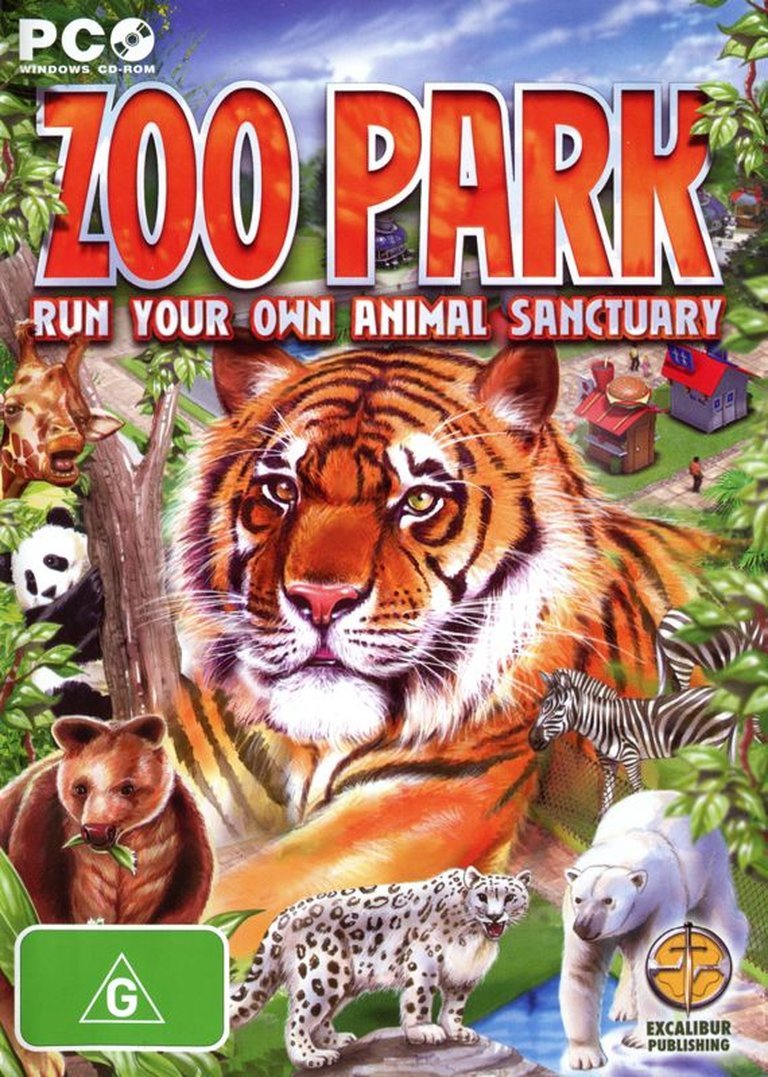
Zoo Park is a managerial simulation game where players design, build, and operate their own zoo from an empty plot of land. Tasked with constructing enclosures and facilities, players adopt and care for over 30 animal species, each with unique environmental needs, while ensuring both animal welfare and guest satisfaction. The game features an isometric visual style and includes elements like animal compatibility, health management, and the rehabilitation of animals for release into the wild, challenging players to balance conservation, entertainment, and business strategy.
Where to Buy Zoo Park
PC
Zoo Park Reviews & Reception
metacritic.com (60/100): Zoo Park presents a unique way to play a tycoon game, however, it isn’t for everyone.
reddit.com : This game is obviously in my top 5 Kairosoft game, but there are still some flaws with the game.
gamercast.net : Zoo Park focuses on rehabilitating animals back into the wild.
Zoo Park: A Sanctuary Sim’s Quiet Defiance – An Archival Review
Introduction: The Other Zoo Tycoon
In the crowded annals of the zoo and wildlife park simulation genre, dominated by behemoths like Zoo Tycoon and, later, Planet Zoo, there exists a quiet, defiant alternate design philosophy. It is a philosophy that asks: what if the goal wasn’t profit, fame, or relentless expansion, but rehabilitation? This is the core, almost radical, premise of Zoo Park (2013), a game developed by the Hungarian studio CyberPhobX Software Development Ltd. and published by Excalibur Publishing and Merge Games. Released on June 13, 2013, for Windows and Macintosh, this isometric simulation carved a niche so specific it was nearly invisible to the mainstream. It is not a game about building a spectacle to impress millions; it is a game aboutbuilding a sanctuary to heal a few. This review will argue that Zoo Park, despite its critical and commercial obscurity, represents a fascinating, if flawed, divergence in the management sim canon—a title that prioritizing animal welfare as a primary metric of success over guest happiness and financial triumph, creating an experience that is less “tycoon” and more “caretaker.”
Development History & Context: A Studio of Specialists
Zoo Park emerges from the pragmatic, post-indie landscape of early 2010s Eastern European game development. CyberPhobX was not a household name but a studio with a clear portfolio: they specialized in niche management and simulation titles. A glance at the MobyGames credits reveals a tight-knit team of 13 individuals, many of whom collaborated on subsequent, similarly obscure sims like Rescue Simulator 2014, Farming World, and Post Master. This indicates a studio operating with a specific skillset and engine familiarity, likely targeting value-conscious publishers like Excalibur and a specific, underserved market segment.
The technological context is that of the mid-2010s PC. The game uses the Asphyre Framework, credited to Yuriy Kotsarenko, a middleware popular for 2D/2.5D isometric games at the time. This choice speaks to a development culture of resourcefulness. The isometric, pre-rendered 3D aesthetic (with graphics credited to Balázs Oszvald, Gábor Csipke, Gyula Pozsgay, Anikó Kránitz, and Csaba Kanál) was cost-effective and allowed for clear readability of gameplay systems—a critical factor in management sims. The sound design, by BB Music Factory, is functional and unobtrusive, fitting the low-key, zen-like atmosphere the game often cultivates.
The gaming landscape of 2013 was still feeling the aftershocks of the 2008 economic crisis, which had fueled a boom in affordable, digitally distributed games. Zoo Park fit this model perfectly: a budget-priced (initially £24.99 in the UK, later heavily discounted on Steam for $1.69-$4.99) simulation with a clear, focused pitch. It entered a space where Zoo Tycoon (2013) was a major, graphics-driven release backed by Microsoft, and Wildlife Park 2 had established a more hardcore, European niche. Zoo Park’s positioning was not as a competitor to those, but as a simpler, more welfare-oriented alternative.
Narrative & Thematic Deep Dive: The Unspoken Story of Rehabilitation
Zoo Park possesses a narrative structure so minimalist it resides almost entirely in the game’s implicit themes and mechanical imperatives rather than a written plot or characters. The “story” is the player’s own chronicle of transforming a barren plot of land into a functioning sanctuary. The only named narrative guide is “Uncle Joe,” whose brief tutorial frames the endeavor not as a business venture but as a conservation project.
The core thematic conflict is established immediately through the game’s central, unique mechanic: animal rehabilitation and release. While Zoo Tycoon might allow breeding for the sake of having cute babies, Zoo Park frames reproduction as a step toward a higher goal: eventually, a healthy, happy pair of animals can be “rehabilitated” and released back into the wild. This is the game’s ultimate victory condition—not a five-star rating or a million dollars, but a successful release. This imbues every action with moral weight. Feeding a lion, cleaning its enclosure, and raising its “happiness” (or “friendliness,” in some descriptions) is not merely a gameplay loop to avoid a mood penalty; it is ethical labor with a tangible, positive outcome. The animal’s lifespan is finite—they can get sick, lonely, and die—mirroring the real-world stakes of conservation work.
This creates a profound gameplay/story segregation from its genre brethren. Guests are a means to an end—their “popularity points” fund research and upkeep. Their complaints about gift shops or restrooms are nuisances to be managed so you can continue your primary work. The tension arises from this duality: you must balance the功利主义 (utilitarianism) of guest satisfaction to generate resources with the deontological (duty-based) care for the animals themselves. The game’s quiet thesis is that true success in wildlife management is measured in healed animals sent back to nature, not in ticket sales. It is a narrative about stewardship over ownership, a perspective almost unique in the genre.
Gameplay Mechanics & Systems: The Caretaker’s Loop
Deconstructing the core gameplay reveals a system elegantly designed around its central theme.
- Core Loop & Progression: The loop is: Build/Upgrade Enclosure -> Assign Animals -> Maintain Needs (Food, Cleanliness, Companionship) -> Generate Popularity from Guests -> Use Popularity to Research New Animal species, Facilities, or Sanctuary Expansions -> Repeat. Progression is not linear but branching and research-driven. To house kangaroos, you must build an Australian Animal Research Centre and complete its research tree. This removes the typical “unlock tier 3 animals at level 10” structure, replacing it with a knowledge-based system. Sanctuary expansion (increasing the fenced area) is tied to this research progress, aligning physical growth with conservation expertise.
- Animal Systems: This is the game’s heart. Each of the 30+ animals has specific habitat requirements (terrain types, foliage, water features, climbing structures). Animals have mood/happiness meters influenced by enclosure quality, cleanliness, food, and social needs (some are solitary, some need companionship). Crucially, certain large predators (bears, crocodiles) start with a “danger” stat that must be lowered through care and positive interaction before they become “friendly.” This directly ties management skill to animal welfare and public safety. The breeding system allows for population management, with offspring that can be donated to other sanctuaries.
- Guest & Economic Systems: Guests generate “popularity points” (the currency) by visiting exhibits and using amenities. They have basic needs (food, drink, restrooms, shopping). Critically, there is no pricing control—no ticket price sliders, no vendor profit margins. This is a deliberate design choice removing micromanagement capitalism to focus player attention on operational care. Expenses are fixed and deducted automatically from your popularity point balance. Financial failure means you can’t afford food or research, not that you bankrupted yourself with a bad loan.
- Innovations & Flaws: The rehabilitation release mechanic is the standout innovation, giving long-term goals profound meaning. The real-time animal lifespans and aging add poignancy. However, the system has glaring flaws. The removal of fences once an animal is “tamed” or friendly (as noted in user reviews) is a major gameplay/thematic disconnect. It makes sense for a petting zoo, not a sanctuary where dangerous animals, even if friendly, require secure containment for public safety and their own well-being. The UI, while straightforward, is described as reliant on sometimes-perplexing iconography, and the lack of terrain deformation (you cannot create rivers or custom snowy areas beyond using specific “snowy tree” assets) severely limits creative landscaping, a key joy in other sims. The game also notably lacks certain popular animals (hippopotamus, standard turtles), a limitation felt by players.
World-Building, Art & Sound: A Functional, Unassuming Canvas
The world of Zoo Park is defined by its pragmatic functionality over artistic grandeur.
- Visual Direction & Atmosphere: The isometric projection provides a clear, tactical view of your sanctuary. The 3D models for animals and buildings are simple, low-poly, and functional. The atmosphere is one of quiet, manageable domesticity rather than wild, untamed spectacle. There is no day/night cycle mentioned in sources, and the environment is static. Branching paths and guest movement follow simple “all in a row” patterns. The visual storytelling is in the progression: your sanctuary starts as a grid of empty grass and dirt paths, slowly filling with distinct biome-themed sections (African savanna, Australian outback, frozen tundra) as you research them. The lack of advanced graphical fidelity is a double-edged sword: it ensures smooth performance on low-end hardware but also makes animals occasionally look “verveeld” (bored, as the Dutch critic noted) due to simple animations and repetitive behaviors.
- Sound Design: The music and sound effects by BB Music Factory are serviceable and unobtrusive, likely consisting of MIDI-style tracks and basic environmental sounds. There is no indication of a dynamic soundtrack that reacts to zoo success or disaster. The soundscape supports the meditative, task-oriented gameplay without driving emotion.
- Contribution to Experience: The art and sound do not aim for awe; they aim for clarity and calm. They facilitate the player’s ability to read the simulation at a glance. The visual simplicity means the player’s mental energy is spent on interpreting animal needs and guest flow, not on being overwhelmed by graphical detail. This creates a unique, almost accountant-botanist mood, distinct from the awe of Planet Zoo or the chaotic fun of RollerCoaster Tycoon.
Reception & Legacy: The Critically Ignored, Player-Divided Sanctuary
Zoo Park’s reception is a study in muted, niche engagement.
- Critical Reception: At launch, it was virtually ignored by the mainstream press. The one recorded critic review on MobyGames is from Gamer.nl (40/100), which is scathing. It directly compares the game unfavorably to Zoo Tycoon, criticizing its lack of animal diversity, boring animals, and the absurd claim that “trees are the most important part” of the simulation, suggesting a shallow or broken building system. This critic saw it as a failure to compete on its most obvious rival’s terms.
- Player Reception: Player scores are mixed to negative on aggregate. MobyGames shows a 2.0/5 from 2 ratings. Steam data (Steambase) presents a more nuanced picture: a Player Score of 57/100 (“Mixed”) from 312 reviews, with a relatively even split (177 positive, 135 negative). This suggests a small but engaged community with polarized experiences.
- Common Criticisms (from Steam/Reddit): Players echo the critic’s concerns on lack of depth and polish. Frequent complaints include: the “fenceless” animal issue (a major immersion and realism breaker for a sim), the inability to create custom terrain or aquatic exhibits, missing iconic animals (hippos, turtles), and a perceived “mobile game” or “Facebook game” feel lacking in depth and replayability. The map size is noted as potentially restrictive, though expansion is possible.
- Common Praises (from Steam/Reddit): The defenders, like the user “MrFreshdom” on Metacritic, praise its unique focus and freedom. They appreciate the lack of hand-holding, the creative sandbox for park design despite asset limitations, and the refreshing absence of financial micromanagement. For these players, the simple joy of creating a habitat, watching animals thrive, and completing research without aggressive monetization or complexity is the appeal. The Reddit community for Kairosoft games (which includes a different game, Zoo Park Story) also praises breeding “combos” and long-term goals, though this specifically refers to Kairosoft’s title, highlighting the confusion in the genre’s naming.
- Legacy & Influence: Zoo Park has had no discernible mainstream influence. It is a footnote, a cult curiosity. Its legacy lies in being a counter-example. It demonstrates that a zoo sim can be built on a foundation of animal welfare ethics rather than capitalist expansion. It prefigured, in a small way, the more sophisticated ecological and welfare systems later seen in Planet Zoo (2019), though without the technical polish or scale. It serves as an artifact of a time when smaller studios could experiment with niche twists on established genres for the digital budget market. Its obscurity is a testament to how difficult it is for such a philosophically opposed design to gain traction against giants built on more universally appealing (profit, growth) fantasies.
Conclusion: A Flawed Relic, Not a Failure
Zoo Park is not a great game by conventional metrics. It is graphically dated, mechanically limited, feature-sparse compared to its contemporaries, and critically panned. Its user interface is functional at best, and its omission of basic terraforming or fencing options for dangerous animals is a baffling design oversight that undermines its own premise. By the standards of 2013, or today, it is a budget-title curio.
Yet, to dismiss it entirely is to miss its quiet, persistent value. Zoo Park is a conceptual success. It asked a different question of the zoo simulation genre and built a coherent, if imperfect, answer. Its rehabilitation mechanic isn’t just a gimmick; it is a moral framework that permeates every action. The absence of financial micromanagement is not a lack of depth, but a curatorial choice to focus the player’s mind on conservation, not commerce. For players who find the relentless profitability goals of other sims exhausting or ethically dissonant, Zoo Park offers a rare, contemplative space. It is a game about quiet moments of care—watching a bear’s danger meter drop, seeing a newly-released animal wander off the map, tending to an aging elephant in its final days.
Its place in video game history is not as a milestone of technical achievement or a genre-defining masterpiece. It is a minor, stubborn artifact of a design ethos that values narrative theme over mechanical complexity, and ethical simulation over financial simulation. It is the game that looked at Zoo Tycoon and asked, “But what are we for?” Its answer was flawed, underdeveloped, and commercially unsuccessful, but the question it dared to ask remains one of the most profound for the entire management simulation genre. For that, Zoo Park deserves not a high score, but a respectful, archival nod—a testament to the fact that even in the shadow of giants, a small sanctuary for a different idea can still be built.