
- Release Year: 2024
- Platforms: Windows
- Publisher: Team Vivat s.r.o.
- Developer: Team Vivat s.r.o.
- Genre: Action, Adventure
- Perspective: Behind view
- Game Mode: Single-player
- Gameplay: Action, Driving, Open World, Sandbox, Shooter
- Setting: Contemporary Europe
- Average Score: 50/100
Description
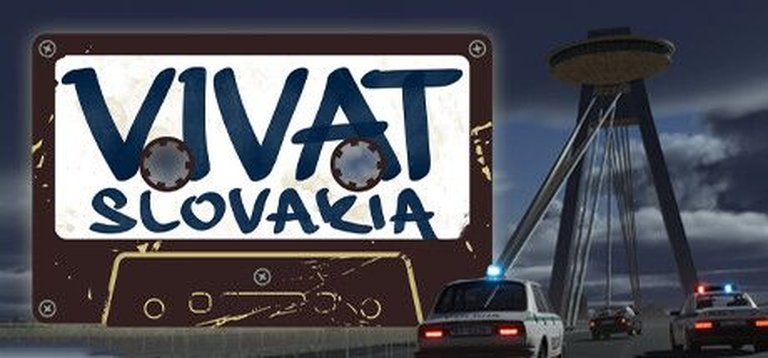
Vivat Slovakia is an open-world action-adventure sandbox game set in 1990s Bratislava, Slovakia, where players immerse themselves in a crime-focused narrative inspired by real-life events from the post-communist era. Developed by Team Vivat s.r.o., it features driving, shooting, and exploration in an authentic recreation of the city with Slovak dubbing and local landmarks, drawing comparisons to Grand Theft Auto while embracing a ‘Eurojank’ charm despite being in Early Access with technical bugs and unfinished design elements.
Gameplay Videos
Where to Buy Vivat Slovakia
PC
Vivat Slovakia Free Download
Vivat Slovakia Patches & Updates
Vivat Slovakia Reviews & Reception
metacritic.com (50/100): Vivat Slovakia is an ambitious, but technically and design-wise incomplete attempt at a Slovakian open-world game.
Vivat Slovakia: A Flawed, Authentic Love Letter to the Wild 90s
In the grand tapestry of open-world gaming, few titles arrive with such a specific, unapologetically local identity as Vivat Slovakia. Conceived not in the sprawling studios of California or Japan, but in the heart of post-communist Bratislava, this game immediately invites comparison to the titan it openly emulates: Rockstar’s Grand Theft Auto. The label “the Slovak GTA” is both a burden and a badge of pride for Team Vivat, a small indie studio that dared to tackle an entire genre with a budget that, by their own admission, equals a single month of a major studio’s burn rate. The result is not a polished competitor, but a fascinating, bug-ridden, and deeply authentic artifact—a game where the spirit of the ’90s is so potent it sometimes overpowers the technical shortcomings. This review will argue that Vivat Slovakia is a critical case study in hyper-localized game development, trading AAA scope for cultural specificity, and while it stumbles under the weight of its own ambition, it carves out a unique and valuable niche in video game history.
Development History & Context: From Modding Dreams to Crowdfunding Reality
The genesis of Vivat Slovakia is a classic Eastern European modding success story. The core team emerged from the vibrant Czech-Slovak modding scene surrounding older Grand Theft Auto titles. As producer Roman Lipka explained to The Slovak Spectator, this community was defined by a profound desire: to see their own streets, their own signs (replacing “NO PARKING” with “NEPARKOVAŤ”), and their own stories in a GTA-style game. The memory of playing Mafia: The City of Lost Heaven with Czech dubbing left an indelible mark, fueling a “childhood dream” of a domestic open-world epic.
This dream was pursued not through traditional publishing, but via a successful crowdfunding campaign on Start Lab in early 2022. The campaign raised six times its minimum goal, a testament to pent-up demand for a game that spoke directly to Slovak and Czech players. The project was bolstered by support from the Slovak Arts Council, and its development became a point of national pride, even earning a feature in Forbes as one of Europe’s most promising indie studios. The technical constraints were severe: built in the Unity engine, with a team size dwarfed by Rockstar’s, the developers were candid about the disparity. Lipka’s metaphor is telling: “If GTA5 is a Bentley, Vivat Slovakia is a Lada.” This frames the entire project not as an attempt to dethrone a king, but to build a functional, heartfelt vehicle for a specific audience that had been underserved by the global industry.
Narrative & Thematic Deep Dive: The “Wild 90s” as Historical Trauma
Where Vivat Slovakia achieves its greatest transcendence is in its narrative premise and setting. The game is set in the mid-1990s, in the freshly independent Slovak Republic—a nation “writhing through birth pangs.” The developers, drawing on consultations with former drivers and bodyguards from the era, depict a society where the lines between state enforcement and organized crime were not just blurred but actively erased. As the official blurb states: “The difference between the secret service and organized crime is being blurred. Parties that should oppose each other are now hand in hand in gaining money and power.”
The player assumes the role of an unnamed, bald man in his thirties, a secret police officer deep undercover as a taxi driver. This is a masterstroke of thematic irony. The protagonist, tasked with bringing order, must operate within the very system of corruption and violence he seeks to investigate. His cover job—a taxi driver—is the perfect observational post, allowing him to “check-up on people of interest at close proximity” while moving freely through the city. The narrative is not fiction but “based on documented events that shocked a nation,” per the Games Press release, including the real-life kidnapping of a president’s son and other true-crime sagas that Western media ignored.
The cast is a who’s who of Slovak cultural figures, lending immense gravitas. Marián Labuda, a legendary Slovak actor, voices the protagonist, while Lukáš Frlajs voices his young colleague. Imitator Rasťo Piško and security analyst Milan Žitný also feature. This isn’t just voice acting; it’s a national theatrical production. The central theme is the brutal, chaotic transition from communism to capitalism—a period where “you don’t have what you don’t steal” became a widespread maxim. The story explores how the state’s weakness allowed criminal syndicates to flourish, protected by elite politicians, creating a symbiosis of graft and violence that defined an era. It’s a darker, more systemic critique than typical gangster tales, viewing crime not as an outsider subculture but as a direct consequence of state failure.
Gameplay Mechanics & Systems: Ambitious Loops and Rough Execution
Mechanically, Vivat Slovakia attempts to replicate the core GTA loop: explore a dynamic open world, engage in driving and shooting, and complete story missions. The scale is modest but focused: a 10 km² map of Bratislava, a “meticulously recreated” fragment of the city that includes real landmarks and businesses. This crowdfunded inclusion of real local shops adds a layer of poignant authenticity—players can see their own city, or their parents’ city, rendered in digital form.
The vehicle roster is a highlight, featuring over 50 cars inspired by real 90s models. The spectrum tells the era’s story: from “old socialist scrap” like Škodas and Ladas to rare, exclusive import cars reserved for the new elite. Driving is described as “dynamic and destructive,” with realistic physics that make chases and crashes feel weighty. The weapon selection is period-accurate and region-specific, moving beyond baseball bats to telescopic batons (“k確ka”), firearms used by the criminal underworld, and other tools of the trade.
However, this is where the “Lada” metaphor becomes painfully literal. The reviews consistently point to the game’s technical and design failings. Sector notes that the “action component feels unfinished,” mission design is often “weak,” and the technical state “frequently disrupts the whole experience.” Gaming Age bluntly calls it “buggy,” stating that Early Access status doesn’t excuse a state unlikely to be “finished” soon. The AI, physics glitches, and general jank are recurrent problems. The open-world activities beyond the story—street racing, import/export schemes, fishing—are present but underdeveloped, feeling like checklist additions rather than deep systems. The core gameplay loop, therefore, is a study in contrasts: the sheer novelty and authenticity of driving a recognizable 90s Škoda through a recognizable Bratislava is frequently undermined by a clunky shooting mechanic, poor enemy AI, and missions that lack the polish and pacing of their inspirations. It is a game you endure for the atmosphere and premise, not for its mechanical mastery.
World-Building, Art & Sound: Where the Soul Resides
If the gameplay is the body, the world-building is the soul of Vivat Slovakia, and it is here the game achieves something genuinely special. The recreation of 1990s Bratislava is not just a backdrop; it is the primary character. The atmosphere is gritty, lived-in, and overwhelmingly specific. The visual direction leans into a muted, slightly washed-out palette that evokes the drab transition period, with architectural details, propaganda posters, and street furniture meticulously researched.
The sound design is arguably the game’s most celebrated element. The developers partnered with local radio staples: FM Yanko and Subtension, and the soundtrack features period music curated by real Slovak DJs. More than just background noise, the radio is a narrative device, with talk shows featuring stand-up comedians from the collective Silné Reči, blending humor with the era’s cynicism. The option for a custom radio station with your own music is a nice touch. This audio landscape is not generic synthwave; it’s the actual sounds of Slovak youth culture in the 1990s.
The crowdfunding element extends into world-building, as real fans had their businesses and homes modeled and placed into the virtual Bratislava. This creates a unique meta-layer: the game is a community documentary as much as a playable action game. The Sector review best captures this: it “excels with strong local 90s atmosphere, authentic Bratislava environment, and quality Slovak dubbing.” The sound of a 90s Lada coughing to life, the snippets of Slovak radio chatter, the sight of familiar storefronts—these are the moments where the game transcends its technical limitations and becomes a powerful piece of digital archaeology.
Reception & Legacy: The “Eurojank” Phenomenon
Upon its Early Access release in April 2024 (full release targeted for late 2024/early 2025), Vivat Slovakia received a mixed critical reception, averaging 50% on MobyGames and a “Mixed” rating on Steam (though later user reviews trend more positive at 63% of 525 reviews). The critical consensus is remarkably consistent:
- Praise is reserved for authenticity and charm. Gaming Age (70%) admits it’s “buggy” but finds “a certain messy, buggy, absurd charm,” especially for those who embrace “Eurojank” as a term of affection. Sector (50%) concedes it has “its charm, especially for players with a connection to the home environment or interest in the causewari of the early Slovak Republic.”
- Criticism is leveled at completeness and polish. Indian-TV (40%) states the ambition was “practically impossible to fulfill” and that it needs “another one or two years of development.” Gaming Professors (50%), writing in Slovak, recommends it only for those who want to support the developers or are desperately curious, warning others to wait for the full version.
Commercially, it has found a niche audience. Its successful crowdfunding and steady presence on Steam indicate a dedicated community, primarily composed of Slovak/Czech players and open-world enthusiasts curious about this regional take on the genre. Its legacy is twofold. First, as a cultural artifact, it is invaluable. It is one of the first, if not the first, major video games to deal directly and seriously with the early years of Slovak independence, providing a interactive lens into a tumultuous, often overlooked historical period. Second, as a case study in constrained development, it demonstrates the power (and peril) of hyper-localization. It cannot compete with the content volume of AAA titles, but its specificity is its strength. It has influenced the conversation around “Eurojank” games—those developed with limited resources but immense heart and cultural knowledge—joining the ranks of titles like Kingdom Come: Deliverance (in spirit, if not scale) or the early S.T.A.L.K.E.R. mods.
Conclusion: An Imperfect, Essential Artifact
Vivat Slovakia is not a great game by conventional metrics. Its shooting is clumsy, its mission design uneven, and its technical stability questionable. To judge it by the standards of GTA V or even a mid-tier Ubisoft open-world game is to fundamentally misunderstand its purpose. It is not a product engineered for mass global appeal; it is a passion project, a historical reenactment, and a communal love letter rendered in Unity.
Its verdict in the annals of history should be as a significant niche masterpiece. It succeeds brilliantly in its primary goals: to authentically recreate the look, sound, feel, and stories of 1990s Bratislava, and to provide a playable entry point into a specific, painful, and vibrant chapter of post-communist history. The performances from its legendary voice cast, the painstakingly accurate vehicle and weapon lists, the integration of real local businesses and radio—these are achievements that no amount of graphical fidelity can replicate. For players outside Slovakia, it remains a compelling curiosity, a window into a world rarely depicted in interactive entertainment. For Slovak players, it is quite likely a profound and resonant experience, a digital heritage site they can explore and, in some cases, see themselves within.
Ultimately, Vivat Slovakia is proof that video games can be—perhaps should be—vehicles for specific cultural memory. Its jank is a direct result of its beautiful, impossible ambition: to build a world that a major studio would never finance, for an audience the global market often ignores. It is a Lada, not a Bentley. But for those who remember the roads it travels, or who wish to understand them, it is a remarkable and irreplaceable ride. Its place in history is secured not by its Metacritic score, but by its unwavering, flawed, and deeply authentic heart.
Final Score: 7/10 – A culturally indispensable, mechanically uneven open-world game that captures a time and place with unmatched specificity. A must-play for historians of Eastern Europe and connoisseurs of Eurojank, a chore for the uninitiated.